

 Could you tell the readers a little bit about yourself? I’m a licensed nursing home administrator by day, a writer, editor/anthologist, armchair critic, and pop culture enthusiast by night. Oh, yeah…and I’m a gay man. Guess that last bit makes my appearance in the hallowed halls of Ginger Nuts rather relevant this month, yes? Why horror? What is appeal of the genre to you as both a fan and as a writer? I’m less certain that I chose horror; I think horror chose me. Truthfully, from as far back as I can remember, I was drawn to all things dark. As a kid, my earliest recollections of being terrified were watching made-for-TV movies from the 70s like DON’T BE AFRAID OF THE DARK, GARGOYLES, and TRILOGY OF TERROR. I can still remember damn near pissing myself when that little Zuni fetish doll from the latter chased poor cross-eyed Karen Black around her apartment! As I got a little older, my Dad would take me to the movies as part of our weekend “buddy days”. They were usually Irwin Allen disaster flicks or movies with a lot of car chases, but then a little film called JAWS was released. I was eight-years-old and can still feel the knot in my stomach the first time I heard the opening notes of the film’s now-legendary theme music. I think I only made up to the point where skinny-dipping Chrissie gets slammed into the buoy before I pleaded with my Dad to leave. It would take three subsequent tries before I could make it through the entire film, each time making it a little further into the movie before my ever-patient father heard the desperation of the “Please, Daddy…can we leave now?” in my voice. JAWS was a rite of passage for me; it was the first time I needed to summon and sustain any sense of real bravery. When I finally saw those end credits, it was a mark of accomplishment…a hint of manhood, if you will. 1978 was a game changer for me — the cusp of adolescence and the release of John Carpenter’s HALLOWEEN. If JAWS hooked me, HALLOWEEN reeled me in and cemented what would become a lifelong adoration of both slasher films and a certain actress named Jamie Lee Curtis. As LBGTQ+ fan and writer of horror, how did you when you first became immersed in the genre and found that representation that you could identify was few and far between? I came of age in the 80s at the advent of the AIDS epidemic when gay men, especially, were demonized. There was no representation of us anywhere, unless the story included a gay man dying of the disease. So you got used to digging for the representation…searching for the queer subtext. Sometimes you even saw shit that wasn’t there because you were so desperate to see something…anything…that remotely came off as gay. My own identity came from within—I was lucky. I didn’t find many of the gay sub-cultures relatable at the time I was coming up through the ranks; I guess I’m what you called an “old soul.” I wanted to see the romance, the couplings and mundane heteronormative portrayals that came—and were lambasted by some—later. In horror, the few LGBTQ+ characters were either repressed to the point of being driven to homicide (think DRESSED TO KILL or SLEEPAWAY CAMP) or easy—even deserving—victims (think THE FAN or the horror-adjacent CRUISING). So representation in horror, for me at least, came through the extrapolation of gay subtext through wistful cinematic eyes in films like A Nightmare on Elm Street 2: Freddy’s Revenge and The Lost Boys and Fright Night. It would be years before I’d see actual lead gay male characters in horror films like HELLBENT and PITCHFORK. How did you discover authors that wrote about characters that you could relate to? For some reason, it seemed easier to find and gain access to queer content in horror fiction. Maybe it was the fact that books with LGBTQ+ characters and content were shelved separately in bookstores and often flew under everyone’s radar. I mean, I can remember reading CLOSER, the first in Dennis Cooper’s series of five novels known as the George Miles cycle, in the late ‘80s and being blown away by that intersection of sex and violence set against a queer backdrop. Then there was Lewis Gannet’s THE LIVING ONE, which profoundly influenced the idea that I could write about scary things happening with gay characters and events. Other than the horror genre, what else has been a major influence on your writing? Films. Especially slasher films. The term horror, especially when applied to fiction always carries such heavy connotations. What’s your feeling on the term “horror” and what do you think we can do to break past these assumptions? I think labels—especially in the age of the Internet—have largely been relegated to nothing more than marketing tags. They help consumers with a particular interest zero in on books of potential relevance to them. For me, the more labels the better. I think the negative connotations associated with the term “horror” in the past are largely a thing of the past…a generational stigma that we’re aging out of, thankfully. The current crop of horror writers out there are certainly doing their part in moving past long-time genre tropes. Consider Paul Tremblay’s A Cabin at the End of the World—I’d slap that with “horror,” “LGBT,” “thriller,” “non-traditional families,” “apocalypse,” “religion,” “multi-cultural families,” “home invasion,” and “eschatology” tags. Books just aren’t consigned to one category anymore, so I don’t think the more inauspicious chapters of horror’s history can hurt the genre anymore. A lot of good horror movements have arisen as a direct result of the socio/political climate, considering the current state of the world where do you see horror going in the next few years? In this socio-political climate, the only way for horror is up. It’s an interesting dichotomy; people feel skittish as the larger world around them unravels and they turn to horror. You’d think escapist rom-coms would be the fallback when the world turns to shit, but no—it’s material that will scare them even more. What are the books and films that helped to define you as an author? There are three books that I credit with defining me as a writer: Jack Ketchum’s OFF SEASON, which conveyed the naked brutality of horror better than anything I’d read before—or since; Peter Straub’s SHADLOWLAND, through which I’d experience my first true sense of character development (and, to this day, I’ve long-harbored the suspicion that Tom and Del were more than friends); and Agatha Christie’s AND THEN THERE WERE NONE, which taught me about plot complexity and the exhilarating joy of throwing the reader for a loop at story’s end. As far as cinematic influences, I’ve ingested so many slashers since seeing HALLOWEEN at the age of ten that the formula just creeps naturally into my work. There’s something very methodical about the slasher formula, something almost comforting as a writer. My first novel, THE LITERARY SIX, was really a hybrid of Christie’s AND THEN THERE WERE NONE and the slasher flick APRIL FOOL’S DAY, with cozy elements of the classic whodunit blended with a grittier slasher reality. I have a great affection for the slasher film, and I attempted to pay homage to the genre with LIT6 (the book’s Internet dubbing). I was fascinated with the idea of updating the teenage slasher experience when I sat down to write the book, wondering what would happen if the characters within the story had aged along with the audience. How would their adult minds cope with the onslaught of slasher violence? What new or better developed skills would they bring to the table in warding off evil? What would the effects of the violence be on the survivor(s)? I suspect that future works may continue that exploration of a classic whodunit mood integrated with a slasher aesthetic. One of the best blurbs I got for LIT6 cited it as “the book Agatha Christie would have written if she married John Carpenter,” so I’m still hoping that the English cozy-meets-slasher film hybrid will become my genre niche. LOL! In recent years there has been a slow but gradual diversification within the genre, which new LBGTQ+ writers do you think we should be paying attention to? There are some amazing horror writers in the LGBTQ+ community writing excellent books. Lee Thomas is a favorite—so much so that I invited him to contribute to both volumes of UNSPEAKABLE HORROR, as well as a non-fiction anthology I put together a few years back on slasher films called BUTCHER KNIVES AND BODY COUNTS: Essays on the Formula, Frights, and Fun of the Slasher Film. Lee is a fantastic writer, equally outstanding in the short story realm and novels. I’d recommend his short story collections LIKE LIGHT FOR FLIES and IN THE CLOSET, UNDER THE BED before delving into his novels DISTORTION and THE DUST OF WONDERLAND. Michael Rowe is another exceptional writer. He was the editor of the groundbreaking QUEER FEAR anthologies back in the early 2000’s and has emerged in recent years as an first-rate novelist with ENTER, NIGHT and WILD FELL. Others queer writers and writers of queer works I’d recommend would include Tom Cardamone, Douglas Clegg, Caitlìn R. Kiernan, Lucy A. Snyder, Gemma Files, Marshall Moore, and I’d be remiss if I didn’t mention a favorite—Laird Barron’s novella “Mysterium Tremendum,” from his 2010 Night Shade collection Occultation and other Stories. And keep an eye out for a young writer named J. Daniel Stone. He’s got some wickedly good writing chops, as is evident in his 2017 short story collection Lovebites & Razorlines. How would you describe your writing style? I honestly wouldn’t. I’ll leave that up to the readers and critics of the world. Are there any reviews of your work, positive or negative that have stayed with you? So many fellow writers have been kind with blurbs and reviewers generous with their critical reviews—you’ll never hear me fixate on the few negative reviews I’ve received over the years. Hands down, my favorite blurb from a review ever came from a website called Retro Slashers. The reviewer, Ross Horsley, had very kind words for THE LITERARY SIX: “The Literary Six is a literary treat for fans of good old-fashioned slashers and proves that you don’t have to rely on a battered ex-rental tape and a miracle of VCR tracking to get that authentic fix. When it comes to gripping and intelligent slashers, it seems the pen is mightier than the machete.” What aspects of writing to do you find the most difficult? Honestly, I’m a terrible procrastinator. I get easily sidetracked from my own writing, especially when an intriguing anthology project comes my way. Maintaining focus for me is always a challenge. I’m an idea guy—I have folders and folders with sub-folders of novel ideas and outlines on my laptop just waiting to see the light of day. I marvel when people say they can’t come up with ideas for stories since I projectile vomit them. Are there any subjects that you would never write about? Animal abuse. I’m super-triggered by even the suggestion of it. I’m the guy who bursts into tears when the ASPCA commercial with Sarah McLaughlin’s song “Angel” comes on. Other than that, if a topic—however taboo or distasteful to some—is germane to the story I feel compelled to write, nothing is off the table. Storytelling is about truth, and sometimes the truth is ugly and uncomfortable. Writing, is not a static process, how have you developed as a writer over the years? I’ve gotten more vicious during the editing process. I love words and the symmetry of words when crafting a story so it was always difficult for me to kill a sentence or paragraph I’d fallen in love with. I’ve worked hard on training myself to keep somewhat of an emotional detachment from the words themselves and focus more on structure and pacing. That makes it easier to excise clunky passages from a work, even though the words themselves might be poetry on the page and perfection to the literary ear when considered outside the story. What is the best piece of advice you ever received with regards to your writing? I did some private workshopping back in ’07 with Jonathan Maberry—who’s a love of a guy and a hell of a good writer—and he told me, point blank, that I had had overused my villain in my first novel. His advice: “This is a common wrinkle in suspense writing of any kind. As authors we love our villains. We imagine complex motivations for them and want them onstage so we can play with their twisted morals and skewed motives. The reader, however, is a participant in the creative process of any book and if we let the reader take a good hard look at the monster then the monster gets less frightening. Sure, the villain may still be threatening to the characters in the story, but the reader can see the greasepaint and zippers on the monster if he’s on screen too long.” Getting your worked noticed is one of the hardest things for a writer to achieve, how have you attempted to break through the barriers that are so often in place against LBGTQ+ writers? Honestly, I’ve never consciously tried to break through any barriers—real or perceived. I just write the stories I’m moved to write, try to polish them with as thorough an edit as possible, and then submit them to markets in which I’d like to see them find a home. As with any profession, I think it’s equally important to network and establish good will, forging positive relationships with editors. Every time you submit something—be it short story or novel proposal—it’s like going on a job interview. It’s vital to put your best foot forward. Many CIS white male authors use LGBTQ+ characters in their works, what’s the mistake that they make when trying to portray these characters? There are two—both at opposite ends of the same spectrum. Many define the LGBTQ+ character expressly by his/her/their sexuality. Sexual orientation is an aspect of the human condition—it’s not the human condition. I’ve cringed when writers oversexualize the LGBTQ+ characters—especially gay male characters—in a story. Sex is a human function that occurs naturally at, primarily, logical times—not in the middle of a zombie infestation. It makes me nuts when gay male characters are eyeballs-deep in the horror and suddenly want to fuck like rabbits. Conversely, I’ve also seen CIS white male authors make the exact opposite mistake by neutering their LGBTQ+ characters, relegating their sexual orientation to a mere footnote in some expository introduction. There is no coupling, no romantic interest, and certainly no actual sexual contact. They’ve essentially rendered their LGBTQ+ characters asexual. Interestingly, straight male writers will often make both mistakes within the same story—the lesbian characters will be full-on sex maniacs while the gay male characters are effectively eunuchs. Moving on to getting your work read by unwashed masses, what do you think is the biggest misconception about LGBTQ+ fiction? I think the biggest misconceptions about LGBTQ+ fiction are the same as the misconceptions and stereotypes the community faces in real life—the conflation of sexual orientation and gender identity with promiscuity, hedonism, behavioral deviancy. I think LGBTQ+ fiction largely suffers from the misperception that the stories and characters won’t be relatable when, in fact, gay, bisexual, and trans men and women grapple with the same universal truths as the rest of society—because they are a part of society. I think traditional readers approach LGBTQ+ fiction skeptically thinking in terms of stereotypes and an exclusionary “otherness.” There are as number of presses dedicated to LGBTQ+ fiction, do you view these as a good thing, or do you think they help to perpetuate the ongoing exclusion from mainstream presses? I look at dedicated LGBTQ+ presses the same way I’d look at a movie studio if I were producing a horror film. Would I partner with a smaller studio like, say, Blumhouse that specializes in making and marketing such content or would I chance it with a larger, more generic studio that casts its content net far and wide? Honestly, without dedicated presses, there are more than a few works of LGBTQ+ fiction that might never have seen the light of day. That said, I don’t really believe that the name of the publishing house on the book’s spine limits or increases an audience; marketing does. I should mention that there is a wonderful small press outfit right now called Valancourt Books located in Richmond, Virginia, that’s run by a lovely married gay couple, James Jenkins and Ryan Cagle. They’ve been doing a bang-up job of republishing modern works of gay interest and/or from the horror genre from as recent as the 1970s or 1980s that have been long out of print. Valancourt has reprinted many works last published in the 1980s by the now-defunct Gay Men's Press in their Gay Modern Classics series. And here is the million dollar question do you agree with movements like this and things such as Women in Horror Month? If so how would you like to see sites such as Ginger Nuts of Horror tackle diversity? Absolutely. I see no downside to shining a light on underrepresented segments of society. If anything, awareness of people different from us makes for a more evolved human race with the potential to improve everything from basic social interactions to the arts. Sure, we all want to see ourselves reflected back in films, TV, and fiction, but how boring to see only our reflections. The most common phrase you hear when people object to active movements to encourage all forms of diversity is “I don’t care about the sexuality, gender, color, etc. of the writer I only care about good stories” what would you like to say to these people? Almost without fail, people who say this are white heterosexual males. It’s a defense mechanism. There seems to be a subconscious thought process that by allowing others to sit at the table there may be less room for them—or that they may be forced to sit somewhere else entirely. We see this reflected in the uptick of white nationalism on the global stage. It’s sad and scary—and this notion is without any demonstrable merit. Right now there is nothing more genuinely frightening in the world than insecure straight white guys who perceive themselves as “under attack.” What piece of your own work are you most proud of? I’d have to say the first volume in the Unspeakable Horror series—UNSPEAKABLE HORROR: FROM THE SHADOWS OF THE CLOSET. One of the first people who reached out to me after THE LITERARY SIX was released back in 2006 was an author and poet named Chad Helder. Like many LGBT horror fans, he had long felt underrepresented as a gay man in the genre and was drawn to the gay and bisexual themes and characters of my novel. To make a long story short, we developed a virtual friendship and Chad asked me if I’d be interested in contributing to his queer horror blog, aptly named UNSPEAKABLE HORROR. Of course I jumped at the chance. About a year later, just as I was preparing to launch my now-defunct Dark Scribe Press, the idea struck me that the UH moniker would be the perfect anchor for an anthology series — much in the way Michael Rowe’s idea for the groundbreaking QUEER FEAR anthologies was. I asked Chad if he’d like to co-edit with me, we developed submissions criteria and put out the call. Thus, the UNSPEAKABLE HORROR brand was born and the rest, as they say, is history. That first anthology went on to win the prestigious Bram Stoker Award for Superior Achievement in an Anthology. It was the first time in the sponsoring organization’s (then) 22-year history that an expressly LGBT-themed anthology had ever won. I can still remember getting back to my hotel room late at night following the awards banquet and after-parties and turning on my computer to, literally, hundreds of congratulatory emails and social media postings. Fellow writers from both the horror and LGBT literature circles, authors I look up to and admire immensely, were offering their heartfelt congratulations from around the globe. It was at that moment when I realized Chad and I had accomplished something remarkable. For those who haven’t read any of your books, which of your books do you think best represents your work and why? As far as books, I’d have to again cite my work as an editor on the Unspeakable Horror anthologies. I think those represent my taste and literary aesthetic best. As far as my own writing, I’d say some of my shorter fiction—notably, “Matinee” from the Night Shadows: Queer Horror anthology (Bold Strokes Books, 2012) edited by Greg Herren and J.M. Redman and, more recently, “The London Encounter” from FANTASTIC TALES OF TERROR: HISTORY’S DARKEST SECRETS edited by Eugene Johnson and published by Crystal Lake Publishing last year. The latter is a horror-historical reimagining of the last night of Judy Garland’s life set in the London mews house she rented and shared with her fifth husband. Can you tell us about your last book, and can you tell us about what you are working on next? The last book was an anthology I edited—UNSPEAKABLE HORROR 2: ABOMINATIONS OF DESIRE. It was the long-awaited follow-up to the first volume and featured some wonderful writers I was anxious to work with like Gemma Files, Stephen Graham Jones, Helen Marshall, and David Nickle. This collection centers around the abstract of desire gone bad. Desire, when distorted to the level of atrocity, can be a thing of horror indeed. What am I working on now? It’s a question I dread because I never know what to say since my process is so painstakingly slow. I won’t lie: I have some kind of literary attention-deficit disorder. I typically juggle multiple projects simultaneously so… I’ve got my first short fiction collection in the works while still working on my second novel while trying to keep my hands off my third novel, which I began at the same time as the second. Likely, it will be fourth project that sees the light of day first—and something of a departure for me. Back in 2015, I relocated to the state of Michigan for a year with my fiancé. While there, I challenged myself to start reading more poetry and then I started to intensively study and work within the form. Surprisingly, a collection of decidedly horror-themed verse has emerged. I’ve literally only showed it to one beta reader—a dear friend and colleague who’s very well-respected within the horror writing community—and she went crazy over it. That feedback has now energized me to finish it and find it a fitting home. What was the last great book you read, and what was the last book that disappointed you? My favorite book from last year was, surprisingly, not horror. It was The Great Believers by Rebecca Makkai. It’s a wonderful novel that toggles back and forth between the height of the AIDS crisis in 1980s Chicago and contemporary Paris where the aftereffects of loss are still keenly felt some three decades later. The novel that disappointed me? Reluctantly, I’d have to say My Sister, the Serial Killer by Oyinkan Braithwaite. Too absurdist for my taste. What's the one question you wish you would get asked but never do? And what would be the answer? Easy. The question I’d love to be asked but never am is: “So, Mr. Liaguno, how does it feel to be longtime best friends with Jamie Lee Curtis?” The answer would be the alarm clock ringing in my ear before I could respond. ABOUT VINCE LIAGUNO Vince Liaguno is the Bram Stoker Award-winning editor of UNSPEAKABLE HORROR: FROM THE SHADOWS OF THE CLOSET (Dark Scribe Press 2008), an anthology of queer horror fiction, which he co-edited with Chad Helder. His debut novel, 2006’s THE LITERARY SIX, was a tribute to the slasher films of the 80’s and won an Independent Publisher Award (IPPY) for Horror and was named a finalist in ForeWord Magazine’s Book of the Year Awards in the Gay/Lesbian Fiction category. More recently, he edited BUTCHER KNIVES & BODY COUNTS (Dark Scribe Press, 2011)—a collection of essays on the formula, frights, and fun of the slasher film—as well as the second volume in the UNSPEAKABLE HORROR series, subtitled ABOMINATIONS OF DESIRE (Evil Jester Press, 2017). He’s currently at work on his second novel. He currently resides on the eastern end of Long Island, New York, where he is a licensed nursing home administrator by day and a writer, anthologist, and pop culture enthusiast by night. He is a member (and former Secretary) of the Horror Writers Association (HWA) and a member of the National Book Critics Circle (NBCC). For more information and to follow Vince on social Media please follow the links below Author Website: www.VinceLiaguno.com Facebook: https://www.facebook.com/vince.liaguno Twitter: https://twitter.com/VinceLiaguno Goodreads: https://www.goodreads.com/VinceLiaguno  
 Could you tell the readers a little bit about yourself? I’m an award-winning writer, mostly of novels and novellas with a few short stories here and there. My preferred genres are wry horror - you know, the sort that remembers it can also have a sense of humor, because ultimately screams and laughter come from the same place of subverted expectations - and science fiction. And detective novels. And ghost stories. OK, let’s just say “speculative fiction” and be done with it. My day job is in information security, and I’m a gaymer and runner and baker. I’ve contributed to tabletop RPGs and I’m both a cat person and a dog person. In my highly-detailed fantasy life, my primary residence is a fully-staffed, 300-acre refuge for animals others have abandoned or otherwise classified as “unadoptable”: you know, all the cats with three legs and parrots who only know cuss words and iguanas with bad attitudes. Why horror? What is appeal of the genre to you as both a fan and as a writer? Because I grew up afraid. That sounds… wow. That sounds so melodramatic, but it’s true. I grew up in a very isolated place in the Appalachians. It was scary being queer there. It was scary being any kind of different there. It was a place where people believed in a hostile and active supernatural world: not in some merely reflexive, cross-yourself-at-a-mention-of-the-dead way, but in very conscious, very explicit, very weird ways. I grew up in a place where people simultaneously held the belief that demons and ghosts and witchcraft were all real, all actively malevolent, all arrayed against the ever-narrowing “us” of those who belonged and had not yet been exposed as an agent of the forces of darkness, and that thinking about those things too much made one vulnerable to their influence. And that’s just the mundane stuff. I haven’t even gotten into how my grandmother taught me to recognize the smoke from a moonshine still (in the 1970’s!) so that I could avoid getting too close to one and winding up murdered. Now I try to describe worlds where people feel certain the supernatural exists, often because they are themselves a part of its fabric, and who also have to keep one foot in the world that no longer believes such things. I think doing so is probably a way for me to process all my dumb baggage in front of everyone. As LBGTQ+ fan and writer of horror, how did first become immersed in the genre and found that representation that you could identify was few and far between? I have a very distinct memory of being shocked when I ran across my first explicitly homophobic remark in a horror novel I read in high school. Prior to that, my biggest horror experience had been repeated readings of Dracula, which remains my favorite novel of all time. It contains such a daringly transgressive band of Victorian proto-hippies that I never felt particularly excluded. Sure, they’re all straights, but Mina is a 19th century woman whose compatriots value her creativity and intellect and welcome her into the fold. The men of the group are her near-invalid husband, their elderly intellectual mentor, and a trio of guys who have all sworn a blood oath to one another because they fell in love with the same woman and decided to become best friends rather than rivals. How awesome is that? These cats are the Victorian equivalent of a polyamorous Scooby-Doo gang bouncing around town solving crimes. Stoker explicitly wrote Dracula to be progressive and especially feminist by the standards of the time, and it still contains plenty of welcome antidotes to toxic masculinity. But yowza was I eventually in for a rude awakening across the rest of the genre. As a result, I don’t actually read much horror these days, and I’m pretty selective about what I watch. I have made it a policy to check out the moment a story seems to think it will be hilarious if the queers get bashed/murdered/mocked, or women assaulted, or people of color targeted. Writers and other creators would do well to remember those of us who love participating in these genres often come to them from a place of being outsiders looking for an escape. Using those stories to beat up outsiders is a hell of an insult to us. They would also do well to notice that all the most inventive speculative fiction storytelling right now is by and/or about marginalized people and their experiences: Get Out, for instance, or the 2018 Halloween, which is as perfect as I can imagine of a representation of the #MeToo movement and women whose lived experiences are misogynistically discounted and disbelieved when shared. How did you discover authors that wrote about characters that you could relate to? I very clearly recall the moment someone in college handed me an Anne Rice novel. I wasn’t very far into Interview with the Vampire when I realized it was the gayest thing I’d ever read. I fell instantly in love. Other than the horror genre, what else has been a major influence on your writing? I read a ton of Nancy Drew novels as a kid - mostly the ‘50s editions with the yellow covers - and was completely carried away by her life: absentee parents, a car of her own, and a couple of friends always up for adventure? Sign my ass up! I also watched a ton of Star Trek in syndication as a child, and then ST:TNG came along and I felt like the whole world had bent to my whim. I also watched a lot of (disjointed, out of order, so kind of nonsensical but also very exciting) old Doctor Who on our local PBS station as a child. And there’s no denying that Anne Rice and Terry Pratchett entered my reading life at exactly the right time to make huge impressions on me. Those two were practically holding hands and skipping down the path when I stumbled into them around age 21. Basically anything in which the protagonists have to go somewhere else at great risk to become who they are. That made a huge impression on me as a kid who sensed I could not be who I was in the place where I was born, and it’s shaped a lot of what I write. The term horror, especially when applied to fiction always carries such heavy connotations. What’s your feeling on the term “horror” and what do you think we can do to break past these assumptions? I think a lot of people, both in and out of fandom, associate “horror” with a certain set of arbitrary requirements: it must be about a supernatural monster, or it must be about teenagers trying to survive a serial killer, or it must be about getting inside the mind of a killer. We have been blessed with a ton of good horror, so standouts like A Nightmare on Elm Street or Scream or Christine or Hannibal, the best of the best, come to define the genre - and any definition is by necessity somewhat limiting. In terms of how to break these assumptions, on the one hand I’m not sure we should rush to throw them away. They’re useful! And they’re fun! Like I said, I think we get them from the best of horror and not from the worst, and I am tremendously grateful to that stuff for existing. I also think it’s important that we be fresh and new and interesting. For me, balancing the two means utilizing some of the tropes and trappings of the classics as a launchpad, and then trying to figure out a way to expand the message to something outside of what those classics were talking about. A lot of the genre-defining works are about really important themes, like adults never listen to the kids in trouble until it’s too late. That’s something drawn right out of their creators’ experiences, probably. So let’s draw on our own experiences of being the outsider who is declared dangerous but feels endangered, or of being the kids whose secrets draw them together, or the kids who excel at reading the subtleties of body language and tone because we spend so much time studying others in search of allies. A lot of good horror movements have arisen as a direct result of the socio/political climate, considering the current state of the world where do you see horror going in the next few years? Horror has deep roots in the concept of cautionary tales, and I think we could all name examples in which that reflex for warning the reader not to stray too far from the herd resulted in stories that reinscribed the dominant and oppressive paradigm. We saw that evolve in the ‘90s and early 2000’s, so that the skin-of-her-teeth “final girl” of all those slasher movies became the determined survivor (Scream) or even the centrally promoted and fully empowered protagonist (Buffy the Vampire Slayer). And these days, all the most interesting and inventive work in horror is about marginalized people and perspectives: the new Halloween, again, or the remake of Suspiria, which is just stunning and stands exquisitely on its own as a film experience. I think that trend is going to continue. We’re in a moment in which the President is a fascist who lost the popular vote despite a massive assist from a hostile foreign power and somehow managed to wind up in office anyway, whose entire time in office has been spent stoking the fires of hate and promoting the most poisonous and explosive forms of conformity and lockstep thinking, and whose rhetoric is entirely self-aggrandizing at the explicit expense of the humanity of others. If there is any justice in the worlds of our making, we will use horror to remind people that what makes us different is what gives us strength and that we are not afraid to use that strength against the people who would use fear to control us. I think horror has slowly evolved from “don’t be too different, kids,” to “I’m going to be me no matter what and survive anyway,” to “what makes me different gives me focus and purpose.” The next step up from that should be, “If you think what makes me different is bad, motherfucker, just wait: you ain’t seen nothin’ yet.” What are the books and films that helped to define you as an author? This isn’t a ranking, but a general list of what I consider some of the works that most make me work to become a better writer: Dracula (Bram Stoker) Parable of the Sower (Octavia Butler) Death Trick (Richard Stevenson) Small Gods (Terry Pratchett) Interview with the Vampire (Anne Rice) How Much for Just the Planet? (John M. Ford) Hyperion (Dan Simmons) Leviathan Wakes (James S.A. Correy) The Left Hand of Darkness (Ursula LeGuin) The Handmaid’s Tale (Margaret Atwood) The Long Goodbye (Raymond Chandler) Films/TV: Buffy the Vampire Slayer (both film and TV!) The Craft The Addams Family Dawn of the Dead (some awesome heavy-handed metaphor) They Live The Thing Silence of the Lambs Friday the 13th Friday the 13th: The Series (underrated and very fun episodic television!) Return to Horror High In recent years there has been a slow but gradual diversification within the genre, which new LBGTQ+ writers do you think we should be paying attention to? Currently high on my to-read list are Lady Dane Figueroa Edidi’s Ghetto Goddess series, about a young trans woman of color whose transition is linked to accessing the power of witchcraft. They sound pretty phenomenal, and I want to dig into them. I also very much want to read some of Thommy Hutson’s nonfiction writing about the ‘80s slasher films I love so much. He’s written about both the Friday the 13th and A Nightmare on Elm Street franchises and I am an absolute slut for intellectual analysis of genre fiction. How would you describe your writing style? I sometimes refer to it as “wry horror.” I like to tell stories about characters who find their people - who find friends in what they expected to be a lonely eternity, or who otherwise seek out those who will understand them and a place where they can be themselves - but I also like to introduce the supernatural, and to raise some uncomfortable questions at the edges of their lives, and I like to remember it all necessarily has a humorous edge to it. Humor and horror are very closely related emotional experiences, and they both have the power to educate and enlighten, to expand a reader’s perspective beyond their own experience and expectations. They’re extremely valuable and powerful when used together. Are there any reviews of your work, positive or negative that have stayed with you? A reviewer once called me, “Stephen King meets Stephen Colbert,” and I responded to say I cannot hope to live up to either of those, but I plan to put that on everything I publish for the rest of my life, up to and including my own tombstone. What aspects of writing to do you find the most difficult? Probably the middle 60,000 words of any novel? That sounds flip, but it isn’t. The hardest thing for me, by far, is to write the plot without feeling like it is completely predictable and transparent and that any reader would be bored silly watching it unspool. Are there any subjects that you would never write about? I have no interest in writing a sexual assault scene or trivializing sexual assault by writing about it from an inauthentic, contrived perspective. I welcome stories from survivors, that represent their lived experience, and I don’t want to devalue the bravery it takes for a survivor to speak out by turning their trauma into some sort of callously voyeuristic intellectual exercise on my part. Writing, is not a static process, how have you developed as a writer over the years? I think I’ve gotten better at hearing what I’m writing as I write it. I’m not perfect, and I’m not saying my first draft is my final draft, but I think I’ve gotten better at finding and expressing my rhythm. That said, far more has not changed. I still need a ton of caffeine. I still write in the same coffee shop, many books later. I still need dance music. What is the best piece of advice you ever received with regards to your writing? Honestly, and again this will sound flip but it is totally sincere, the best advice I received was to ignore all advice. We each have to find what works for us. There’s no harm in trying on someone else’s advice to see if it fits, and stealing from it what’s useful, but nobody has a monopoly on the secret sauce. Getting your worked noticed is one of the hardest things for a writer to achieve, how have you attempted to break through the barriers that are so often in place against LBGTQ+ writers? First, I self-published and promoted it specifically as queer fiction. I featured the queerness, even though the main character of my first series is both gay and basically ace, so there is not exactly a lot in the way of steamy queer action but there are many ways in which his experience of queer life in the early 20th century color his views of the world today. Second, I made friends with other queer writers at local conventions where I was a guest and sought their advice. That led me to a publisher who loves having queer fiction in his catalogue. He values us as creators and consumers, and as a fan in his own right he remembers that thing I was saying of how so many of us are drawn to genre by growing up feeling like outsiders. He wants to publish stories that speak to and strengthen and empower and value those of us who feel like outsiders. Third, don’t think you’re too good for romance, or to include a romantic element of some sort in your story. My horror is almost always motivated by relationships of some sort, from familial to platonic to romantic. Queer identities are driven almost entirely by our approach to and experience of sexuality and gender. Even a whiff of a positive representation of the queer experience in some form will draw interest in your story. I’m not saying use relationships as the bait in some sort of bad-faith switcheroo, but I am saying remember that we all experience that part of the human condition in some way - in our gender identities, in our sexual orientations, in feeling alienated for being asexual or agender - and the opportunity to connect with an authentic and meaningful representation of those parts of us that make us queer can be a great on-ramp for someone who might otherwise think your story isn’t for them. Many CIS white male authors use LGBTQ+ characters in their works, what’s the mistake that they make when trying to portray these characters? They make us weak. They may think they’re representing the traumas we face at different points in our life, and that’s great, but they commit the error of thinking those traumas weaken us. They do hurt us, but if we survive them then more often than not, in my experience, we hone and polish them into weapons and armor. Moving on to getting your work read by unwashed masses, what do you think is the biggest misconception about LGBTQ+ fiction? By far I think the two biggest misconceptions are that every queer story is a coming out story - which is a powerful part of our experience, and for many of us it’s the defining moment - and that every queer story is only about sex or romance. There is plenty of room for sex and romance but I can’t think of any queer stories that are exclusively about falling in love or getting laid. There are as number of presses dedicated to LGBTQ+ fiction, do you view these as a good thing, or do you think they help to perpetuate the ongoing exclusion from mainstream presses? I think they’re a wonderful thing. They’re our cultural stewards. They’re our home base, our secret clubhouse, our mothership. They foster the next generation of voices and provide a place where we can be our truest selves. They don’t exclude us from the mainstream press: they are often superior to the mainstream press. And here is the million dollar question do you agree with movements like this and things such as Women in Horror Month? If so how would you like to see sites such as Ginger Nuts of Horror tackle diversity? I absolutely support things like this, and Women in Horror Month, and any other sincere effort to spotlight marginalized voices working in genre fiction. Horror is about the outer edge of human experience, about what we love and will fight to protect, about what we fear makes us weak, about what we didn’t know makes us strong. People whose experiences are of exclusion, of being disbelieved, of being underestimated, of being openly reviled, have a lot to say about those things, and we need more opportunities to hear them. The most common phrase you hear when people object to active movements to encourage all forms of diversity is “I don’t care about the sexuality, gender, color etc etc of the writer I only care about good stories” what would you like to say to these people? It must be nice to feel that safe in society. I do not feel safe. To many writers, the characters they write become like children, who is your favorite child, and who is your least favorite to write for and why? My favorite is Roderick Surrett, a supporting character in The Withrow Chronicles (first book is Perishables). Roderick is a strung-out gogo boy from the 1960’s who these days is a vampire and very likely a serial killer. He became a vampire not because he wanted to preserve his then-life for eternity, but because he wanted to see what the future held, forever. He’s weird and scary and sexual and almost definitely up to no good, and even I don’t know exactly what he wants from the world, and all the ways he’s an outsider, all the things that make people wary of him, have also made him very compassionate and cautious and calculating. What piece of your own work are you most proud of? In terms of published work, either “Daddy Used to Drink Too Much,” a short story published as part of Wrapped in Red: 13 Tales of Vampiric Horror (Sekhmet Press) or the third novel in The Withrow Chronicles, Deal With the Devil. A Fall in Autumn is the first novel in a series of sci-fi detective stories coming out in 2019, and out of everything I’ve ever written, published or otherwise, I’m proudest of that. Even my editor noted at one point that it was the best thing I’ve ever written. I am just exceptionally proud of it. For those who haven’t read any of your books, which of your books do you think best represents your work and why? Perishables, the first book in The Withrow Chronicles. Readers often tell me it doesn’t “feel” like it’s part of its own series, but I think it best represents some of what I’m trying to accomplish: that mix of humor and horror, and the way expectations are undone. Do you have a favorite line or passage from your work, and would you like to share it with us? “She’d waxed and waned like some consumptive moon for years, chasing normal life just like a cat after a string.” -- “Daddy Used to Drink Too Much,” Wrapped in Red: 13 Tales of Vampiric Horror Can you tell us about your last book, and can you tell us about what you are working on next? My most recent completed work is Nobody Gets Out Alive, which is the fifth and final(-ish) book of The Withrow Chronicles, in which all the little strings from the previous books get pulled together and tied off once and for all. I leave in that “-ish” caveat because I am very interested in writing novellas set in that world and expanding the universe a bit. There are many characters and themes and story ideas there I’d like to explore further, and I think novellas are the perfect form for that. What was the last great book you read, and what was the last book that disappointed you? The last book that just knocked my socks off was Body Counts: A Memoir of Politics, Sex, AIDS, and Survival by Sean Strub. It’s a memoir detailing his early years as a fundraiser for various queer causes, his experience watching HIV and AIDS creep into the queer communities, and his conversion to full-blown AIDS activist. There are parts of it that are very challenging, very distressing, but overall it’s one of the most uplifting and empowering books I’ve ever read. I wept when I finished it. I loved it. The most recent horror novel to knock my socks off was definitely Lovecraft Country. It takes the whole Lovecraftian template of having a privileged old New Englander encounter the Mythos and be driven mad by the idea the universe might at best be indifferent to them and turns it inside out, giving us stories of African-Americans in the Jim Crow era encountering an indifferent or malevolent world and already knowing how to navigate it. The characters are compelling, the science fiction and horror spot-on, and the social commentary perfectly executed. I loved it. We read it for my queer book club and just couldn’t get enough of it. I’m trying to think of a book that’s recently disappointed me and not having a ton of luck. Is it possible I’m just having really good luck with books? What's the one question you wish you would get asked but never do? And what would be the answer? The question no one ever asks above a hushed tone - and someone asks me this in that hushed tone at almost every convention where I’m a guest - is, “Have you ever killed someone you know in a story?” The answer is, nearly all of them. 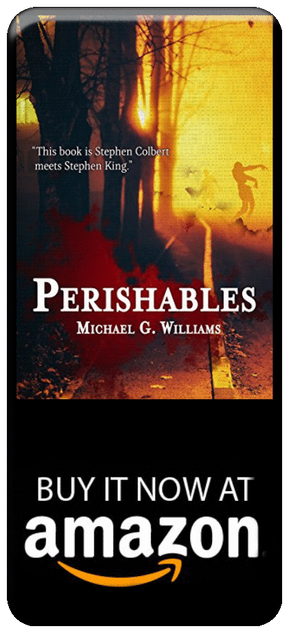 Winner of the 2012 Laine Cunningham Novel Award! Everybody hates their Homeowner’s Association, and nobody likes a zombie apocalypse. Put the two together, and Withrow Surrett is having a truly craptastic night. Not to mention the fact that he’s got one big secret to keep from the idiots in his home – Withrow is a vampire. Perishables has been called by some “a gripping examination into suburban ennui set in a milieu of post-modern apocalyptic horror.” Not really. Those people would be navel-gazing idiots. Perishables is a bust-your-gut funny collection of three stories about trust, human and undead relationships, what community really means, and zombies. A LOT of freakin’ zombies. Fans of The Black Knight Chronicles, The Tome of Bill, and Fred, the Vampire Accountant will love this series.    Could you tell the readers a little bit about yourself? I am a Western Australian writer. I am an English language teacher – grammar, pronunciation, vocabulary – the whole shebang! My passion is writing and creating characters, stories and worlds. I began, years ago, by writing horror stories and having them published in small journals and e-zines. Most of them have folded now. I guess I have had my biggest successes writing MM erotic romances. Within this field, I also like to write with either horror, paranormal or fantasy themes. Why horror? What is appeal of the genre to you as both a fan and as a writer? For someone who was extremely frightened of the dark as a young boy (think turning the light off and leaping onto the bed), I have grown to actually prefer the night. I love being alone in the dark, walking the street at night, or being alone in my home or in the back yard at night. I always, without fail, watch horror films in the dark. And I have watched almost every horror film there is. These days I am more discerning. For example, there is nothing scary about slasher films. A girl with big tits gets cut up. Sorry, not scary. I love psychological horror. Horror that creeps you out hours after you’ve finished watching / reading it. Stuff that makes you, as a grown man, check under the bed. How did you discover authors that wrote about characters that you could relate to? I read Steven King when I was a teenager because that was the thing to do, and thought he was the bees knees, but as an adult, I find his horror kind of family friendly. I love Anne Rice and Neil Gaiman, and above all, Clive Barker. Clive truly writes the stuff of nightmares. Really hardcore horror. I worship him. And I was introduced to all of them, except Neil Gainman, by the films of their books. Hellraiser, by Clive Barker, is still an all-time favourite, and a classic amongst horror buffs. Plus, Clive is gay. And hot. Other than the horror genre, what else has been a major influence on your writing? Music. I can listen to a song and it inspires ideas. Kate Bush and Marilyn Manson are two prime examples. I have written more than one story that their music has inspired. Also, dreams. Unlike most people, I love nightmares. Naturally, I am frightened when I am experiencing them, but when I wake up, I have to get every detail down in my notebook. The term horror, especially when applied to fiction always carries such heavy connotations. What’s your feeling on the term “horror” and what do you think we can do to break past these assumptions? I think horror is a pretty broad term. I hear stories about what scares other people and it doesn’t scare me. For example, the slasher films I was talking about. They do absolutely nothing for me. I have never read a book that has frightened me. And the only two films to frighten me were “The Exorcist” (my favourite film of all-time) and the first “Nightmare on Elm Street”. Probably because of the age I was when I watched them. The original “Texas Chainsaw Massacre” was pretty disturbing, too. The remake – crap. Horror, true horror, features the scary things that could possibly happen. Like in-breds in the Appalachians, featured in “Wrong Turn”, capturing you and not knowing that the torture they are putting you through is wrong. That’s scary. You won’t ever find me in the Appalachians because of that film. Well, that and the fact I live in Australia. “Jaws” put the fear of Great Whites into me for life. And where I live it is just as well. We get people attacked and killed by them every now and again. Thanks to Steven Spielberg, they won’t get me!!! And I guess you break the assumptions by creating good product that changes people’s minds. Steven King’s son is doing that. I prefer his horror to his father’s. A lot of good horror movements have arisen as a direct result of the socio/political climate, considering the current state of the world where do you see horror going in the next few years? Horror, as already shown, is probably going to be more political, or have more to do with current concerns, such as global warming and, my personal favourite, the illuminati. What are the books and films that helped to define you as an author? Easy. CLIVE BARKER. He is such a hero of mine. Gay and so creative and successful with it. I have read ALL his books and seen all the films he has either made or that were based on his work. Anne Rice has influenced me a lot. I love her descriptive prose, although it gets on my nerves a bit now. Neil Gaiman is a huge influence. Also, Michael Crichton. His stories fire my imagination. Those 4 are by far the best writers around in my opinion. With Stephen King’s son, Joe Hill, as runner up. As for films, there are basically two – “The Exorcist” and “Hellraiser”. Both were ahead of their time and both were absolutely brilliant. Still are. I watch them regularly. I could act them out. “We have such sights to show you!” In recent years there has been a slow but gradual diversification within the genre, which new LBGTQ+ writers do you think we should be paying attention to? I actually haven’t read any LBGTQ horror, I’m ashamed to say. I have a full-time job and any spare time I get is spent writing. When I do read, it is more mainstream stuff which I have seen advertised and has niggled at me until I’ve read it – like M. R. Carey books. I do read gay books by Rob Rosen, Rick Reed, R.W. Clinger. I can recommend those writers. How would you describe your writing style? Not sure. Grammatically correct, for one thing. British English, as we use in Australia. Very descriptive. Quite graphic. Well-written is a comment I often get. Are there any reviews of your work, positive or negative that have stayed with you? I am a pretty good barometer of my own work. I know when something is brilliant and when something is not so good. I try to fix things in the final edits, but sometimes I am still not happy. I only promote the work I am pleased with. So, I would have to say, negative reviews can really get me down. Especially when it is something that I consider some of my best work. What really burns me up is people who say “It should have finished this way.” Or, “He should have written it like this”. Well then, go and write your own book. But don’t judge the things that could have / should have / would have been. My stories are my stories. I don’t care if you don’t like the plot or the writing or the characters – those are technical things. But don’t tell me what should have happened. Everything that I think should have happened, did happen. What aspects of writing to do you find the most difficult? The editing. Absolutely. If editing was a person, I would hit it with my car, reverse back over it, and hit it again. I abhor it. But, unfortunately, I am a perfectionist and I make myself do it. I edit about three times, at least. I absolutely hate it, though I do it. Ideally, once I have written it and done the first edit, that is the last time I want to see the thing. But of course, you have your editor’s edits to go through and then the final edit. I often do the final proofread myself, as well. If I have time. And patience. Are there any subjects that you would never write about? I am not a Politically Correct type of person. I think political correctness has gone too far. Yes, we should respect everyone and value everyone, but with things in the correct context, I wish there were no taboos. So, while there is nothing that I wouldn’t write about, why waste my time writing something that won’t get published?? I mean, I don’t want to deliberately go out of my way to write something inflammatory, but if I want to include it in a story, why not. I wrote a sorry about a sexually active school boy – which I was – but my editor said the character had to be 18. I asked her what high school student is 18 (at least, in Australia)? She said she understood and that the readers would to, but the character had to be 18. That annoyed me a lot, because as we all know, teens are having sex at younger and younger ages. I didn’t want to write anything illegal, I just wanted my 16 year old school boy character to be able to be able to have sex. Writing, is not a static process, how have you developed as a writer over the years? Although I hate negative reviews, if it is constructive, I will listen to what they have to say -after I have simmered down. I am one of those sensitive writers, but I do listen to helpful critiques. I think listening to readers, as well, improves your writing. After all, they are the ones that consume your work. I am always trying to improve. I don’t really read reviews anymore, not even the good ones, but in the past, the constructive comments have helped honed my skills. What is the best piece of advice you ever received with regards to your writing? I remember someone commenting on how my characters didn’t speak naturally. It was all very proper. Too scripted. That REALLY helped me. Ever since then I try to write direct speech that is as natural as possible. And have actually been complimented on it. So thank you to whoever brought that to my attention. Getting your worked noticed is one of the hardest things for a writer to achieve, how have you attempted to break through the barriers that are so often in place against LBGTQ+ writers? Facebook groups have helped a lot with this. And there are more and more of them. Not so sure how effective they are…yet. Many CIS white male authors use LGBTQ+ characters in their works, what’s the mistake that they make when trying to portray these characters? Writing stereotypes. Or writing them with straight-man characteristics. Women writers of gay characters often imbue them with more female feelings and emotions. The truth is somewhere in between. Moving on to getting your work read by unwashed masses, what do you think is the biggest misconception about LGBTQ+ fiction? The biggest misconception is that it’s all about pale, limp wristed characters that sit around talking about Kylie or Madonna or Lady Gaga. There are some gay people like that, of course, but how about some diversity. Some gay men you would never know were gay. In other words, I think some people have a stereotypical view of what being gay is. Or a narrow view of what being gay is. Whereas in actual fact, gays are as many and varied as heterosexuals. There are as number of presses dedicated to LGBTQ+ fiction, do you view these as a good thing, or do you think they help to perpetuate the ongoing exclusion from mainstream presses? I think they actually help LGBTQ people. Mainstream presses are not going to give equal opportunities to gay people, and the ones that say they will, it seems to me like a token effort. Although, every chance presented, is, after-all, a chance. And here is the million dollar question do you agree with movements like this and things such as Women in Horror Month? If so how would you like to see sites such as Ginger Nuts of Horror tackle diversity? I think just by accepting a proportional amount of work from all minority groups. Every single person has at least one or two stories to tell. Accept them all and let your readers read the spectrum. The most common phrase you hear when people object to active movements to encourage all forms of diversity is “I don’t care about the sexuality, gender, color etc etc of the writer I only care about good stories” what would you like to say to these people? I’d say, I agree. You shouldn’t just publish something because a gay guy or a lesbian or a black person wrote it. You should publish it because it is something well-written, something different to the rest, or something wonderful. To many writers, the characters they write become like children, who is your favorite child, and who is your least favorite to write for and why? My favourite children are the ones that the vast majority of my readers like. If I have written something, or someone, that people like, then that is my favourite child. As for least favourite, most of the children I wrote when I was starting out. There are some shockers. I have tried to remove as many of them from publication as possible. What piece of your own work are you most proud of? I am most proud of two pieces – “The Hiding Place”, which is semi-autobiographical. It deals with bullying and the effects it can have long after you leave school. There is a strong sexual thread throughout it, quite graphic, but it doesn’t seem to have detracted from the overall story. It got Honorable Mention in the 2013 Rainbow Awards Secondly, my novel “Across the Sea” about two convicts sent to colonial Australia 170 years ago. I put a lot of blood and sweat into that, as well as a lot of research. I wanted to enter it in the Rainbow Awards, but forgot. Yes, I forgot. All right? :D For those who haven’t read any of your books, which of your books do you think best represents your work and why? I would definitely say the two above represent my work, but in the horror mode, I would suggest “The Stroke of Midnight” and “Brothers of the Moon”, which I consider my most imaginative works of horror. They are both collections of stories and novellas. Do you have a favorite line or passage from your work, and would you like to share it with us? Too many to list. I always try to put something clever in each book or story. Can you tell us about your last book, and can you tell us about what you are working on next? My last book was a paranormal story for Halloween, called “Why Ghosts Haunt”. It is more romantic than erotic. It’s also quite short, but I think it is a very good story. Short and sweet. I am not currently working on anything, but my next book to be released is a novella about gay spouse abuse. It is quite confronting at the beginning, then turns into something positive, which I know doesn’t always happen, but there is enough misery in the world without writing about it. Having said that, I don’t think a lot of people know about gay spouse abuse. It’s always the battered women we hear about, but there are plenty of battered men, too. What was the last great book you read, and what was the last book that disappointed you? The last great book I read was “Fellside” by M.R. Carey. That man has imagination to burn. If you haven’t read him, do it. Now!! LOL. The last book I read that didn’t really impress me was, unfortunately, Neil Gaiman’s “Norse Mythology”. It reminded me of the re-telling of medieval adventures that Enid Blyton used to write for children. There was nothing new or interesting in his re-telling. I was disappointed because he is a brilliant writer – usually. What's the one question you wish you would get asked but never do? And what would be the answer? I’ve never really thought about. How about: “Want a cuddle?” Answer: “Yes”.  
 Could you tell the readers a little bit about yourself? Hi, I’m Die and I enjoy telling lies. I usually have a bit of trouble categorising the exact genre of my stories, but I think ‘unsettling’ probably covers it best. When I’m not writing, I like walking in the wilds, exploring abandoned places, building stuff and listening to goth music. I also run and DJ at the best* goth night in Chester alongside my partner, Mark. My favourite biscuits are Tunnocks caramel wafers, and Jack Russell terriers make me happy. (*and only) Why horror? What is the appeal of the genre to you as both a fan and as a writer? It’s one of those many things that you can just ascribe to ‘a feeling’. I’ve always been drawn to ‘spooky’ things, ever since I was a small child. They just felt more homely to me. My favourite type of horror is the type that blurs the lines between ‘good’ and ‘bad’ – where the ‘monster’ turns out to be your friend. I like how horror makes us question ourselves and test our limits. As LBGTQ+ fan and writer of horror, how did you feel when you first became immersed in the genre and found that representation that you could identify was few and far between? It’s not just horror – media representation of LGBTQ+ is still pretty sparse. I think it’s getting better, slowly. There are definitely more gay characters in fiction now than there used to be, although certain tropes do seem to still persist (the gay guy is still never gonna be the horror movie survivor, even in 2018!) As a trans man, however, I can’t really name any trans masculine characters off the top of my head – certainly not in horror. It’s never really stopped me identifying with characters, though. The thing about being trans is that you can’t necessarily ‘tell’ a person is transgender, so it’s quite easy to imagine that your favourite character is. And for me, personally, I’d rather do that than have an overt transgender narrative that might potentially alienate me even more, if it’s about transitioning, or prejudice. How did you discover authors that wrote about characters that you could relate to? The first writer I discovered who wrote horror that I could really relate to was Poppy Z Brite. I was working a Saturday job in a library when I was about 15 and I was drawn to the cover of Lost Souls. For me, at that age, horror tales about pretty, gay, teenage goth boys were a revelation. He seemed to move in the world that I occupied, listened to the same music that I did, read the same books. It was very comforting to know those characters. Then, many years later, I discovered that Poppy Brite was also a trans man. Another writer I loved during my teenage years was Martin Millar. His work was less overtly horror, but was very LGBTQ+ inclusive fantasy fiction. I still very much enjoy his ‘Werewolf Girl’ books. Later, I became a big fan of Chuck Palahniuk, whose work definitely falls into the horror bracket, I think. I’m glad to say I don’t exactly identify with his characters, but again, he’s a gay author writing horror that certainly includes LGBTQ+ characters. Honestly though, in terms of identifying with characters, I’ve always seemed to identify more with ‘monsters’ (vampires, demons, robots). They often seem to me to read as allegories for marginalized identities (Crowley from Supernatural is the best trans masculine representation I’ve personally ever found, and he’s not even trans!) and I identify more with them more than with intentional representation, a lot of the time. Other than the horror genre, what else has been a major influence on your writing? The stories I write come most often from my dreams, so I guess my subconscious has the most influence on my writing. Whatever I go through in day to day life gets regurgitated through the filter of my subconscious and turned into fiction. Perhaps it’s a way of dealing with real fears. I dream a lot, and they’re usually bad dreams (I’m not sure why, as I’m a pretty happy guy when I’m awake!) Mostly it’s too vague to be usable, but every few weeks or so I’ll usually get something that sparks my waking imagination, or very occasionally, a fully-formed horror that I’m excited to write up! The term horror, especially when applied to fiction always carries such heavy connotations. What’s your feeling on the term “horror” and what do you think we can do to break past these assumptions? This is actually one of my main issues as a writer. The term ‘horror’ is so loaded. It still seems to carry the assumption that it’ll be blood and gore - which presents a problem for me when categorising my work, when I tend towards the more unsettling, psychological or paranormal side of the genre. There’s still also a lot of snobbery when it comes to ‘genre writing’ which is utterly ridiculous. There is so much excellent writing being overlooked, just because publishers and readers don’t want to be associated with ‘genre’. I tend to list my work as ‘literary horror’ in the hopes that it’ll get the message across more clearly, but that often seems to end up with my stories straddling two ‘opposing’ genres – too literary for horror, too horror for literary – and it’s a real shame that that’s the case. A lot of good horror movements have arisen as a direct result of the socio/political climate, considering the current state of the world where do you see horror going in the next few years? Well, the world is one giant tyre fire at the moment, which is depressing. I’m not a huge fan of dystopian fiction at the best of times (the world is unhappy enough without making fiction that you can control unhappy too) but at this stage I really do wish people would start writing some happier endings..! I’m a firm believer in life imitating art, so what I’d at least like to see in fiction is more hopeful messages, and more inclusivity and positivity when it comes to marginalised characters. That doesn’t sound like much of a ‘horror’ message, but I’ve also found that, as a genre, horror (and fantasy and sci-fi) seems to be able to encompass the marginal with even greater ease than other genres. What are the books and films that helped to define you as an author? Well, as I mentioned, it was probably ‘Lost Souls’ by Poppy Brite that first made me want to write ‘seriously’. Since then I think I’ve mainly been influenced, style-wise, by authors like Chuck Palahniuk and Bruce Robinson. In terms of content or atmosphere, I’ve found writers like M R James and Shirley Jackson the most affecting. I’m not saying that I write like them (I wish!) but I’ve grown to love the quiet, unsettling, creeping type of horror that never fully shows the source of the fear. In terms of films, my early favourites were always Harryhausen films – I remain a huge fan to this day. There’s something organic about those stop-motion creatures. More recently, I’m a huge fan of Del Toro for the same reason – he has an ability to make the monstrous beautiful, even if it’s not outright friendly. I like to see subtlety and beauty in horror. In recent years there has been a slow but gradual diversification within the genre, which new LBGTQ+ writers do you think we should be paying attention to? I have to confess, I don’t read as much as I’d like to, especially newer authors. One of my resolutions for 2019 is to read more books than I did last year. That said, I can thoroughly recommend both SR Jones and Alys Earl – two LGBTQ+ authors who published short stories and novels in 2018 and whose writing I greatly admire. How would you describe your writing style? A vast pile of bones grown over with climbing roses. Are there any reviews of your work, positive or negative that have stayed with you? One of the first rejections I ever received took such exception to a particular character in the story I’d submitted that it makes me laugh remembering it even to this day. I think when a spec-fic editor rejects a story because a character is too unnerving, that has to count as a win. As for good reviews, I’ve had too many lovely ones and I’m so grateful for all of them, to choose. One that I’ll always remember went along the lines of ‘five stars isn’t enough – I want to give this a galaxy’ which I thought was really sweet. Also, for my novel ‘Spirit Houses’ “Wow, that Negative. A place that is upsetting and unsettling, but where you might just want to spend a thousand years.” What aspects of writing do you find the most difficult? The writing part..! I’m honestly so bad at it. I have so many ideas, I can get them out just fine, but the actual sitting down and writing bit – it’s like pulling teeth! I’m a very slow worker. And don’t get me onto marketing – I’m even worse at marketing than writing. Telling stories is something I love to do, but publicising my work is something I actually kind of hate – I find it dull, repetitive and it feels a bit narcissistic if I’m honest. Are there any subjects that you would never write about? There are certain things that you’ll never see in a story of mine. I’m not into the more body-horror or splatterpunk side of horror. You’ll never see sexual violence or torture porn. I’m not into torture, full-stop, and I won’t write themes of abuse against any creature (human, animal or inhuman!) As for subjects – I’m not sure there are any subjects I won’t write about, if they’re handled in the correct way, but I’m always trying to educate myself to the best of my ability and trying to avoid writing about subjects that might be better tackled by those who are closer to them. Writing, is not a static process, how have you developed as a writer over the years? As with anything else, the more you write, the more practiced you get at it. I’d like to hope, the better you get at it, too. I’ve certainly become more disciplined in terms of sitting down and getting things done until they’re finished, and I’ve become better at writing to deadline. I think my style has developed too, so my writing is a lot more ‘me’ than it perhaps was at the start of my career. And I’ve certainly got better at grammar and formatting, thanks to a friend teaching me how to actually format dialogue..! What is the best piece of advice you ever received with regards to your writing? It sounds like a bit of a cliché, but the thing I find the most useful still, is ‘write what you know’. If you’re writing from your own experience, it can’t be ‘wrong’. And if you’re writing about things you love and themes that are important to you, then I think that it always shows through in the work. If an author enjoyed writing it, then it’s more likely that a reader will enjoy reading it. In my opinion, self-indulgent is usually the best! Getting your worked noticed is one of the hardest things for a writer to achieve, how have you attempted to break through the barriers that are so often in place against LBGTQ+ writers? I think ‘attempted’ is the operative word here, as I’m not sure that my work is actually being noticed..! I’ve mentioned before, but I don’t like marketing. I find it one of the most difficult aspects of being a writer, in an oversaturated market place. Unless you have a recognized name, or an actual marketing team behind you, then getting your work out there is a huge undertaking. I think that’s difficult for any indie or small press writer, regardless of minority status. I can’t say that I’ve particularly done anything to break through any barriers – I’ve just carried on churning, submitting work to every market I can and hoping for the best. Many cis white male authors use LGBTQ+ characters in their works, what’s the mistake that they make when trying to portray these characters? I think that anyone writing a character from a background that isn’t their own runs the risk of writing that character in a way that people from that background can’t fully identify with. There’s a danger I think of falling back onto tropes and clichés, or putting too much emphasis on angst or persecution as a short-cut to drama. That said, I’ve read characterisation like that in own voices fiction too, so I don’t think it’s necessarily only a straight, white cishet issue. I think that every author can benefit from really thinking about their characters, getting inside their heads, and making sure they’re real, live individuals, rather than stereotypes. Moving on to getting your work read by unwashed masses, what do you think is the biggest misconception about LGBTQ+ fiction? I’m not entirely sure what people think about LGBTQ+ fiction, to be honest! I think a lot of it might be viewed as necessarily having some kind of romance element to it, to hammer home the sexuality of the characters, and that people must be demonstrably x, y or z for it to qualify as LGBTQ+. Which isn’t true – you can have an incidentally bi character without them having any form of romantic plotline at all, for example. There are as number of presses dedicated to LGBTQ+ fiction, do you view these as a good thing, or do you think they help to perpetuate the ongoing exclusion from mainstream presses? I’ve seen a lot of LGBTQ+ calls for submissions this year and I do think it’s great, but also a bit of a double edged sword. On one hand, it’s brilliant that there’s finally a wider market for inclusive fiction, and there’s certainly the benefit of ‘making up for lost time’ in terms of more places accepting exclusively queer fiction. It’s also handy for me in a way, as submitting to a trans anthology, for example, ensures that my characters will be read favourably and my work isn’t going to be rejected purely for it featuring trans characters. I do worry though, that it’ll lead to my work being ‘typecast’. I’m a writer, I’m not just a trans writer. So whilst I think queer presses are fantastic, and a positive thing, I very much look forward to increasing integration amongst the broader writing community. It’s really great to see so many mainstream presses with declarations that they accept and value diversity in writing. Hopefully one day soon, we won’t even need to have those declarations because it’ll just be a given. And here is the million dollar question do you agree with movements like this and things such as Women in Horror Month? If so how would you like to see sites such as Ginger Nuts of Horror tackle diversity? Absolutely, I think showcasing different aspects of a genre is great, and I’d love to see more ‘showcase’ months for lesser-seen minorities. The bottom line for me, really, is inclusivity though – if you just ensure that you’re not actively excluding a minority, then that should be enough. The most common phrase you hear when people object to active movements to encourage all forms of diversity is “I don’t care about the sexuality, gender, color etc etc of the writer I only care about good stories” what would you like to say to these people? I can see the reasoning behind this argument, because on one level I agree with it – I’d rather have my writing read because it’s good, than purely for the fact it features trans characters, or that I’m a trans author. However, the fact that there is still a lack of diversity in media means that encouragement of diversity is still necessary and valid, and there are many more authors out there who are equally as talented as writers from traditionally more privileged or visible groups, who deserve to have their work showcased. To many writers, the characters they write become like children, who is your favorite child, and who is your least favorite to write for and why? I don’t think I can choose a least favourite. Even the worst villains come to have a place in your heart when you’re the one writing them! I guess I did have a character in a story called ‘The Fourth Ape’ named Hubert Dole and he was a pretty bad guy – killed animals for taxidermy, and murdered a few people too. As for favourites, I tend to like characters with voices I really enjoy writing the dialogue for, so I’ll say my favourites are probably… everyone from my novel ‘Spirit Houses’ but I have a special soft spot for Fix. He’s been with me for a long time and I feel like I know him. What piece of your own work are you most proud of? I’m proud of pretty much anything I write, because writing is hard work! There’s one project I did though called ‘365 Lies’. I made a spur of the moment New Year’s Resolution to write a flash fiction a day for an entire year. I stuck to it, and I published the resulting collection of stories as a single author collection and all the proceeds from sales have been and will continue to be donated to the MNDA. So I’m really proud of having stuck to doing that for a full year, and of the collection of stories that came from it. For those who haven’t read any of your books, which of your books do you think best represents your work and why? My book ‘My Glass is Runn’ is a pretty good cross-section of my work, as it’s short stories, so shows quite a wide variation of my writing, and I think it represents the rest of my back catalogue quite well. Do you have a favorite line or passage from your work, and would you like to share it with us? I should probably include a nice quote here, but if I’m being honest, the one line of my own work that really sticks with me (and is the one thing I’ve written that me and my partner actually quote at one another with frequency) is “Oh look, my car keys!” That has zero meaning out of context, but it’s at a point in ‘Spirit Houses’ where several of the characters have travelled to another plane, and Alex is delighted to discover that he hasn’t lost his car keys (despite his car being in a different dimension). It sums his optimism up quite well, I think. Can you tell us about your last book, and can you tell us about what you are working on next? The last book I published was ‘My Glass is Runn’ which is a single author collection of fourteen creepy short stories. The stories range from a reclusive genius building a reanimated menagerie in the woods, to a child discovering what horrors lurk at the bottom of the ball pit, to a son falling foul of the same curse that claimed his greedy father, and many more. I’m hoping to publish another single author collection, provisionally titled ‘Making Friends (and other fictions)’ in 2019. I’m also currently working on a collection of short horror stories, all of which have transgender or non-binary protagonists. What was the last great book you read, and what was the last book that disappointed you? I read ‘Thin Air’ by Michelle Paver this year, and I was really impressed by it – it had that claustrophobic air of menace that I aspire to in my own writing. I’m currently reading ‘Teleny’ (attributed to Oscar Wilde) and it’s actually really grim, and not in a good way! What's the one question you wish you would get asked but never do? And what would be the answer? Hmmm. Maybe ‘What fictional character would you most like to hang out with, your own or someone else’s creation, and what would you get up to?’ I think I’d hang out with Manda, Ray and Alex from ‘Spirit Houses’. Maybe just work-shadow them for a day, then go for a few drinks in the evening and ask them what the heck is going to happen in the sequel I’ve got planned..! for more info and to purchase die's books please follow the links below.Website: https://diebooth.wordpress.com/ Facebook: https://www.facebook.com/dieboothauthor/ Twitter: https://twitter.com/diebooth ( @diebooth ) Sales page (Lulu): http://www.lulu.com/spotlight/diebooth List of publications and sales links: https://diebooth.wordpress.com/writing/  
 Brian Barr is the author of the Carolina Daemonic series, the 3 H’s Trilogy, and the Brutal Bazaar Collection. He has written novels, short stories, and comics. He co-created and co-writes the comic book Empress with Chuck Amadori, which features art by Sullivan Suad and Zilson Costa, colored by Geraldo Filho. Could you tell the readers a little bit about yourself? My name is Brian Barr. I am a speculative fiction author who writes horror, fantasy, and science fiction primarily, though I write in various genres. Why horror? What is appeal of the genre to you as both a fan and as a writer? I grew up on horror. My mom was a Stephen King fan. His books along with Koontz and others were in our home. I also grew up on horror movies. When I was a kid, Scary Stories to Tell in the Dark was a huge inspiration as it was the first book that genuine scared me, due to the illustrations. I liked to read and tell ghost stories from as early as I remember, so the genre has always been a strong influence. As LBGTQ+ fan and writer of horror, how did you first become immersed in the genre and found that representation that you could identify was few and far between? Clive Barker was the first queer author I discovered, before I ever questioned or understood my own sexual identity. He was also the first author who made me realize the exact type of horror fiction I learn towards. Clive Barker leans towards fantasy and horror, which was more my speed than the King I grew up on. Even though I love King, Clive was the first author who represented what I wanted to create as an author. The Great and Secret Show changed my life; to read this fantastic dark story that seemed so epic resonated with me. How did you discover authors that wrote about characters that you could relate to? I’ve discovered a lot of work after I became an author myself. Connecting to different writers online and seeing how vast these genres are, even in small presses or with independent creators, has been refreshing. Other than the horror genre, what else has been a major influence on your writing? Life and experience. In a lot of my work, I write what I know, even as a creative speculative author. I mix the weird, dark, and fantastic with reality. I have my Sirens horror triple-feature that touches on police brutality, fatherless homes, and racism. My Carolina Daemonic series touches heavily on queerphobia, racism, the dark history of our country, and various social issues. Various themes that appear in my stories connect with aspects of my life and subject matter that I am familiar with and passionate about. The term horror, especially when applied to fiction always carries such heavy connotations. What’s your feeling on the term “horror” and what do you think we can do to break past these assumptions? I think horror touches on our fears, real terrors or imaginary, and what disturbs us. It can help us confront real monsters and overcome them on a psychological level, or cheer for a protagonist who overcomes their own fears. I like the term horror. I’m sure there are a number of assumptions people may have about horror and I’ve met people who’ll say they don’t like horror. These same individuals will watch a psychological horror or a movie that was different than what they though horror was and like it. I think it’s important to let people know how vast horror is- it isn’t all gore, it isn’t all fictitious monsters (even though I like splatterpunk, gory horror, and monster horror- just using as an example of what people limit horror to), and there are various subgenres within horror that can connect to people, even if they think they don’t like horror. A lot of good horror movements have arisen as a direct result of the socio/political climate, considering the current state of the world where do you see horror going in the next few years? I don’t pay a lot of attention to trends and waves since I’m always doing my own thing as an author. Even with Carolina Daemonic, where I incorporate undead creatures, it just worked with the plot- I didn’t follow zombie fiction even when The Walking Dead was at its peak. I’m not sure where an entire genre will go within a few years- I just know that there are various authors who are doing great things with horror like Greg Anderson Elysee, Paula Ashe, Farah Rose Smith, The Sisters of Slaughter (Melissa Lason and Michelle Garza), Rex Hurst, and many other creators who push the genre forward in innovative and creative ways. What are the books and films that helped to define you as an author? The Great and Secret Show by Clive Barker, Scary Stories to Tell in the Dark, A Clockwork Orange (the book by Anthony Burgess, not the film), The Brothers Karamozov by Dostoyevsky, Otherland by Tad Williams, A Song of Ice and Fire by George R. R. Martin, Alan Moore’s comics, and so many others. In recent years there has been a slow but gradual diversification within the genre, which new LBGTQ+ writers do you think we should be paying attention to? Paula Ashe and Greg Anderson Elysee. How would you describe your writing style? I have two writing styles. Sometimes I write in a very simple and straightforward style, like in my stories The Head and the 3 H’s Trilogy as a whole, even with the occult and weird/cosmic fiction influences. Other works I like to get prosey and dive into thorough world-building, like my first Carolina Daemonic novel and my Serpent King novel. It depends on the work and how deep I want to get, or what works with the story. Are there any reviews of your work, positive or negative that have stayed with you? I have so many positive reviews that stay with me, usually the ones where the reader got what I was going for in my story. The negative ones that stay with me are the ones where a reader completely misinterpreted what I was writing and projected weird personal ideas onto my stories. Rex Hurst has left a lot of positive reviews for my work and I’m always happy when he likes my stuff, since he’s a great author as well. What aspects of writing to do you find the most difficult? I go through periods where I need to take breaks from writing. Those are the most difficult because I love to write and wish I could do it all the time. But I’ve learned when I’m tired or doing too much in other areas, I need to sit back and rest, then let the inspiration naturally come. Are there any subjects that you would never write about? Yes. I have some hard limits to what I won’t write about. Subjects that deal with abuse or that could aid in marginalizing groups of people without finding a solution or helping people overcome those harsh circumstances are off-limits for me. Writing, is not a static process, how have you developed as a writer over the years? In many ways. I’ve learned when to write in a simple fashion and when to get wordy. I’ve learned how to maintain my personal love for writing and to do what I like to connect with the right audiences. I’ve learned how to avoid certain writer circles that do not respect my value as a human being or the value of others, and to avoid being a token for other author circles as well. There’s been a lot of hard but beneficial lessons for me as I’ve grown the past four years that I’ve been an author. What is the best piece of advice you ever received with regards to your writing? To stay true to myself. Getting your worked noticed is one of the hardest things for a writer to achieve, how have you attempted to break through the barriers that are so often in place against LBGTQ+ writers? I support places that support LBGTQ+ authors. Queer Sci Fi is the number one resource, from their website to their Facebook groups. I have never found a more supportive avenue for queer creators, and it’s refreshing to find a queer space that supports authors of all backgrounds as well. Many CIS white male authors use LGBTQ+ characters in their works, what’s the mistake that they make when trying to portray these characters? It’s been a long time since I’ve read a story from a white cis male who tackled queer characters. I would just say no matter who you are, if you’re trying to tackle any type of character that is different from you, try to approach them from a human angle. Avoid stereotypes and understand their drives, emotions, thoughts, and actions from a relatable perspective. Meet other queer people, get a well-rounded view of them as individuals. I have a positive example since I can’t think of any negatives I’ve recently read. Over a decade ago, I read a book by science fiction book by a cis-white author named Steven Harper. The book was called Dreamer and the main character was a gay Aboriginal teen. Dreamer depicted the protagonist in such a real and believable way that I found it easy to identify with him, especially since this was around the same time I was understanding my sexuality. For the character to be move a racial and sexual minority that I could identify with and understand on a personal level did a lot for me. Moving on to getting your work read by unwashed masses, what do you think ins the biggest misconception about LGBTQ+ fiction? I think the biggest misconception is that it is limited to queerness and that is all LGBTQ+ fiction is about. It’s not. It’s as diverse as any other fiction, except it highlights queer characters and creates stories for marginalized people who are often ignored or stereotyped and insulted in other forms of fiction. LGBTQ+ fiction can educate people on just how real LGBTQ+ individuals are, as well as how relatable they can be to anyone, be they straight or not. It breaks a lot of barriers and negative ideas that reinforce hatred and ignorance. There are as number of presses dedicated to LGBTQ+ fiction, do you view these as a good thing, or do you think they help to perpetuate the ongoing exclusion from mainstream presses? It’s a great thing. If those presses did not exist, it wouldn’t magically stop the ongoing exclusion that comes from mainstream presses. Bigotry would still exist. This reminds me a lot of arguments people have against black presses and presses that deal with racial minority groups, that old “Why’s there a BET and not a WET?” mentality. When presses shut black people and minorities out in the Jim Crow era, black people created their own magazines, their own book publishing presses, their own black media. Once Jim Crow ended, should a Vibe or an Essence or a Jet not exist anymore? No, because we don’t live in a perfect world where minorities are granted equal representation in mainstream presses, and those presses still champion underrepresented people. The same thing with LGBTQ+ outlets, Asian outlets, Hispanic and Latino outlets, etc. They exist because even as the world has become more diverse and open to different types of people since the 1950’s or whenever, there is still a lot of exclusion and ignorance in mainstream media. I’m glad presses for LGBTQ+ people exist, and that they get books out that would otherwise get ignored. And here is the million dollar question do you agree with movements like this and things such as Women in Horror Month? If so how would you like to see sites such as Ginger Nuts of Horror tackle diversity? Yes and yes. The most common phrase you hear when people object to active movements to encourage all forms of diversity is “I don’t care about the sexuality, gender, color etc etc of the writer I only care about good stories” what would you like to say to these people? They are enablers of bigotry and just as horrible as bigots. They reinforce the same ideas that limit fiction and the creators of fiction. It is easy to stay blind when you don’t have to deal with the harsh realities other people deal with. It’s easy not to care about things when you don’t have to experience the negatives that others go through. I’ve learned a lot about privileged people in the writing industry who do everything to ignore or devalue conversations about bigotry. I stay away from them. I have no interest in being tokenized by them or reinforcing their ignorance. To many writers, the characters they write become like children, who is your favorite child, and who is your least favorite to write for and why? My favorite character is Susie, a black female goth in the 3rd book of the 3 H’s Trilogy, The Hell. I identify with her a great deal; she shares a lot of my musical interests, experiences, and viewpoints. My least favorite character I’ve written is Tobias in my Carolina Daemonic series, because he represents every aspect of bigotry and privilege that I find destructive to humanity. What piece of your own work are you most proud of? The 3 H’s Trilogy. For those who haven’t read any of your books, which of your books do you think best represents your work and why? The 3 H’s Trilogy and Carolina Daemonic. 3 H’s captures my love for cosmic horror and occult fantasy. Carolina Daemonic is also an occult horror, but deals more with social and political issues in an unapologetic way. Do you have a favorite line or passage from your work, and would you like to share it with us? I love the way that The Head starts. Can you tell us about your last book, and can you tell us about what you are working on next? Carolina Daemonic, Book II: Rebel Hell, will be out next year. It’s a fast-paced occult horror and action story, since I did a lot of the world and history building in the first novel. Next, I’ll be working on Book III: Heritage of Hate. What was the last great book you read, and what was the last book that disappointed you? The last great books I read were David J’s (from Bauhaus) Who Killed Mr. Moonlight, Marilyn Manson’s Long Hard Road Out of Hell, and Kim Gordon’s Girl in a Band. I love music autobiographies. The last book I read that disappointed me was by an author I respect and love, so I don’t want to mention it. What's the one question you wish you would get asked but never do? And what would be the answer? I don’t know. I never thought about that. I usually like the questions I’m asked in interviews, and when I don’t, I usually ignore them and answer the others. I would just be making up something on the spot as far as a question I’d wish for. For more information about Brian and to check out his books please follow these links Amazon Author Page: https://www.amazon.com/Brian-Barr/e/B010Y0MEJU/ref=sr_ntt_srch_lnk_2?qid=1543429036&sr=8-2 Amazon 3 H’s Trilogy: https://www.amazon.com/gp/product/B071GS3GQX/ref=dbs_a_def_rwt_bibl_vppi_i53 Amazon Carolina Daemonic- First Novel and Short Story Collection: Novel One (Second Novel, Rebel Hell, Coming in 2019): https://www.amazon.com/Carolina-Daemonic-Confederate-Brian-Barr-ebook/dp/B073XRM44Q/ref=sr_1_2?s=digital-text&ie=UTF8&qid=1543429300&sr=1-2&keywords=Carolina+Daemonic+Brian+Barr Collection: https://www.amazon.com/gp/product/B07B83RGGY/ref=dbs_a_def_rwt_bibl_vppi_i119 Brutal Bazaar Collection: https://www.amazon.com/Brian-Barrs-Brutal-Bazaar-Barr-ebook/dp/B076KX69BH/ref=sr_1_1?s=digital-text&ie=UTF8&qid=1543429372&sr=1-1&keywords=Brian+Barr+Brutal+Bazaar 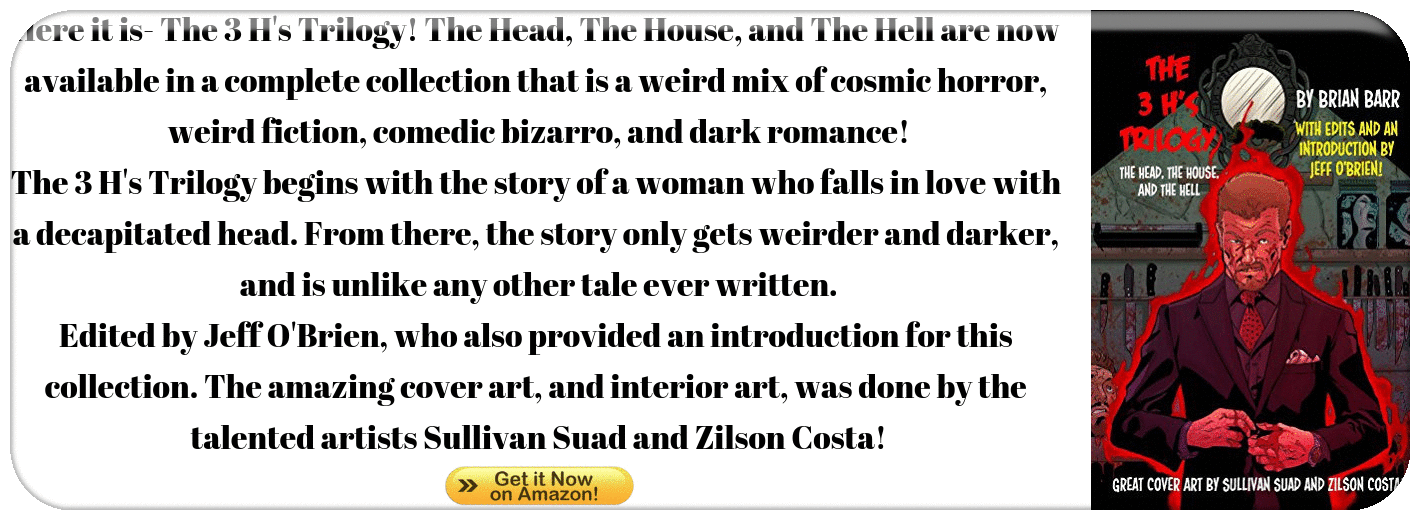    Carmilla Voiez is a proudly bisexual and mildly autistic introvert who finds writing much easier than verbal communication. A life long Goth, living with two kids, two cats and a poet by the sea. She is passionate about horror, the alt scene, intersectional feminism, art, nature and animals. When not writing, she gets paid to hang out in a stately home and entertain tourists. Carmilla grew up on a varied diet of horror. Her earliest influences as a teenage reader were Graham Masterton, Brian Lumley and Clive Barker mixed with the romance of Hammer Horror and the visceral violence of the first wave of video nasties. Fascinated by the Goth aesthetic and enchanted by threnodies of eighties Goth and post-punk music she evolved into the creature of darkness we find today. Her books are both extraordinarily personal and universally challenging. As Jef Withonef of Houston Press once said - "You do not read her books, you survive them." Carmilla’s bibliography includes Starblood (Vamptasy Publishing, Dec 2018), Starblood the graphic novel, Psychonaut the graphic novel, The Ballerina and the Revolutionary, Broken Mirror and Other Morbid Tales. Her work has been included in Zombie Punks Fuck Off (Clash Books), Slice Girls (Stitched Smile), and Another Beautiful Nightmare (Vamptasy). Her website and blog can be found at www.carmillavoiez.com Could you tell the readers a little bit about yourself? My name is Carmilla Voiez. I’m openly bisexual and tend to write about bisexual characters in my stories. I live in Scotland and am a life-time Goth. One of the questions of my life has been how I fit into a binary gender. The short answer is that I don’t and I doubt many people do without some effort. That said I identify more-or-less as cis-female with wriggle room, and am currently dating a gender-fluid partner. I’ve been writing (mostly horror) since 2009, although I did have some poetry (no please don’t look it up) published when I was a teenager in Goth zines. My talents definitely lie in prose, believe me. I have a series of novels – Starblood, Psychonaut, Black Sun and Ribbons that follow the stories of a group of Goths based in Bristol, England (the town where I grew up). I have an urban fantasy novel with a queer protagonist – The Ballerina and the Revolutionary. And a collection of short stories – Broken Mirror and Other Morbid Tales. My stories have been included in Zombie Punks Fuck Off, Another Beautiful Nightmare, Slice Girls and Siren’s Call Magazine. Why horror? What is appeal of the genre to you as both a fan and as a writer? When you grow up different to everyone around you it is easier sometimes to walk a different path. I’ve been obsessed with magic, the Goth culture, and supernatural beings for most of my life. I find comfort in the horror genre for a number of reasons. I am highly empathic and I tend to internalise the pain of others, even those I have not met. Politics and current affairs are more horrific to me than anything I have read within the horror genre. Horror stories are small. The decisions made in them are rarely as wide reaching as even what mobile phone we buy. As such the horror can be managed and understood, survived. At the same time, as a writer, it allows me to address the big questions on a small level, in microcosm, which allows the reader to experience and understand the dilemma without feeling overwhelmed. As LBGTQ+ fan and writer of horror, how did you first becOme immersed in the genre and found that representation that you could identify was few and far between? The only horror/fantasy writer I read as I grew up who looked at a wide spectrum of gender and sexuality was Clive Barker. I consumed everything I could of his stories and I am sure they have influenced my own work. Outwith Barker it is woeful how underrepresented bisexual characters are. I now the reference is barely horror, but even where bisexual characters are a part of a story e.g. Willow in Buffy the Vampire Slayer, their bisexuality is erased and they are only shown as lesbian or straight depending on their current partner. When trans is shown in horror it is frequently associated with mental illness and danger. I desperately wanted to see more positive representations of diverse sexuality and gender expression in the genre. I have tried to show these in my own work and I do believe that indie horror is becoming more representative. How did you discover authors that wrote about characters that you could relate to? Finding non-feminine female characters and bisexual characters is an ongoing challenge. I jump on every recommendation I receive. Fantasy seems to deliver more variety and I love the books of Rosie Garland, Octavia Butler, Storm Constantine and Natsuo Kirino. Other than the horror genre, what else has been a major influence on your writing? Weird Tales, like those of Thomas Ligotti and Haruki Murakami, Magical Realism and Dark Fantasy. But I read across genres and am probably as influenced by Contemporary Literature. The term horror, especially when applied to fiction always carries such heavy connotations. What’s your feeling on the term “horror” and what do you think we can do to break past these assumptions? Horror is as wide a genre as fantasy or sci-fi, perhaps wider. Horror can be extreme violence (Splatterpunk) or a gentle sense of unease (Ghost Stories). We all have a dark side. Most might try to hide it, but it provides a great subject for literature. I suspect the problem might be that people who write horror mixed with other genres e.g. with elements of crime will call their work Crime or Thriller to avoid the negative assumptions that Horror evokes. In this way much of the variety in horror is obscured. A lot of good horror movements have arisen as a direct result of the socio/political climate, considering the current state of the world where do you see horror going in the next few years? Apocalyptic horror. Yes we’ve been on the precipice of disaster before, but the level of threat vs the willful denial of that threat feels unprecedented. What are the books and films that helped to define you as an author? That’s impossible to answer fully so horror wise I think To Wake the Dead by Ramsey Campbell and The Books of Blood by Clive Barker were both important to me and encouraged me to look into magic and psychology. The Wasp Factory by Iain Banks and On Beauty (and other work) by Zadie Smith influenced my style. On Writing by Stephen King influenced by process, as did studying with the Open University. I am not certain how influenced I have been by particular films, but I enjoy surrealism and visual language as encapsulated in the better films by Dario Argento and those of David Lynch. In recent years there has been a slow but gradual diversification within the genre, which new LBGTQ+ writers do you think we should be paying attention to? Sumiko Saulson, Lily Luchesi, Christopher Rice, Jewelle L Gomez, Matt Converse, Emma Johnson How would you describe your writing style? Frequently trippy, bisexual, magical, anarchist splattergoth. Are there any reviews of your work, positive or negative that have stayed with you? I’ve been accused of treating male protagonists like dogs. I cannot entirely agree with that criticism but my stories are told via a female lens. I’ve also been told that my work could either be the result of genius or madness. I think that’s my favourite. What aspects of writing to do you find the most difficult? Starting. Getting the initial idea that the story will revolve around. I know many authors would say editing, but I love that part. Are there any subjects that you would never write about? Not if I could find a way to cover them sympathetically. Writing, is not a static process, how have you developed as a writer over the years? My writing has become tighter as I’ve matured. What is the best piece of advice you ever received with regards to your writing? Keep writing and worry about the quality later. Getting your worked noticed is one of the hardest things for a writer to achieve, how have you attempted to break through the barriers that are so often in place against LBGTQ+ writers? I don’t think I have done that yet. Many CIS white male authors use LGBTQ+ characters in their works, what’s the mistake that they make when trying to portray these characters? Anyone who uses a stereotype as a character will fail to engage the reader. I don’t think that straight people can’t write queer characters, just like I don’t think women can’t write men, or vice versa. But a deep understanding of the character is always needed otherwise the book will be terrible. Moving on to getting your work read by unwashed masses, what do you think is the biggest misconception about LGBTQ+ fiction? That it’s going to be preachy-social-justice stuff when in actual fact you are just reading a story where one or more of the characters comes from a different background and has different experiences of the world. There are as number of presses dedicated to LGBTQ+ fiction, do you view these as a good thing, or do you think they help to perpetuate the ongoing exclusion from mainstream presses? I think they are a great thing. The only thing that will perpetuate the ongoing exclusion of the mainstream presses is if the agents/publishers/editors choose not to publish a book with LGBTQ+ characters. I would argue that most mainstream presses would sooner sign LGBTQ+ books than Horror books. And here is the million dollar question do you agree with movements like this and things such as Women in Horror Month? If so how would you like to see sites such as Ginger Nuts of Horror tackle diversity? Absolutely. I am always looking for new voices as a reader and new readers as a writer. Following the same pattern of existing movements makes sense and will allow for a greater reach. So Women in Horror in February makes sense as the hashtags will be active. Maybe include disability, translated work, and work by people of colour in these events? The most common phrase you hear when people object to active movements to encourage all forms of diversity is “I don’t care about the sexuality, gender, color etc etc of the writer I only care about good stories” what would you like to say to these people? You can have both. When you can read about people who aren’t like you, who think differently and have different experiences, why would you choose not to? For many writers, the characters they write become like children, who is your favorite child, and who is your least favorite to write for and why? I love and hate all my children. Freya from Starblood is my current favourite because she behaves so unexpectedly and I enjoy torturing the poor woman. What piece of your own work are you most proud of? Tricky question. I prefer my longer pieces to my short stories. I do love the Starblood series. For those who haven’t read any of your books, which of your books do you think best represents your work and why? Starblood – it includes my obsessions about magic and sexuality and also the personal struggles of being female while negotiating a place in the world. Do you have a favorite line or passage from your work, and would you like to share it with us? Satori does not want to step towards her. She is Star, but she is more and less than that. She is a dark goddess, mother to a demon child, terrifying in aspect, but at the same time she is destroyed, ravaged and broken. Yet he knows these things are surface. He feels a force behind them, brightness and strength. It frightens him. Can you tell us about your last book, and can you tell us about what you are working on next? Most recently I had a short story called Eat the Rich published in a collection called Zombie Punks Fuck Off. I am working on a fourth novel in the Starblood series and a third graphic novel, based on Black Sun. What was the last great book you read, and what was the last book that disappointed you? I am currently reading a Compendium of the Weird: 750,000 words of short stories in chronological order. It’s wonderful and it might keep me busy til Christmas. The last book that disappointed me was Balzac’s Cousin Bette. There was no characterisation at all and the plot belonged in a bad soap opera. What's the one question you wish you would get asked but never do? And what would be the answer? Can I make a television series from Starblood? The answer would probably be yes. https://www.facebook.com/Author.Carmilla.Voiez/ https://twitter.com/carmillavoiez https://www.pinterest.co.uk/carmillav/starblood-the-graphic-novel/ https://www.quora.com/profile/Carmilla-Voiez# https://www.goodreads.com/author/show/4893389.Carmilla_Voiez https://www.amazon.com/Carmilla-Voiez/e/B00AMZKZ5I https://www.amazon.co.uk/Carmilla-Voiez/e/B00AMZKZ5I/ 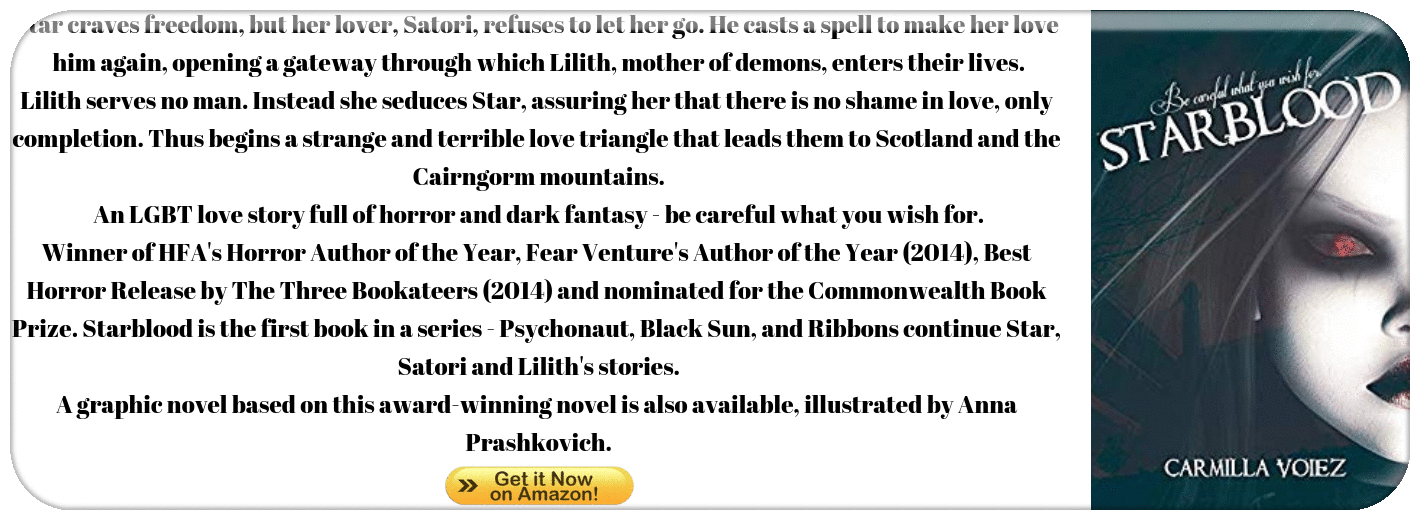    Lou Yardley is an Office Gremlin by day and an author by night (it’s the best time, really, as it’s when all the monsters come out to play). “The Other’s Voice” (published in 2016) was her first novel and she has discovered that this whole “writing thing” is quite addictive. Her aim is to write at least one full length novel each year, as well as publishing exclusive works on her Patreon page. She released “Hellhound” onto the world in April 2018. She currently lives with her partner Mark, and their eight cats in Greater London. When she’s not performing spreadsheet alchemy in her day job, Lou likes playing the banjo (when she remembers to!), reading, listening to the kind of metal where the vocalists growl at you, and watching B-movies. Could you tell the readers a little bit about yourself? Sure, I’m Lou and I’m a caffeine fiend from somewhere in South London (or Surrey, if I’m trying to be posh). I live with Mark (my other half and resident “swearologist”) and our army of cats. Books, metal (the music, not the material… although I have nothing against that) and horror make me happy. I’ve been self-publishing since 2016 and I love it immensely. The ability to share my weird little stories with people at my own pace and in my own way is amazing. What do you like to do when you're not writing? Like most writery folk, I enjoy reading and I consume as many books as I can. I also love to watch B-Movies of the horror variety. Or, in some cases, “Z-Movies”. Basically, I tend to gravitate to the kinds of films that others leave well alone. I love the fact that ANYTHING can happen in a B-Movie. And, even if it’s a “bad” one, it’s never time wasted. You can fall into “so bad it’s good” territory very easily. I’m also learning to play the banjo, but I have to admit that I haven’t picked it up in a few months, and I like to dabble in the world of Warhammer (although, again I haven’t built, painted or played anything for ages!). I can also be found at metal gigs and festivals where I like to bang my head. Other than the horror genre, what else has been a major influence on your writing? I read a lot of fantasy stuff, so I imagine that has an impact on how I write. I really enjoy reading authors like George RR Martin, Gail Z Martin and Ben Galley. I’ve also got a lot of love for pretty much any film that came out in the 80s and 90s. The horror movies are probably obvious influences, but I also think there are nods to “Flight of the Navigator”, “ET” and “The Goonies” in my work. Oh, and “The Neverending Story” - both the film and book. Both versions of that story had a HUGE impact on me. The term horror, especially when applied to fiction always carries such heavy connotations. What’s your feeling on the term “horror” and what do you think we can do to break past these assumptions? Horror, for me, is an amazing thing. If I read that a film or a book falls into the horror genre, I’ve got an idea that it will weird me out in some way. Perhaps there will be scares. Maybe there will be gore (I generally hope so!). Maybe there are monsters. All of these things are great because they are pure escapism. Horror is a vast beast that can range from the spooky to the absolutely gore-tastic. It can be a whisper of a breeze on the back of your neck while you sit in a windowless room, or it can be multiple stab wounds to the gut by a masked killer (who may or may not have supernatural powers). Horror is a beautiful thing and I don’t think I need to break past this assumption at all. Sure, there are those out there who may view horror as a negative thing. But these are usually people who have never read a horror book or watched a horror movie and have no interest in doing so. Therefore, their opinions don’t matter much to me. Maybe that’s the wrong attitude, but hey… those are my thoughts on the subject. A lot of good horror movements have arisen as a direct result of the socio/political climate, considering the current state of the world where do you see horror going in the next few years? The real world is absolutely terrifying at the moment. I don’t think there’s much that we can write that will out-scare real-world events. With that in mind, I imagine that we’re going to see a lot of dystopian (albeit frighteningly realistic) stories popping up. Even more so than we have now. From a personal point of view, I’m hoping that we get to see more creature features and more over-the-top ridiculousness. If the world’s falling apart, I want some escapism. I want Bigfoot, dammit. What are the books and films that helped to define you as an author? Stephen King’s “‘Salem’s Lot” has been a big influence on me. Actually, most things by Mr King have been a terrific influence on me. Also, movies like “The Thing”, “Evil Dead” and, more recently, “The Void” have had a dramatic effect on how I interpret my twisted little world. Although, with that said, I wouldn’t necessarily say that they’ve defined me. I’m still working on that part. I think I need to write some more stories and explore my writing voice before I can define myself and my work properly. I think it’s a slow process, but I’ll get there. What new and upcoming authors do you think we should take notice of? I don’t think they’re necessarily ‘new’, but I’ve really enjoyed the stuff I’ve recently read from Toneye Eyenot, P. Blakey-Novis, Alan Baxter, Rich Hawkins, Amy Cross, Dave Jeffery, Ania Ahlborn and Duncan Ralston. How would you describe your writing style? Chaotic. I tend to vomit words onto the page and hope for the best! I like to mix suspense with gore and humour. I think humour and horror go together fantastically well. How many times have you watched a horror film and laughed when someone experienced a violent and bloody end? I think the things that make us laugh and the things that scare us trigger similar things in the brain. I don’t go for big jokes, but I have a wry sense of humour that often creeps in. It’s not really intentional, but it’s there. Are there any reviews of your work, positive or negative that have stayed with you? I’ve managed to avoid the negative reviews so far. I’m sure they’re out there, but I’ve not read them. I have, however, read quite a few positive ones - which is great for my ego! There have been a few that have really stayed with me, but one, in particular, was posted on OldStyleTales.com. It’s pretty lengthy, but the part that makes me smile (and makes me want to keep writing) is: “The best part of reading Lou Yardley’s excellent werewolf novel, “Hellhound,” is a very basic, very underrated, very underappreciated thing: it’s the writing. Horror writers often excel at creating eerie atmosphere, summoning terror, or what Stephen King called “the gross-out,” and while Yardley is gifted in all three respects, her work has something else that many supernatural novels lack: the ability to write a good story. “Hellhound” is a guessing game that keeps its readers in suspense and teases with a deft skill reminiscent of the corkscrew plots of Ambrose Bierce: like so many of his ghost stories and psychological thrillers, this is a tale that merits a second and then a third read.” What aspects of writing to do you find the most difficult? Finding the time… or not beating myself up when I can’t find it. When I’m working on a project, I try to write between 1,000 and 3,000 words per day. If I reach that target, I’m a happy bunny and all's right with the world. If I miss it, then I’m like the Grouch from Sesame Street. On those days, I’ll sometimes just write a sentence or a short paragraph, just so that I can say that I’ve written “something”. Oh, and names. Names are hard. More on that in a bit! Is there one subject you would never write about as an author? Probably. There are a number of subjects that need to be treated delicately and with respect. I won’t name them here, but I’m sure you can work out what they are. Other than that, I’ll never write about sparkly vampires. How important are names to you in your books? Do you choose the names based on liking the way it sounds or the meaning? Ugh, names! For me, they’re one of the hardest parts of writing. Choosing the right one is a minefield! I like simple names (mainly because I’m going to be writing them a lot if they’re a main character), but the issue with that is that I usually realise that I know someone with that name. I always worry that they’re going to think that I don’t like them - especially if I give their namesake a gory and violent death! Writing, is not a static process, how have you developed as a writer over the years? I never used to plan, but I have started doing that now. I’m currently working on a novel that I have a very strong plan for (although it’s still quite ‘open’ so that I can play) and it’s made the whole process so much easier. I know where I’m going and I just have fun getting there. What tools do you feel are must-haves for writers? Ideas, something to write with/on and coffee/tea/beverage of your choice. There are loads of digital tools out there and fancy gadgets, but the things I mentioned are the things that you really need. The rest are just “nice to haves”. What is the best piece of advice you ever received with regards to your writing? To write the book that you want to read. Getting your work noticed is one of the hardest things for a writer to achieve, how have you tried to approach this subject? Mainly by stumbling around in the dark! I haven’t found THE thing that works just yet, but getting to know other authors and fans of the genre that you’re writing in is a big help. Whether it’s online or in person, networking is key. I’ve tried a variety of free and paid services for authors and I’ve had varying success across the board. One thing I would note is that what works well for one author, may not work so well for another, so don’t panic if things don’t always go to plan. To many writers, the characters they write become like children, who is your favourite child, and who is your least favourite to write for and why? I’ll start with my least favourite and that’s Mia from “The Other’s Voice”. This isn’t because she’s a bad character, it’s just because of where I was when I wrote her. Back then (in 2015-2016), I had no idea what I was doing and I think I made a lot of mistakes. I think if I was to rewrite that book now, I could make her more real and give her a bit more depth. I’m going to cheat now and say that I have four favourites. The first is Peter from “Hellhound” because he was so much fun to write. He was neither good nor bad, he just did what he needed to do. I also love Lexi from “When the Sun Sets” because she’s not a badass heroine type, but she proves that even the most ‘average’ of us have the capacity to survive (or at least try to!). The other two are from a book that I’m writing at the moment and their names are Autumn and Wilfred. I won’t say any more about them at the moment, but I’m hoping that people are going to like them as much as I do. What piece of your own work are you most proud of? At the moment, I’d have to say “Hellhound” because of the number of amazing people that it’s introduced me to. And are there any that you would like to forget about? Yes… but I’m not saying which… haha! For those who haven’t read any of your books, which of your books do you think best represents your work and why? “Hellhound” and “When the Sun Sets” were both published this year, so I think they’re a good representation of where I’m at. They both look at the horror genre in very different ways, but I think they both have my signature style. Can you tell us about your last book, and can you tell us about what you are working on next? My most recent novel was “Hellhound” which is my take on the werewolf legend. I think it’s great for those folks like me who love a creature feature! I’ve also published a couple of short stories this year as well. “When the Sun Sets” looks at what might happen if the sun went down and never came back up. What would happen to society? What else might come out of the shadows? There’s also “The Forest” parts 1 and 2, which fall more into dark fantasy territory (although there’s a bit of horror in there too). This tells the story of two children who go on a bizarre adventure and explores the confusing consequences of that adventure. I’m currently working on the first draft of a novel called “Rise of the Carnivores”. It’s my ode to the B-Movie in book form. As I mentioned in a previous answer, anything can happen in a B-Movie, just like anything can happen in this book. It’s a mixture of horror, dark fantasy and science fiction and it’s deliciously over-the-top. I’ve had so much fun writing it so far! If you could erase one horror cliché what would be your choice? I don’t know… I quite like the clichés… Is that wrong? I know that a lot of people have issues with the idea of the “final girl” in horror movies and books, but I’ve always been drawn to that. The idea of a main, female character surviving until the end is kinda empowering for me. Even if she is hitching a ride in a car/truck in the middle of nowhere, while covered in blood that may or may not belong to her. The fact is that she made it, and that makes her mighty. As long as clichés are used in fun and interesting ways, I think we’re good. What was the last great book you read, and what was the last book that disappointed you? “Devouring Dark” by Alan Baxter was fantastic and I can’t recommend it enough! There’s also “The Shuddering” by Ania Ahlborn which was bloody brilliant (and the imagery from it has stayed with me for weeks) and “Maniac Gods” by Rich Hawkins was probably one of my favourite books of 2018. I can’t really think of any books that have disappointed me. I can usually find some merit in most things, whether it’s a book, film or album. Maybe I’m just really good at picking out things that I’m going to like! What's the one question you wish you would get asked but never do? And what would be the answer? The question is: What is your favourite dinosaur? And my answer would be: It used to be the stegosaurus, but I’ve got a lot of love for the Carnotaurus at the moment. I also love the Mosasaurus, but I don’t think that’s technically a dinosaur. For more information and to follow Lou on social media please follow the links below Website: www.louyardley.com Twitter: www.twitter.com/louciferspeaks Facebook: www.facebook.com/louyardley Instagram: www.instagram.com/louciferspeaks Amazon: https://www.amazon.co.uk/Lou-Yardley/e/B01CKBS5S0/ BigCartel: www.louyardley.bigcartel.com 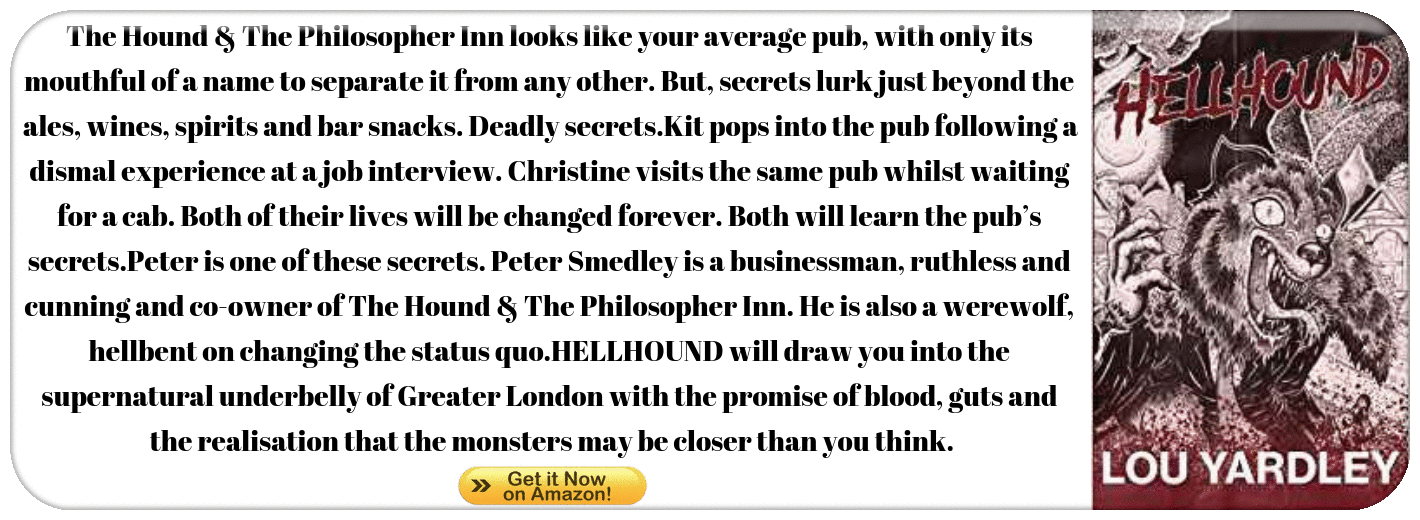 
 Scott Nicholson is the author of more than 30 horror, psychological, and post-apocalyptic thrillers. He’s sold more than a million books worldwide and been published in ten languages. His first novel The Red Church was a Mystery Guild alternate selection and a Stoker Award finalist. His website is AuthorScottNicholson.com. Could you tell the readers a little bit about yourself? I’m just your basic lazy dreamer type who’s always been making up stuff. I started with crayons and went into writing, art, and music, and never grew up. I’ve had a lifelong aversion to reality. What do you like to do when you're not writing? I tend an organic garden and I fish a lot. I also still play some guitar almost every day, and of course I’m always reading one or two books at a time. Other than the horror genre, what else has been a major influence on your writing? I like good, dark, twisting thrillers like Dennis Lehane’s and Gillian Flynn’s, and I love dystopian stuff like Fahrenheit 451 and 1984. I’d guess Dr. Seuss was a huge influence, with his carefree imagination, wordplay, and subtle messaging. The term horror, especially when applied to fiction always carries such heavy connotations. What’s your feeling on the term “horror” and what do you think we can do to break past these assumptions? I believe the primary confusion is the term “horror” used as a cinema genre, which is often slasher or torture porn, which is only a very minor fiction subgenre. The typical normie lumps it all together, but really, who cares what normies think? Horror doesn’t give a shit about anyone’s opinions. It just is. A lot of good horror movements have arisen as a direct result of the socio/political climate, considering the current state of the world where do you see horror going in the next few years? Humans are terrible are making predictions. People usually point to the ‘80’s and the Me-First Reagan Era and say “Horror thrived when times were dark and evil flourished.” But maybe, just maybe, it had everything to do with the rise of Stephen King and nothing at all to do with the times. But voices appear when the message is needed, and you can’t really write outside the times you are in, no matter how hard you try. What are the books and films that helped to define you as an author? The Lorax made me an environmentalist, The Star-Bellied Sneetches taught me the folly of racism, and Shirley Jackson’s “The Lottery” taught me you could have a really dark story that was also beautiful. I remember reading Kurt Vonnegut’s short story “Harrison Bergeron” as a young teen and I was incensed at its disregard for reality and the use of a name like “Diana Moon Glampers,” as well as its profound satire. Within a couple of years I was reading all of his books. That and Hemingway and Richard Brautigan and John Steinbeck, and then Stephen King came along, so I had an odd mix of influences. What new and upcoming authors do you think we should take notice off? I don’t read many new authors and don’t want to leave anyone out, although I am thrilled the indie and digital era has allowed so many people to get their voices out there. I’m still way behind on my classics reading. For example, right now I’m reading Straub’s “Ghost Story.” I still have hundreds of old paperbacks lying around to catch up on. How would you describe your writing style? I’m the least qualified person to have an opinion about that. Some people have described me as easily readable, kind of commercial-grade fiction; others say I have weird humor and that I am dark and cynical. I like to think I have a strange spice I put in there that you can only get from me. Whether that’s to your taste or not is a different question! I can say that I do commit to the craft and love choosing the words, the musicality of a sentence, and power of a nice turn of phrase or image. Are there any reviews of your work, positive or negative that have stayed with you? I learned early on to not read reviews, because they say more about the reviewer than the work and it really doesn’t matter at all in the process of creation. It’s not like I’m going to rewrite the book because Becky in Madison doesn’t like it. Plus I feel ignoring reviews respects people’s right to an opinion without mine getting in the way. I do remember one in Fangoria for my second novel that went something like “Sets the record for small-town Southern stereotypes.” What the reviewer couldn’t know was that all those characters were based on my relatives! What aspects of writing to do you find the most difficult? The longevity of it. It’s a lifetime commitment, and the work is never done. Which, of course, is also a blessing. And the necessity of making money, if you’re a professional—that adds an extra level of complexity and invades the creative process a bit whether you want it to or not. Is there one subject you would never write about as an author? Well, not so far. I’ve done short stories where I crossed some taboo lines—sexual violence against a minor (although by another minor), the killing of pets, implied incest, plenty of racist characters. Each case had plot motivation behind it, and I’ve always used short stories to experiment with subject matter and voice. In retrospect, I don’t know if those stories need to survive in published form, but I don’t regret writing them. As a reader, I can endure a lot as long as it’s not purely gratuitous. How important are names to you in your books? Do you choose the names based on liking the way it sounds or the meaning? I hoard names. I love names. I collect them from everywhere—cemeteries, phone books, street signs, old history books, and even random lists. Especially where I live, in the remote Appalachian Mountains, the names really add color to the area. I just try not to use names that sound like the name of a made-up character like you see in some bad mainstream books. Writing, is not a static process, how have you developed as a writer over the years? After more than 20 years, I’ve definitely burned off a little of the passion, but I hope I’ve made up for it with wisdom, experience, and craft. I can still sit down and write 15 pages a day for a stretch if necessary, but early on I could write like water flowing. Now it’s more like I’m pushing water uphill. I think that’s true of most artists in any field. Never grow old, kids. What tools do you feel are must-haves for writers? Strunk & White’s Elements of Style is a basic one. A good thesaurus is cool. A big, broad library helps. And learn basic grammar. I’ve always said, “If you can write a sentence, you can write a book.” Sadly, most people never learn to care about sentences. What is the best piece of advice you ever received with regards to your writing? When I went back to college to get a degree, I took some writing classes. You’d get the usual brainless critiques from the others, like “I don’t really get it” or “I think Bobby should be taller.” My fiction teacher, a Vietnam War refugee, wrote on one of my stories, “You write with feeling. I say go for it.” I understood that to mean committing to the craft every day. Later on, when I was first getting published, Bentley Little advised, “Keep your head down and write.” Getting your worked noticed is one of the hardest things for a writer to achieve, how have you tried to approach this subject? I’ve always been a tireless promoter, because not only do I believe in my work, I know that ultimately no one will ever care more about it than I do. That doesn’t mean standing up naked at a horror convention and screaming that I’m the next Stephen King. It means finding an audience one reader at a time. Plus, of course, now that it’s a job, it’s not optional. Especially as primarily an indie writer now, my job is not to write books, my job is to sell books. That starts with writing well and creating your best product/art, and then marketing it to your audience. It’s simple, but it’s not easy. To many writers, the characters they write become like children, who is your favorite child, and who is your least favorite to write for and why? I tend to love the villains. In a way, all characters are a biographical extension of the author, often exaggerated to ludicrous extremes. That’s why I love using shifting third-person limited viewpoint so much—I can get in the heads of many different people. I don’t fall in love with my heroes and heroines. I will say this: I’ve never written a character that I couldn’t kill. What piece of your own work are you most proud of? Probably The Red Church, which is a little sad because it was my first published novel, although the fourth one I wrote. It feels a little timeless, because it didn’t fit in with the horror being published at that time and doesn’t have a heavy dose of cultural references, as if the story exists in a parallel world. My short story “The Vampire Shortstop” I wrote basically in a day based on awakening from a dream with that title in my head. It won the Writers of the Future award. It’s the only piece of my work I ever re-read, every five years or so, and it always makes me cry a little at the end. And are there any that you would like to forget about? Not on the writing side of things. I regret nothing except the books that failed to find an audience—that effort could have been better spent on something people would respond to. But again, that’s about having to pay bills. In a perfect world with free health care and basic income, I’d write the craziest stuff I could imagine. I often find myself going “Hmm, I bet the conventional audience won’t like this” and then I grin and do it anyway. For those who haven’t read any of your books, which of your books do you think best represents your work and why? The Red Church, because I wasn’t published then and I wasn’t clogged up with “Scott Nicholson the author” bullshit. Can you tell us about your last book, and can you tell us about what you are working on next? The first book in the Arize series, Resurrection, just came out. Basically the zombie apocalypse as Biblical prophecy. The second book, Revelation, will be out after Christmas. If you could erase one horror cliché what would be your choice? Horror writers as book characters. What was the last great book you read, and what was the last book that disappointed you? Swan Song by Robert McCammon. (See, I told you I was behind the times!) I can’t remember the last disappointment, since I tend to give up on books pretty fast if they don’t catch my interest early on. What's the one question you wish you would get asked but never do? And what would be the answer? “Why don’t you stop writing and go away?” To which I’d answer. “Gladly. All it will cost you is a million bucks.” Website : http://authorscottnicholson.com Facebook: http://www.facebook.com/AuthorScottNicholson Twitter: http://www.twitter.com/eScottNicholson Amazon: https://www.amazon.com/Scott-Nicholson/e/B001HCX30O  
  K.B. Goddard was born and raised in rural Derbyshire. She is a writer of traditional ghost stories and supernatural fiction. Her horror and folklore articles have appeared on The Spooky Isles, and her short stories have been produced as dramatic readings for the Wicked Library podcast. The episode of the Wicked Library featuring her story "Shadows" won the 2017 Parsec Award for Best Speculative Fiction Story: Small Cast (Short Form). She also penned the opening episode of season 2 of The Lift podcast "The Lost Library", Which was a finalist in the same category. Her work has appeared on Shadows at the Door and she was honoured to be one of the thirteen writers chosen to contribute to their first anthology. She is also one of the writers featured in The Lift's first written anthology. Could you tell the readers a little bit about yourself? I think I’ve always known that I wanted to do something related to the arts. When I was 16 I went to college to study Performing Arts, which was a strange choice because I was painfully shy; really it was painful. In some ways it helped to build my confidence, or at least helped me to wear a mask that didn’t show the inner panic. I think I was drawn to the idea of pretending to be someone else for a while: it was more interesting than being me, after all. But it was obvious that I didn’t have the nerve of the stomach for all the travelling and auditioning that acting involves. It took me a long time before I got around to really trying my hand at writing, although I had dabbled and had it in the back of my mind for a while. When I eventually got stuck in I found it a much better fit than acting. Writing is kind of like acting on paper, only you get to be inside the head of all of the characters. Since then I’ve been lucky enough to be featured in anthologies and podcasts. What do you like to do when you're not writing? Until recently I was studying with the Open University and that occupied a lot of my time. For the last year or so I have been crocheting, which is not very in keeping with the horror vibe is it? But it’s very therapeutic. Other than the horror genre, what else has been a major influence on your writing? I’ve always been interested in myths and folklore. Some of my stories do have more of a mythical or folklore feel than a horror feel; there’s always a supernatural element though. Classic detective fiction holds an appeal to me too. I guess it’s something about trying to get to the bottom of a mystery to understand something unknown that appeals to me in all these things. The term horror, especially when applied to fiction always carries such heavy connotations. What’s your feeling on the term “horror” and what do you think we can do to break past these assumptions? I am often in two minds about whether to promote myself as a horror writer for this very reason. Say horror to people nowadays and they will usually think of blood, guts and gore, the slasher movies etc. It is as if the ghost story or traditional supernatural tale has been booted out of the genre altogether. I don’t know, perhaps it should have its own category but book shops and retailers still class it as a subgenre of horror. Personally, I have never really been in to the whole blood and guts type of horror. It has it’s place and its fans and that’s fine but mostly it’s just not for me. I have written stories with some physical violence but it always has a purpose; the violence itself isn’t the driving force of the story. I prefer the subtle chill, the air of slight, creeping unease. I’d like to see this element of the horror genre make a definite comeback. I think if we are going to show people that the horror genre is not all about the gore then we need to show them the alternatives, that horror can have a broad and varied meaning. A lot of good horror movements have arisen as a direct result of the socio/political climate, considering the current state of the world where do you see horror going in the next few years? The increasing influence of technology will probably become more prevalent. I can see a technology-fuelled, dystopian type horror taking hold. Or people may become so disillusioned with the modern world that horror goes the opposite way and goes back to its supernatural roots as a reaction against modernity. Who knows? What are the books and films that helped to define you as an author? The ghost stories of M. R. James were a big influence on me, especially Oh, Whistle And I’ll Come To You, My Lad. The Sherlock Holmes stories also influenced me because it was through them that I found that I really loved the Victorian style of writing that inspired my stories; it was more formal but also more elegant in many ways. I just loved the way the language flowed. I know that style isn’t a hit with a lot of people now but it fascinated me as a 14 year old reading them for the first time. It’s perhaps because I was always fascinated by history too when I was growing up. The historical element added to the escapism, which is something I think I needed, and I think that’s something the best fiction does, takes you out of yourself for a while. I don’t think I’ve ever been heavily influenced by films. I don’t think I have a very visually-orientated imagination, although, my first Victorian ghost story was inspired in part by a film I saw once years ago, called The Asphyx, in which a scientist experimented with ways of storing the soul to prevent death. What new and upcoming authors do you think we should take notice off? I must confess I’m not very good at keeping up with “the new”. By the time I read a book it’s probably been out for years. Ironically, while studying creative writing I had no time for reading anything other than my course materials! So, I have a lot of catching up to do. That said the other year I took part in an anthology project for Shadows at the Door and through that I met a lot of great authors, some more established than others. Likewise, podcasts such as The Wicked Library and The Lift are always showcasing upcoming authors so I’d say many of the authors contributing to those three projects are worth checking out. They are real melting pots for new talent. How would you describe your writing style? Old-fashioned or traditional. At the moment I am mostly writing Victorian-style ghost stories and supernatural tales. Some are traditionally spooky, some are just weird. I write them in a mock-Victorian, but hopefully still very readable, style. Are there any reviews of your work, positive or negative that have stayed with you? I try not to get hung up on negative reviews, which isn’t always easy. Luckily most people who have reviewed my work have been pretty gentle with me. I did get a 2 star rating once with no review and that was quite deflating because there was no way of knowing what went wrong: did my book fail totally or did I just not tick the boxes they were looking for? You can never please everyone and I am aware that I am writing in quite a niche style in an often overlooked subgenre. One reviewer did once suggest I might be a time traveller, which was a lovely way of saying that I had achieved the style I was going for. What aspects of writing to do you find the most difficult? Coming up with new stories ideas and plots. Is there one subject you would never write about as an author? Well, never say never, but I can’t see me ever writing full on slasher fiction or erotic scenes. How important are names to you in your books? Do you choose the names based on liking the way it sounds or the meaning? Usually I choose them depending on how they sound and whether I feel like they suit my characters. They also need to be period appropriate for my Victorian stories. Writing, is not a static process, how have you developed as a writer over the years? Well, I feel like it’s still quite early days for me as I got off to a slow start and I’m quite a slow worker. I’ve been experimenting with different lengths of work: I wrote my first novella last year. Since then I’ve been studying and thinking in more detail about the use of the senses in creating the feel of a scene, which is hopefully something that will show through in my future work. Because I don’t think in a very visual way I want to explore the role of the other senses more to add depth to my work. After all. The best supernatural fiction is often about the unseen. What tools do you feel are must-haves for writers? It seems an obvious thing to say but primarily pen, paper and imagination. These days a computer is pretty essential, of course. Often, though, it can be easier to let your thoughts fly when writing by hand; you’re not so fixated on editing. You can always tweak it when you type it up. That way it hits the computer keyboard with the first edit done. I often like to draft an awkward scene by hand. I don’t know why but sometimes it feels more natural. With a pen and a notebook you can also easily write down a sudden spark of inspiration when it hits. What is the best piece of advice you ever received with regards to your writing? Don’t give up. Getting your work noticed is one of the hardest things for a writer to achieve, how have you tried to approach this subject? I use Facebook and Twitter. I used to keep a blog too, but I’m taking a break from that; it wasn’t really something I excelled at and never got much traffic. I have probably gained more notice via submitting stories to podcasts and articles to a horror and folkore website. I have Goodreads too but I’m not a natural at promotion! It is certainly a challenge. To many writers, the characters they write become like children, who is your favourite child, and who is your least favourite to write for and why? As most of my stories so far have been shorts, I haven’t had chance to really bond with many characters. The character of Algernon Hunter has recurred in a few stories so he’s an obvious one. I gave him a wife who I would like to do more with; she has psychic powers but struggles with them, so I think I could have fun developing her and seeing who she is once she’s in control of her gift. I think a character I wrote who was an internet troll was kind of nasty to write because he was just such a horrible person. Likewise, the husband in my novella was a creepy character. What piece of your own work are you most proud of? Probably a short story I wrote called Reflections on a Malady. It was my first Victorian ghost story and it’s still one of my favourites. And are there any that you would like to forget about? I could not possibly comment. For those who haven’t read any of your books, which of your books do you think best represents your work and why? Probably A Spirited Evening and Other Stories. It has one of my favourites in it. It was my first book and was written as a homage to the classic ghost story. I think it captures the feel of the old fashioned ghost story pretty well for the traditionalists out there. Do you have a favorite line or passage from your work, and would you like to share it with us? “She sighed and picked up her necklace from the dressing table and held it to her throat. The metal was cold against her skin, and she shivered as it touched her neck. The clasp was awkward, and she struggled for a few moments, becoming increasingly frustrated. She contemplated finding Maria or a maid to assist her. Suddenly her frustration gave way to terror. This time it was not the touch of metal that caused her to shiver but the touch of hands! Cold, invisible hands took the necklace from her and fastened the clasp. She sat motionless, too terrified even to scream, as she felt the phantom fingers move around her throat; she thought they meant to strangle her, but after a moment’s pressure they released their grip and moved downwards, coming to rest on her shoulders. She felt their evil caress and a sensation as of breath against her neck.” Can you tell us about your last book, and can you tell us about what you are working on next? My last book was a Victorian, gothic novella called The Girl With The Roses: A Tale From The Haunted Auctions. It is about a young woman who is married off to a rich widower. She finds herself isolated and surrounded by strange things and starts asking herself what happened to this man’s first wife. I’ve also just had a story published as part of The Lift’s first written anthology; there are definitely some horror elements in my tale. As for upcoming projects, I’m planning for a new collection of ghost stories. If you could erase one horror cliché what would be your choice? The reliance on physical violence and the idea that if someone isn’t brutally murdered or tortured it isn’t horror. What was the last great book you read, and what was the last book that disappointed you? I’ve just read Carnacki The Ghost Finder. I really enjoyed that, a nice mix of horror and mystery. Not a horror book but The Watchmaker of Filigree Street gave me a very slight feeling of disappointment. It had some interesting ideas but ultimately I felt the premise actually played a tiny role in the story and it just petered out and didn’t really go anywhere, which was a shame. Still, I enjoyed reading it. What's the one question you wish you would get asked but never do? And what would be the answer? Can we make your ghost stories into a series for Christmas on the BBC? My answer: Let’s talk! Please follow the links below for more information Twitter: www.twitter.com/kbgoddard Facebook: www.facebook.com/kbgoddard Goodreads: www.goodreads.com/author/show/8514985.K_B_Goddard Amazon author page: www.amazon.com/author/kbgoddard  
 Roger Keen is a writer, filmmaker and film critic with a special interest in surrealism, counter-culture and psychedelia. He has contributed to many award-winning programmes for the BBC, ITV and Channel 4, and his short stories, articles and reviews have appeared in numerous magazines and online. He is the author of the novelistic memoir The Mad Artist: Psychonautic Adventures in the 1970s and the psychological horror/crime thriller Literary Stalker. Visit him on: http://www.rogerkeen.com/ Could you tell the readers a little bit about yourself? I went to art college in the 1970s and was very involved in the counter-culture scene of that era. I particularly loved the Beat writers, Burroughs and Kerouac, and surrealist painters such as Dali and Magritte. I painted for a while and then took up photography and filmmaking, and after college I worked in TV, including the drama series Robin of Sherwood in the ’80s. I’ve always liked Gothic fiction and movies, and in the ’90s I started writing horror stories and got into the scene, as it was then. More recently I’ve been reviving those associations because Literary Stalker is a return to the horror/crime genre and also it’s ‘about’ the horror-writing world. What do you like to do when you're not writing? Watching films and TV and reading, naturally. I try to root out more obscure films and novels I’ve always meant to watch and read – and also classics – and when I finally get around to experiencing them it’s always rewarding. Also I like walking, sometimes in wild country such as the Lake District and the Alps, and occasionally I play golf and ski in winter. I’m a big fan of Indian food and West Country cider, usually in that order. Other than the horror genre, what else has been a major influence on your writing? I’m a particular fan of 20th century experimental writing. William Burroughs was a big early influence – because his work has elements of science fiction and horror as well as hard-boiled crime in the mix, and I liked that genre mash-up effect, imitated by many. Other similar writers would include Beckett, Borges and Nabokov. Also I’ve been a long-time fan of Kurt Vonnegut and Philip K. Dick in science fiction, and when it comes to crime, I like Patricia Highsmith, Thomas Harris and Ruth Rendell. The term horror, especially when applied to fiction always carries such heavy connotations. What’s your feeling on the term “horror” and what do you think we can do to break past these assumptions? I’ve always looked at the term “horror” in fiction in a broad sense, because you can find it in many places, outside the traditional boundaries of the genre and classic “Gothic” work. Shakespeare, for example, contains loads of horror, which has been used in horror films such as Theatre of Blood (which I pastiched in Literary Stalker); and you can see those elements in “literary” writers such as Dostoevsky and Maupassant. Contemporary authors such as Irvine Welsh and Ian McEwan have written great “horror” stories that would fit seamlessly into anthologies alongside the works of genre writers. So I think we shouldn’t get stuck with labeling work too much – that can sometimes be an advantage but also a disadvantage. A lot of good horror movements have arisen as a direct result of the socio/political climate, considering the current state of the world where do you see horror going in the next few years? New technology and media, and changing geopolitics have influenced horror a lot lately – reality TV, Facebook interaction, ubiquitous surveillance, found footage, you name it. I think we’ll get more horror that’s themed around the political polarization we’re seeing on social media, plus the threat of terrorism and breakdown in the social order. The rise of weaponised robots and similar tech will also figure. Whether this will spawn a whole new “movement” or not remains to be seen. What are the books and films that helped to define you as an author? In my youth I read novels like Burroughs’s Naked Lunch and Vonnegut’s Slaughterhouse 5, and I loved them because they were both hip and of the moment, and also they messed around with traditional narrative rules in a postmodern way. I have tried to emulate that principle in my writing, though not in quite the same fashion. When it comes to film, I’ve always loved the dark and weird, and so I’m a particular fan of the two Davids – Lynch and Cronenberg. Two films I saw in childhood really came to define my approach to writing. The first is the 1940s portmanteau chiller Dead of Night, because it’s about nightmares leaking into reality and also dark psychology – the ventriloquist being taken over by his dummy is an especially good example. The other film is The Wizard of Oz, which I saw in a cinema at the age of eight – exactly the right age – and it’s juxtaposition of worlds: real and fantastical, sepia and Technicolor, really set my imagination going. The same is true of Ray Harryhausen’s films, which I also saw in the cinema at an early age. What new and upcoming authors do you think we should take notice off? I have to confess that I’m perhaps not as familiar with the latest in new authors as I should be! When it comes to writers who’ve been around a few years now, then Joe Hill is an obvious one to mention. His early stories, such as ‘Best New Horror’, were both edgy and excellent, and he’s followed up that promise with his novels. Sarah Pinborough, who again is hardly new, has recently broken through to the bestseller lists with Behind Her Eyes, which is a clever newer kind of thriller, mixing crime with the borderline paranormal – I think we’ll see more of such subtle genre fusions in the future. How would you describe your writing style? Sort of ‘dark literary’ and also ‘metafictional’. I’ve been banging on lately about ‘metacrime’ and ‘metahorror’ in relation to Literary Stalker, because it’s that kind of a work – having novels-within-novels and narrator self-consciousness. I don’t know if that puts some people off, because they think it will be too obscurantist. Whatever tricks I use, I try to keep the pace and interest in the story going, otherwise there’s no point. Are there any reviews of your work, positive or negative that have stayed with you? Oh indeed – good reviews are lifeblood to the ‘struggling writer’! The Digital Fix critic Noel Megahey has reviewed both of my books very positively, showing a deep understanding and insight into what I’m trying to do, which is most heartening. I’ve also had positive reviews from established authors like Simon Clark, and upcoming crime writer Michael Mackenzie. It’s always good when people (especially writers) ‘get’ your work. A few don’t quite get it, of course, and I’ve had lukewarm reviews, but no real stinkers thankfully! What aspects of writing to do you find the most difficult? Staying focused and following through to finishing points, though I’m getting better in older age! In the past, my worst fault has been writing never-ending novels – in the sense of never finding a final form. I keep getting new ideas and moving the goalposts, though on the plus side the changes are doubtless improvements. I’d find it very difficult to be one of those book-a-year types of writers! Is there one subject you would never write about as an author? I can’t think of one in particular at the moment. In the past, I might have said ‘romance’, but there’s a kind of romance going on in Literary Stalker – though it’s a twisted, perverse, obsessional (and one-sided) romance, so I suppose that’s okay! How important are names to you in your books? Do you choose the names based on liking the way it sounds or the meaning? Names are very important, and I constantly study names with a view to using them in future – and I try out different combinations of Christian and surname. Names say so much about a character even before we get any description. Dickens was the master in that department. I tend to use shorter, more common names for narrators and viewpoint characters, and longer ones for other characters with some distinct quality I want to highlight. Liking the way it sounds and the meaning both figure in that. Writing, is not a static process, how have you developed as a writer over the years? I started off writing very autobiographically, which again came from the Beat authors. Burroughs’s early novels were autobiographical, as were Kerouac’s, and the two influenced each other. Then I tried to embroider my own life stories into ‘adventures’ – and my ‘novelistic memoir’ The Mad Artist revisits these two trends: firstly the real life facts and then the fictional artifice built on top. In the ’90s I got into the horror scene, partly because I was attracted to the dark, Gothic aspects, but also because it had a vibrant indie-press scene which was a gateway to publication. I did get a handful of stories published, but I moved away from that as ideas got scarcer. I also wrote a lot of non-fiction – reviews and feature articles, and in the 2000s I concentrated mainly on film criticism. More recently I’ve come back to narrative fiction, picking up on the experiments I tried decades ago and having more success at achieving results. What tools do you feel are must-haves for writers? Well, having the time to write and freedom from distraction are most important. That said, there is the obvious combination of patience, energy, a good focus on goals and the ability not to be put off by difficulty. It’s also important to satisfy yourself first and find a unique niche, and then hope your work gels with other people. What is the best piece of advice you ever received with regards to your writing? I think it’s the simple line: “keep going”. When you finish something, start the next thing and don’t to be too preoccupied with either success or rejection. Getting your worked noticed is one of the hardest things for a writer to achieve, how have you tried to approach this subject? Like most of us, I’ve joined the circus of posting promotional stuff on Facebook, Twitter, Instagram, etc., but the underlying drawback here is you’re always sending the same messages to much the same people; though the upside is you occasionally get a re-tweet from someone important which starts a whole new ballgame. I also write articles of broader interest that mention my work, which bring more people to my blog and website. Earlier in the year, I commissioned a blog tour for Literary Stalker, which was very useful and put me in touch with a lot of new people. To many writers, the characters they write become like children, who is your favourite child, and who is your least favourite to write for and why? I’ve come to particularly like Jago Farrar, my ‘Facebook murderer’, partly because he’s such a mean, nasty unforgiving type, totally beyond redemption; but also because he’s a character in a novel-within-a-novel, so he’s twice removed from real life and is therefore more schematic, more heightened in his behavior, and also less ‘human’ with foreshortened affect , much like an android type. What piece of your own work are you most proud of? I do like my twist endings, which I put a lot of work into fashioning. Both The Mad Artist and Literary Stalker have Mobius strip-style endings, which is another concept I’ve picked up mainly from film – David Lynch and Charlie Kaufmann, to be precise. I like to ‘pull the rug out’ from under narratives, cast doubt on certainties and offer other possibilities, perhaps cryptic ones. The success of Mulholland Drive, and the endless debating over what’s really going on, makes for a new frontier in twenty-first century narrative, in my opinion. And are there any that you would like to forget about? I wrote a story about necrophilia a long time ago, when I was in a phase of trying to shock. Thankfully it was rejected, and notwithstanding the subject matter it wasn’t very good anyway. I will have to forget it all over again now! For those who haven’t read any of your books, which of your books do you think best represents your work and why? I suppose Literary Stalker, because it is in the horror/crime genre and it encompasses trends and ideas going back to my past short stories, so it is pretty representative. Do you have a favorite line or passage from your work, and would you like to share it with us? I don’t know if it will come across well out of context, but this is a description of the climax of a letters-of-the-alphabet hallucination underwent on an LSD trip from The Mad Artist: “Gargantuan floribundant lettered planets zoomed in from space, travelling light years to reach me, glowing brightly as multifarious patterned life populated their surfaces, only then for it dim, fade and die, only then for it to be replaced by still more glorious versions, the whole process racking up exponentially with unstoppable energy till whole lettered galaxies, whole lettered universes were living and dying within the intervals of my heartbeats…” Can you tell us about your last book, and can you tell us about what you are working on next? My last book was Literary Stalker, which is about an obsessed horror author taking revenge on his enemies by “killing” them off within a novel he’s writing – The Facebook Murders. But what happens is that fiction and real life begin to crossover. The novel I’m currently working on, The Empty Chair, is more a literary work with similar nested fictions, involving a TV director trying to develop a film based on his own life, as it is happening. I also have another horror/crime piece in development, which is kind of borderline supernatural and involves chaos magic. If you could erase one horror cliché what would be your choice? I think it would have be “the killer isn’t really dead (or else has returned from the grave)”. It has been done well in the past but is now such a cliché we’re always anticipating it. What was the last great book you read, and what was the last book that disappointed you? My last really good, page-turning read was Michael Connelly’s Two Kinds of Truth, and I can’t think of a disappointing one. What's the one question you wish you would get asked but never do? And what would be the answer? Why aren’t you famous when you have such a brilliant mind, and so many people who are actually famous are also really thick (based on celeb quiz show appearances)? My answer: Ha! Ha! If only it worked that way…but it doesn’t! Thanks for the opportunity, Jim! Social Media: http://www.rogerkeen.com/ https://www.facebook.com/MadArtistRogerKeen/ https://twitter.com/The_Mad_Artist https://musingsofthemadartist.wordpress.com/ https://www.goodreads.com/author/show/4613921.Roger_Keen  
|


Archives
May 2023
|



 RSS Feed

|

|