

FIVE MINUTES WITH AUTHOR JOHN F LEONARD
18/2/2019
 Could you tell the readers a little bit about yourself? I’m a family man - don’t do anything very wild these days (other than write). Quietly proud of my Irish heritage. Love reading, writing, art. Needless to say, my taste tends towards the darker end of the spectrum. Also interested in politics, but the interest is waning - the level of bare-faced lying seems to have risen to an all-time high and it’s putting me off. What do you like to do when you're not writing? Love to read, although that suffers when I’m writing a lot - I need some space between the two activities. Vegetate in front of the television. Twitter - that’s deadly. Some sort of Twilight Zone that eats hours. Other than the horror genre, what else has been a major influence on your writing? In terms of reading matter, science fiction and some fantasy - mostly when I was younger. Comedy is something else that’s very important to me - the world is full of horror, we all need to laugh sometimes. I tend to go for English comedy. The term horror, especially when applied to fiction always carries such heavy connotations. What’s your feeling on the term “horror” and what do you think we can do to break past these assumptions? I know what you mean, but I’m not sure how we get past it. Think I’d like to see more emphasis placed on how broad ‘horror’ can be. Just how much the genre encompasses. To my mind, there’s an element of horror in a lot of fiction, but it doesn’t always get tagged as such. A lot of good horror movements have arisen as a direct result of the socio/political climate, considering the current state of the world where do you see horror going in the next few years? We’re on the brink of a technological revolution which will radically change how we live. I don’t believe we can fully comprehend the consequences, but they’re bound to spawn new angles on horror. I’m hoping they also include a redefinition of Capitalism because the current version has gone astray. My cynicism aside, a good story is a good story - there’s still a lot to be said for old school horror. I don’t think the basic concepts really change. Death, darkness. The unknown and unknowable. What are the books and films that helped to define you as an author? Films, are easier than books. As a kid, it was Hammer Horror, The Birds, Quatermass and the Pit, Invasion of the Body Snatchers. That kind of stuff. More recently - Alien, The Godfather, The Thing, Rising Damp (I know, a weird one). Books get tough. There are a lot and my answer will be different on any given day. The Fog - James Herbert. The Stand - Stephen King. Weaveworld - Clive Barker. Radix - A. A. Attanasio. I’ll stop. The list will get silly. What new and upcoming authors do you think we should take notice off? Honestly? I’m ashamed to say I haven’t read enough of late to give an informed answer. Sounds like a cop out, but it’s the truth and I’m far from proud of the fact. How would you describe your writing style? Quirky. Conversational. Throw in some poetic flourishes. Willing to play a little fast and loose with grammar when I think breaking the rules works for what I want. Voice is important - finding your style. Mind you, retaining it a different kettle of fish. Refining yourself, being receptive to criticism, and using it to get better. Your own sound can get diluted, if you aren’t careful. Are there any reviews of your work, positive or negative that have stayed with you? Quite a few! It’s difficult to properly explain the impact of reviews, both types. I’m lucky in that most have been positive. The review for Bad Pennies on GNOH springs to mind. I was a bit down at the time and it really lifted me: Also one for Call Drops from Leonard Tillerman. Again, just great that someone seemed to get it: I can live with negative, whether I agree or not, if it’s constructive and gives me something to consider. Bugs the hell out of me when it’s just a flat statement - ‘didn’t like it’. Fair enough, but throw me a bone. Give me something to go on. What aspects of writing to do you find the most difficult? Probably time management. I’m not prolific in terms of daily word count and it hits me hard when I lose control of my schedule. Need to be more disciplined I suppose, but even then there are only so many hours in the day. Is there one subject you would never write about as an author? Interesting question - never thought about it in depth. I tend to have an idea for a story and let it grow. It’s quite organic, so I don’t rule anything out. How important are names to you in your books? Do you choose the names based on liking the way it sounds or the meaning? For me, hugely important. They have to feel ‘right’ so I guess sound is a big factor. I’ll sometimes try to hide a meaning in them as well. I usually research so they fit the age/background of the character. It’s a tricky balance - memorable, without standing out so much as to feel false. I have my own (secret) theory about assonance and syllables with names and it hasn’t let me down yet. I sometimes tweet requests for suggestions. Not necessarily because I’m expecting to be gifted the name - just that the suggestions will shift my thinking. Plus, it’s fun. There are some brilliant replies. Writing, is not a static process, how have you developed as a writer over the years? I wanted to write from my late teens and didn’t do much about it. Scribbled bits and pieces and binned most of them. Then, a few years ago, I was seriously ill. It made me realise none of us have very long. Certainly not as long as we might think. So I got cracking and published something! Now I’m simply trying to do justice to each project/idea. What tools do you feel are must-haves for writers? A thick skin and a broadband connection. What is the best piece of advice you ever received with regards to your writing? I had some contact with a well-known author when I started (won’t say who, it’s not fair). Anyway, he alluded to how difficult it was getting an agent, let alone a publisher. Basically, get your finger out and just do it. Getting your work noticed is one of the hardest things for a writer to achieve, how have you tried to approach this subject? Friends. Social media. The two merge in some happy instances. Not trying to be a lick-hole here, but sites like GingerNuts of Horror are a godsend. Finding folk who are approachable and willing to help - it’s priceless. That said, the effort involved in marketing your own work can be daunting. To many writers, the characters they write become like children, who is your favourite child, and who is your least favourite to write for and why? Right now, two favourites - Ronald Hodge from Bad Pennies. He is one nasty piece of work. So dark that he needs to live again in a new book. It might not happen, simply because I don’t want to ruin him. The other is Doggem. Can you believe it, a toy dog? There is so much potential with Doggem. I’m not ready yet, but I think I might do more with him. None I genuinely dislike writing. Don’t tend to enjoy characters who are too ‘nice’. I want some nastiness to play with. What piece of your own work are you most proud of? Writing quality? I’d say Doggem. I indulged myself there and it worked. In terms of concept, I’d have to go for Bad Pennies. It’s the book where different strands of thought began to coalesce into an over-arching idea. A meaningful way forward. And are there any that you would like to forget about? Collapse - not forget, but revise. My first book, 160k words of flawed, bitey goodness. Don’t get me wrong, it’s a decent read and it did okay. Got a fair few five star reviews. But I think I could make it outstanding. There’s a part of me that resists doing the revision - better to leave it as a marker. Something to remind me of where I came from and let people see the progression. For those who haven’t read any of your books, which of your books do you think best represents your work and why? That’s difficult - what I’ve produced so far is quite varied. Let’s go with Call Drops It’s old school horror. I’m not a gore merchant - nothing wrong with that, just it’s not me. Call Drops has some gruesome elements, but it’s also a well-constructed story. Do you have a favorite line or passage from your work, and would you like to share it with us? How about something from A Plague of Pages (my new one and I like this): “The woman was hanging from the highest point in the middle of the room. A length of cord stretched from her neck and looped round a metal beam. The cord might have been washing line. The steel stuff encased in green plastic. It periodically shot viridian glints into the shadows as she slowly rotated. There must have been wind, although Adi couldn’t feel it. It was there nevertheless. Slight, unseen and unfelt. Invisible disturbance, touching and twirling her. Eddies playing tag with the grey-faced lady. Not just the one line around her throat. She was a regular maypole. Ribbon chokers trailing upward. Attached to the end of each was a red helium balloon. They bobbed and swayed above her. Forever drifting beyond reach. Or maybe just yearning for freedom. Her arms were drooping wings. Pages instead of feathers. Stapled or glued together and fastened to her limbs. Impossible to tell precisely how at this distance. Graceful curves of script arcing downward in contrast to the rising balloons. “My guess is a Stephen King fangirl. That film with the clown in the library. Beep Beep Sadie, we all float in Oakhill.” Adi didn’t speak, he was still trying to take it in. Many of the shelves had been stripped of books. They sat now in a jumbled pyramid below her dangling feet. He absently registered one of her shoes had fallen off. Presumably lost in a sea of hardbacks. A piece of cardboard was pinned to her chest. the world is better without me - there is no kindness in my soul “ Can you tell us about your last book, and can you tell us about what you are working on next? I’ve been a busy boy. Doggem was quite recent, but A Plague of Pages is the latest. It’s a decent sized novella. Set in the same world as Bad Pennies and Call Drops. About a guy who has hit some tough times in life and needs to redefine himself. He wants to be a horror writer (by the way, it’s not auto-biographical). My work in progress is a cosmic horror story. Hope to publish that in the near future. If you could erase one horror cliché what would be your choice? I’m a bit fed up with spooky children. You watch, now I’ve said that, I’ll come up with a red hot idea that needs a spooky kid. What was the last great book you read, and what was the last book that disappointed you? I really enjoyed Gwendy's Button Box by Stephen King and Richard Chizmar. Horror, with an understated quality. There was a subtly to the darkness - lovely piece of work. Sleeping Beauties by Owen and Stephen King was a disappointment. I love apocalyptic stories and am a huge Stephen King fan. So what could go wrong? This ticked all the boxes, surely? Sadly not - great concept, great writing style, and then it runs into trouble. The story is riddled with virtue signaling. Plus, the some of the reasoning in plot struck me as thin in places. Something that could have been a new ‘The Stand’ ends up being clumsy and hard to finish. Shame, could have been a brilliant book. What's the one question you wish you would get asked but never do? And what would be the answer? Has there ever been a better detective series than The Sweeney? The answer is obviously no! Seriously though, I loved your question about names. John F Leonard John was born in England and grew up in the midlands where he learned to love the sound of scrapyard dogs and the rattle and clank of passing trains. He studied English, Art and History and has, at different times, been a sculptor, odd-job man and office worker. He enjoys horror and comedy (not necessarily together). Married with two astonishing children, he now lives a few miles from the old Victorian terrace in which he was born. Scribbling scary stories seems to keep him vaguely sane (accurate at time of writing). To find out more and to follow John on social media please follow the links below Twitter: https://twitter.com/john_f_leonard Amazon Author Page: https://www.amazon.co.uk/l/B01BHUE6Z6 Amazon Author Page US: https://www.amazon.com/John-F-Leonard/e/B01BHUE6Z6 call drops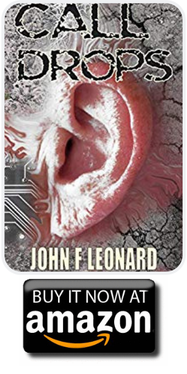 Vincent likes nothing more than rootling round second-hand shops in search of the interesting and unusual. Items that are lost and forgotten. Why not? He needs the diversion. Time on his hands and money to burn. His life is affluent and empty. Little on the horizon and memories tinged bittersweet. That’s all about to change. He’s about to find something that is perhaps better left unfound. CALL DROPS is a darkly swirling mix of horror and mystery that will stay with you long after the reading is done. It’ll maybe make you think twice about impulse buying, those moments when you simply must have something, even though you don’t need it. It might cause you to look again at the apparently mundane and everyday ...and possibly, just possibly, wonder at what twisted marvels lurk within your mobile phone.   WOMEN IN HORROR: ALIAS, WOOD AND JONES
13/2/2019
 In honour of February being Women In Horror Month, horror and speculative fiction author, Penny Jones (U.K.) and writer of the weird and the strange, Tabatha Wood (New Zealand) get together by the power of the Internet to talk candidly about the genre, their influences, and what they think the future holds for female horror writers. TW - So I’ll start with the most obvious question: why did you start writing scary stories? PJ - I've always written dark stories, but I don't really see them as horror, more that they are a slightly skewed version of life. I've never really enjoyed rollercoasters, but I think the adrenaline rush that people get from them, is the same as the one I get from reading or writing dark fiction. It's like; "I'm powerful, I can destroy the monster." How about you? TW - Honestly, I think I was just a bit of a weird, loner kid and I was really drawn to other odd and unusual things. I used to read a lot of male-penned slasher stuff when I was younger, all guts and gore, and it wasn’t until I was older that I found Susan Hill and Daphne du Maurier were writing stories which were far more scary. I liked that. I wanted to do that myself. I totally understand that feeling of power and I love that I can get under people’s skin. PJ - For me it is more a wanting to hold the mirror up to people, so they can look more closely at themselves. Do you think that because you identified as "the weird kid/ loner" you were looking for people like yourself which you maybe couldn't find in what people might consider more mainstream fiction? TW - Oh, absolutely. It was like, I didn’t understand the “normal” stuff in the same way. It just didn’t make me tick. My mother was always weirded out by it. I think she was probably worried I was going to start acting out the torture stuff. Become a serial killer… or a dentist. PJ - I was really lucky, my family were always really supportive. And although people would probably say that yes, I was the weird kid, I wasn't a loner, and my friends were always really supportive and interested. Even my teachers liked my dark stories. My parents looked out for age-appropriate books and movies for me. TW - I think I’m just a cliché, I definitely fit into the “strange kid” box. I often feel that way even now, although I don’t mind so much. I remember reading (Stephen King’s) “Carrie” for the first time, and while I had never experienced that level of extreme bullying or ostracism, I still identified with her. I think that was the first time for me where I found a dark character who fought back. She was weird and she was the “monster” but I wanted her to win. It was oddly refreshing. You said your parents found books and movies for you, who do you cite as your influences? I think the very first horror book I read was a Christopher Pike “Point Horror”, although I also have a memory of a short story involving flies which scared the absolute pants off me. I’ve never really liked insect-based horror since. PJ - As a kid, I remember wanting to buy an anthology called "The Green Ghost and other stories”. It was for sale at one of those book fairs that came to the schools. The woman at the fair wouldn't sell it to me, and my mum had to come in and tell them to let me have it. So that one has a special place in my heart. Other than that, as a child I would sneak out and read my parent's Pan book of Horror, although I wasn't allowed to. I was especially traumatised by Alex White's stories in those books. My parents only had two vetoes on what horror I was allowed, and they were the Pan book of Horror and (Mary Shelley’s) “Frankenstein”; the first because they thought they were too gruesome and would give me nightmares - they were right - the second because they thought science was so close to making the story a reality, that I would have difficulty separating fact from fiction. I know your parents were not as understanding as mine over horror, so no point in asking what they thought was unsuitable for you, but do you think there are any books or topics you wouldn't want your own children reading or watching? TW - To be fair, they never stopped me from reading it, but I know my mother and grandmother would have much preferred me to read “nicer” things. As a parent now, I do find myself cringing a little bit as I’m certain I read about things that weren’t appropriate for my age, sex as well as horror, but it also doesn’t seem to have done me too much harm. I knew it was fiction, so I was able to compartmentalise it. It was my own imagination which was worse, I think. My youngest kid hates horror and scary stuff, but my eldest adores it. We’ve watched “Aliens” and “Stranger Things” and “Buffy the Vampire Slayer” together, and he’s very into special effects stuff. He’s like me in that he is able to separate the reality from the story, so I know he’s okay with it. I wouldn’t let him watch any of the “Saw” movies or “Hellraiser” type stuff just yet, and I don’t think I will ever be happy about them watching “Seven”. That movie messed me up. PJ - I think that often as a child if something is too mature you just don't pick up on it. I watched “Beetlejuice” when I was 8 and I rewatched it with a friend and her daughter when I was older and her daughter was 8. My friend and I were shocked at the whorehouse scene in the model town, and the pussy grabbing scene. We just hadn't registered those as being about sex when we saw it as kids. TW - I think there is a bit of that, yes. I also think a lot of it is also about safety. Watching a scary movie with your mum, and knowing you can talk about anything that upsets you, is much different to watching it on your own and being disturbed by something which you then can’t fully process. Reading horror really takes you out of that safe space. PJ – At least with horror you kind of know what to expect, you’re ready for the storyline to turn nasty. I don't do torture at all, but I tend to find that a lot of mainstream television, films and books, have more overt torture than horror does. Often in horror the torture is implied rather than overt. One of my least favourite scenes is in “Spectre” when James Bond is having his skull drilled into. It isn't the drilling that is the torture to me though, it is the fact that he will no longer remember who Madeleine is. It is such a violation, having that taken away from you. TW - I feel much the same way about “Eternal Sunshine of the Spotless Mind.” It’s not a horror or scary movie at all, but the whole premise is so disturbing and problematic, and yet also strangely tragic. I get so conflicted not knowing how to feel, or who to root for. PJ - I’ve not seen that, but just read the outline of it, and it sounds amazing, so I will have to now. Is there anything that you want to read or watch, but you're too much of a wimp to? For me it is “Saw”. I think the concept sounds amazing, but although I know it isn't "Torture Porn" I'm still struggling to get over the gruesomeness of it. I'm just too scared to watch it. TW - I have to say, “Saw” isn’t really that bad, I actually like it for being so clever. It works so well because it puts the characters in situations where they have to make terrible choices - choices that you can identify with. I don’t really enjoy watching gory or ultra-violent movies, I have a real aversion to blood. I came over all funny while watching “I Don’t Feel At Home in this World Anymore” because of a finger-breaking scene. I’ve noticed the rise of very ultra-violent television in recent years, programs like “The Walking Dead” for example, and “Punisher”, and I have to say I don’t like it. I feel really uncomfortable about that being normalised or glamourised. That episode with Glenn in TWD, I think you know which one I’m referring to, I just couldn’t watch it. I’d already read the comics and I knew what was coming and I actually threw the damn comic across the room when I read it, I was so angry. Then they made it a “thing” in the TV show, like it was cool and edgy to show something so graphic. They took away the humanity completely. Anything that taps into the human element fascinates me. Explorations of our fragility and morality, the choices we make to keep ourselves and our loved ones alive. I’m not so interested in the good versus evil, man versus monsters stuff, unless the monster is the man. It took me six seasons before I realised the humans were the walking dead! I think the comics were much better at exploring the human side of things, the characters certainly felt more real to me than those on screen. PJ - I never got into TWD, mainly because there was very little human element. For me horror is to root for humanity to overcome the adversities they face. If you don't care for the character, how can you care if they succeed or not? It was strange, I didn't really care for the recent (Netflix) adaptation of “The Haunting of Hill House” for the same reason. The characters although very human, were not very likeable, and after about episode 4, I just wanted them all to die. However I love Shirley Jackson's work, and it was very true to her style, her characters are usually very unlikeable. All I can put it down to is that Jackson's novels are quite short, and I can put up with a disagreeable protagonist for two-hundred pages, but not for ten hours So, you’ve said what sort of things interest you. What scares you? TW - What scares me? So many things. I think the biggest one for me is the thought of going blind. Probably because it could be a very real possibility if I don’t look after my health and keep my Diabetes under good control. The next one would be dementia or losing my marbles. I can’t face the thought of not being me any more. Drowning is another one. Insects under the skin - eugh! Losing my kids and my husband. Burning to death. Yeah, I think I’m pretty much terrified of everything! PJ - I'm scared of everything. I’m a naturally anxious person. But I always laugh and say I'm the most optimistic pessimist you could ever meet. If something scares me, I'll jump in with both feet, but I’ll be pretty sure it'll be as bad as I think it will be. I did a charity bungee jump as a teenager, thinking the person would push me off, and they told me they weren't allowed to. I did jump, and afterwards people said, “I bet you were glad you did it, I bet it felt like flying?” No, no it didn’t. It felt like falling, falling to my death, and then just as I was about to die, being ripped back up and having to go through that sensation over and over again. The losing my marbles one is a strong one for me too, again it’s that loss of self that is so scary. I mean, I'm a mental health nurse and I've worked in hospitals so I know the horror movie image of it isn't usually that accurate, but the thought of not being in control is terrifying. Saying that, “American Horror Story: Asylum” is a really truthful portrayal of mental health hospitals at the time. Minus the aliens, of course. TW - I have a lot of anxiety, about pretty much everything, but like you I won’t let it stop me. It’s got nothing to do with a rush or a thrill, I don’t get any endorphins afterwards, in fact I usually just feel exhausted, but not doing something seems far scarier. Becoming old and boring and “safe” just isn’t an option for me. No disrespect meant to any of my family, but I feel like they’ve been safe all of their lives. I’m the kind of kid who climbs the mountain because I can, because it’s there. The idea that you could live your whole life and not climb it just perplexes me. Do you ever use events or experiences from your own life in your stories? PJ - All the time. There is a little bit of me in all of my characters, even the baddies. My stories usually contain at least an ounce of truth to them. For example, when I wrote "Non-Standard Construction" I had been resealing my sink, and had got a sliver of sealant wedged down in my nail bed. Every time I typed I got a sharp stabbing pain! I think you need to be truthful with your characters to make them real to your readers, and for me that is saying what would I do in this situation? Or, what have I done in that situation? What about You? TW - I definitely at least try to “write what you know”. Most of my monsters end up being people anyway, so if they’re not based on me, they might be based on people I’ve known. At the moment I feel like I’m living in the “Truman Show”. I write a story and a few days afterwards I’ll see a news article or a Facebook post which seems to echo what I’ve written. I’m beginning to think I’m either going mad or I’ve turned precognitive! I wrote a short horror story based on a New Zealand grasshopper called a wētā. In my story it loses a leg. My husband went for a walk the other day and came across a wētā just sitting on the grass, missing a leg. It was freaky. I suppose that just emphasises the elements of truth within my writing. Putting in enough details so it seems real and believable, while also making it weird and unsettling. I read an interview with Natalie Wilson, professor of Women’s Studies and Literature at CSUSM. She suggests that: “Horror texts and the monsters that populate them register our natural traumas. They say a lot about our current events and ways of thinking.” It seemed like zombies and vampires were everywhere until recently. Now it’s all about space exploration and off-world travel. Where do you think modern horror as a genre fits into society today, and what can it teach us? PJ - I think that for me it is looking at dehumanisation. Sadly though, that is a horror genre that has already had popularity because of similar societal factors in the past. I think it is why (Margaret Atwood’s) “The Handmaid's Tale” was so popular. The increase of the popularity in far right politics scares me more than anything else at the moment. Though apparently this reoccurrence is a natural human response. If you look through history, you have a surge of what we term “liberal political wins”, such as: gay marriage, women's rights, equal rights. This is countered with a retaliation from the more extreme right wing, but afterwards the balance is always in the favour of the liberal. As a species, humanity cannot manage too much change at once, so there has to be some return to our past mistakes, to make our future more sustainable. If we had a utopia thrust upon us, humanity would make it into a dystopia. As a race we really do think that there is no such thing as a free lunch. TW - I agree. Humans as a species seem to love making things irrationally difficult for themselves. It’s like we find it hard to accept real happiness can be possible. There is this overwhelming anxiety that we shouldn’t get too comfortable because something will always come along and snatch all our comfort away from us. In contrast, there is also a huge amount of denial amongst politicians and world leaders about real problems that can actually destroy us. It’s interesting that you mention “The Handmaid’s Tale”, especially in the midst of #metoo. I think a lot of people - men particularly - fail to understand just how real that could be. That’s also quite an interesting thing for me as a female writer, my idea of horror might be quite different to that of a male one. I don’t just mean the usual tropes of “monsters in the womb” and the fear of being assaulted. (Ira Levin’s) “Rosemary’s Baby” for example, is not frightening to me because she is incubating a demon, but because she is forced to do so. Her body is overcome by man as much as monster. I wonder if it would be even more terrifying if Levin had changed Rosemary into “Richard”. To amplify that lack of choice and body autonomy even more. PJ - Yes, I think our concept of horror is very individual. From a completely abstract point of view, what is horror for women is not going to be the most horrific for men. But I also think it goes deeper than that. Our background such as our class or standing in society affects our fears. Laura Mauro really gets this in her novella "Naming the Bones,” the concept that you can be working class, and not just be typecast as the scumbag. I think that diversity is needed within the genre, if horror is really going to appeal to everyone. TW - That goes for race too. (The movie) “Get Out” being a great example. Diversity and representation are always going to be important in any genre, but it’s really interesting to see how those concepts are being used in modern examples to create stories which are not typically horror, but still incredibly frightening. The rise of “disability horror” is one I’m regarding with a cautious interest at the moment, as I think it has the propensity to backfire, but movies such as “Hush”, ‘The Quiet Place” and “Bird Box” have increased in popularity, and I suspect that is tied very strongly into the element of control and the deep-rooted fear that we are all such fragile creatures, susceptible to many mortal dangers. What we take for granted can so easily be taken away from us, and that makes us vulnerable, and scared. So, as you know, February is Women in Horror Month. Genres such as sci-fi and horror have always been very typically dominated by men. What sort of issues do you think modern female horror writers face which men don’t? Are there any, or is it a more level playing field now? PJ - I think it is a more level playing field now. I'm really new to the scene, and I've heard the stories of how hard it was to be part of the scene in the ‘80s and ‘90s. It seems strange that the genre that focuses on the “Outsider”, was seen as being less accepting of those who weren't "male, pale and middle class”, as I've often heard it termed. I wasn't there, I can't comment on then; but now seems to be a golden time for women writers in horror. The last three British Fantasy Society short story winners were all female: Laura Mauro, Georgina Bruce and Priya Sharma. They all have collections either out or coming out with Undertow Publications, and I would seriously suggest if you want to see what the UK horror scene is producing at the moment then you couldn't do better than read their work. I hope that Women in Horror month will actually soon become obsolete, not because I don't like it, but because there will be parity between the sexes in the horror genre. I think now is the time to start looking at where else there may be a requirement for more diversity in our reading materials and authors. If we want to scare people with our horror, we need to know everybody's fears, and the best way to do that is to read as widely as possible. TW - I totally agree. Women In Horror Month is a brilliant initiative, but I look forwards to the day when the gender distinction is irrelevant. Here in New Zealand I still seem to find more male horror authors than female, but there are some amazing paranormal and speculative fiction writers out there too: Eleanor Gill; Cat Conner - especially her Byte series; Lee Murray; J. C. Hart; and the dark tales of Elizabeth Knox, most notably “Wake.” Their writing is fresh and powerful and really exciting. There is also an interesting sub-genre of the Kiwi Gothic. (NZ horror writer) William Cook has said: “it points to a strong emphasis on settler anxiety derived from the confrontation with a hostile and alien environment”. I am curious to see if, or how, this will change and grow in the wake of destructive climate change and depletion of the world’s natural resources. I think a lot of the real horrors in our world are what’s out there waiting for us. The impending crises many humans don’t want to acknowledge. Maybe through reading and writing about them, we can scare people into preparing for the inevitable.  Penny Jones is writer of horror, speculative fiction, and the occasional poem. She lives in Leicestershire with her long suffering husband. Her short stories have been published in a number of anthologies. Notable works include: “Non-Standard Construction,” “Swimming Out To Sea,” “The Farm,” and “Along the Long Road.” You can find her online at https://www.penny-jones.com  Tabatha Wood also writes horror shorts and other unsettling fiction. She emigrated to Wellington in 2017 with her husband and two children. Her debut collection of horror and speculative fiction: “Dark Winds Over Wellington: Chilling Tales of the Weird & The Strange” will be published in March 2019. You can find her at http://tabathawood.com   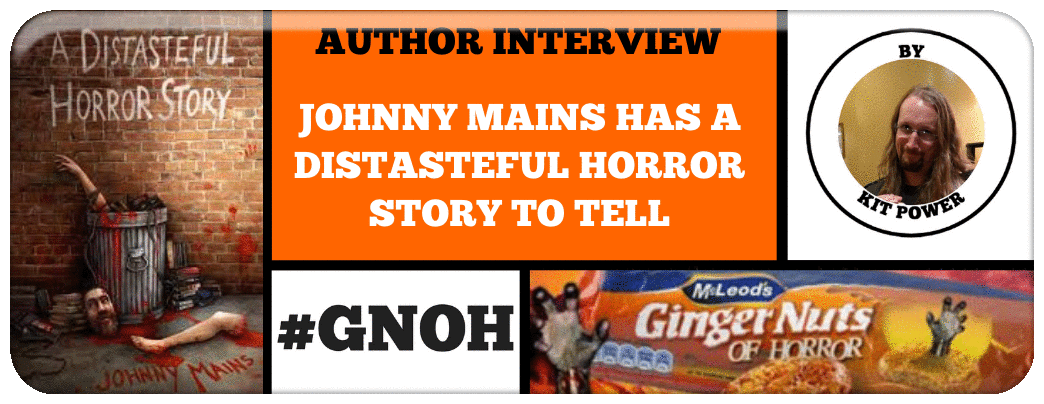 On the eve of his debut novel release, author, editor, and living legend Johnny Mains sat down with Gingernuts of Horror to talk conventions, Best British Horror, and of course his long awaited debut novel, A Very Distasteful Horror Story. Gingernuts of Horror: Thanks for taking the time to talk to us, Johnny! How are you doing? Johnny Mains: Hello! All is good...at the moment! GoH: Let’s talk A Very Distasteful Horror Story. You’ve been in the writing and editing game a long time now, but this is your first novel. What finally prompted you to take the plunge with a long form book? JM: 2018 is my tenth anniversary of being a writer; my short story, ‘The Spoon’ sold to Charlie Black for his Third Black Book of Horror. In a way I thought the best way to mark the ten years was to try and get a novel published rather than another collection of short stories (although I am also working on a fourth collection as we speak). My longest work before this was a novella, called ‘The Gamekeeper’ which only came in at 33,000 words - Distasteful comes in at twice that length - so a short novel, but a novel nonetheless. What made me take the plunge was I left my job at Citizens Advice in 2016 due to a mental breakdown, and in the weeks that followed I locked myself up in the office all day tried to write short stories. I started and junked about ten, was drinking extremely heavily and felt utterly hopeless about it all until I started writing a pretty good short story about an author’s wife who has an affair with another author at a horror convention and the affair comes to light at same time a murder of a third horror author happens before their eyes. After I had written the murder, which only took three or four lines to describe, I couldn’t get it out of my head - who was that author, who murdered him and why? I took the decision to scrap the story I was writing; at that time I had hit 4,000 words on it, stupidly didn’t keep a copy, and began work on Distasteful within thirty seconds of deleting the tale. I had the voice straight away and wrote three thousand words in a single sitting, and read over what I had done and I got prickles on the back of my neck. I knew I had something - I didn’t know how it was going to end up at that point, it’s wasn’t till I got to 10,000 words that I knew I was going to go for the novel. GoH: So there was no advanced plotting for Distasteful? It’s a pretty twisty plot... JM: No, none. I went in absolutely cold, only knowing that there was a murder of a famous horror author. I started taking notes as I was writing it - and had hundreds of postik notes all lined up, but that was just to remind me of names, book and story titles etc - but I never plot anything, it takes the joy out of writing for me. There’s nothing more exciting than not having a clue as to what’s going to come next. I don’t know if automatic writing exists as pure state, but I’m astounded at what the mind can produce when you’re ‘in the zone’. I had to re-read the book a lot when I was writing it just to make sure I hadn’t repeated myself - I had, twice, but plotting means you know what you’re on about. I don’t, I just wing it and hope for the best. If I’m lucky, like with a few of my short stories, ‘The Girl on the Suicide Bridge’, ‘Aldeburgh’, and ‘The Joanne’, lightning strikes - if not, you get absolute gash, which probably amounts to 90% of my output. GoH: A Very Distasteful Horror Story struck me, in part, as a love story to the horror convention scene of the 90’s. Do you think that was a particularly special time, or do you think the horror scene is still vibrant? JM: I was never a part of the scene in the 90s - I arrived, rather unexpectedly in 2007, the eager fan wanting to contribute - and was a bit of a surprise to everyone that I hadn’t been a part until then because I was the full package, so to speak. The reason for that is I was a serious drug addict until 2004/5, was homeless on and off from the age of 17 - 29, so I didn’t have the ways or means to be part of the genre. The one thing that kept me going was books and I read thousands during that time and built up an enormous education with reading. It wasn’t just horror, but autobiographies, historical books, nature works, scientific journals - anything and everything I could get my hands on I would devour. It kept my mind fresh, even though I was constantly abusing it with mind-bending drugs. The horror scene - well there really isn’t one is there? You can’t call a scene a scene when it’s simply people chatting on facebook - or going back in time, you can’t have a scene when it’s a yearly convention and three or four meetings, there is a connective distance that can’t be closed. I would define a true scene as a constant organic happening, in person, contact that happens regularly, if not constantly - and throughout it people are creating, pushing, searching collaborating. That’s a scene. And scenes die out when people don’t contribute, or it evolves into something else, breaks off, splinters - but stuff is always being produced. But the book does express love for conventions, and I would have to say out of the few I’ve been to, the 2010 World Horror Convention, in Brighton and where I launched my first anthology, Back From The Dead, was the best convention or gathering I’ve ever been to in my life. GoH: What are your memories of that 2010 Con? JM: I met a lot of people who I had only been in touch with on the phone or email, Michel Parry and Richard Dalby, both now sadly gone into the ether - but to meet them in the flesh and have amazing chats, yeah, that was special. I also managed to get the largest gathering of Pan Book of Horror authors together which had never been done before and I ran an amazing panel where all of these authors and artists, who had all been so important to me during my formative years, were all together and that was just absolutely mindblowing. GoH:The novel also blends real people with fictional ones. How worried were you about including real people in this tale? Did you set any rules for yourself about you would and wouldn’t do with the real people you were writing about? JH: If people are annoyed that they’ve been included, tough. If I’ve met them at a public gathering where they are promoting themselves and promoting their work I think it would be disingenuous of them to be annoyed at being part of my book. If the roles were reversed, I would take everything with a good dose of humour, I’m confident enough to know who I am, so another person’s vision of me would just be that - however, I’ve been very kind to everyone whose names I’ve used- I’ve created single characters who I’ve squished together from an amalgamation of people I’ve met - and if they try to sue me, it means they’re owning up to being absolute arseholes, which is fine. I have no money, no assets. Sue away. I will say though that Carson Fisher, the murdered horror author, isn’t based on anyone alive - may fleetingly refer to a dead horror author, but that’s about it. I did ask Ramsey Campbell for his permission to include him in his book, but that was only because I wanted to do some very nasty things to him. Ramsey more than happily agreed and he doesn’t want to read what I’ve written till he gets the book for himself. GoH: The prison thread of the novel I found really atmospheric and claustrophobic. What research did you do for those parts? And what writing decisions did you make to evoke that sense of claustrophobia? JM: It’s no secret that I’ve spent time in jail. Or if it is, it’s an open one. However, I was always scared to admit it before because I thought it would harm any ‘career’ in real life. Now I’m self-employed I simply don’t give a fuck. Jail was a fucking horrendous place, someone tried to attack me in a shower with the sole aim of sticking their willy up me - luckily they ‘slipped’ and their jaw had to be wired. I was also threatened for my phone credit and that was a very, very close thing - I could have ended up with a serious injury, the bloke asking for my phone credit was much bigger than I was, he already had a murder to his name and I only got out of it by offering to write his family a letter as he couldn’t read or write. We became ‘friends’ - and I wrote letters for him or designed him Christmas cards for his children and he made sure that the rest of my time inside was quiet. As to writing decisions, I just close my eyes and I can transport myself back to the cell rather easily. I can never forget it, the experience is part of who I am - and I’ve never talked about it in depth to anyone other than the missus. We refer it as my ‘trip to Butlins’. GoH: Can you tell us a little bit about Effingham-on-the-Stour - a town that often crops up in your writing and seems to be on par with Castle Rock and Midsomer for supernatural awfulness and murder? JM: The market town is loosely based on Downham Market in Norfolk, it has a beautiful clock tower, market square, not too overwhelmingly touristy, and has one of the loveliest railway stations in the country. As to Effingham’s location, I’ve never wanted to exactly pin that down to a real county as I want the town to remain timeless and culturally vague. However, Effingham seems to be wherever I have lived in my life, so it’s in Suffolk, Norfolk, Scottish Borders, Devon and if my last short story is anything to go by, Serpent Bay, Effingham is only 4 miles from the bottom of Cornwall. I like the fact that it’s almost like Doctor Who and her Tardis, pops up whenever, wherever. I’ve yet to create a map for it, but there is a large central park with a bandstand, a wood that envelops one side of the town with a river and a mill on that side, some extremely steep hills (based on several in Redditch, Worcester), a posh end of town that’s one single road, and an old creepy house that’s on a hill that looks over the town. And a McDonalds. I’m fond of the town, it’s appeared in about 15 of my short stories and features heavily in the novel. And while Castle Rock is more than guilty of influencing the initial idea of Effingham - it’s amazing how it has now become as real to me as the city I live in at the moment and every time I write a story without knowing where it’s set and Effingham appears, I am genuinely happy. GoH: The cover art for the novel is superb! Who created that for you? JM: The artwork for the cover was done by the genius that is David Whitlam; I’ve known David for quite a few years now and his work is simply stunning. There is no other word for it. He did the cover for my British Fantasy Society anthology, The Burning Circus, and also the cover to my third collection, A Little Light Screaming. It was only right that he did the cover to my novel, he got what I was after and the finished work is pitch perfect. It has a very grungy feel, of the time, even though it’s digitally drawn. GoH: Moving on to your editing, talk to us about Best British Horror 2018! How did this come about? JM: Best British Horror was dropped by Salt without them telling me. I was preparing for 2016’s book, indeed I spent seven months reading material for it; don’t forget publishers and authors were sending me hard copies - and I happened to mention in a phone call to one of the owners about how good the BBH 2016 was going to be and that I wanted to use a Robert Aickman story to open up the book. It was then I was told that there wouldn’t be another book, horror wasn’t selling, but could they have a third Dead Funny book? I was absolutely heartbroken, and not to mention just a little bit fucked off - and it also happened around the time I got ill - so when I was looking for stability all I had was akin to a plank on a marble and I was standing on the plank trying to keep my balance. So, two years went by, and I was really missing reading what was being written by my peers and wanted to promote that work again. I wanted to re-launch Best British Horror; so I got in touch with Ian Whates who thought it was a great idea, and here we are - this year’s book is out and have already got the stories for this year’s book and there are some incredible stories in both 2018 and 19’s. I hope it’s a series we can keep on running and running - we owe that to all of the authors and publishers who do this for little or no reward. So please, readers, fans of horror - buy this book. Get behind it, support it. GoH: Talk to us about the process of reading all those anthologies and collections - it seems like a huge amount of work and also your thoughts behind what makes a best of, the trends, the authors… JM: Luckily I’m only reading stories written by people who are British or who live in Britain, so that normally gets rid of about 40/50% of the anthology contents straight away. I don’t read reprints and collections may have only two or three original stories - so the amount I read, whilst great, isn’t overwhelming. I would like to think I’m an intuitive reader/chooser of stories and with the three books in the series and 2019’s volume - so far, at least 80% of the tales have been chosen on that first gut reading. I don’t care who the author is, whether they or their stories are the talk of the town or as stylistically unfashionable as I am, I work solely on the impact of the story - what it does to me when reading, after reading and whether I’m still thinking about the story the next day. That selection process doesn’t always translate to how well the subsequent stories go together when I have them all chosen - and that’s when the hardest part of the process, for me, truly kicks in, to give the contents and the order the stories are read an appearance of effortless synchronicity. I read, re-read, re-read again in dozens of combinations, seeing what stories may have the same vibe, feel - moving them around so you’re not reading too many similarly-shaped stories too close to one another, that the middle of the book doesn’t feel to flabby - but to start the book off with the stand-out tale, then build up the rest of the book until the end story, which I personally feel is the most important tale of the whole the book. That, for me, is the true mark of whether an anthology will stick with you or not - that last burst of popping candy on the tongue. GoH: I understand you’ve also been branching out into commentary work. What movies have you featured on? And how heavily do you script your commentary tracks? JM: Yes! It’s all rather exciting. I’ve been writing liner notes for quite a while now, Michael Brooke has been the man who has nurtured the non-fiction part of my brain, and I had been badgering him to do one, never had the confidence to do one on my own; I didn’t have the first clue on how the process goes - and we recorded the commentary for Sidney Lumet’s The Deadly Affair and my all-time favourite Hammer film, The Snorkel. I then recorded my first solo commentary for Firestarter, based on the Stephen King novel and Michael and I recorded a commentary for Tyrone Power’s greatest film, Nightmare Alley. The research is gruelling, however when we’re together we just have notes and the film running silently and we bounce off each-other; he’s the straight man, I’m normally laughing at something I’ve found amusing, but it really works, and the people who write reviews about film commentaries have always been more than nice about them and us. Regarding the solo commentary for Firestarter, I wrote a script for that and followed it to the letter; when I tried to go off-piste and ad-lib, I screwed it up every time, because I didn’t have anyone riffing with me. GoH: You cover a huge amount of material on the Firestarter commentary, from detailed production information to historical context and stories of real-life spontaneous human combustion - how do you settle on what to include, and how to transition from subject to subject? JM: Alchemy. GoH: Lastly, tell us what 2019 has in store! What should we look out for from Johnny Mains, and what are you looking forward to? JM: Well, this year is a busy one - I’m working on putting together a Charles Birkin collection of ‘lost’ stories for Valancourt books and writing a biographical essay for it, finishing essays on Scarred For Life Volume 2, a massive essay on Nigel Kneale’s 1984, Best British Horror 2019, finishing off a Barry Pain collection, putting together a collection of ‘lost’ works by Theo Douglas (H.D. Everett), Finality of Ghosts - the last book of my trilogy of ‘lost’ ghost stories by women. Ongoing work on my Freaks book, finishing my Jason King novel and diving into research for a planned Cynthia Asquith biography. Also hoping to get some more commentary work, maybe write one or two short stories. So yes, busy!   Could you tell the readers a little bit about yourself? I’m a writer and filmmaker from Merseyside, now living in London. I have a PhD in Music from Goldsmiths University and I spend most of my time these days writing film journalism and novels. When time and funding permits, I sometimes make short films on super-8 and I run the website Celluloid Wicker Man. What do you like to do when you're not writing? My life currently is a bit like that train sequence from the Wallace & Gromit film The Wrong Trousers where Gromit has to lay the line of the toy train at breakneck speed whilst actually on the train so he can catch the penguin. My writing life is currently a bit like that so almost everything I do has to be geared towards the writing in some way so I can pay my rent and continue getting work. That said, I’m lucky that my work so often involves having to read a lot, watch a lot (films and older television) and even visiting a lot places connected to literature or film: so reading, watching and visiting unusual places breaks up the writing. Other than the horror genre, what else has been a major influence on your writing? I think the most influential thing on what I do has been a childhood immersed in Doctor Who. When you’re watching what is essentially surreal archive television at a very young age, and I mean almost every day where it was possible thanks to VHS, its openness to the sheer absurdity of all sorts of fiction, ideas and genres, totally leaves you open later in life for things that others would probably find absurd to seek inspiration from. There’s no better opening for genre basically. The other big influence was discovering aesthetic philosophy at university and how the writing opened up and challenged everything, creatively, morally and politically. Theodor Adorno got to me for a while, not just in his style of writing but how his theories sat in contrary with my obvious leaning towards pop culture. Also Jacques Derrida and Gilles Deleuze were and still are surprisingly big influences on what I do. So yes, Doctor Who and post-war twentieth-century philosophy… The term horror, especially when applied to fiction always carries such heavy connotations. What’s your feeling on the term “horror” and what do you think we can do to break past these assumptions? I’m not quite sure to be honest, especially because I don’t consider my fiction work to be purely of the horror genre. It deliberately blurs the lines stylistically, in the same way that Magic Realism has done with fantasy, drawing on techniques from European Literary fiction in particular, but sometimes sneaking in imagery or ideas more associated with what people would consider “horror.” Quite a lot of the writers I admire do this. However, I think it’s worth noting that negative reactions to genre connotations are often derived from very little experience of what the genre can do and when people have problems with such connotations it’s usually from a bias, perhaps even a snobbishness, born solely and purely from ignorance. A lot of good horror movements have arisen as a direct result of the socio/political climate, considering the current state of the world. Where do you see horror going in the next few years? Horror in film has always done this, more so I think than traditional drama, so it’s no surprise to find the genre in cinema in such a healthy place when the world is so dizzyingly chaotic. I wish I could share an opinion on the literature equivalent but when I do dip into horror literature, it’s usually from older works. The last horror book I read was Jeremias Gotthelf’s The Black Spider, and even then, that’s more of a theological parable from 1842 that just happens to feature a black spider growing out of someone’s face. What are the books and films that helped to define you as an author? The Rings of Saturn and The Emigrants by W.G. Sebald The Television plays of Nigel Kneale Extinction and Correction by Thomas Bernhard The Collected Ghost Stories of M.R. James The Waves and Orlando by Virginia Woolf The films of Andrei Tarkovsky The Caretaker and The Homecoming by Harold Pinter What new and upcoming authors do you think we should take notice off? Édouard Louis for biting but beautiful political writing and Benjamin Myers who, though not new, is finally getting the recognition he deserves. How would you describe your writing style? Plagued by memories and photographs. Are there any reviews of your work, positive or negative that have stayed with you? Most of the negative ones grate for a few days before I realise that even my favourite authors have it far worse off online. With my last book, (Folk Horror) that was to be expected as it was a semi-academic book that became unusually popular because of the subject matter and academic writing is not readily accessible. The writing process for it was also chaotic so some negative reviews were bound to crop up. I wish I could re-write the last book in a more accessible writing style but its subject is of less interest to me these days and there are more pressing books that need attention. What aspects of writing to do you find the most difficult? The public speaking that inevitably is now be part and parcel of writing and publishing a book is the most difficult part for me. I’m not too bad at public speaking admittedly but the anxiety I suffer in the run up to it is far worse than anything in the writing process itself. You’d think I was being sent to the gallows or something. Is there one subject you would never write about as an author? I don’t think I’d ever write anything purely historical. I’m much more interested in the present. The past plays a huge part in everything I write but is only interesting to me in my fiction when it’s connected with hindsight to the present and the vast cacophony of changes in between. How important are names to you in your books? Do you choose the names based on liking the way it sounds or the meaning? Thomas of Mothlight is actually a nod to the character from Antonioni’s adaptation of Blowup; another protagonist whose life is haunted by photographs. The narrator of my next book is named Isabelle after Isabelle Huppert… For those who haven’t read any of your books, which of your books do you think best represents your work and why? Mothlight is most representative of what I want to be doing at least as it is fiction. I won’t be writing another nonfiction book for quite some time yet though when I do it’ll be about Polaroid photographs. Can you tell us about what you are working on next? The initial draft was finished a while ago for my next fiction How Pale The Winter Has Made Us which is going to also published by Influx Press in 2020. It’s about a woman away in the French city of Strasbourg who hears of the suicide of her father in London and opts to stay there over winter. She goes rather mad in the process, deciding to research and obsess over the history of the town and its various occupants such as Goethe, Gutenberg and Jean-Hans Arp, to the point where reality and history begins to dissolve. I’m currently working on the pitching draft for the fiction after that which is currently under the title of Nettles and reframes some unhappy memories from my own past on Merseyside as something weirder. Dealing with such memories is only possible for the narrator by building a strange, eerie world around the spirits of the Wirral marshland and a local stone called Grannies Rock. If you could erase one horror cliché what would be your choice? Perhaps reliance on jump scares which have become a handy shorthand for “We’ve ran out of ideas.” We’re far from The Exorcist III shall we say… What was the last great book you read, and what was the last book that disappointed you? Great: History of Violence by Édouard Louis Disappointed: Candide by Voltaire about Adam Scovell Adam Scovell is a writer and filmmaker from Merseyside now based in London. His writing has featured in The Times, BFI, Sight & Sound, Little White Lies and The Quietus. He runs the website, Celluloid Wicker Man, and his film work has been screened at a variety of festivals and events. In 2015, he worked with Robert Macfarlane on an adaptation of his Sunday Times best-seller, Holloway, and has worked on films alongside Stanley Donwood, Iain Sinclair and BAFTA-nominated director, Paul Wright. His first book, Folk Horror: Hours Dreadful and Things Strange, was published by Auteur in 2017 and he has recently completed his PhD at Goldsmiths University. Twitter: @adamscovell Website: http://www.celluloidwickerman.com Book link: https://www.influxpress.com/mothlight/ Amazon link: https://www.amazon.co.uk/Mothlight-Adam-Scovell/dp/1910312371/ref=sr_1_1?ie=UTF8&qid=1546505642&sr=8-1&keywords=mothlight+adam+scovell mothlight "The idea was lost but the memory was here." Phyllis Ewans, a prominent researcher in lepidoptera and a keen walker, has died of old age. Thomas, a much younger fellow researcher of moths first met Phyllis when he was a child. He became her carer and companion, having rekindled her acquaintance in later life. Increasingly possessed by thoughts that he somehow actually is Phyllis Ewans, and unable to rid himself of the feeling that she is haunting him, Thomas must discover her secrets through her many possessions and photographs, before he is lost permanently in a labyrinth of memories long past. Steeped in dusty melancholy and analogue shadows, MOTHLIGHT is an uncanny story of grief, memory and the price of obsession. Read our review of Mothlight here
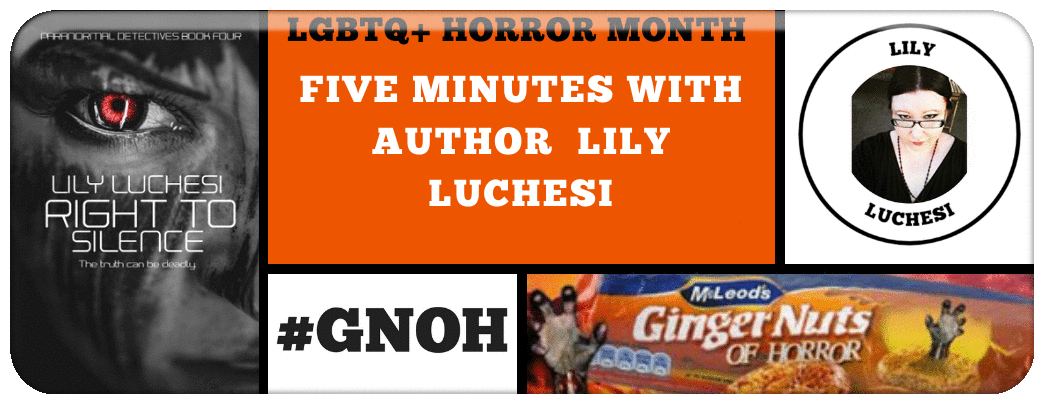 Could you tell the readers a little bit about yourself? Hi! I’m Lily, USA Today bestselling author of horror and paranormal fiction. I am mildly obsessed with vampires and ghosts, and find studying the supernatural to be a fun pastime. I also love music, going to concerts, getting tattooed, and cooking. I’m also bisexual demiromantic, which gives me a deeper, more personal reason for writing LGBT+ characters. Why horror? What is appeal of the genre to you as both a fan and as a writer? Ithink that fear is such a primal emotion. Fear, lust, and anger are automatic things for most humans (some don’t experience lust). Writing about them in any capacity is thrilling. It’s a study in humanity at its most vulnerable. As LBGTQ+ fan and writer of horror, how did you when you first became immersed in the genre and found that representation that you could identify was few and far between? Oh that’s a good question. I think it was a few years back, before I even started writing, when I noticed queerbaiting in a favorite horror program of mine. It always seemed like the sexy hetero couple were the stars, the POC characters wound up dead first, and LGBT+ people didn’t exist. I remember even as a little girl wondering why no girls kissed girls, since I was a girl who wanted to kiss girls. I knew that I would include LGBT+ people in my work right away. Not as a statement, not to be political or politically correct, but because we exist and we’re valid. How did you discover authors that wrote about characters that you could relate to? Other than the horror genre, what else has been a major influence on your writing? You might laugh, but comic books. Batwoman was my first bit of exposure to a LGBT+ strong female character. Currently, DC Comics has Sara Lance, Ava Sharpe, Nyssa Al Ghul, John Constantine, Lena Luthor, Curtis Holt, and Nora Allen as LGBT+ representation on their various TV shows. Soon they will have Kate Kane. It took me a long time to find novels with LGBT+ characters. Now we have people like TL Travis, Piper Kay, Felicia Fox, Anna Stone, and Vicki Kinnaird (to name a few) writing LGBT+ fiction. It’s amazing to see so much representation. The term horror, especially when applied to fiction always carries such heavy connotations. What’s your feeling on the term “horror” and what do you think we can do to break past these assumptions? I think that many people believe “horror” means “evil”. No. Even while there are movies rooted in the occult (and my own books are as well), we don’t watch horror because we’re evil. Some people do, and honestly, those people are in the minority in the horror fandom. For example, my tagline is “horror with heart”. I have gore, violence, creepy scenarios, and more, but there is also a strong sense of humanity in my books. In the Paranormal Detectives Series, for example, book four has a tearful, romantic goodbye between an ill fated couple after a violent vampire attack. You can’t properly scare people if they are not emotionally invested. Horror isn’t about jump scares and Satan. It’s about the people to whom these things happen. A lot of good horror movements have arisen as a direct result of the socio/political climate, considering the current state of the world where do you see horror going in the next few years? This is another really great question. In the political climate, sadly my existence as a LGBT+ woman with mental health issues and income issues has become a target. I think that you will see many more LGBT+ people, people of color, and sick people writing more realistic horror. I think it will veer away from the fantastical and become more reality based, like The Purge. I recently co-wrote a horror/Apocalypse novel called Soul Syndicate, where the world ends and only 9 people are left alive. Out of those nine, we have people from all races, religions, genders, and sexual orientations. Faith, my co-writer, and I weren’t trying to make a political statement, but yet it became one. I personally hope that we see a lot of “oppressed rising up” as a trend in horror, as we showed in Soul Syndicate. But I don’t want to see horror lose its monsters and paranormal edge. In my books, I try to discuss important current issues, but present them as paranormal because that’s the fun with being a creator: horror gives us an unlimited arsenal of ideas and possibilities. What are the books and films that helped to define you as an author? Books: anything Stephen King; the first four Vampire Chronicles novels by Anne Rice; Dracula; Vampire Kisses series by Ellen Schreiber; Harry Potter series by JK Rowling; The Saga of Darren Shan by Darren Shan; The Chronicles of Vladimir Tod by Zac Brewer (nee Heather); anything by Poe; the Bronte sisters; Shakespeare. Movies: Bram Stoker’s Dracula, Queen of the Damned, Van Helsing, Die Hard, Underworld. In recent years there has been a slow but gradual diversification within the genre, which new LBGTQ+ writers do you think we should be paying attention to? I listed a few above, actually. So to them I will add JS Coatsworth, Layla Dorine, and Carmilla Voiez. How would you describe your writing style? You know, I’ve been writing professionally for four and a half years and I still can’t explain my style. Is ‘strong female characters with monsters’ a genre? While I do write gay characters (Brighton and Mark in PDS 3 and 4; Bloodspell; Soul Syndicate, Nick and Roger in The Coven Series), I mostly write strong women. Be they straight or LGBT+, my books don’t seem complete without one bad ass lady and a few monsters thrown in. I write fiction for all ages, races, orientations, and genders, but deep down I really, truly write for all the little girls like me. The creepy girls who wanted to kick butt while looking pretty and kissing cute boys (and other girls!). My MCs are usually Goth, like me, plus size, and strong willed. Because I never had representation growing up. Now I want to create that representation. Are there any reviews of your work, positive or negative that have stayed with you? Many, but there’s one from Knightingale Reviews for my first novel Stake-Out, and they had this to say about my heroine, Angelica: “Angelica added a depth to the story and proudly represented females everywhere. C and I have an extremely hard time finding female characters that we actually enjoy reading about. Too many of them are whiny, unpleasant, indecisive, passive, or are just blind followers. Others have low self-esteem or retain this complex where they think they need a man to rescue them instead of saving themselves. Now, we're not saying that these are terrible qualities or characteristics that lesson someone's worth; it's just that they are often qualities that are exploited or implemented so frequently that a girl seems weak. Angelica was just the opposite, though. She a true breath of fresh air. Angelica Cross can easily be described as headstrong and independent. However, she also doesn't fit in among humans or supernatural creatures extremely well, a fact that she doesn't let bring her down.” What aspects of writing to do you find the most difficult? That dreaded middle. I can write blurbs, beginnings, plot twists, and endings. That little middle part drives me mental, I swear. I find myself writing out of order, just so I can write the middle last! Are there any subjects that you would never write about? Nothing is off limits for me. I even touch on sexual assault in PDS4 and will again in PDS8. I would never, EVER describe it, but anything and everything in the world can become plot fodder for me. Writing, is not a static process, how have you developed as a writer over the years? I learned more about “show, don’t tell” as well as using a less omnipresent narrating voice. I think you can see my growth as you read my work from start to finish, and I am proud of all I learned. What is the best piece of advice you ever received with regards to your writing? It came from Stephen King: write with the door close and edit with it open. I tend to worry about what people will think when I write, especially as I was creating A Bloody Legacy and The Hunger Within (my BDSM lesfic stories). I had to remind myself that A), I am accurately depicting a lesbian bondage style relationship and B), I know what I’m talking about. Other people’s opinions shouldn’t matter. Getting your worked noticed is one of the hardest things for a writer to achieve, how have you attempted to break through the barriers that are so often in place against LBGTQ+ writers? I admit, it hurts going to bloggers and seeing “no LGBT+ work accepted”. Because not all LGBT+ books are sexual. Why can’t people read a book just because a boy loves a boy or a girl loves boys and girls? When shopping Soul Syndicate to bloggers, it was hard to find reviewers because we have gay, trans, bi, and asexual characters in the story. And the roadblocks were immense. But with the Paranormal Detectives Series and The Coven Series, I have gay, lesbian, and straight relationships, and have only received one poor criticism from a homophobe. I hate it when they say “there are too many gay characters” and “it’s unrealistic”. As a bi woman, I can tell you that us LGBT+ people often befriend each other because, originally, it was safer. It’s definitely not unrealisitc. But that’s how I avoid some roadblocks: my LGBT+ characters are in books with straight characters, so it’s hard for someone to say “we can’t read this” when the main pairing is straight, and others are LGBT+. Sneaky? Maybe. But I am a Slytherin, after all. Many CIS white male authors use LGBTQ+ characters in their works, what’s the mistake that they make when trying to portray these characters? Making gay men overly effeminate. Not all gay men are like Jack from Will and Grace, but many straight men think so. And when it comes to women: bi women are NOT there just to have threesomes. I cannot stress this enough. And lesbian sex is … well … it’s sexy. It is. But lesbians do more than have sex. And straight men need to remember that. (Don’t get me started on the men who make lesbians “turn” straight. That makes me feel ill.) Moving on to getting your work read by unwashed masses, what do you think ins the biggest misconception about LGBTQ+ fiction? It’s all about sex. Yes, I write LGBT+ erotica. But the stories are about so much more than sex. Or that it’s only aimed at LGBT+ people. A majority of LGBT+ fiction writers and readers are heterosexual. If you’re reading this and unsure, don’t worry. Just come dip your toes in, you’ll probably find that you like it. There are a number of presses dedicated to LGBTQ+ fiction, do you view these as a good thing, or do you think they help to perpetuate the ongoing exclusion from mainstream presses? That’s like asking do I think BET is exclusion for POC. No. LGBT+ presses were created because we had nowhere else to go. Like the LOGO network. Now that mainstream presses are recognizing out work, that’s wonderful! But I will always stand by and support LGBT+ only presses. Because they were there for us when no one else was. And here is the million dollar question do you agree with movements like this and things such as Women in Horror Month? If so how would you like to see sites such as Ginger Nuts of Horror tackle diversity? I LOVE WiHM! I participate somehow every year. This year Vamptasy Publishing is releasing a horror anthology written solely by female authors called Another Beautiful Nightmare. My erotic horror is LGBT+ based, and I love being a diverse woman of horror. I want to see other lesbian, bi, trans, pan, and ace/aro women showcased both within fiction and as creators in the future. The most common phrase you hear when people object to active movements to encourage all forms of diversity is “I don’t care about the sexuality, gender, color etc etc of the writer I only care about good stories” what would you like to say to these people? It’s fine not to care. It’s great that you don’t think of it. But here’s the thing: you have to at least acknowledge it. The fact that I am a bi woman plays heavily in my work, so I would like it to be noted. Same for gay men or trans authors. Same with POC authors. Like, I don’t care that TH Morris is a black man, but I do, however, care that he is a black man writing horror with a diverse cast in his books (The 11th Percent Series; it’s amazing!). Because it shows that diversity matters, inclusion matters. So straight, white, cis people: go on not caring. I love that you don’t care. But don’t mistake not caring for not recognizing. There’s a big difference. To many writers, the characters they write become like children, who is your favorite child, and who is your least favorite to write for and why? My favorite child is Angelica Cross, by far. She’s the lead in my Paranormal Detectives Series. She’s a vampire, businesswoman, government leader, hero, pansexual, woman. She infuriates me sometimes, but I love her to death. Least favorite is probably Alicia Gordon, who is in books 1 and 2 of The Coven Series. She is the bully I hated my whole life given an immense amount of power. What piece of your own work are you most proud of? Never Again. It’s about a Jewish male siren who fights against Nazis and demons in WWII, proving that while hate never dies, heroes never die, either. For those who haven’t read any of your books, which of your books do you think best represents your work and why? Right To Silence (Paranormal Detectives Book 4). It’s written in two parts, the first part focusing on Brighton and Mark and their illicit romance in the Victorian era, and then moves into the present. It showcases what I’m best at: violence and love. Do you have a favorite line or passage from your work, and would you like to share it with us? Probably this one, from The Coven Heir (The Coven Series Book 2): Sometimes the people who want to make you feel that way get past ‘consent’ and barrel right through your barriers like charging bulls. They rush into your head and start breaking everything they can find, marking their territory where they don’t belong. And before long, your head begins to get muddled, and then your heart takes on most of the burden of the emotional stress a bully puts on you. Bullying leaves lasting damage that never really goes away. Its scar is garish and visible, barely healed. It can be ripped open at any moment, as fresh and bloody as it was while the abuse was still going on. Others can’t see the scar, but it’s there, hidden under the layers of concrete that you create to protect yourself, so that the pain can only be felt by you and you alone. And when the pain finally does die down, it’s like you’re left in a desolate, dark room with no idea where to go from there. It damages every part of you, dampens your trust, makes you scared to feel happy in case the bully comes back again to rip your joy away from you. Can you tell us about your last book, and can you tell us about what you are working on next? My last book released is Day of Execution (Paranormal Detectives Book Seven), which is the penultimate book in that series and a real tearjerker. I can’t say much, but beta readers HATE me for that. I am prepping for The Coven Rescue (The Coven Series Book Three), which is coming March 23rd. What was the last great book you read, and what was the last book that disappointed you? I have not been reading as much as I’d like. The last really great book I read was Greyson Fox by TL Travis, which is a dark MM romance. The last book that really disappointed me I read back in 2015. It was recommended as a “strong female lead” and it was anything but. Sure the lead kicked ass, but she wasn’t strong. She was a bully and did things no strong woman would ever do. What's the one question you wish you would get asked but never do? And what would be the answer? This one surprised me. I am not sure. I have been asked so many questions, many of them interesting as this interview has been. One question I have only been asked once and I love is “if you could be in a story, which would it be?” I was asked that once and it really made me think. I’d want to be in a position of power in a medieval setting. To be able to make a good difference for my “kingdom”. I suppose that’s why my characters are Empresses and Princesses. ABOUT Lily Luchesi Lily Luchesi is the USA Today bestselling and award-winning author of the Paranormal Detectives Series, published by Vamptasy Publishing. She also has short stories included in multiple bestselling anthologies, and a successful dark erotica retelling of Dracula. Her Coven Series has successfully topped Amazon's Hot New Releases list consecutively. She is also the editor, curator and contributing author of Vamptasy Publishing's Damsels of Distress anthology, which celebrates strong female characters in horror and paranormal fiction. She was born in Chicago, Illinois, and now resides in Los Angeles, California. Ever since she was a toddler her mother noticed her tendency for being interested in all things "dark". At two she became infatuated with vampires and ghosts, and that infatuation turned into a lifestyle. She is also an out member of the LGBT+ community. When she's not writing, she's going to rock concerts, getting tattooed, watching the CW, or reading manga. And drinking copious amounts of coffee. TO FIND OUT MORE ABOUT LILY AND TO FOLLOW HER ON SOCIAL MEDIAwww.facebook.com/LilyLuchesi http://lilyluchesibooks.wix.com/lilyluchesi http://amazon.com/author/lilyluchesi www.twitter.com/LilyLuchesi www.facebook.com/LilyLuchesi https://www.facebook.com/groups/1000888509953193/ (street team) www.instagram.com/lilyluchesi http://www.goodreads.com/author/show/7369101.Lily_Luchesi Lily Luchesi http://lilyluchesibooks.wix.com/lilyluchesi http://amazon.com/author/lilyluchesi http://facebook.com/lilyluchesi http://twitter.com/LilyLuchesi http://instagram.com/lilyluchesi http://www.goodreads.com/author/show/7369101.Lily_Luchesi 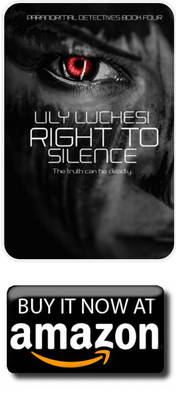 The truth can be deadly. In the first of this two-part novel, we learn the history of hunters Brighton Sands and Mark Evans in their two lifetimes, culminating in their final battle with the insane vampire they have been hunting for centuries. In the second part, with Angelica Cross still on the run, multiple vampiric murders lead to the kidnapping of a famous vamp. Detective Danny Mancini must drag a mortal into the bowels of Hell in order to rescue her. But why does Leander Price want her so badly, and what does she have to do with an ancient vampire prophecy? 
 Hello J. Daniel Stone! Welcome to Ginger Nuts of Horror and the LGBT+ Awareness Month Project. I’m happy to be able to interview you today as part of the project to highlight and bring positive exposure to minority groups such as the LGBT+ community. Please feel free to correct me if I am wrong, or misinformed, in any way I state anything here, but it is my best intention to allow your voice to be raised and heard in the horror writing community. A big thanks to Jim, editor at GNOH, for this platform and project! Second, I just want to say how thrilled I am that J agreed to this interview. He’s long been a favorite writer and friend of mine. His passion for his art, for words, for issues ...they motivate me to be a more open and more critical thinking person. He’s creative and fun and feisty and very talented. I hope that this interview will give you a peek into his writing word enough that you’ll try out his work, but also into the depths what it’s like to write as a LGBT+ author. Let’s get started. Erin: Who are you as a person? Let us get to know you as a person through your own words… J. Daniel Stone: Down to earth empath with a ravenous creative drive. Erin: Tell us a little about your overall writing: what you have published, your themes, your background? J: I’d say my work encompasses my own personal tortures, dreams, nightmares and hopelessness; anger, angst, dread and overall disappointment. Queer horror at its finest. With that said, I have two novels, a novella, and short story collection under my belt at the current moment. The Absence of Light Blood Kiss I Can Taste the Blood – a collaborative set of novellas with Josh Malerman, John FD Taff, Erik T. Johnson Lovebites & Razorlines Erin: What are your goals for 2019 as a writer? J: I want to see my new novella published “If Only It Would Remain” which was written for John FD Taff’s I CAN HEAR THE SHADOWS (the big sister of I Can Taste The Blood) anthology collaboration, which also features novellas by Taff, Josh Malerman, and Erik T Johnson. I also plan to complete the final edits on my new novel STATIONS OF SHADOW and then want to send it out to publishers. Erin: What do you feel is your great accomplishment so far? J: I think Blood Kiss is the best published thing out there of mine. I also enjoy Lovebites & Razorlines as that collects my best early short stories. But I’ve really changed as a writer over the years so it’s interesting to see where I was then compared to now. Erin: What has been your greatest struggle? J: The need to outdo myself. Erin: Does any of your own work (stories, novels, etc.) deal with LGBT+ themes? Why or why not? J: All of my work is queer. It’s how I live my life. LGBT people exist. They should be in books and movies and tv shows and etc. There’s no arguing that. Erin: Have you ever heard of a story about an LGBT person facing discrimination in the writing community, and/or have you personally been discriminated against for your sexual orientation or gender identity? J: All LGBT writers have been discriminated against whether they know it or not, whether someone told it to their face or not. Proof is in the pudding in the publishing world. Just look at what books are the most popular across all genres, or the books that get turned into movies. It’s never about us, I can assure you that. The only literal discrimination in the publishing world I experienced was a rejection that came which said there was too much gayness in one of my short stories (that one is published in Lovebites & Razorlines entitled “Ecdysis”). But at least that editor had the balls to tell me what he really felt. I literally valued that. I don’t crumble when people resist my way of life. I literally just keep living because I don’t give a rat’s ass what they think. Consider that the true New Yorker in me. Erin: What does the word discrimination mean to you as a writer? J: Someone in power who has the power to keep you down because your life doesn’t align with theirs. Well I have words for them. TOO FUCKING BAD. The world doesn’t revolve around you. Erin: Can you briefly describe some of the gay, lesbian, bisexual or transgender people who are important to you in your life and why? J: My amazing group of friends, who are my chosen family. I truly have the best people in my life. Erin: Do you have some LGBT+ authors you admire and why? What are some books you can recommend to others in horror or others written by or about LGBT+? J: William S. Burroughs is tops for me. He taught me everything. I have a tattoo of his initials. Of his work I’d say one should read Naked Lunch, Cities of the Red Night, Interzone, Queer and Junky. That’s a good start. Also, the finest living trans author, and my personal favorite, is Caitlin R. Kiernan. I’ve been following her work before I even thought about writing my own stories. I believe she helped shape who I am as a writer as well. Of her work I’d recommend Tales of Pain and Wonder, Silk, To Charles Fort with Love, Low Red Moon, The Five of Cups and The Drowning Girl. Erin: How do you personally feel about January being delegated as LGBT+ awareness month? J: It would make more sense if it was in June since that’s Pride Month, but January is fine by me. Erin: What is something you want all straight horror authors in the community to know, if you could tell them anything about supporting you? J: Don’t support me just because I’m gay. Support my badass fiction. Erin: What is something you want to tell your fellow LGBT+ authors/writers? J: Don’t let anyone scare you into thinking you shouldn’t write queer fiction. We need more of it desperately. Erin: Furthermore, what is something you’d like all editors and publishers in the horror community to know? J: Make an effort to publish more queer fiction with queer characters and themes, written by QUEER authors! Erin: For fellow straight writers who want to broaden their characters to include people of other minorities, what is something you could offer them in terms of how to create a LGBT+ character properly? J: Queer people are so diverse there really is no recipe for writing us. All of our stories and histories are unique and very different from each other, though we are all centrally bonded by being queer. Erin: What’s your next upcoming work? J: I Can Hear The Shadows with John FD Taff, Erik T Johnson, and Josh Malerman. Then I’d like to see my third novel, Stations of Shadow, find a publisher this year at some point. Erin: Where can everyone find you on social media best and please leave any links to past or upcoming works here - J: Twitter and Instagram @SolitarySpiral and Facebook. Erin: Thank you so much for joining me in this important and eye-opening discussion! I wish you the best of luck in the future with all things. ABOUT J. Daniel Stone J. Daniel Stone writes from NYC where he was born and raised. He is the author of the urban horror novels The Absence of Light and Blood Kiss; the collaborative, stand-alone novella I Can Taste the Blood; and the short story collection Lovebites & Razorlines. In 2016 he was selected by readers to be included in Dread (the Best Horror of Grey Matter Press). He writes under a pseudonym to keep the wolves at bay. Find out more about JDS on his website The Absence of Light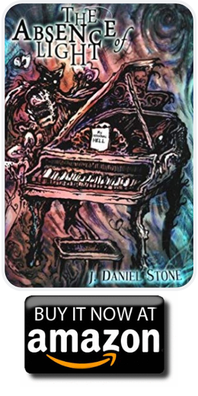 The Absence of Light is a dark prose novel written by 25-year-old J. Daniel Stone. The story involves two groups of friends--one group a metal band and the other a clan of ghost hunters--who clash after a night of rocking out in a seedy downtown club in NYC. With his fascinating ability for mapping out interesting characters, and a natural ability at setting a gloomy mood, Stone successfully takes his readers through the problems that everyday people face within the boondocks via a small Pennsylvania mining town dusted in anthracite, to the frightening throes of the ever-changing face of New York City with an authenticity that is rarely found in first novels. His words will resonate like a hangover long after you read them. about Erin Sweet Al-Mehairi Erin Sweet Al-Mehairi has Bachelor of Arts degrees in English, Journalism, and History. She has twenty years of experience in the communication and marketing fields and is currently an author, writer, journalist, publicist, and an editor, primarily in the publishing industry, among many other things. Breathe. Breathe., published by Unnerving in 2017, is her debut collection of dark poetry and short stories and was an Amazon best-selling paid title, debuting at #2 in Hot New Releases in Women’s Poetry. She has poems and stories featured in several other anthologies and magazines and was the co-curating editor for the gothic anthology Haunted are these Houses. You can e-mail her at hookofabook (at) hotmail (dot) com and find her easily at her website Oh, for the Hook of a Book!, Amazon, or GoodReads. You’ll also find her on Facebook, Twitter (@erinalmehairi), and Instagram. 
 Hello horror fans! My name is Emma Pullar. I write dark fiction and children’s books, and for the Ginger Nuts of Horror diversity drive, I've interviewed the wonderful Roz White. Roz is a transwoman and an amazing writer. Horror/thriller is something that I write but it's not a genre that Roz usually writes. She’s better known for her popular novella series called The Sisterhood. Still, she took up the challenge and joined me and other writers of dark fiction in contributing a chilling short story to a charity anthology called Dark Minds. I thought it would be fun to interview Roz and find out what inspired her to write a short horror story. Emma: What inspired you to write the short story, Horror, and why did you submit it to the Dark Minds charity anthology? Roz: Well, the charity project was advertised on Facebook and elsewhere, and I was kind-of asked, kind-of volunteered… I occasionally get inspiration outside my usual genres and this story seemed to fit, or as much as any of mine ever will! Emma: Your other works include female-centric dramas, was it difficult to switch up and write something darker? Roz: Not really - were I trying to make a novel out of it I suspect the going would have been much harder! I knew what I wanted, and I knew the sort of feel I wanted for the tale. Like my more mainstream stuff, it’s all about the mind, the feeling of place and occasion, and the build-up of tension is almost entirely in the mind of the reader. Emma: Your story is appropriately called 'Horror' but it doesn't fall neatly under the horror umbrella. Even so, when I read it, I felt that heart-stopping fear every good horror story should have. Was the story based on a real experience or was it a complete work of fiction? Roz: Rumbled! LOL! It’s a near-real experience, in that whilst on a visit to Sparkle in Manchester a few years back, I found myself on the wrong side of midnight, walking in a miniskirt and heels back to my hotel - up a hill and on my own. There were indeed shadows in doorways as I walked, and nobody around but rather dodgy taxi-drivers! From there it was a very short step to the extra bits that made the story what it is... Emma: What are you most afraid of and why? Roz: Not a lot, really; having had the life I have, I’ve faced weapons, bullying, harassment and a whole lot more. I fear long, lingering deaths through illness; I definitely fear the loss of faculties through dementia or some such. I fear poverty into old age (please buy more books, folks!) Quite a lot of basis for more stories there, perhaps? Emma: Do you think you'll ever write on the dark side again? Roz: It depends on what inspires me. I have more of a likelihood to expand a recurring idea, that of a “world next door”, where things are so very familiar and yet… not. There are already one or two stories that might be counted as similarly “horrific” to that other one; “Celebrity Death Camp” is a fun foray into where current television trends might end up, for example, but as usual with me, not as blunt-force direct as the title might imply! On the odd occasion when I do horror, I’m inspired by the reactions of people, of what goes on in their minds under stress. I have read Dracula, and it left me cold; I read Frankenstein and have loved it ever since - because it’s not about the Monster. It’s about Victor’s descent into madness and despair as he fails to deal with what he’s done, and for me, that is where “real” horror resides in us all. Emma: Thank you so much for answering my questions, Roz. Loved your answers. Roz: You’re very welcome! They’re excellent questions, too. If you'd like to read, Horror, by Roz White, you'll find it in the Dark Minds anthology, available from Amazon. about Roz White  I’ve been writing since I was about four; hopefully my style has improved a little! I enter a genre when I go looking for something in that style that I want to read and fail to find it; this has led me into so far seven novels and three novellas centred on The Sisterhood, a group of transwomen in a support group whose friendships through trials and tribulations form the plots for the books. But I also write Steampunk fantasy, and under a pen name I have nearly a dozen Viking-Age historical fictions under my belt as well. Oh - did I mention that I’m a transwoman too? The Sisterhood Five transwomen; five lives; five sets of problems! New girl Sarah arrives in The Sisterhood Club just as the lives of those she meets are about to fall apart. Jo is faced with devastating loss and unending pressure at work; Phoebe is about to become homeless; Cathy is staring the end of her marriage in the face. Naomi, the Mother Hen of the group, while appearing to keep it all together, is facing mounting problems of her own... and Sarah is left wondering what on earth she is walking into! Can the common bonds of their burgeoning sisterhood see them through the ever-growing pressure, or will the world around them finally destroy it all? Roz White is a well-known author of transgender fiction; in this, her first full novel, her explorations of this unique condition go deeper and more complete than ever before. 
 Could you tell the readers a little bit about yourself? I’m Julie Travis, 51 years old, born in West London but I’ve been living in West Cornwall for well over a decade. I’ve been writing horror fiction since the early 1990s. Why horror? What is appeal of the genre to you as both a fan and as a writer? I’ve been pretty obsessed with horror since I was a child and read every short story I could get hold of (usually fairly Gothic stuff, for instance Augustus Hare’s The Vampire Of Croglin Grange was a massive favourite) and watched Hammer Horror films fairly constantly. Perhaps part of the appeal as a fan was my belief in the paranormal and life after death. As a writer, I find the genre has given me the space to explore everything from mental illness to grief to dreams and folklore – and ‘other’ sexualities. Oh, and as the years have gone on my belief in the paranormal has only been reinforced by my experiences and grown stronger. As an LBGTQ+ fan and writer of horror, how did you when you first became immersed in the genre and found that representation that you could identify was few and far between? It was probably because of some of the films that were being released. I walked away from horror for a while, because so many of the films in the 1980s were misogynistic. I was not reflected there at all and it felt like the genre I loved was utterly controlled by Right-wing, anti-feminist men and nothing could ever change. How did you discover authors that wrote about characters that you could relate to? The band Coil introduced me to Clive Barker’s writing. They were friends with each other (and eventually collaborated on the original, unused, Hellraiser score) and that was enough to make me investigate his Books of Blood and other short stories (such as Coming To Grief). I was elated to find strong female characters and gay and lesbian characters. I wasn’t out at that time, but I knew why I was relating to them! Also Iain Banks’ The Wasp Factory was such a post-punk novel – and I remember a punk fanzine (Grim Humour) interviewing him – that it attracted my attention. There was hope after all! Other than the horror genre, what else has been a major influence on your writing? Music, I would say; I’m also a lifelong music obsessive and certain bands (such as the aforementioned Coil, Psychic TV and Lustmord, from the Industrial Music genre) were coming out with what sounded to me like dream soundtracks. A couple of what I would call Gothic bands (which pre-dated Goth) – early Siouxsie & The Banshees, Joy Division, Bauhaus, Sex Gang Children - also helped channel my darker thoughts. And dreams. Too awful or too amazing to ignore. The term horror, especially when applied to fiction always carries such heavy connotations. What’s your feeling on the term “horror” and what do you think we can do to break past these assumptions? Horror has often been seen as a kind of ‘cartoon’ fiction and there’s plenty of novels that would support that. I’m not sure how it’s viewed by non-horror fans – perhaps not very seriously. Then again there’s been a lot of articles in the mainstream press about contemporary horror so anyone who wants to be informed can be…I think this means I don’t really know; I lost touch with mainstream society a long time ago. A lot of good horror movements have arisen as a direct result of the socio/political climate, considering the current state of the world where do you see horror going in the next few years? It’s certainly good to see a response to the current state of things – I’m aware that there doesn’t seem to be much of that in, say, music…I’m hoping that there will be more diversity among editors and publishers, etc, as that will further expand the worldview in the horror genre, although there might be plenty of good stuff that I’m missing out on. What are the books and films that helped to define you as an author? Films – as a youngster Hammer Horror’s Dracula films scared the hell out of me and so left a lasting impression, as did The Hound of the Baskervilles (Nigel Rathbone version). Later on, the first Hellraiser film was a massive thrill – seeing Barker’s work in the flesh, as it were! I find it almost unwatchable now due to all its flaws and much prefer Nightbreed and The Lord of Illusion, but Hellraiser was around at the right time to be a huge influence. I won’t hide the fact that I’ve always wanted to make a film. Books – various editions of the Pan Book of Horrors and an assortment of horror anthologies. Enid Blyton’s The Magic Faraway Tree and Clive Barker’s Books of Blood, of course. Plus – not books but just as essential – numerous copies of The Fortean Times. And the Re/Search J G Ballard issue, which is full mostly of interviews, which have long been a huge influence and inspiration. In recent years there has been a slow but gradual diversification within the genre, which new LBGTQ+ writers do you think we should be paying attention to? She’s been around for a while, but everyone should be checking out the likes of Georgina Bruce. Reading her work makes me feel as if I’m dreaming. I wish I knew of more, but your LGBTQ+ month should take care of that! How would you describe your writing style? My natural style is simple storytelling although I’ve been told it’s cinematic – which is how I see my stories, so perhaps it’s a mixture of the two. My intention is to put the reader into an altered state, much as I am when I’m writing, in order to be absorbed into the tale and become part of it. Are there any reviews of your work, positive or negative that have stayed with you? I try to put the negative ones aside (constructive criticism can be very helpful but being told I was like Myra Hindley was a bit much) and these two positive comments will always stay with me: after reading an excerpt of The Ferocious Night (Storylandia) at the Penzance Literary Festival a few years ago, a woman told me that it made her feel better about her brother’s death. I was speechless at that. And a US army veteran messaged me about Trigger (Vasterian #2) – a very heavy story that almost no one has wanted to comment on – saying he’d been through some terrible times and had found it ‘reassuring’. How could I ask for anything more? What aspects of writing to do you find the most difficult? Focus. I’m on a fairly serious amount of medication and find it difficult to concentrate for long, but I’ve adapted by leaving a story on the table and going back and forth between it and doing other things. It seems to work. For some reason, I find it incredibly easy to focus while in the launderette, so I usually take a story there! Are there any subjects that you would never write about? Anything that didn’t feel ‘true’ – that I couldn’t truly relate to or feel empathy with. Or beautiful teenage vampires: yawn! Writing is not a static process, how have you developed as a writer over the years? I’m happy to admit my early work was clumsy and clunky, both in terms of technical ability and direction. I wanted to grab readers by the lapels and hurl them around. As my knowledge of, shall we say, spiritual matters, became more refined I found far more layers and depth coming into my stories and of course my abilities as a writer have improved so hopefully I’m getting things across better. Basically I feel I have control over how I write now, although perhaps not over the stories – they find their own way. What is the best piece of advice you ever received with regards to your writing? A few years ago I wrote to Sarah Waters and she was lovely enough to write back, telling me that I should have a three pronged attack – the horror etc press, the gay press and the mainstream press. She told me she was surprised that she’d never been put under pressure to ‘straighten out’, which I found reassuring. But the main thing was that she took me seriously when I said I was being overlooked because of my sexual orientation. Getting your worked noticed is one of the hardest things for a writer to achieve, how have you attempted to break through the barriers that are so often in place against LBGTQ+ writers? I’m not sure that I have managed to do this – I’ve noticed some stories involving Queer protagonists being all but ignored by reviewers. But perhaps it’s been a matter of perseverance, of continually trawling the ‘net to find publishers/editors who really get what I’m doing and aren’t fazed by my dykeness. I certainly haven’t been subtle in my approach! But I did spend over a decade in the wilderness, as it were, due to some of the homophobic attitudes I found within the horror/sf genre, including getting some abuse from a very high profile writer and it’s only in the last couple of years that I’ve felt able to engage with the community again and, I have to say, attitudes have changed somewhat. Many CIS white male authors use LGBTQ+ characters in their works, what’s the mistake that they make when trying to portray these characters? I should read some of this stuff to find out! I’ve been focusing on female Occult and Surrealist authors for several years now, so it’s rather passed me by. Moving on to getting your work read by unwashed masses, what do you think is the biggest misconception about LGBTQ+ fiction? The same as much of society’s misconception about LGBTQ+ people – that it’s only about sex. There’s far more to us than that; there’s an entire culture around being Queer. There are as number of presses dedicated to LGBTQ+ fiction, do you view these as a good thing, or do you think they help to perpetuate the ongoing exclusion from mainstream presses? They’re a good thing, same as presses run by and for other minorities. We need to do our own thing, be in control of our lives as much as possible. That doesn’t mean we can’t collaborate with the mainstream press. When I was on the gay scene in London it wasn’t because I was excluded by the mainstream; I preferred to be in Queer space. It certainly wasn’t perfect but we spoke the same language and it was safe space. And here is the million dollar question do you agree with movements like this and things such as Women in Horror Month? If so how would you like to see sites such as Ginger Nuts of Horror tackle diversity? Yes I do agree with these movements, because they’re necessary. I love the fact that GNOH is making a big deal out of having a LGBTQ+ month! Another method which I’ve found interesting is of a magazine like Nenonymous, which left the authors’ names off the stories, only revealing them in the next issue – although of course that wouldn’t change the subject matter of the stories. Perhaps there should be more of this kind of thing, focusing on different minorities. The far Right are, literally, on the march, so this is more essential than ever. The most common phrase you hear when people object to active movements to encourage all forms of diversity is “I don’t care about the sexuality, gender, color etc etc of the writer I only care about good stories” what would you like to say to these people? But do those ‘good stories’ involve the writer writing only about straight, white people? As mentioned above, I’m convinced that my story Pieces (Urban Occult) was virtually ignored because the central characters were a mixed race lesbian couple. I think many people just skim over a story that doesn’t reflect them. I probably do, too, but I’m actively trying to overcome that and understand as many experiences as I can. Also – and very importantly – minorities have been actively held back from succeeding in almost every part of society, so our voices need to be pushed forward and heard. To many writers, the characters they write become like children, who is your favorite child, and who is your least favorite to write for and why? Interesting question! Perhaps my favourite character is one from a very early published story, The Guinea Worm. Susan Curtis was a feisty woman who dared to find out who she really was. I‘d like to meet her some time. My least favourite is not any of the monsters I write about; King Leopold from We Are All Falling… was a petty and judgmental idiot who enjoys other peoples’ misery. Far too commonplace for comfort. What piece of your own work are you most proud of? Probably the story We Are All Falling Towards The Centre Of The Earth. I cried a lot when I wrote it and readers have been telling me they’ve cried when reading it. Much as I believe in love, I think it’s always doomed one way or another and that’s an absolute tragedy. For those who haven’t read any of your books, which of your books do you think best represents your work and why? Is it too obvious to say my latest collection? Basically because it represents years of grieving and change, and learning, too. It’s the most honest thing I’ve ever written. Do you have a favorite line or passage from your work, and would you like to share it with us? “Everything is a time machine.” Well, most things are, anyway. Personal objects especially are time machines – I remember seeing someone looking at photographs of her parents, who’d died a long time ago. Her body was still in the room but the essence of the woman had disappeared to a different time and place. And I mean disappeared. She just wasn’t there any more. Can you tell us about your last book, and can you tell us about what you are working on next? We Are All Falling… came about because a publisher I’d worked with several times, Wapshott Press wanted to publish my second short story collection in book form (the first, also published by Wapshott, had been a single author issue of their journal). Actually, it isn’t a collection in the usual sense, it was Waphott Press allowing me a vehicle for the stories I’d recently written and was working on. It was an incredible opportunity and hopefully they’re as happy with it as I am. As for the future – I worked on something this year that I can’t yet announce, but it was a great honour to be asked. Hopefully it’ll be published soon! But I’m also working on a new story, Sky Eyes, although I don’t know whether I’ll send it anywhere for publication yet; I’m trying it purely as a ‘magickal’ process and publication is way down the list of priorities. My main, current project is Dead Unicorn Ventures, a Queer arts group formed a few months ago here in Penzance. We’re working on a ‘zine – my first since the mid 1980s – that’s coming from a distinctly lesbian perspective, and a gig, with some amazing acts, is booked for next July. It’s important because there’s literally nothing happening for our community here, and Cornwall Pride was full of sparkles and unicorns (hence the name!) but nothing of any substance. We want more. What was the last great book you read, and what was the last book that disappointed you? Scented Gardens For The Blind by Janet Frame was just incredible. Frame struggled terribly with mental illness and that’s clear in the novel. It sent me to some strange places, to the point where a friend advised me to step away from it for a while. I got part way through The Dispossessed and ran out of steam. I felt awful, because I love what the book, and Ursula Le Guin, was about, but I found the actual story somewhat stodgy. I must read more of her work, though, as she was an extremely wise woman. What's the one question you wish you would get asked but never do? And what would be the answer? Q – what’s your favourite line on the London Underground network? A – it has to be the DLR. It’s mostly overground and travels across some really interesting parts of East London. And if you’re lucky, you get to sit in the front seat so you can pretend to be driving it. about julie travis Julie Travis has had her transgenre fiction (horror/Surrealist/dark fantasy) fiction published in the independent press in the UK and North America for the last twenty-five years. She was co-founder of the Queeruption international festival, has been an occasional album photographer for prog-rock/avant-garde band UNIT and is obsessed with stone circles, holy wells and burial cairns. Julie Travis began writing horror and dark fantasy fiction in the early 1990s, after a youth spent watching horror films, writing music fanzines and playing bass guitar in a punk band. We are all Falling Towards the Centre of the Earth The second short story collection from British writer Julie Travis presents nine new tales of horror, dark fantasy and Surrealism. This is where you’ll find the landscape is a living thing, that monuments are built to the future and where Death is just the beginning. Enjoy contemporary fairy tales mingling amongst stories of escape from desperate times and a culture where difference is seen as a blessing, not a threat. "A feeling akin to sanctity… a reverence for the bleak and wild landscape… a kind of pantheism or Gaia worship. There’s a whiff of writers like Machen or Blackwood, echoes of Barker, a combination of ghost story and folklore." Peter Tennant, Black Static 
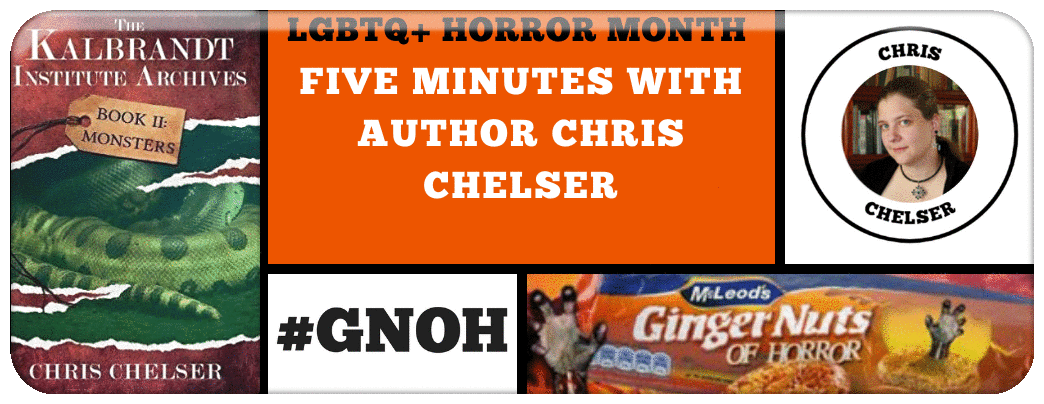 Could you tell the readers a little bit about yourself? When I was six, I scrawled and illustrated my first story to keep the demons under my bed at bay. For the better part of three decades, dark stories and psychological puzzles kept me sane while I went through the motions of school, multiple university degrees and a corporate career. By my mid-thirties, the demons won. I have dedicated myself to feeding the little bastards ever since, while being a wife and a mother between the lines. In other trivia: I’m Dutch by birth, bilingual by nature, and live in the Netherlands. I believe this is the point in the biography where writers mention their pets, but we don’t have any. Although my son does very convincing impressions of puppies, kittens, and the occasional pterodactyl. Does that count? Why horror? What is appeal of the genre to you as both a fan and as a writer? My love for dark fiction and horror has been there since I can remember. As a child, I couldn’t relate to the happy-ever-after stories in children’s fiction considered appropriate for my age. So as soon as I could string words together, I wrote what wanted to read. In school, my creative writing projects dealt with injuries and death, which terrified my teacher. What appeals to me now, as an adult, is the reality of it. Fear, desolation and despair are emotions we all feel, but they are no longer socially acceptable… except in horror fiction. As LBGTQ+ fan and writer of horror, how did you when you first became immersed in the genre and found that representation that you could identify was few and far between? After the initial shock of finding out, I regarded my bisexuality as similar to my eye colour: a fact of life. I never struggled with it, so maybe that is why I didn’t actively search for representation for a long time. It is more important to me whether I can relate to a character on the whole, and their sexuality was never a deal-breaker in that respect. Perhaps that is for the better, but any queer characters in a story tend to be exclusively gay or lesbian, and that’s not me. In the horror genre, in my experience explicitly queer characters are so rare that they might as well no exist. Either sexuality doesn’t feature at all due to the nature of the plot, or if it does contain sex/erotic scenes, the story plays safe and sticks to heterosexuality, because that is still the statistical majority of the readers. Occasionally a story like that will include LGBT+ aspects, but those are often thrown in for shock value only. That isn’t representation, that’s just repulsive. These days, I don’t expect to find relatable LGBT+ characters in works of any genre, never mind bisexual main characters. But it does happen, once in a blue moon. When it does, I feel a little warmer inside. How did you discover authors that wrote about characters that you could relate to? Characters are a package deal for me, and not every character from the same author will be relatable. So finding them – authors and characters – is really a matter of chance. Other than the horror genre, what else has been a major influence on your writing? European surrealist graphic novelists of the 20th century. Like Patrick Ness does in his And the Ocean Was Our Sky, they take magical realism to an almost psychedelic level that requires the reader to not just suspend but relinquish disbelief. I enjoy that immensely, and it’s a goal to strive for in my own work. The term horror, especially when applied to fiction always carries such heavy connotations. What’s your feeling on the term “horror” and what do you think we can do to break past these assumptions? To me, it seems the term is often interpreted as a synonym for brainless carnage and gore. A great pity, since I feel everything from suspense to thrillers can – and at times should – be included in the genre. I’m a fan of occult horror myself, but history has proven that real life is sometimes more horrifying than fiction. There are so many stories and concepts that qualify, yet so many bookstores and even libraries showcase only a narrow selection. But the public can’t discover what they don’t know is out there. Fortunately, many reviewers of the genre highlight the enormous diversity of horror stories and authors. It may take time, but I believe that will go a long way to help break the mainstream prejudice that horror is just one type of story. A lot of good horror movements have arisen as a direct result of the socio/political climate, considering the current state of the world where do you see horror going in the next few years? Given the unhinged state of society at present, I expect developments in two directions. On one hand, people are angry and they want to see that anger translated in their entertainment. In the shape of more and increasingly violent dystopian zombie fics, I imagine. On the other hand, there will be people who want to escape from reality, to a time when things seem simpler. So I believe we will also see more gothic horror stories with historical settings in the near future. What are the books and films that helped to define you as an author? I took my cues from such a wide range of works in all kinds of genres and styles. None of those defined me, yet they all did. If I must name one, it would have to be the surrealistic graphic novels by the Belgian artist Eric. In recent years there has been a slow but gradual diversification within the genre, which new LBGTQ+ writers do you think we should be paying attention to? Ow, this is like asking me which new authors with green eyes I recommend. I segregate authors in only two categories: those whose work I like, and those whose work doesn’t resonate with me. The ones I like may well be LGBT+, but unless they are shouting that from the rooftops, I probably won’t realise that they are. How would you describe your writing style? My stories tend to be complex, confronting and at times demanding. I weave multiple layers through the plot, and details are important. Despite all that, many people tell me my books have a filmic flow that is easy to read. It does make sense, since for me writing is transcribing the movie that plays in my mind. Are there any reviews of your work, positive or negative that have stayed with you? I’m not a native speaker of English, so every time a reader comments on the high quality of the language in my work, that fills me with joy. One review that still puzzles me a bit was a reviewer rating my novel The Devourer with two stars, saying it was because one of the side characters was “so horrible”. That despicability was the whole point of the character, so I took this to mean I had done a good job. What aspects of writing to do you find the most difficult? Mustering the necessary concentration and focus. My mind bounces all over the place, all the time! Are there any subjects that you would never write about? Graphic child death. I write, and have written, about children who died of natural causes, but never gratuitously. Corpses and horrendous deaths in general are not a problem. But not children. Writing, is not a static process, how have you developed as a writer over the years? Because of my visual-oriented nature, I had to actively learn to engage all senses of the characters to make a scene come to life for the reader. I love to experiment with different story structures, settings, styles... There is always something new I want to try out in a project, just to see if I can pull it off. What is the best piece of advice you ever received with regards to your writing? “Be concise.” My background in law and business often acts up, and I’m constantly trying to break that habit of needlessly convoluted speech. Getting your worked noticed is one of the hardest things for a writer to achieve, how have you attempted to break through the barriers that are so often in place against LBGTQ+ writers? It’s not really my place to discuss the barriers LGBT+ authors face in the industry. Yes, I’m bisexual and not everyone accepts that fact about me, but since I’m a woman married to a man, the divergence of my sexuality is almost invisible. I don’t face the prejudice that some LGBT+ authors do. All I have to worry about is the standard industry barriers and catching readers’ attention, both of which are enough of a struggle. Many CIS white male authors use LGBTQ+ characters in their works, what’s the mistake that they make when trying to portray these characters? Stereotyping. Clothes, demeanour, interests, and of course the idea that LGBT+ life consists solely of relationship drama. As if queer people don’t have jobs or drive a car or pay their bills, same as everyone. More insidious, however, is that for these authors the acronym doesn’t continue after “LG”. They may consider writing a gay or lesbian character, but it seems they can’t fathom the various other ways people – and thus characters – can be queer. Moving on to getting your work read by unwashed masses, what do you think ins the biggest misconception about LGBTQ+ fiction? That somehow LGBT+ fiction deals with themes that have nothing to do with the predominantly heterosexual masses. I often hear arguments like “Oh, it’s all relationship drama and depression. That’s not me, so I don’t want to read that.” Certain conflicts depicted in LGBT+ fiction may indeed be less relatable to heterosexuals, but in terms of themes it’s really quite universal. There are as number of presses dedicated to LGBTQ+ fiction, do you view these as a good thing, or do you think they help to perpetuate the ongoing exclusion from mainstream presses? While the mainstream presses continue to be homophobic, dedicated presses are a key factor in getting LGBT+ fiction out into the world. That said, I do believe that it would help not to put too much emphasis on a book being LGBT+ fiction. What I mean is that there is a difference to how a press presents itself to readers and to authors. A press that is known to authors to be LGBT+ friendly could present its titles to the masses simply as good books worth reading. Humans are wired to reject what they don’t know or understand, so tying into my answer to the previous question about misconceptions among the masses: if a book is not explicitly marketed as being LGBT+ fiction, there is less chance of the masses rejecting it outright. That way, readers can discover for themselves that LGBT+ authors and characters are not ‘scary’, which in turn lowers the barriers for mainstream presses to give LGBT+ authors a fair chance. And here is the million dollar question do you agree with movements like this and things such as Women in Horror Month? If so how would you like to see sites such as Ginger Nuts of Horror tackle diversity? Any niche in a market could do with a highlight to draw attention to its existence. When you have visited 5 bookstores and in each of them, 95% of the horror section is books by Stephen King and Joe Hill, then yes, Women in Horror Month is a welcome spotlight on authors who are otherwise overlooked. The same is true for subgenres of horror. We all know about serial killers, monsters, haunted houses, and gore fests, but how about putting a spotlight on horror in science fiction? Or historical horror stories to read after you finished Frankenstein and Dracula? To me, highlighting diversity by singling out ‘popular minorities’ seems patronising, but including these movements in a range of spotlights on various lesser-known corners of the market sounds very appealing across the board. The most common phrase you hear when people object to active movements to encourage all forms of diversity is “I don’t care about the sexuality, gender, color etc etc of the writer I only care about good stories” what would you like to say to these people? That is the definition of inclusion, and if those people put their money where their mouth is, that is a fine thing. However, representation serves another purpose on a larger scale than this single individual. The influence of authors, stories and characters cannot be underestimated. Positive representation is incredibly powerful: the more you see something, the more you subconsciously accept and even like it. This ‘mere exposure effect’ is how society’s outlook on certain subjects changes over time. For that reason alone, positive representation of queer people in fiction matters. It isn’t just about the individual author or reader, but about how our society evolves. Hopefully into something less judgmental and more inclusive. To many writers, the characters they write become like children, who is your favorite child, and who is your least favorite to write for and why? If I don’t like writing a character, they have no business being in my stories. I do have several problematic children, the ones I love to hate, but I still like writing them. One of my absolute favourites is Cael Kalbrandt from The Kalbrandt Institute Archives series. He is such a bastard! The challenge with him is to let his better traits shimmer through his arrogant nature, without suggesting that these make him anything else than a psychotic manipulator. What piece of your own work are you most proud of? All my stories make me proud in one way or another. In some cases simply because I mustered the courage to write them at all, never mind finish them. For those who haven’t read any of your books, which of your books do you think best represents your work and why? For this spotlight specifically, I would recommend The Kalbrandt Institute Archives. Diversity of all kinds – character traits and backgrounds, stories, subjects, themes – is the key driver of this series. Both main characters are different variations of queer, as are multiple supporting characters. Plus people tell me it is an entertaining read. 😉 Do you have a favorite line or passage from your work, and would you like to share it with us? From The Kalbrandt Institute Archives – Book I: Hauntings ‘It’s just a research institute, for crying out loud. Of strange subjects, I’ll grant you that, but with what I can do, I’m used to freaky stuff.’ ‘Freaky?’ He snorted. ‘You fell down a rabbit hole, Eva. Haven’t you realised that yet?’ ‘The comparison crossed my mind,’ she spat back. ‘So if I’m Alice, what does that make you? The Mad Hatter or the March Hare?’ Can you tell us about your last book, and can you tell us about what you are working on next? Apart from Books III and IV of the Kalbrandt series, I’m currently writing a surrealistic novel where a ship and its crew provide a graphic allegory for depression and suicide. What was the last great book you read, and what was the last book that disappointed you? Laura Purcell’s The Silent Companions was the last book that truly captured me. Nothing I read since surpassed that. The latest disappointment was Matt Haig’s How To Stop Time. The premise was promising, but the story was too straightforward to my taste. What's the one question you wish you would get asked but never do? And what would be the answer? “Do you want another coffee?” Yes. Yes, I do. ABOUT CHRIS CHELSER Inspired by first-hand experiences, Chris Chelser writes dark paranormal fiction about ghosts, monsters, history and the human soul. Preferring dark stories to ‘happily ever after’ since she was a child, she began writing in her teens and never stopped. She lives in the Netherlands with her family, and with the demons under her bed, which have inspired The Kalbrandt Institute Archives series, her novel The Devourer, and other work still stewing in the murky depths. Website: www.chrischelser.com Twitter: www.twitter.com/chrischelser THE KALBRANDT INSTITUTE ARCHIVES – BOOK I: HAUNTINGS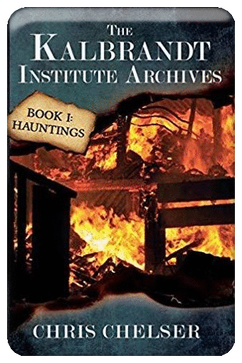 It’s her first day, and the Institute’s vast collection of rare books and ancient artefacts is already whispering to her. Here, Eva’s psychic ability to ‘read’ objects on touch isn’t weird. It is why they hired her. But the reports in the archives contain more than she bargained for. Watching through the eyes of her long-dead colleagues, Eva discovers the dark reality of her dream job: how long before she, too, becomes a memento in her boss’s collection? Amazon (paperback & Kindle) Smashwords (epub, mobi & more) THE KALBRANDT INSTITUTE ARCHIVES – BOOK II: MONSTERS Several months after her first encounter with the archives, Eva's training relentlessly pushes her psychometric ability to the limit. While digging for memories hidden in fossilised bones and ancient documents, she discovers the true purpose of her job, and any hope she had of leaving is dashed. With the help of a new ally, Eva exposes disturbing facts about their boss. Unable to escape his grasp, they will have to find another way to fight back. Because there can be no doubt that they work for a monster... Amazon (paperback & Kindle) Smashwords (epub, mobi & more) Note: All my books are permanently free on Smashwords! 
 Mark Allan Gunnells loves to tell stories. He has since he was a kid, penning one-page tales that were Twilight Zone knockoffs. He likes to think he has gotten a little better since then. He loves reader feedback, and above all he loves telling stories. He lives in Greer, SC, with his husband Craig A. Metcalf. Could you tell the readers a little bit about yourself? Well, the short and sweet version is I’m a man who loves to tell stories. Nothing brings me greater joy. I’m also a gay man, happily married to a man I always say isn’t the man of my dreams because he actually exceeded my dreams. Sometimes the question arises, are you a gay writer or a writer who happens to be gay? For me, those distinctions don’t matter. Both being gay and being a writer are such intrinsic parts of who I am that they meld together with all the other aspects that make me me that I don’t give it much thought to be honest. Why horror? What is appeal of the genre to you as both a fan and as a writer? You know, I’m not entirely sure I have a satisfying answer for that. Horror got its claws into me as a young ago, when I watched the original Salem’s Lot miniseries and even caught a bit of The Exorcist on TV. I found horror so thrilling, so captivating, that I was instantly hooked. Horror at its best has a real physical effect on the reader, and as I developed into a writer myself, I wanted to try to create that effect for readers as well. As an LBGTQ+ fan and writer how did you become immersed in the genre and find representation that you could identify was few and far between? I knew I wanted to be a writer before I knew I was gay. At least, before I accepted I was gay. As I came to terms with my sexuality, I was still writing stories with exclusively heterosexual characters. Partly because I looked around and there simply wasn’t a lot of representation. Most mainstream horror novels had no gay characters, and when they did those characters were usually used as punchlines or objects of horror themselves. There were also no high-profile gay writers in the horror field. Barker was prominent but he was not out at the time. Insiders may have known he was gay, but the general public did not so I felt alone when I scanned the horror genre. I honestly wasn’t sure there would be a place for me at the table. How did you discover authors that wrote about characters that you could relate to? Other than the horror genre, what else has been a major influence on your writing? As the 1990s unfolded, some gay voices did start to immerge in the horror field. For one, Barker very publically came out on the cover of Advocate magazine and released the novel Sacrament with a sympathetic gay protagonist. That made a huge impact on me, seeing that someone who was such a force in the genre was gay and unashamed and still putting books out by a major publisher and getting lots of attention. Then I discovered Poppy Z. Brite. Though at the time I didn’t yet realize Brite was trans, I did know that he used gay characters in all his work and he didn’t make those characters eunuchs but dealt very openly with their sexuality. Other than horror, the works of writers like Armistead Maupin and David Leavitt and even Rita Mae Brown influenced me at a critical stage, just seeing the way they created these authentic and dynamic gay characters. The term horror, especially when applied to fiction always carries such heavy connotations. What’s your feeling on the term “horror” and what do you think we can do to break past these assumptions? The thing that frustrates me the most is that sometimes the term “horror” is thought to mean low quality. Even among so-called fans, I will see comments like, “The plot didn’t make a lot of sense and the characterization was thin, but hey, it’s just horror.” That is why when a book or movie comes out that gets critical acclaim, people start bending over backwards to label it as something other than horror. Thriller or suspense or supernatural mystery. Because they seem to think if something is good then it can’t be horror because by definition horror can’t be good. That is utter bull, and I think the best way to combat that is for creators to keep creating horror with strong plot and three-dimensional characters, stories with layers and emotional power. We need to create such stories then not shy away from the horror label. We need to make quality work then be unashamed in calling it horror. A lot of good horror movements have arisen as a direct result of the socio/political climate, considering the current state of the world where do you see horror going in the next few years? I hope that horror continues to get more diverse. It is happening, but there is still a push back. Anytime someone brings up the fact that the majority of horror anthologies have TOCs that consist of primarily white straight men, people get in an uproar and say “It should only be about the talent.” Well, yes, but if you say that is happening but the majority still consist of white straight men, then you have to own the fact that you are saying you think white straight men are just more talented than women or racial minorities or gay writers. And I don’t think that is true. I think there is a lot of historical bias, both conscious and unconscious, we are still working through. Making the horror genre more diverse will only serve to strengthen the genre. New voices, new perspectives can take familiar stories and infuse them with an originality that makes them fresh again. What are the books and films that helped to define you as an author? The work of Stephen King really influenced me a lot in my formative years. The way he creates characters that feel like people you know, and settlings that are as familiar to you as your own backyard. He took horror out of the gothic castles and put it in the middle of downtown for me. It was the first novel I ever read that left me totally in awe and made me want to try harder as a writer to achieve something of that magnitude. And to be honest, the thing that probably has had the greatest impact on me as a writer is The Twilight Zone. I grew up watching both the original series and the 1980s incarnation, and there was something about the surreal nature of those stories, the subtle horror that didn’t beat you over the head with it but instead worked more insidiously, that defined how I came to view horror. In recent years there has been a slow but gradual diversification within the genre, which new LBGTQ+ writers do you think we should be paying attention to? There are some wonderful LGB TQ+ authors out there, some more well-known than others, that I think people should be reading. Number one on my list is Australian author Aaron Dries. His work is so emotionally raw and powerful and vivid, I can’t recommend him enough. Brandon Ford also puts out some very good horror novels and collections as well. Norman Prentiss and David Greske also come to mind. How would you describe your writing style? I have a very conversational style of writing. Straight-forward and simple, I guess I want the reader to feel they are just being told a spooky story by a friend. Are there any reviews of your work, positive or negative that have stayed with you? When I was first publishing short stories in ezines and small magazines, I had an editor tell me basically not to quite my day job. Not in those exact words but he said I needed to seriously consider whether writing was something I really wanted to do, because my energy might have been better directed elsewhere. That has stayed with me because it did not crush me; instead, it motivated me. Because despite the fact that this editor felt I had no talent, I knew writing was my passion and writing was what made me happy. And nothing was going to deter me from doing it. I also remember a lovely review the writer John R. Little gave to my collection Tales from the Midnight Shift. I did not know John at the time, but he gave such a generous review that it touched me greatly. What aspects of writing to do you find the most difficult? The non-writing parts are difficult for me. Namely, the self-promotional parts. It’s a tricky business. You need to get the word out, but too much and you become obnoxious. I find that a hard balance to strike. Are there any subjects that you would never write about? No. I feel like any subject is fair game in fiction. Not everyone will want to read every subject, but I would never let that dictate whether or not I explored a subject. Writing, is not a static process, how have you developed as a writer over the years? Well, I like to think I’ve gotten better. We all start out as sort of imitators, mimicking the writers we love, but as the years have gone by, I feel I’ve found my own distinctive voice. What is the best piece of advice you ever received with regards to your writing? To write what you love, to write what you are passionate about. Not to worry about market trends or things like that, but to just focus on the stories that bring you the most joy. Getting your worked noticed is one of the hardest things for a writer to achieve, how have you attempted to break through the barriers that are so often in place against LBGTQ+ writers? I’m not a household name, far from it, but I’ve been pleased to find that being openly gay doesn’t seem to have hindered me. When I first started publishing, I ran into some editors that did tell me being openly gay would hurt my potential career. I had some rejections that told me the “heterosexual male fanbase” of horror would not be interested in works with gay characters, especially if these characters were not gay in name only but actually had active sex lives. I had braced myself for such a reaction from readers, but I did not find that to be the case at all. I think those editors were underestimating the horror readers. Many CIS white male authors use LGBTQ+ characters in their works, what’s the mistake that they make when trying to portray these characters? Sometimes they overthink it. At the core of things, humans are all more alike than different. But sometimes I see CIS white males use gay characters in what I call “name only.” You know these characters are gay because there is a line that says they are gay, but then that doesn’t seem to have any effect on who they are. Being gay isn’t all that I am, but it does inform who I am. It’s like something Joe Lansdale once said about characterization. Giving a character a limp isn’t characterization, but how that character feels about the limp and how it effects his life…that’s characterization. Same with being gay. How has it effected the character? And yes, gay people aren’t constantly having sex like the stereotype suggests, but all humans have a sexual drive and ignoring that when you create a gay character seems kind of glaring to me. Moving on to getting your work read by unwashed masses, what do you think is the biggest misconception about LGBTQ+ fiction? That straight readers can’t relate to it. That was something those early editors made me fear, but I have gotten great feedback from straight readers who see the characters as more than just gay, but as fully realized humans. It’s a misconception in general that people only want to read about people who are just like them. There are as number of presses dedicated to LGBTQ+ fiction, do you view these as a good thing, or do you think they help to perpetuate the ongoing exclusion from mainstream presses? I’m of two minds. I don’t think there is anything wrong with it, the way there is nothing wrong with a women’s only or LGBT only anthology. It puts focus on a segment of the horror community that historically has had little focus on them. However, it shouldn’t become a trap where a gay author can ONLY publish in these markets. I had an editor tell me that once, that my work featuring gay characters should be sent only to publishers that specialized in this. Nothing wrong with those presses, but it shouldn’t be an either/or. And I do see mainstream presses opening more to gay horror authors. And here is the million dollar question do you agree with movements like this and things such as Women in Horror Month? If so how would you like to see sites such as Ginger Nuts of Horror tackle diversity? Absolutely agree. Like I said before, this kind of thing shines a spotlight on minorities that historically haven’t been represented much in the horror genre. That is important to gain visibility and traction. I think what Ginger Nuts is doing by highlighting LGBTQ+ for the month is a great thing, and I am glad to be a part of it. The most common phrase you hear when people object to active movements to encourage all forms of diversity is “I don’t care about the sexuality, gender, color etc etc of the writer I only care about good stories” what would you like to say to these people? I addressed this earlier. You can’t say something like that and then ignore the fact that the majority of the genre is still straight white males. If you are going to say you only care about good stories, do you then believe that good stories are written by all different types of people? If the answer is yes, then you should then question why there isn’t more diversity in the genre. If the answer is no, you are part of the problem. To many writers, the characters they write become like children, who is your favorite child, and who is your least favorite to write for and why? No parent will admit to having a favorite child, but I particularly enjoyed writing the character Emilio Gambrell who appeared in my novels The Quarry and The Cult of Ocasta (and also a supporting role in my novella October Roses) because I found him a fascinating character who changed a lot. I also had so much fun writing Jacoby in Outcast and Mama Metcalf in Where the Dead Go to Die because they were hilarious. I don’t really dislike writing any character. Even the wicked or annoying ones, they serve the story and therefore are never a pain to write. What piece of your own work are you most proud of? That’s another of those “favorite child” type questions. I am very proud of my short story collections, I have to say. Short stories are a particular passion of mine. Oddly I’m most proud of some of the ones that have gotten the least attention. I have two digital-only collections, Ghosts in the Attic and Curtain Call, that I think contain some of my best work. I also recently self-published a novella collection called Deviations from the Norm, and I think the vampire novella “The Unholy Eucharist” is one of my most ambitious works and I am incredibly proud of that one For those who haven’t read any of your books, which of your books do you think best represents your work and why? That is a hard one to answer because I write different types of stories even in the horror genre so that no one book I think can really represent me. In some ways, the collections give you the broadest view of my interests. So something like Flowers in a Dumpster or Companions in Ruin. Do you have a favorite line or passage from your work, and would you like to share it with us? I’ve always been proud of the opening line of my zombie novella Asylum. I think it is attention-grabbing and immediately lets you know what kind of story you are getting. It goes, “When the dead arose, Jimmy was going down on the balding accountant.” Can you tell us about your last book, and can you tell us about what you are working on next? My most recent release was Deviations from the Norm, which collects three novellas that take familiar horror tropes and hopefully give them fresh twists. I have a new collection and novel due out in 2019. I’ve been working exclusively on short stories for the past several months, but I’m about to start a new novel. What was the last great book you read, and what was the last book that disappointed you? I recently finished The Night Listener by Armistead Maupin and Driving to Geronimo’s Grave and Other Stories by Joe Lansdale and found them both quite wonderful. Also the newest books by Anne Rice and J.K. Rowling really delighted me. As for disappointed me, I honestly have the philosophy that I don’t tend to talk about the books that disappoint me because even then I know the writer put his or her heart and soul into it and don’t want to give any negativity. What's the one question you wish you would get asked but never do? And what would be the answer? No one ever asks me the first fictional character I ever fell in love with. And if asked, I would answer that it was probably Eddie Dean in King’s Dark Tower series. Watching him battle his demons with wit and charm really won my heart.  
|


Archives
May 2023
|



 RSS Feed

|

|