

FIVE MINUTES WITH AUTHOR IAN WELKE
22/4/2019
 Could you tell the readers a little bit about yourself? I’m a writer from Long Beach, California. I started playing roleplaying games in the late 1970s/early 1980s. This started with D&D which led to Call of Cthulhu, which led me and my library card to HP Lovecraft which opened the door to horror fiction for me. I was already a big reader of fantasy, Tolkien had already led to D&D, so I suppose there’s a circular path in there. After watching the original Cosmos, I wanted to be an astronomer, but when it came time for university, it was clear I wasn’t good at math, but I was good at literature and history, and I earned a History degree, specializing in ancient and medieval history. When I moved out of the house, I was lucky enough to have roommates who went to work at Blizzard Entertainment. They helped me leave my miserable delivery job that I had stuck with way too long due to my obsession with Neal Stephenson’s Snowcrash, and I started in the testing department at Blizzard. I worked there for eight years and got to work on games such as Diablo 1 and 2, Starcraft, Warcraft III, and much of the early testing on World of Warcraft. I then moved to Seattle for six years, where I was happy to get to work with great people, at a terrible company for part of it, and then got to work with great people at a great company on the game Torchlight. The games industry expects crazy hours, and I wanted to spend more time writing. I’d sold a couple short stories while I was living in Seattle, and when moving back to Long Beach gave me the chance to spend more time reading and writing, I took it. So far in addition to a handful of short stories, I’ve written three novels that have been published by Omnium Gatherum books: The Whisperer in Dissonance (2014) , End Times at Ridgemont High (2015), and Four Corners (2019). What do you like to do when you're not writing? Reading, movies, or in this era, television, I’m pretty obsessed with stories. Along the same lines I still play roleplaying games regularly, tabletop games less often but whenever I can. My other obsessions are: music, mathematics, whisky, cooking. Other than the horror genre, what else has been a major influence on your writing? Really all genres. I learned to read, I mean proper see it in your mind’s eye read, when I was a kid because my dad read us the Lord of the Rings, and I wanted to hear it again, but my dad was always working so if I wanted the story again I had to read it myself. Fantasy fiction has always been my favorite to get lost in, although I also think it has horror elements. At least when your seven, that chapter where the black riders come into Bree… I still get a shiver. Along with fantasy I grew up reading comic books and the classic science fiction writers, then Douglas Adams came along and Hitchhikers Guide joined Lord of the Rings as the books I’d reread whenever I needed cheering up. When I grew a bit older I discovered the hardboiled detective fiction, and I’m named Ian because my mother really liked spy novels (lucky for me I was born when I was, a year later and I’m pretty sure my middle name would’ve been Le Carre), so I think genre fiction has always been there for me. The term horror, especially when applied to fiction always carries such heavy connotations. What’s your feeling on the term “horror” and what do you think we can do to break past these assumptions? I know exactly what you mean. I’ve been in the HWA tent at the Los Angeles Time Festival of Books a few times, and a sizeable number of people turn away saying, “I don’t like horror” and the odd thing is, I think it’s a difference preconception for each of them, or at least one of a number of different preconceptions: some mean they don’t like vampire stories, others don’t want to read torture porn or slasher stories. The cause varies but the reaction is the same. I think the answer must vary as well. Certainly there are people who want to read the torture porn or slasher stories, etc. But I think most readers would be open to horror stories if they weren’t thinking of them as automatically being about that preconception. I think some of this can be accomplished with crossed genres. Or at least I think that the horror averse reader assumes that they’ll spend the entire story with the character miserable, and who wants to be immersed in that? Just scanning the book shelves behind my monitor for the “horror” books, I don’t think any of them do this. I think the majority of those stories are fun. Okay the characters might not be having joy all the time, but they’re unlocking a mystery, discovering something weird, in a plot that verges more on science fiction with some intense scary bits. Just scanning a few on one shelf, I see the Cody Goodfellow books, which are often manic hilarity mixed with horror elements, the Laird Barron books a few of which have legitimately given me nightmares but tend to be more psychological than the characters being endlessly tortured, Robert Jackson’s American Elsewhere is set in a town so interesting it’s fun to spend time in that setting despite the horror. There’s a line in Twin Peaks about “I’m having the most beautiful dream and the worst nightmare at the same time,” and I think the two pair weirdly well together. To sum up this ramble, I think there needs to be a way of describing the genre to the averse reader to ensure them that there will be fun and joy and not just page to page terror. A lot of good horror movements have arisen as a direct result of the socio/political climate, considering the current state of the world where do you see horror going in the next few years? The way the world is going at the moment, I fear that future books will have to be written in the mud with a stick. But yes, what to write given the state of things is something I’ve worried about. It started that I was writing a lot of dystopian fiction only to have to throw it out because by the time I finished the story, the thing I was going to warn about had happened, only worse and also somehow, a lot stupider. This is going to sound odd coming from a writer who has written three novels with apocalyptic elements, but I’d like to see some optimism in fiction, given that there seems to be none in the real world currently. The crazy part of my mind almost wonders if we caused this. Did we write so many dystopias that we inverse The Man in the High Castled ourselves? Have we metad the wrong direction? Unfortunately I don’t know if optimism is in my wheelhouse, but I think I’m going to try. What are the books and films that helped to define you as an author? I think I’m paralyzed by the possibilities for the answer to that question. I read so much and so often get totally carried away by stories. Since I’ve already mentioned a few of those stories in other questions, I’ll go with the Borges short story “Tlon, Uqbar, Orbis Tertius.” It’s a bit of metafiction about people who create a fictional world that starts to come into their reality because that’s what happens within their story. For a movie I’ll pick How to get Ahead in Advertising, although Chinatown or They Live or a whole bunch others are tempting. What new and upcoming authors do you think we should take notice off? I’m not sure at what the metric is on new and upcoming. Two writers I’ve met who I think are great horror writers are S.P. Miskowski and John Claude Smith. I look up to both of them, both for their prose and for their storytelling. Pete Aldin is an Australian writer with some great updates on werewolf and zombie fiction in particular. In addition to his excellent what if Tom Waits were a deity in a fantasy series books, Brent Kelley has actually written a dystopian novel that actually disgusted me, and I’m usually pretty jaded. How would you describe your writing style? The good thing about my writing style is it’s usually fast paced. There’s an Elmore Leonard line about cutting out the bits you’d skip over while you’re reading. Sometimes I do that too much, but fortunately editors have been kind enough to help. I guess that’s the best description of my writing style is I really can’t thank editors enough. Are there any reviews of your work, positive or negative that have stayed with you? I’m still at the stage where I’m happy to get any reviews. I guess the one odd thing about that… Some of the blurbs on my first book were so nice, I took them way too seriously. The early drafts of my third book took forever to write partially because I kept thinking about those blurbs and “oh god, now I have to live up to that!” What aspects of writing to do you find the most difficult? Focusing on one story to get it written and not getting distracted by the million other stories I want to write is a tough one. Writing the middle of a story can be tough. Usually I know the beginning and the ending, but sometimes they don’t connect as well as I think they will. Ooh. Time is a big problem. It takes me so long to write that things change and I forget things and… I guess really all of it is a struggle, or everything is a struggle except research. I always like researching, I only sometimes like writing. If there were a way to do the research and have the story form magically, I’d take it. Is there one subject you would never write about as an author? This is tricky, because answering the question is almost like writing about it. I think it’s unlikely I’d write a rape scene. There are other much better writers who can deal with this. I don’t think I could do it, and if I tried to write it I’d be terrified that I’d make some terrible mistake. How important are names to you in your books? Do you choose the names based on liking the way it sounds or the meaning? It didn’t occur to me to worry about the way things sound until I had to do readings and then I realized how much it matters. Names are very important. I try to make sure I research the name, where it comes from, what that says about the character’s background. There was a fantasy book I have since shelved (and been running as D&D instead) where every name was derived from a different language. Spent months researching those names, just to abandon the story, ah well. Writing, is not a static process, how have you developed as a writer over the years? I sure hope my writing has evolved in a positive way. One thing I’ve learned is that I need to write what I want to write. It seems obvious, but it took some learning. After my second book was nominated for a Bram Stoker Award, but didn’t sell a lot of copies, I started worrying too much about sales. I tried writing a book for what I thought would be a mass market, and basically lost a couple of years to writing a boring book that thankfully is now in the trash where it belongs. What tools do you feel are must-haves for writers? Everyone is different. For me the best thing I found is Scrivener. The way it helps separate a chapter from the main file, and a scene from the chapter, makes writing more manageable. What is the best piece of advice you ever received with regards to your writing? Everybody is different and what works for one writer might not work for you. Like everything else I do, I’ve read tons of books about writing. For me I really like Stephen King’s On Writing, Anne Lamott’s Bird By Bird, and Jeff Vandermeer’s Wonderbook isn’t just a great book for writers it’s one of the most beautiful books I’ve ever seen. But I think you need to treat writing advice as a buffet and select the parts you like or are very good for you and leave the rest for other people. Getting your worked noticed is one of the hardest things for a writer to achieve, how have you tried to approach this subject? I’m pretty sure I’m terrible at this, but I’m trying. I’ve put up a website, I’m on social media, I’ve done readings, attended conventions etc. At the end of the day I think I’ve written some good stories, but I think it’s going to take a great story in order to stand out and get the word of mouth going. Hopefully Four Corners will be that book, if not, maybe it will be the next. To many writers, the characters they write become like children, who is your favorite child, and who is your least favorite to write for and why? My favorite character to write was Dean, the stoner surfer from my second book End Times at Ridgemont High. His chapters and scenes were as close to effortless as I’ve found writing, and he made me laugh which seems insane since I was writing what he did and said. There’s never been a character I didn’t like writing, but if there were I’d guess it would be a character who fights a lot, or is the action hero in a group. For some reason I hate writing fight scenes. I’m going to have to get a lot better at this given some of the books I have planned, but at the moment it always feels like a chore. What piece of your own work are you most proud of? I did so much research for Four Corners and the ways that research (what didn’t get cut) found its way into the book still surprises me. Without giving too much away, there’s a scene where the protagonists find a lost diary of John Wesley Powell (the man who first forded the Colorado River despite having lost part of an arm in the Civil War). I think I got Powell’s writing style down, or came close to it anyway. I love this and the way that an incredibly varied array of history works its way into that book. And are there any that you would like to forget about? I have stopped and started too many stories to count. I guess the book that I wrote in between End Times at Ridgemont High and Four Corners, the one where I was trying too hard to please an imagined market rather than writing what I want, I should forget about. It still bothers me because I think there’s a good book in there somewhere, but it’s not what I want to work on and probably is better forgotten. For those who haven’t read any of your books, which of your books do you think best represents your work and why? I think either Four Corners or The Whisperer in Dissonance are probably pretty good representations of my work and myself. Sleep deprived, too much coffee, scattered and often manic… yeah that about sums me up. Four Corners might be better, I sure hope my writing has improved over the last six years, but also I think the book with all its research conveys my wish to acquire knowledge to the reader. I hope. Do you have a favorite line or passage from your work, and would you like to share it with us? I like this chapter ender from Four Corners: When he passed each of the places where his comrades had been, all he found was their gun belts submerged in a puddle of rain water. Over each puddle a spiral petroglyph had been scratched into the rock. Can you tell us about your last book, and can you tell us about what you are working on next? My latest book is Four Corners. It’s a story of a conspiracy running through deep time set in the American southwest. As the characters unlock the mystery they find weird esoteric libraries in the guise of abandoned buildings, learn how the conspiracy affected the disappearance of the ancestral Puebloans and later the Puebloan revolt, how a modern cult had run ins with the Wild Bunch, uranium miners, and a lost cult classic psychedelic 70s western… amongst other madness. There are two projects I’m really eager to start. One is a science fiction story in a fantasy setting. The other is a spyfi series I’d describe with shorthand as Sandbaggers in space. If you could erase one horror cliché what would be your choice? The thing about clichés, is it often seems like they’re there for a reason, especially with horror. I’d suppose some things are just conveniences for the writer, describing a character by looking in the mirror for instance and we could probably do without these (I know I’ve done that one, shame on me.) On the other hand, I think I probably overuse having my characters be sleep deprived for instance, but a) write what you know and b) I think it’s a good way to make their perceptions unreliable which eases the weird into the book. What was the last great book you read, and what was the last book that disappointed you? I just read two books I really liked. A Distant Mirror by Barbara Tuchman and Fire and Blood by George RR Martin. Both were histories, one fictional, but still. Both had a lot of great moments of backstabbing, treachery… I love the way Martin used a fictional historiography to make the sources of his book characters of their own. I don’t just highly recommend them, I recommend reading the two together. Another nonfiction book I recently read was an account of the commando raid on the heavy water processing plant in Norway during World War II. I didn’t care for the style of the writing I suspect. There were jumps between the raid taking place and the interviews in the 1970s that I found hard to follow. What's the one question you wish you would get asked but never do? And what would be the answer? Probably something to do with research. I’d probably have to admit that I have a research problem and need therapy for it. Thanks for letting me ramble on! ABOUT IAN WELKE Ian Welke grew up in the library in Long Beach, California. After receiving his Bachelor of Arts in History from California State University, Long Beach, he worked in the computer games industry for fifteen years where he was lucky enough to work at Blizzard Entertainment and at Runic Games in Seattle. While living in Seattle he sold his first short story, a space-western, written mainly because he was depressed that Firefly had been canceled. Following the insane notion that life is short and he should do what he wants most, he moved back to southern California and started writing full time. Ian's short fiction has appeared in Big Pulp, Arcane II, the American Nightmare anthology, and the 18 Wheels of Horror anthology, amongst other places. His novels, The Whisperer in Dissonance (2014) and the Bram Stoker Award Nominated End Times at Ridgemont High (2015), and Four Corners (2019) are all published by Ominum Gatherum Books. Twitter: https://twitter.com/mewelke Website: https://www.ianwelke.net/ The Whisperer in Dissonance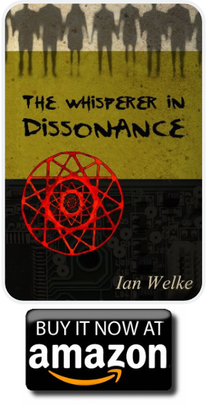 Annie sleeps in fitful spurts dreaming of an altered world populated by drone-like slaves and gangly masters. Her dreams leave her panicked and ragged as if she hadn’t slept at all. Is there a barely audible voice buzzing in the background hum? Or is the sleep deprivation driving her to delusions? “The Whisperer in Dissonance is a scary, disturbing novel that reads like a cross between H.P. Lovecraft and Philip K. Dick. I highly recommend it.” —Mike Davis, editor of The Lovecraft Ezine    Could you tell the readers a little bit about yourself? I was born in Newcastle, Australia which is a quiet little place with 5 beaches all within walking distance from each other. I started writing movies and that was my goal, to be the next Tarantino or Kevin Smith. But, then reality came crashing down on me and I turned to novels and short stories. And here I am. What do you like to do when you're not writing? Watching movies, playing video games and spending time with my wife. How about you? Other than the horror genre, what else has been a major influence on your writing? My father and his father before him. They were natural storytellers and I was lucky enough to get the gift of the gab. That and the old Jim Henson TV series ‘The Storyteller’ with John Hurt in it. The term horror, especially when applied to fiction always carries such heavy connotations. What’s your feeling on the term “horror” and what do you think we can do to break past these assumptions? Well, “horror” is extremely subjective. I mean one man’s horror is another man’s pleasure. For me personally, “horror” is anything that cannot be described or explained rationally, so to break past the assumption that “horror” is a low genre or what-have-you we need to slowly move away from the standard clichés and some authors have already done that. Just look at Gabino Iglesias and John Hornor Jacobs, both have done that. But, for the majority “horror”, unfortunately, will always be the realm of jump scares and poorly defined characters. A lot of good horror movements have arisen as a direct result of the socio/political climate, considering the current state of the world where do you see horror going in the next few years? The phrase “Big Brother is watching you” springs to mind. That and the infantility of society. What are the books and films that helped to define you as an author? Oh, that is a tough one…For books I’d say David Eddings, Raymond E. Feist, Don Winslow, Jake Bible, Brian Keene and Miguel de Cervantes. Movies? The Princess Bride, Big Trouble in Little China, In The Mouth of Madness…Anything John Carpenter…Okay it’s better to go by director. Martin Scorsese, Quentin Tarantino, John Carpenter, Edgar Wright, Billy Wilder, John Landis and Stuart Gordon. What new and upcoming authors do you think we should take notice off? Can I say myself? No? Oh, okay then…well, definitely Gabino Iglesias and John Hornor Jacobs and Valerie Lioudis, Angel Medina and Sylvester Barzey (those last ones specialize in Zombies) How would you describe your writing style? Very cinematic, since that was how I started. I go more for action and violence than creepiness, which I must work on. Are there any reviews of your work, positive or negative that have stayed with you? Definitely, a review for my book ‘Flicker’ said “Don’s (the main character) journey is one that few will forget as both he and us are assaulted by the kind of vomit-inducing sights that would make Clive Barker say “steady on”.” I love the part about Clive Barker. And the most negative was someone said about my very first book “a very condescending writer”, which I am still trying to figure out what they meant. What aspects of writing to do you find the most difficult? Hmmm…editing is the big one. I’m very much a one and done kind of author so the moment I type ‘the end’ that’s it. I move on. So, having to come back to edit is like dragging me to the dentist. Is there one subject you would never write about as an author? Nope. As long as I find it interesting and can spin it to horror then I’ll write about it. How important are names to you in your books? Do you choose the names based on liking the way it sounds or the meaning? Sometimes they are so important and other times a complete after thought. Honestly I go with how they sound. I try to find names that have a musicality to them, which to me at least means they’ll stay with the reader long after they have finished the book. Writing, is not a static process, how have you developed as a writer over the years? When I first started writing prose, I was constantly worried about how much description to put in and how long a chapter should be. Now, my mantra is “everything is as long as it needs to be, so quit worrying.” That and my research-fu has improved by leaps and bounds. What tools do you feel are must-haves for writers? Having a thick skin is the best tool a writer can have. Whether you are traditional, indie or hybrid publishing you are releasing something into the world that is going to touch people. Some will accept it and be positive while others will try to tear you down because you have done something they never could or would. What is the best piece of advice you ever received with regards to your writing? So far it would have to be, switch to using a word processor…No, I’m serious. I used to write long-hand and give it to my lecturers and they would all say the same thing, “I don’t understand hieroglyphs.” Now, using a laptop my output has increased tenfold. Other than that it would be “Don’t try to imitate anyone else, what makes your writing unique is that it comes from you and you alone. Nobody talks, thinks and writes like you do, so embrace it.” Getting your worked noticed is one of the hardest things for a writer to achieve, how have you tried to approach this subject? You’re telling me! So far Facebook Groups and twitter have been the best approach. Stephen Kozeniewski has a facebook group for authors to tweet and re-tweet weekly any book related posts. That in itself has been a great help to me. To many writers, the characters they write become like children, who is your favorite child, and who is your least favorite to write for and why? You mean I have to pick one?! Well, it would have to be Don English, the star of ‘Flicker’. He is a throwback to Raymond Chandler and Mickey Spillane but in a modern world full of horrors. He is my favourite. Now, least favourite? Well so far I haven’t gotten to that point, but the moment I do, I’ll let you know. What piece of your own work are you most proud of? Definitely ‘Flicker’. And maybe a short movie script that I entered a competition. It didn’t win any awards but the feedback was great. And are there any that you would like to forget about? Certainly! I have a bunch of old short films that are just atrocious, and unfortunately they are on Youtube. And you know what they say, once it is online, it is there forever. For those who haven’t read any of your books, which of your books do you think best represents your work and why? The Outback. It’s a short story in the Australian Outback during a post-apocalypse. It has everything that I love: action, drama, chills and thrills. The main character is not my favourite but close and there is this scene towards the end where I cried after writing it. Plus the ending is one that will either make you cheer or want to beat me up. Do you have a favorite line or passage from your work, and would you like to share it with us? Certainly, it’s from The Outback, a description of a Dropbear (ask any Australian about it): It was larger than a regular koala, at least four times the size and the already formidable claws were longer with serrated edges. The cute grey fur was now a mottled black colour with splotches of the familiar. The ears were slightly more pointed than regular ones but it was the face that inspired fear in the woman and the panicky attacks Dog would launch. The dropbears face was more long and the features heavier than the cute plush looking koala. The eyes were bigger but completely black and devoid of anything resembling life, the brow jutted forward and bathed the entire thing in shadow while the nose was more related to that of a bear or wolf. And the mouth…the mouth was filled with jagged fangs that went out in odd angles and seemed to penetrate the lips and cheeks. This thing was more hideous to Noni than the Resurrected. Can you tell us about your last book, and can you tell us about what you are working on next? My last book was a short story, ‘The Outback’. Before that I had two. One from Severed Press called ‘Kaiju World’ and the other was self-published, ‘Flicker’. Right now I’m working on another short story called ‘White Dress’ about how far love can push us into doing truly horrific things and a novel called ‘Hound’, which is a bit like Cujo meets Jack Ketchum. If you could erase one horror cliché what would be your choice? Definitely ‘jump scares’ and maybe having to explain everything. Sometimes no-explanation is scarier than finding a reason. What was the last great book you read, and what was the last book that disappointed you? The last great book I read was Thomas Ligotti’s ‘The Conspiracy Against the Human Race’. It has really opened my way of thinking about horror and my next books will be more nihilistic and pessimistic towards humanity and horror. And the last to disappoint me would have to have been James Ellroy’s ‘L.A. Confidential’. I read it after seeing the movie and it is just a sprawling mess that needed to be cut down by at least half…well that’s what I think. What's the one question you wish you would get asked but never do? And what would be the answer? That’s a good question! Let me see…Well, it would have to be “Are you corrupting hearts and minds with perverse prose and images?” To which I would emphatically say, “If anyone is old enough to make a decision about their jobs, meals and bedtimes then they can make the decision about what they read and not blame the author.” Thank you and goodnight! R.F. Blackstone Born in the slightly off town of Newcastle on the coast of Australia, R.F. Blackstone learned how to survive life in the land Down Under where everything can kill you. The son of a stage actor, magician and teacher, R.F. Blackstone had an interesting upbringing learning to see the world in a different way. Now taking that slight skewed way of looking at the world and applying it to his writing. He has spent 10 years writing scripts before trying his hand at novels. Currently he lives in Mexico City with his wife, where he enjoys tequila, tacos al pastor and pumping out stories. Links: http://rfblackstone.wordpress.com https://twitter.com/RF_Blackstone https://www.facebook.com/Blackstone.RF https://www.amazon.com/R.F.-Blackstone/e/B07BT23L9Y FLICKER BY R.F. BLACKSTONE 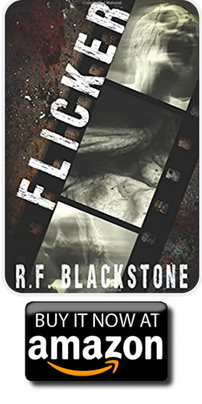 What if there was a movie that had the power to drive any who watches it insane? What if it was only shown once? What if whoever held that movie had the power to change the world in their hands? For Private Eye Don English finding this very movie is just another in a long line of peculiar jobs. He's getting paid well enough and needs the money, so why not? But as he gets closer to finding the lost movie he soon realises that everything is not as it seems. And that sometimes lost things should never ever be found.   FIVE MINUTES WITH TABATHA WOOD
12/4/2019
 Tabatha Wood lives in Wellington, New Zealand with her husband and two boys. A former English teacher and school library manager, her first published books are non-fiction guides aimed at teachers and others who work in education. She now teaches from home, while writing in her spare time. Born in Whitby, North Yorkshire, Tabatha has always had a passion for weaving strange, unusual often gothic tales, entwined with her deep love for the land and sea. She strongly encourages the use of writing and creativity for positive mental health, and runs a group which supports women who write for wellness. She also hosts writing workshops, often gets involved in cosplay charity events, and enjoys knitting and making jewellery. Her short story collection, Dark Winds Over Wellington: Chilling Tales of the Weird & the Strange is the first time she has published her fiction. Could you tell the readers a little bit about yourself? I was born in ‘Dracula’ country. No, not Transylvania, but Whitby, on the north east coast of England. The imposing form of Whitby Abbey standing on the headland and glaring down upon the town was a constant reminder of the gothic myth, and in some ways, a powerful motivator. I did write creepy stories when I was a kid, but I got a pretty negative reaction from my family, so I ended up abandoning writing fiction for a long while, and my first published works were books for education, which I wrote while I was working as a teacher. I’m proud of that achievement, but it’s a very different kind of writing, and not one which I derive much pleasure from. I’m a Jack of all trades when it comes to writing and art, but I don’t see that as a negative thing at all. My most recent collection of short stories are rooted in horror and the supernatural, but I write material in a swathe of genres. I’m a bit of an ageing Goth-slash-hippy, and I’ve always been attracted to anything dark and weird, but I’m also a bit of a creativity magpie — writing, to me, is my “shiny” and I get very easily distracted, tempted and absorbed. I’m also a self proclaimed serial procrastinator; I need to have very clear goals, or I tend to wander off and start getting involved in something new. It’s only as I’ve got older that I've found the courage and the confidence to try writing fiction again, and I’ve also found different ways of working which I hadn’t explored before. What do you like to do when you're not writing? I love being outside in nature, and I have a passion for swimming in the sea off the coast of Wellington. I’m a water baby, but I stopped swimming for many years. I have nerve deafness in both ears, and for a long time I felt really uncomfortable about taking my hearing aids out to swim. I was too scared. Too self-conscious. I’m glad I’ve got over that now. Ocean swimming is both humbling and grounding — you can enjoy the feeling of being free in the water, while also being acutely aware that you can never get too comfortable just in case the sea decides it’s had enough of you. I like that. I like the excitement it brings. Whenever I need to quieten my mind, or just get a sense of myself again, I go to the sea. The sea doesn’t care who you are or what you do — it can be beautiful and calm, or mighty and terrifying. It just does as it wants, it needs no validation. I can identify with that. Other than the horror genre, what else has been a major influence on your writing? I read a lot. Of all kinds of stuff and by a whole range of authors. I’ll even be completely honest and say I don’t read nearly as much horror as I probably should. I can never really pinpoint what the touch paper was, what triggered the explosion that provided my creative boom. While the usual male suspects of King, Koontz, Barker and Hutson got me into horror as a teen, it’s been other writers such as Tom Cox, Deric Longden, Ursula Le Guin, Karin Slaughter, Lee Murray, and the late, great Terry Pratchett who have helped me hone my own fiction writing. They all showed me very different ways of crafting a story. Amanda Palmer’s ‘The Art of Asking’ is basically what inspired me to get off my backside and stop waiting for permission. Meeting and talking with (‘Constantine’ writer) Jamie Delano made me want to prove to myself that I could do this. A personal loss led me to using writing cathartically to balance myself again and embrace the habit of writing every day. Around ten years ago I found myself getting into graphic novels much more than books. My husband is a big comic book fan, but they appealed to me most when I lacked the free time to actually sit down and read a novel. Raising my kids took priority. I’ve carried on reading them because the stories are just so good. Some of my favourite runs are: Brian K. Vaughn’s ‘Y, the Last Man’, Kieran Gillan’s ‘The Wicked and the Divine’, Garth Ennis’s ‘Preacher’, Warren Ellis’s ‘Transmetropolitan,’ all of the original ‘Constantine: Hellblazer’ series — Delano, Ennis, Gaiman, Carey, et al, and ‘The Astonishing X-Men.’ arcs written by Joss Whedon. I used to be such a book snob at one point, I really didn’t understand what kind of positive impact comic books and their writers could have on the literary world. It’s a very different, visual style of writing, but one which I have found has taught me a lot in terms of thinking about story progression, dramatic tension and character arcs. Every time I write a story I think about how I would shoot it cinematically. This always helps me fully realise my characters, and consider their interactions within the narrative. Plus, its always kind of fun to imagine which actor or actress you might cast if you had the opportunity! The term horror, especially when applied to fiction always carries such heavy connotations. What’s your feeling on the term “horror” and what do you think we can do to break past these assumptions? I think that a lot of people hear the word “horror” and assume blood, guts and grisly death. They think ‘Hellraiser’, 'American Horror Story' or ‘Texas Chainsaw Massacre,’ and they forget that horror doesn’t have to be disgusting, or even remotely bloody. I think a lot of that misunderstanding is due to the influence of movies and television which tend to use the horror tag to focus on the revolting and violent as much as the frightening. There is also that lingering social prejudice that horror writers and readers are a bit weird or unpleasant. There are as many clichés attached to horror writers as there are in some of the stories themselves. I initially struggled to find beta readers amongst my immediate writing feedback group because a lot of people said, “Oh, horror isn’t really my thing.” What they meant was, “I don’t like gruesome and grisly stories,” or, “I am concerned that people might think I am weird for liking this.” I had to promise them that it was “emotional horror” and not gore. I actually used to worry that my stories weren’t horrific enough, that they didn’t even really fit into the horror genre. Not enough blood or monsters. Not weird or other-worldly enough. I understood that horror holds up a mirror to society and explores its fears. It highlights the distrust of the Other and the unknown. When I first started writing, I wasn’t fully sure how to capture that and present it without resorting to gratuitous bloodshed, and still be accepted as a ‘real’ horror writer. I now know that was because I didn’t really understand what being a writer of horror really meant to me personally. I needed to find my own style. Horror, much like speculative fiction, is such an umbrella term for any story which unsettles or revolts us. I know some authors even shun the term, and prefer to label their work as dark fiction, or gothic fantasy. Psychological horror always seems to get lumped in with thrillers, which makes no sense to me. Horror writers shouldn’t need to feel apologetic for their art, nor have to find alternative ways to describe it. We could definitely start by redefining some of the parameters of what the horror genre covers and start owning the horror label with pride, rather than trying to water it down by calling it something else for fear of alienating readers. A lot of good horror movements have arisen as a direct result of the socio/political climate, considering the current state of the world where do you see horror going in the next few years? I feel like we need stories which not only scare us, but educate us. Stories which don’t shy away from facing the monsters in our midst — quite specifically, certain governments and world leaders. Stories which acknowledge the potential for humanity’s impending doom, but offer some way we can change the narrative. I imagine we will see a lot of new horror focusing on our desire to terraform and build societies on other planets. Stories which focus on the likelihood of extinction events and our need to survive. I also anticipate much more dystopian horror — not just exploring themes of societal control and government intervention — but racial and sexual tensions, and the beasts who live beside us and within us which we can’t always see. Or don’t want to. I often think a lot of the real horrors in our world are what’s out there waiting for us. The impending environmental, medical and population crises many humans don’t want to acknowledge let alone tackle. All those things which we do to ourselves, and make it harder for humanity to thrive. What are the books and films that helped to define you as an author? I’ve always been a writer in some shape or form, from being very small. I mentioned being inspired by Bram Stoker’s gothic novel, but I think my earliest memory of really wanting to be a proper writer was after reading C.S.Lewis’s Narnia chronicles and thinking, “I could do this. Hey, I want to do this!” I knew I was pretty good at creating believable characters, and as a clichéd only child, I enjoyed spending time in my own head. Daphne du Maurier’s ‘Rebecca’ and Susan Hill’s ‘Woman In Black’ definitely inspired me to write the slow-creep kind of horror which I really enjoyed. ‘American Psycho’ (Bret Easton Ellis) shook me up and stayed with me for weeks. I hated it. It’s a great book, but I found it hard to stomach. Honestly, I think I am inspired by everything I watch and read, without always being conscious of it. It’s really hard for me to say, “that, there, is where it all started” or “that’s been a huge influence to me,” because I tend to squirrel everything I see or read in the creative filing cabinet inside my brain, and it all gets mushed up into other things. It’s often suggested that, “good writers borrow, great writers steal.” (The internet is hazy about who actually said this.) If I were pushed, I would probably name television shows such as: ‘Buffy the Vampire Slayer', ‘Dead Like Me’, ‘Supernatural’ and ‘Being Human’; and movies such as ‘The Cabin in the Woods’, ‘What We Do in the Shadows,’ ‘An American Werewolf in London’, ‘Clive Barker’s Nightbreed’, and the original ‘Red Dragon’ movie, ‘Manhunter’ with William L. Petersen. In reality, any movie which tells a good story with great pacing and characters is teaching me how to craft a tale. I always want to be surprised. I think it’s worth mentioning that I learn just as much from the not-so-great stuff too. Sometimes it’s good to take notes from stories you find mediocre or just plain bad, and think about how you might try to improve them. There are quite a few popular horror books and movies which just don’t excite me at all, and some which are considered a bit middle-of-the-road which I adore. Inspiration often arrives when you least expect it, you just have to be open to letting it in. What new and upcoming authors do you think we should take notice off? Can I say myself? *haha!* That wasn’t a terribly original response was it? I’m going to come clean and say because I’m just returning to the ‘scene’ of sorts, I’m still finding and exploring new authors. I’m making a point this year of reading more female-authored work, and exploring the indie publishing scene a lot more. They are not all necessarily new and upcoming, but on my reading list at the moment are: Priya Sharma, Sunny Moraine, J. C. Hart and Georgina Bruce, plus a whole load of others. I am also going to mention Penny Jones, because without her I really don’t think I would have finished my own collection. She is a master at creating tension and suspense in her writing, and always writes fully realised and believable characters. She is a little ray of sunshine in the horror writing world and I mean that in the best possible way. She highlights just how important being genuinely kind and networking well really is. I’ve found that the community on the whole is very welcoming, and I really want to uphold and foster that sense of belonging, not to accrue more sales, but to find more friends who ‘get’ me. How would you describe your writing style? My style of horror is the creep of paranoia, where everything is almost normal, but not completely. It could be real, but not quite. I don’t want to write something that repulses people, I want to create something that lingers. Good horror will leave you with a feeling of unease. An itch in the brain that you can’t quite scratch, but equally you can’t ignore. It should squirm around in your head for a while, and leave you still thinking about it for a few days afterwards. I don’t write about blood and gore because I personally don’t like it much. The things my brain often conjures up, I don’t want to commit them to paper, because I am always totally weirded out by where those thoughts have come from! I don’t feel comfortable sharing them. Yet. Maybe my next collection will be full-on shock and gore. Are there any reviews of your work, positive or negative that have stayed with you? I’ve been super lucky not to receive any negative reviews yet. I am sure they will come along in time. I tend to be of the opinion that any kind of criticism is always useful, but I don’t have to be immediately beholden to it. I understand that I can control what is on the page, but I can’t control how people react to it. I know I still have a lot to learn, and that’s half the fun of it. I’m actually really excited to see how my writing style might change and evolve, and I’m just trying to be the best writer I can be right now. I suffer from terrible imposter syndrome and at the moment I feel like I’m still waiting for someone to say to me, “You’re no good at this, kid. Go back to the day job.” One positive not-quite-a-review which really tickled me was when someone ‘live tweeted’ my stories to me while they were reading them, and it was great fun to read their reactions. It reaffirmed for me the reasons why I enjoy writing; not for fame and riches, although they would be very nice, but because I like entertaining people. I still get that warm, fuzzy glow when someone reads my work and likes it. That’s why I do it, and why I will continue to do it. What aspects of writing to do you find the most difficult? Letting the story go. Actually admitting to myself that it is finished, that I have to stop tweaking it and changing it, and put it out there. Also, I love writing dialogue, so my characters always talk a lot. Maybe even too much. I can easily get carried away and a character will start monologuing. I’m aware that sometimes I fall into the trap of too much ‘throat clearing,’ and I have to work hard to avoid that. I’m still finding my voice. I’m not even sure I have settled into a particular style as yet. I also struggle with some the technical stuff like accurate punctuation and formatting. Teaching grammar as a subject to a class of thirty kids is somehow very different to putting it into practice in my own writing. Is there one subject you would never write about as an author? Yes, and I’m not going to write about it here either. Let’s just say it involves creepy crawlies and leave it at that. How important are names to you in your books? Do you choose the names based on liking the way it sounds or the meaning? In most cases it’s a bit of both. There are characters in my recent collection who have been named very specifically, and others which were basically picked out of a metaphorical hat. I try to consider diversity while I’m writing, so I don’t want every name to be inherently ‘white’ unless there is a good reason for that. Equally, you can’t write diversity simply by dropping a non-white name into the story — every character should fit their name. Writing, is not a static process, how have you developed as a writer over the years? I definitely plan more now, and in greater detail, than I used to. I suspect part of the reason I never actually completed any of my fiction stories was due to a dreadful combination of not feeling like I was a good enough writer, and not having a clear goal or plan of progress. I pay more attention to the ‘rules’ of writing now too, although I do also break them occasionally. As you can imagine, writing non-fiction is quite different to writing fiction, and for me at least, it was a hell of a lot easier. You don’t really put anything of yourself into non-fiction, and that was something I struggled with at first when I came to write some of the short stories in my most recent collection. One in particular is very personal, and I deliberated for a long time about whether or not I should include it. I’m beginning to see my writing as a journey now, and I’m embracing that as much as I can. What tools do you feel are must-haves for writers? I can’t speak for every writer, but for me there are a few essentials: A regular writing schedule so I can write daily and just get shit done; a notepad with me at all times — paper or electronic — it doesn’t matter as long as I always have somewhere I can capture the muse, because they almost always arrive unexpectedly and at inappropriate times; a bottomless coffee pot; a good pair of headphones so I can work anywhere without distractions, an understanding partner who doesn’t mind when I abandon them to go and write; and a bunch of writing buddies/critique group who share my drive and passion. What is the best piece of advice you ever received with regards to your writing? If it’s not working, let it go. Don’t be afraid of scrapping it and starting again.William Faulkner once said that in order to be a good writer you must, quite often, “kill your darlings.” Understanding that sometimes the creative journey is better than the destination will help you as a writer. There’s absolutely zero shame in accepting that. I’ve adopted quite a few mantras in the past couple of years and the two I get the most from are: “shovel the sand to build sandcastles” and “progress not perfection.” I believe a good writer needs a good growth mindset if they want to evolve and improve. Getting your work noticed is one of the hardest things for a writer to achieve, how have you tried to approach this subject? The usual suspects of social media have been useful to me, but I have to admit that I find Facebook, Twitter etc. absolutely emotionally exhausting, and it’s often hard for me to maintain my online presence. Equally I know it’s part of the job. Networking is essential, as is having realistic expectations of how your work will be received. Friends and family might say they’ll support you, but in reality they are not your target audience. Being genuine and polite will get you everywhere, and if you say you’re going to do something for someone, do it. Even if you get nothing in return, you should always present yourself with the utmost integrity. I’ve also got better at asking for help. There is a great quote in Amanda Palmer’s book which I feel is super important to every creative individual: Asking for help with shame says: You have the power over me. Asking with condescension says: I have the power over you. But asking for help with gratitude says: We have the power to help each other. I like to try and look for the ‘purple cow’ approach whenever I do something new; that is, if there are fifty cows in a field, people will remember a unique, purple one. Figure out what other people are doing which works and look for ways to add to it. For example, I made a Spotify playlist to accompany my stories. It’s a small thing, but it’s about utilising the platforms available to you in different ways and making yourself stand out. To many writers, the characters they write become like children, who is your favourite child, and who is your least favourite to write for and why? I genuinely don’t have a favourite yet. The female vampire character in two of my stories — I won’t name them so as not to give away any spoilers — has definitely stuck with me, and I think she has a few more stories left in her yet. I don’t really like her, she is quite problematic and dishonest, as well as pretty manipulative. She is, however, great fun to write. The empathy she garners is due, in part, to her humanity, which is ironic given that she is no longer human. I keep considering killing her off, but somehow always manages a reprieve. What piece of your own work are you most proud of? I’m genuinely proud of all of my stories at the moment, although my favourites are “From The Deep,” “The Things You See,” and “Heat Pump”, simply because they were the most fun for me to research and write. And are there any that you would like to forget about? The first draft of “Blood Bonds” was awful. Really and terribly awful. I was trying to incorporate some Māori legends and people into my stories, as they are all set in New Zealand, but I got it really wrong. I ended up writing stereotypes and potentially offensive ideas without even realising I was doing it. I was approaching another culture from a privileged, white perspective — writing about my idea of Māori culture instead of writing what I knew. I am so grateful to my friend who read it and told me bluntly, “Do not publish this!” and then advised me where I’d gone wrong. I learned a lot about myself that day and also how much responsibility writers have to properly research and present their subjects, or risk a serious backlash. Thankfully I am not averse to the idea of scrapping my work and starting again. Remember; “kill your darlings.” So that’s exactly what I did. For those who haven’t read any of your books, which of your books do you think best represents your work and why? Right now, I have only released one fiction collection — “Dark Winds Over Wellington: Chilling Tales of the Weird & the Strange.” I would say it’s an accurate representation of where I am as writer and a person, right now. I might feel very different about it a few years, and hopefully a few more books, down the line. Do you have a favorite line or passage from your work, and would you like to share it with us? One of the stories in the collection, “Mongrel” was written as an experiment. I wanted to see if it was possible to write a story completely through dialogue. It’s actually the shortest in the book, but I think it’s pretty fun. I particularly like the opening lines. “Are humans classed as red or white meat?” “What?” “Are humans...” “No, I heard what you said, I’m just disturbed by the content.” “It’s a perfectly reasonable question.” “Yeah. For a cannibal, maybe. Or a serial killer. Should I be concerned?” Can you tell us about your last book, and can you tell us about what you are working on next? My last book was a collection of short supernatural-themed stories all based around the ‘Coolest Little Capital’, Wellington in New Zealand. They mix local legends and folklore with elements of horror. It was, at least in part, inspired by Taika Waititi’s ‘What We Do in the Shadows’ and ‘Wellington Paranormal’, but it was also very much a result of my own research into the local area and my need to integrate myself in the community. As a recent immigrant to the country, it was very important to me to learn about the culture and the people. The stories are a result of the excitement and joy I felt at living in Wellington, while giving a little nod to some of the weirder parts of the city. I feel like I want to continue writing about Wellington, as it just has so much inspirational material to offer me. As is usual for me, I have a couple of ideas already sketched out just waiting for me to sit down and give them some real attention. However, I am involved with running and facilitating some writing workshops in Wellington for women for the next few months, so I suspect most of my free time will be focused on those. If you could erase one horror cliché what would be your choice? If I could only erase one, it would likely be the overuse of negative stereotypes which depict mental illness as a cause of violent or abhorrent behaviour. If I could rub out two, using rape or sexual assault as a shock tactic rather than progressing the plot in any way is another I’d like to see gone for good. What was the last great book you read, and what was the last book that disappointed you? ‘The Bone Season’ by Samantha Shannon had me absolutely riveted from the very start. I don’t know how I had managed to miss her until recently, but I’m so glad I’ve found her now. It’s a dystopian supernatural story, and not at all what I expected. The last book that disappointed me, although it is still a good story, was M.R. Carey’s ‘The Boy on the Bridge’. It is a prequel to ‘The Girl With All the Gifts’, which I really enjoyed, but I just didn’t feel like it was as thrilling, probably because the ending was a forgone conclusion. What's the one question you wish you would get asked but never do? And what would be the answer? “Would you like ten million dollars and a lucrative publishing deal with Big Name Publishers?” “Certainly!” Okay. Seriously, I often wish people would ask me why I so often put queer, disabled and/or people of colour characters in my stories, just so I could remind them that a broad range of character representation in every genre is incredibly important. It’s not about ticking some “diversity checklist,” but because minorities are seriously underrepresented in many genres, and particularly in the horror genre, and we should be challenging and changing that. Dark Winds Over Wellington: Chilling Tales of the Weird & the Strange Horror and speculative fiction author Tabatha Wood invites you to the Coolest Little Capital, where nothing is quite what it seems. Strange creatures lurk in the shadows of the Beehive, while a beast From The Deep is determined to destroy us all. Being Neighbourly might just change your life, and if you listen closely you can hear demonic Whispers in the wind. So sit back, take a sip of A Good Cup of Coffee and question all The Things You See. In the city, there are no Second Chances and every chapter might be your last. Inspired by Wellington legends and folklore, these thirteen original short stories will drag you on a chilling journey through the eerie, the weird and the strange.     “FEAR IS A DARK, UGLY CANNIBAL THAT LURKS AT THE HEART OF EVERYTHING, NO MATTER HOW WE TRY TO CRUSH IT. IT'S A HARSH WORLD WE LIVE IN, BUT IT IS OURS…YOU CAN CALL ME MR SPINDRIFT. BUT YOU KNOW THAT ALREADY.” Nancy Netherwood is a playwright from South East London and a recent graduate of the University of East Anglia’s Creative Writing Programme. She has taken part in projects for young people with the Almeida and Royal Court, and earlier this year was chosen for The North Wall Arts Centre's artist development programme Catalyst, as well as the Pint-Sized Theatre longlist 2018. Goodnight Mr Spindrift is her second play, and we sat done with Nancy to chat about the play, horror in general and her thoughts on the UK Theatre scene Hello Nancy, welcome to Ginger Nuts of Horror, could you briefly introduce yourself to the readers, please? Hello! I’m a 23 year old London-based playwright making my professional debut with ‘Goodnight, Mr Spindrift.’ This play is a pretty good example of what I write - I love using surreal or fantastical touches to explore things like mental health, gender and heredity. When I’m not writing I’m mostly lurking in theatres and taking a really long time to get through books. Why Horror? What is it about the genre that inspired you to start writing about it? Until we did this play for the first time last year, I didn’t actually consider myself a horror writer. I’ve always enjoyed horror fiction - M. R. James, John Darnielle, Shirley Jackson, Neil Gaiman, Mary Shelley and Samanta Schweblin are particular favourites - and I’ve recently plucked up the courage to watch more horror films. I’ve even used horror tropes in most of my writing, but they’ve never been at the centre of my play so I guess it never occurred to me that I wrote Horror with a capital H. But I started writing it for the same reason I love reading and watching it - it’s where some of the most original and exciting storytelling is happening at the moment. And why have you chosen to focus on writing plays over a more traditional form of horror prose? Once I started more actively writing horror, theatre seemed like the perfect fit. The immediacy and physicality of it works so well for the genre - I’ve never felt more genuinely frightened by horror than I have when it’s happening right in front me, and a little goes a long way. There’s no rewind button so you can really play with what people see or think they see. But as said I do love horror fiction and I’d love to write some myself someday. What would you say is the biggest misconception about writing theatre plays, and what do you find to be the biggest challenge for yourself with regards to creating a play? That there are so many stages in your career before you make it to the Royal Court, say, or the National. When I started writing plays I sort of assumed you sent work off to big theatres and sooner or later someone would accept it and you’d be on your way. But it’s a much longer process, and you end up doing short projects, making work with friends, trying and failing a lot as you work out what you’re doing, which is scary but also really exciting. I think my biggest challenge is spending a lot of time on my own when I’m writing. Unlike prose or poetry a script is such a collaboration, and sometimes you get to a point where you just need to get it on its feet. You can spend a lot of time torturing yourself over details when actually you need an actor or director to unlock it. But that’s one of the great things about theatre as well. As a playwright how do work around the confines of a live stage show to deliver the scares, and maintain the tension of your script? This play isn’t a jump scare kind of horror, it’s all about the slow build, which works well in theatre. You have your audience there in the same space as the actors, experiencing the show in real time, and without the advantage of special effects and editing the scares mostly have to be rooted in character, so you want them to be with the characters and experiencing their fear. Your latest play Goodnight Mr Spindrift has just been confirmed for a full run at the Old Red Lion Theatre after a successful showing at the London Horror Festival. You must be over the moon at this news. How did this run come about, did you pitch your play to the theatre or did they contact you? Yes, I’m very excited! Last summer Danse Macabre put out a call for horror plays and chose mine for a rehearsed reading at Old Red Lion. We had a lot of fun rehearsing the play and we got great feedback, but I thought that would probably be the end of it. Then Joe and Sam said they’d love to do a full production if I was interested, and that the Old Red Lion were keen to continue with the play. And here we are! How much involvement with the play once it has enter pre-production and during its run, do you have, are playwrights given more credence than scriptwriters on film shoots? In most cases it’s up to the writer and director to decide. Theatre is more collaborative than film so you generally have a lot more freedom to define the relationship of the writer to the production - personally I like to be in the room for the readthrough and the first couple of rehearsals to answer questions and make sure the director is on the same page as me. Then I leave them to work their magic and come back at the end to help finetune everything. But there’s a big chunk of time in the middle of the process when, I think, my presence wouldn’t help. The director and cast need to feel like they can experiment without the writer breathing down their necks. But all writers have their own preference. If you could change just one thing about the industry with the wave of a magic wand, what would it be? For the industry to be balanced and egalitarian. So many theatres still program more white men than any other writers. Until last year only one play by a black writer had EVER had a West End production. Things are improving but it’s a slow process. I wish we could see all theatres programming work that’s actually representative of the artists working today and the country we live in, and by extension bring in the audiences from those currently under-represented groups. There’s still a big elitism issue with theatre which theatres need to address, and representative programming would go a long way to start fixing that. Why do you think theatre is essential? In a theatre everyone comes together - audience, actors, technical team, stage managers, ushers - and we get to experience something together. I think that immediacy is the thing that got me hooked on theatre. Getting to see your favourite actors give a performance that they’ll never give again, sharing a live, one night only experience with a room full of strangers. That affects you differently from film or literature. Plus the speed with which you can make a show and its relative cheapness mean you can respond to world events quickly and take risks that you can’t in other forms. Anyone with an idea and some friends can make a play and take it to a festival. That’s amazing. Goodnight Mr. Spindrift sounds like a dark dystopian look at life in the UK, what was your inspiration for the play? A lot of things fed into it. I saw the word ‘Spindrift’ on a poster and wrote it down, then added ‘Mr’ because it sounded right somehow. I got very angry about the current government and very anxious about the pressures of being in a relationship. I saw the stage adaptation of 1984 and fell in love with it, which has been a massive influence on my writing ever since but particularly on this play. All those things were sitting in my head for a while and eventually they became this play. Is it important to you that your work has a deeper meaning and a morality core over and above the "horror" elements of your work? I think all horror has a deeper meaning! Even slashers and B-movies are about something, even if that something is never overt. But yes, I definitely use horror tropes to explore other issues - in this play it’s self-doubt and repressed trauma, but I think you can write about anything using horror as a form if you find the right metaphor. It’s a really fascinating way to explore those issues in an inventive and powerful way. And what do you hope that people get out of watching your play? I want to surprise people - I hope horror fans are moved by the relationship drama and straight theatre fans get drawn into the horror. I also want to get them angry on behalf of these characters and themselves about oppression and abuses of power. And that they come out wanting to tell the important people in their life that they love them. Does the title have any significance? You’ll have to come and see the show and find out! How happy are you with finished play? Very happy! It’s hard to ever feel like a piece of writing is finished, but I’ve drafted it several times, done two readings and had good feedback, so I think we’re ready to bring it to a wider audience! Plus Sam and the cast have brought so much to the table, and I can’t wait to see what Natasha and Annabel do with the design - so even though the script is finished there’s a lot more to come which I’m really excited about. What advice would you give to young people interesting into getting into your kind of work? Write every day, even if it’s just one sentence. See and read as many plays as you can. Films, TV, art and books are all useful too, for your work and yourself. Make sure you meet up with friends and other artists when you can, it can be a lonely job, and being around other people is probably the best thing that can happen to your work. What are you working on next? I’m going to be at the North Wall Arts Centre in Oxford for two weeks working on my next play, which will be receiving a rehearsed reading as part of their Alchymy Festival. It’s a much more grounded, naturalistic piece, but there’s still a nightmare sequence and plenty of blood. I’m also in the early stages of a horror adaptation for stage, though I won’t say too much about that one yet... 24th-27 April 2019, 7.30pm Old Red Lion Theatre, 418 St. John Street, London, EC1V 4NJ Full Price £12.00. Concessions £8.00. PURCHASE TICKETS HERE SOCIAL MEDIA LINKS WEBSITE      Could you tell us a little bit about yourself and how you got into writing? I’ve always been obsessed with reading and writing, but it wasn’t until I turned 30 that I started thinking about trying to write for publication. I finished my first ever short story and it won me a place on a screenwriting course taught by an absolutely brilliant woman called Liz Clegg. From there I got into writing screenplays, teaching screenwriting, script consulting and then back to prose again. That same short story was made into a film, and also won first prize in a competition judged by Graham Joyce – so it opened a lot of doors for me. How would you describe your writing? (E.g., Horror, weird, poetic, etc) I really don’t like labels. I think we are too obsessed with naming things and trapping them in boxes. If pushed, I’d probably say weird or maybe slipstream, since all my stories are about negotiating contact and conflict between different dimensions of reality. In fact, a majority of my stories are science fiction, but because I tend to focus on the domestic, and on women’s lives, they often get mistaken for horror. I never set out to write horror but I don’t think it’s possible to write about reality without encountering horror imagery and themes. Who or what has been a major influence on your writing? As a child, there were some books I read so many times I can still recite bits of them by heart: the Alice books, and Douglas Adams’ Hitchhikers ‘trilogy’. I constantly see the influence of these books in my work. Philip K Dick is also a major influence, especially “The Three Stigmata of Palmer Eldritch” which is a hallucinatory trip through different levels of reality. It’s profoundly disturbing. You are known for your amazing short stories, and your story “White Rabbit” won the British Fantasy Society award for best short story. So whose work do you admire, and which authors would you like to bookend one of your stories in an anthology? That’s a difficult question because there are a lot of people writing amazing short stories these days and I admire them all for different reasons! I’ve been teaching Priya Sharma’s “Egg” again this year and love its emotional directness, and how moving and meaningful it is to my students. Padrika Tarrant is, to my mind, a great and under-appreciated writer. Her short stories are absolutely wild. Lydia Davis is a writer I hugely admire, who takes mad risks with stories. Helen McClory is another. I like risk-takers. Even if the risks don’t pay off, it’s always interesting to see how far it’s possible to go. What is the best piece of advice you ever received with regards to your writing? Or what piece of advice about writing would you tell someone if they asked? Take risks. Break rules. And don’t be afraid of failure – that’s all there is. What aspects of writing do you find the most difficult? Nothing about writing is easy, but honestly, I think I like writing because it’s difficult. I like a challenge. Then again, I cannot tolerate exposition. I hate it! So anytime I have to explain something it’s really hard for me. I want to create knowledge by some form of osmosis, not by actually just telling you in a straightforward way. It’s a weird thing. On your website www.georginabruce.com you are currently running a feature where you ask authors to give us a peek into the places where they do their writing, so could you tell us a little bit about your inner sanctum? My inner sanctum is currently hidden underneath an enormous pile of laundry, so that probably tells you all you need to know about that! Tell us about a bit about your debut collection “This House of Wounds”. The stories in This House of Wounds span ten years of writing, so there’s a lot of variety in terms of style and subject matter, although I think you can see certain themes and concerns echoed throughout. The four previously unpublished stories in the collection are a bit of a departure in some ways from the rest of the book. They are definitely floating more freely away from genre conventions and taking more risks with what a story can be. I’m increasingly interested in structure, in making the telling as much a part of the story as the action or description, so these stories are testing out ways of doing that. I’m definitely nervous about how they’ll be received and whether people will get what I’m doing! Having so many stories collected in one place is quite exposing in many ways. It’s a bit like ripping open your chest and watching the feathers and petals fly out… My favourite story in your collection would have to be “Cat World”. The subject matter of human trafficking is a sensitive subject to cover in such a short piece, but you managed it wonderfully. Showing us the humanity and the horror in equal measures. A difficult tale, but an important one to tell. Is there any subject matter you wouldn’t write about? Thank you – I’m proud of that story. I’m not sure there’s any subject I wouldn’t tackle if I really wanted to write about it, but I do always try to be honest with myself about my intentions with writing. Nothing is necessarily off limits but I’m not interested in gratuitous violence or anything in a story which is only there to shock, titillate or frighten the reader. One thing I wouldn’t write now is a completely hopeless story. Maybe in the past I would have, but given our current political climate I feel it would be delinquent and reactionary to create anything that doesn’t have a little space for hope to creep in. And finally can you tell us about what you are working on next? I’m writing a novel. I’m using a pseudonym, so I can’t say much more than that, in case I blow my cover! Read our review of This House of Wounds here ABOUT GEORGINA BRUCE Georgina Bruce is a writer and teacher currently living in Edinburgh. Her short stories have been widely published in magazines and anthologies, and have been longlisted for the Bridport and Mslexia short story prizes. In 2017, her story White Rabbit won the British Fantasy Award for Short Fiction. This House of Wounds is her debut fiction collection. You can find Georgina (when she isn’t writing) at Twitter @monster_soup or at her website http://www.georginabruce.com This House of Wounds The devastating debut short story collection from British Fantasy Award-winning author Georgina Bruce. Haunting and visceral tales for the lost and the lonely. An emotional and riveting debut. Advance praise for Georgina Bruce's 'This House of Wounds.' "An astonishing, totally absorbing debut collection. Edgy, disturbing and delicious in equal parts. Georgina Bruce plays with myth and horror beautifully." -Kerry Hadley-Pryce, Author of Gamble, and The Black Country "The stories in This House of Wounds strike me as both an emotional and intellectual examination of pain, from how it spreads and is passed on to others to how it can easily turn us into different, crueller creatures. Each act formed in pain leads to another, then another, and this makes for twisted, beautiful reading. Georgina Bruce is a courageous and compelling writer." -Aliya Whiteley, Author of The Loosening Skin, and The Beauty    "Moody is as imaginative as Barker, as compulsory as King, and as addictive as Palahniuk." Scream the Horror Magazine  A pioneer of independent publishing, DAVID MOODY first released HATER in 2006, and without an agent, succeeded in selling the film rights for the novel to Mark Johnson (producer, Breaking Bad) and Guillermo Del Toro (director, The Shape of Water, Pan's Labyrinth). Moody's seminal zombie novel AUTUMN was made into an (admittedly terrible) movie starring Dexter Fletcher and David Carradine. He has an unhealthy fascination with the end of the world and likes to write books about ordinary folks going through absolute hell. With the publication of a new series of Hater stories, Moody is poised to further his reputation as a writer of suspense-laced SF/horror, and "farther out" genre books of all description. Find out more about his work at www.davidmoody.net and www.infectedbooks.co.uk. Could you tell the readers a little bit about yourself? Sure. I’ve been writing for an unfeasibly long time now (25 years). Hard to get my head around that, because it feels more like 25 minutes! My first book, Straight to You, was published in 1996 and (rightly) sank without trace. I then wrote Autumn, and rather than spend ages trying to find a publisher, I decided to give it away online. These were the early days of the Internet, before ebooks had taken off and before every new author started giving their work away – I’m so old school I literally used to email Word documents and pdfs to people! Autumn was a big success for me (half a million downloads in a relatively short space of time), and I followed it up with a series of sequels. Then I wrote a book called Hater and, somehow, a copy ended up on Guillermo del Toro’s desk. He bought the film rights and my world went crazy. What do you like to do when you're not writing? I wrote full-time for a number of years before rejoining the real world back in 2014 for the sake of my sanity (it can be harder than you think sitting on your own all day, every day, thinking about the apocalypse). But my writing commitments haven’t slowed, so my free time is currently negligible. That said, I love to watch horror and science-fiction movies – often the more obscure the better. I’m a big live music fan, and distance running helps me keep my mind and body in check. I don’t know what I’d do if I couldn’t run – it’s regularly where I do my best work. I’ve come up with some great plot twists while I’ve been out on the hoof. Generally, when I’m running is the only time I can think about something without being interrupted. Other than the horror genre, what else has been a major influence on your writing? This might sound like a cliché, but the biggest influence on my work is people. I think the survival of the human race is an impossible equation, and whenever I think we’ve seen everything, something else happens to take the craziness to a new level. If you’re in the market for writing a dystopian novel and you’re in need of inspiration, switch on the TV and spend a little time watching the rolling news channels and I guarantee you’ll see plenty that’ll set your mind racing! Regardless of your politics, I think anyone would be hard pushed to remember a time when the world has ever been more polarized. My Hater series takes that polarization as its start point. It’s weird – I wrote the first book back in 2006 and people were telling me back then how reflective it was of what was happening in the world at large. And with each passing year the books seem to have become even more prescient. It’s terrifying to think where we might end up as a species. The term horror, especially when applied to fiction always carries such heavy connotations. What’s your feeling on the term “horror” and what do you think we can do to break past these assumptions? That’s an excellent question. I’ve always really struggled with the label ‘horror’, primarily because I believe horror is more about a feeling or emotion than it is a genre. And I think because ‘horror’ has always had such negative connotations (because it’s easy to make a shitty, blood-soaked horror movie or write an exploitative, gore-filled book), people tend to look down their noses at you when you say you write horror. I get asked this a lot, and there’s a couple of things I usually say to make my point. First, think back to some of the most horrific books and films... have you ever read/seen The Road, Threads, or We Need to Talk About Kevin? They’re all utterly horrific, but the word horror is never once used in their marketing approach. Also, think about other genres – an example I often use is the Western. You know when you watch a Western that you’re likely to get gunfights in the mid-1800’s Americas. But when you tell a horror story... well that could encompass anything at any time in any place. I think a lot of the stuffiness and snobbery comes from the fact we’re often writing about the future rather than the past, and horror stories usually focus on the worst possible outcome. I was a guest at an event a couple of years ago and the panel was asked why anyone should bother reading the stuff we write. I said it’s because we’re trying to warn you what’ll go wrong with the world if we’re not careful. They just laughed politely... A lot of good horror movements have arisen as a direct result of the socio/political climate, considering the current state of the world where do you see horror going in the next few years? I think I’ve already touched on this. I think we’ll continue to see a surge in dystopian horror, given what a fractured society we live in right now. I think another theme we’ll see more in horror is linked to how connected/ interconnected we are now. Imagine the nightmare if the internet suddenly disappeared and people had to think for themselves! It doesn’t bear thinking about... I actually think the internet and its effects on us are fascinating. We seem to be losing individuality in search of what we see online: people follow ‘influencers’ like sheep, abandoning their own likes, dislikes, tastes and desires to fall in line with someone else’s. It’s all beginning to remind me of that classic Twilight Zone episode – Eye of the Beholder. What are the books and films that helped to define you as an author? The books which made me want to write horror for a living are absolute classics: John Wyndham’s Day of the Triffids, Richard Matheson’s I am Legend, and HG Wells’s The War of the Worlds. For me, this is the holy trinity of post-apocalyptic novels, each of which has shaped not only the books I’ve written, but also the genre as a whole. In terms of actually wanting to become a horror writer, it was James Herbert’s Domain which sold the writer’s life to me. I’d never come across a book before which had so much gore, violence and bleakness sandwiched between its covers, and it had a huge effect on me. My movie inspirations are vast, and it’s easier to narrow it down by listing my favourite directors: Cronenberg, Carpenter, Romero. What new and upcoming authors do you think we should take notice off? One of the great things about the explosion in independent publishing over the last decade or so is the huge number of new and upcoming authors who now have a voice and an audience. But, conversely, one of the worst things about the explosion in independent publishing over the last decade or so is the huge number of new and upcoming authors who now have a voice and an audience! There are so many books being published now that it’s hard to find the gems. A chap I’ll always name here is Rich Hawkins, and not just because he’s a friend. There’s a beautiful apocalyptic poetry to a lot of what Rich writes, and I’ve always been really impressed by the stuff of his that I’ve read. How would you describe your writing style? No crap. Straight to the point. I sometimes wish I could be lyrical and set new literary standards but, hey, it’s never going to happen. Instead I just want to tell stories that have an impact on people. That usually means paring down the text to the bare minimum. You won’t find beautiful imagery and layers of allegories in my books, you’ll just get what I hope are bloody good stories told through the eyes of interesting, relatable characters. That’s the plan, anyway... Are there any reviews of your work, positive or negative that have stayed with you? I think you have to read every review, no matter how good or bad. I always used to get particularly hung up on bad reviews (I think all authors do at some point in their career), and it’s all too easy to focus on the bad instead of the good. I’ve grown to think that a bad review is a good thing in some ways – it means you had enough of an impact on a reader for them to want to tell other people what they thought. There are a couple of particular review experiences which stick in my mind... My novel Autumn was filmed in 2008, and it’s fair to say, the film stank. It was made with the best of intentions and the cast was great (it starred Dexter Fletcher and David Carradine), but the folks behind the camera weren’t up to the job. I was asked to introduce a screening of the film in Belfast, and just before I walked out in front of the audience, I received a review by email which included an invoice – the reviewer was a solicitor, and he’d billed me for the time he’d spent enduring the movie! I guess you have to remember that a review is only one person’s opinion, and that was really brought home to me when I received two reviews of Hater within minutes of each other. I’m paraphrasing here, but the first review said ‘great book, crap ending’, whilst the second said ‘crap book, great ending’. You can’t please everyone, and receiving those reviews in quick succession really helped me realise that. What aspects of writing to do you find the most difficult? From a purely practical perspective, starting. One I’m typing, the words always just seem to flow. It’s sometimes hard getting going, particularly when you’ve got a bulging inbox or you’ve neglected your promotional duties recently. I also think it’s sometimes hard to maintain a focus on a piece of work, particularly when it’s long-form like a novel. It’s a massive investment of time and effort, and I’ve been guilty in the past of steering a book in completely the wrong direction. I have a couple of unreleased novels where that happened. I’m naturally an introvert, and so have a tendency to work on something in absolute isolation until it’s finished. Of course, the real danger there is that I might not realise I’ve written a crock of shit until it’s far too late... Is there one subject you would never write about as an author? No. How important are names to you in your books? Do you choose the names based on liking the way it sounds or the meaning? As an author, I collect several things. You just become attuned to them and can’t help picking them out of the ether and noting them down. One is ideas – be it a title or a character or a single line of dialogue; I keep a document in the cloud which I can access from my phone or tablet or computer and add to whenever inspiration strikes. The other thing I collect are names. I do love a good name! I tend to go for names which suit the character – I write about ordinary people most of the time, so often pick ordinary-sounding names. Occasionally I’ll go for a name because of how it sounds. Every so often, weird things happen with names. The main character in the original Hater series is Danny McCoyne. In the second Hater trilogy, which is told from the opposing viewpoint, the main character is Matthew Dunne. It wasn’t until I was well into writing All Roads End Here, the fifth book, that I realized the two leads have interchangeable initials! And if you’ve read the books, you’ll know that’s very significant. I think my favourite names are those you find in David Cronenberg films. The Fly is the example which immediately springs to mind – the three leads all have magnificent names. Where else could you find Seth Brundle, Veronica Quaife and Stathis Borans? Genius! Writing, is not a static process, how have you developed as a writer over the years? I’ve been thinking about this a lot recently, particularly in light of what I’ve written (and not written) over the last five years. Ginger Nuts of Horror was kind enough to feature one of my earlier novels – the 2014 re-write of my 1996 debut, Straight to You. The difference between both versions of the book are stark, and I think they came about for two reasons. Firstly, because I’d had more practice in the decades since I wrote the original, but more importantly, I’d grown as a person. I’m fully aware how pretentious that sounds, but it happens to be true. The book’s about a doomed relationship at the end of the world, and when I first wrote it I was young, free and single and I didn’t have a clue how relationships actually worked. When I came to write the second version I was married with kids and a mortgage and a heck of a lot more life experience. It made all the difference, and gave the characters in the 2014 version the depth and believability they were lacking first time around. Earlier this year I released a collection of short stories – The Last Big Thing – and that included three stories I’d specially written for the release. They were ideas which I’d had kicking around for years, but until late last year I wasn’t in a position to write them. They were informed by particular experiences, and I guess that’s the point. As a writer you’re constantly inspired by everything that goes on around you. That’s why when I turned into a hermit a few years back and wasn’t spending any time with other human beings, my writing dried up. I also believe that you learn from other creators, so I make it my mission to watch as many films and read as many books as I can. It’s not so I can plagiarise, it’s so I can learn! What tools do you feel are must-haves for writers? Headspace, patience, determination, and something to write with/on at all times! What is the best piece of advice you ever received with regards to your writing? I was lucky enough to meet James Herbert a couple of times, and he corrected me when I was talking to him about a book I’d ‘churned out’. He taught me not to be so dismissive of my work. From a practical point of view, the best advice I can share is a few rules which I set myself back in 1994. I’d been trying to write a novel for a while but hadn’t ever got further than a couple of chapters. I set these rules and made myself follow them from 1 January that year, and by May I’d written Straight to You. 1. Plan a chapter-by-chapter outline. 2. Write at least a page every day. 3. Never go back and edit until you’ve finished a full draft. Getting your worked noticed is one of the hardest things for a writer to achieve, how have you tried to approach this subject? You’re absolutely right, and as I mentioned in one of my earlier answers, I was fortunate to hit the market at a good time in 2001/2. The combination of what I was writing, along with the way I was promoting it, gave me an instant platform. But it’s the same with everything... people are always on the look out for what works, and when they find it, they copy it. Now the market is deluged with independently published horror novels, and it’s increasingly difficult to remain in the public eye. I do believe that the most important thing is to have written the very best book you can first and foremost, and you have to have faith that the market will find you. I think the challenges are increasing daily for independent publishers and authors, not least because of the changes we’re seeing in social media. The use of the word ‘social’ is a misnomer, because there’s nothing social about it anymore – it’s cold, calculated business. You want people to see your post? You have to buy their attention. It’s difficult, and is doesn’t come naturally (not to me, anyway). At the present time I’m trying to cover all bases, and the key way of doing that is to remain a hybrid author – one who publishes work traditionally and independently. To many writers, the characters they write become like children, who is your favorite child, and who is your least favorite to write for and why? I have to say that Danny McCoyne, the main character in my original Hater trilogy, has to be my favourite character. He really resonated with a lot of people. He also annoyed just as many! He’s an ordinary guy, wrapped up in the most extraordinary of situations. I love Danny. When I first wrote about him, I wanted to give him an incredibly soul-destroying job and I couldn’t think of a worse thing than to be working in the parking fines processing department of a local council. Fast-forward ten years to the time when I decided to return to the real world after writing full-time, and what job did I end up doing? You got it: I currently manage charging and enforcement policy for the largest charging authority in the UK! My least favourite character is Scott Griffiths from Strangers. I wrote Scott when I was at a real low ebb in my personal life, and I find it hard to go back and read the book again now. He’s a lying, wife-abusing, family-trashing shit, and though I was never guilty of anything like the things he did, I can read between the lines and see some of my own mental health issues being at the route of Scott’s inherent shittiness. It makes me go cold just thinking about it. What piece of your own work are you most proud of? Now that is like having to pick your favourite child! I’d have to say the Hater series as a whole just because of the impact it had and the sales it achieved. Equally, though, Autumn had a similar impact. It’s amazing that people still contact me on a daily basis to talk about these books which are both more than a decade old. And are there any that you would like to forget about? The original versions of Straight to You and Trust. And that’s why I rewrote both books entirely. For those who haven’t read any of your books, which of your books do you think best represents your work and why? Again, I’d say start with either Hater or Autumn. Both are the start points of long-running series which go onto show how I love to build worlds. I’m particularly pleased with the way I’ve expanded the Hater story with the second trilogy – it’s something readers are responding really well to. All of these books deal with the fragility of society and how, when the shit hits the fan, we stop complying with the rules and start acting on instinct. I’ve said it before and I’ll say it again, I just love writing about extremely ordinary folks who find themselves, usually through no fault of their own, stuck in the most extraordinary, life or death situations. Do you have a favorite line or passage from your work, and would you like to share it with us? Here’s a gem from the mouth of Danny McCoyne which a lot of readers picked up on: “Life feels like a game of Snakes and Ladders, but without any ladders.” And here’s a quote from Autumn which sums up my approach to post-apocalyptic stories. I’m not interested why these huge, cataclysmic events have happened, I just want to know what people are doing to survive them. “Surviving is one thing," he said quietly, his voice suddenly calmer, "but you've got to have a reason to do it. There's no point in living if you don't have anything worth living for.” Can you tell us about your last book, and can you tell us about what you are working on next? I’ve had two releases in quick succession so far this year. First was The Last Big Thing, a collection of stories which wouldn’t be out of place in The Twilight Zone or Tales from the Crypt. Also this month, the fifth Hater novel, All Roads End Here, was released by St Martin’s Press. I’m just working on edits for Chokehold, the absolute final Hater novel which is out in November, and for the first time in a long time I now have a clean slate. I’ve a number of ideas I want to work on, so it’s a question of finding the right one (ie the one my agent thinks will sell) and getting it written. If you could erase one horror cliché what would be your choice? There are so many... groups splitting up and going into dark places, idiots doing ridiculously risky things they wouldn’t normally do under any other circumstances... I love zombies (that sounds so wrong!) and in the Autumn series I actually did erase a number of clichés to try and make the living dead more believable. The infection in Autumn is in the air, and you either catch it or you don’t – that meant there’d be no people getting bitten and hiding the bite mark from everyone else in their group of survivors until they ‘turn’ at absolutely the worst moment possible... I also did away with flesh-eating altogether. I’ve just never been able to understand why zombies would eat? They don’t drink, sleep, go to the toilet... why would they eat? It makes no sense (not that reanimated corpses make any sense anyway). What was the last great book you read, and what was the last book that disappointed you? I tried really hard to read Justin Cronin’s The Passage, and I know this is an unpopular opinion, but I just couldn’t get through it. I thoroughly enjoyed Josh Malerman’s Bird Box, and I thought the movie was a decent adaptation. It’s been great to see that movie be such a success – it gives me hope for the genre and for the adaptation of Hater which has been edging towards the screen for over a decade now. Filming almost started in 2009, but things fell apart at the last minute as they often do. But we’re still working on it. I read the script at the end of last year, and it’s brilliant. What's the one question you wish you would get asked but never do? And what would be the answer? Why do you write? It’s simple enough, but no one ever seems to ask. My answer is because I have to. It may sound pretentious, but I have an infinite amount of story ideas rattling around my head, and I need to get them out. Plus, there’s genuinely no better feeling than when you write something and it has an impact on someone else. It’s also a huge power-trip! Being a writer allows you to a). make stuff up for a living, b). be in control of infinite numbers of characters and situations, and c). make the most amazing movies in your head with endless special effects budgets, perfect locations and a top-notch cast. It’s bloody hard work though. Links: www.davidmoody.net (main site) www.facebook.com/davidmoodyauthor www.twitter.com/davidjmoody www.instagram.com/davidmoodyauthor www.amazon.com/David-Moody/e/B001JSCGOU/ “Moody has the power to make the most mundane and ordinary characters interesting and believable, and is reminiscent of Stephen King at his finest.” —Shadowlocked “In his evocation of fear and unease and the speed with which he grips you, he brings to mind old Brit horror writer James Herbert. And that is some recommendation.” —London Lite “Moody is an inarguably talented author... one of the best horror authors of the new decade.” ―Bloody-Disgusting.com "British horror at its absolute best." —Starburst ALL ROADS END HERE Set in the world of David Moody's Hater trilogy, All Roads End Here is the sequel to the "top drawer horror" (Booklist, starred review) One of Us Will Be Dead by Morning. It’s taken Matthew Dunne almost three months to get home. Never more than a few meters from the Haters at any time, every single step has been fraught with danger. But he’s made it. In his absence, his home city has become a sprawling, walled-off refugee camp. But the camp–and the entire world beyond its borders–is balanced on a knife-edge. During his time in the wilderness, Matt developed a skill which is in high demand: the ability to anticipate and predict Hater behavior. It’s these skills that will thrust him into a web of subterfuge and danger. As the pressure mounts inside the camp, he finds himself under scrutiny from all sides. He’s always done his best to avoid trouble, but sometimes it can’t be helped. The shit’s about to hit the fan, and this time Matt’s right at the epicenter. All Roads End Here is a fast-paced, and wonderfully dark story about humanity’s fight for survival in the face of the impending apocalypse.    FIVE MINUTES WITH AUTHOR MICHAEL J MOORE
11/3/2019
 Could you tell the readers a bit about yourself? When I discovered I was a writer, I became instantly obsessed. I was twenty-nine. I didn't start submitting my work until three years later. That was the beginning of last year. I've since landed two book deals through different publishers, one of which will be released next week, the other sometime this year. One of my books was adapted into a play, and will be performed in Seattle this summer. Two plays I wrote were produced last year, and I've had multiple short stories published. What do you like to do when you're not writing? I grew up in a small town about an hour north of Seattle. Since I was young, I've always had a strange infatuation with big cities though. I really enjoy traveling and admiring the different architectural layouts of cities I haven't been to. Other than the horror genre, what else has been a major influence on your writing? Moods. Emotions. Reflections. It all pretty much stems from internal experiences that I've done my best to recreate through stories. The term horror... What’s your feeling on.it and what can we do to break past these assumptions? I've had people look at me funny when I tell them I write horror. Some have even laughed. I don't let it bother me when people refuse to take the genre seriously. If they miss out on a good story because of incorrect assumptions, it's their loss. The bottom line is good writing is good writing, regardless of genre or even topic. A well written story should provide emotional payoff, and not just fear. With horror, fear is merely the vehicle that gets us there. There's always going to be the stigma that scary stories are nothing more than excuses to glorify gratuitous violence and gore. I don't think we need to reprogram the way people think though. Just keep writing what we want to write, and let them read what they want to read. The pieces will fall into place on their own. There will always be an audience, just like there will always be critics. A lot of good horror movements have arisen... Where do you see horror going in the next few years? The social issues haven't changed. Throughout history, they've always been the same--racism, classism, poverty, corrupt politicians, etc.--they've only manifested in different ways at different times. There will always be stories that hinge on the gloomy potential consequences of these things. And a lot of it has, and will continue to be great fiction. A lot of recent horror, however, has been influenced more by style than social climate. Writers are trying to offer situations and monsters that haven't been used before. I think we can expect to continue to be surprised. What are the books and films that have helped define you as an author? From the time I was old enough to enjoy television, I was watching old scary movies with my Mom. I would save every penny I found until I had a dollar to rent a VHS from the horror section. I remember one time when I was ten or eleven, my mom pulled Sleep Away Camp off of the rack and said, "Michael, you have to watch this one. You'll love it." I fell in love with RL Stine as soon as I learned to read. One day I found a box of dusty Stephen King and VC Andrew books in the closet. I tore through “The Shining” in three days when I was eight. Regretfully, I didn't subject myself to the traumatization caused by Flowers in the Attic until twenty years later. What new and upcoming authors do you think we should take notice of? Tom Richey. How would you describe your writing style? I like to approach social issues without beating you over the head with them. My style is meant to take you for a fun ride, not tell you how or what to think. Are there any reviews of your work, positive or negative, that have stayed with you? Recently the guitar player for My Life with the Thrill Kill Kult wrote in a blurb that he was patiently strumming his guitar, waiting for one of my sequels to be released. I thought it was pretty awesome, since that band was not only on the soundtrack, but appeared on The Crow. That was my favorite movie as a Kid. What aspects of writing do you find most difficult? It's funny, because my favorite parts of the book, tend to be the most difficult to write. Dialogue has always come naturally to me. Description is simple enough. I never have to put much thought into pacing. It's the action scenes, particularly, the big climax, which I have to write very slowly and carefully. There's a certain degree of anxiety that comes with writing these scenes. I've put a lot of work into building the tension and the thought of disappointing anybody who's taken the time to make the journey with my characters and I, is terrifying. Is there one subject you would never write about? No. How important are names? Do you choose names because...? Good fiction paints a picture of a believable world that readers can relate to. In the real world, names are usually given before we know anything about a person and who they will grow up to be. It's a cheap gimmick to give forgettable names to disposable characters, or sinister sounding names to antagonists. Of course there are exceptions to everything, one being nicknames. You still have to be careful, though, because even the bad guy is the protagonist in his own story. I could never in good conscience give my characters names that reveal their personalities and attempt to pass it off as realism. How have you developed as a writer over the years? Somehow, I've gotten much faster. It took me three months to write the first draft of my first novel, which came out to be roughly 225 pages. These days, I write about 300 plus pages a month, and as it should with everybody, the quality of writing continues to grow. What tools are must-haves for writers? A sense of style. A clearly recognizable voice. Something that readers can connect with and become attached to. Good dialogue breathes life into characters. It makes them real. Too often, especially in literary fiction, we read long conversations that consist of short, one-to-two sentence exchanges between characters who all sound the same. This isn't how people talk. Listen to the people around you. Learn speaking patterns and use them. What is the best piece of advice you ever received with regards to your writing? Revise, edit, proofread, and revise again. Getting your work noticed... how have you tried to approach this subject? Publishing anywhere I can, whether it pays or not. Building a resume is the most important thing a writer can do in the beginning. To many writers your characters are like children. Who is your favorite and least favorite and why? Jazmin Gutierrez, from my forthcoming Ninja Girl series, is my favorite. If I told you too much about her, it would ruin the story. Book One is set to be released this year. Jazmin doesn't show up until Book Two. I really enjoyed getting to know her through the writing process though. I think my least favorite was Carol Estes, the psychotic ex-preacher/cannibal in After the Change. She was a horrible character who I tried hard to like. She just wouldn't give me a reason to. What piece of your own work are you most proud of? After the Change. Are there any you would like to forget? I have a binding agreement with my trash, not to discuss the many stories I've fed it. For those who haven't read...which book best represents your work and why? After the Change. I write young adult fiction and I write horror. This book is a mixture of both. Do you have a favorite line from one of your books? "The hanged man in the gallows keeps the entire world at balance." Can you tell us about your last book and what you're working on now? After the Change, is my debut novel about a group of three teenagers surviving the Zombie Apocalypse together. They eventually decide to come out of hiding and search for survivors in order to colonize a local prison. It's written from the perspective of fifteen year old Diego Conner, an intelligent boy who often has to be the voice of reason to his two best friends, Sheena and Wes. On the way to Snohomish Correctional Complex, they find what they're looking for, along with more trouble than they're prepared to deal with. I'm working on this series side by side with my Ninja Girl series. If you could erase one horror cliche...? "The stuff nightmares are made of." It's backwards. Nightmares are the stuff horror stories are made of. Last great book, last disappointing book. Joyland, By Stephen King is an amazingly smooth read. I recently re-read it, and it was just as good as the first time around. As for disappointing, The Road, by Cormack McCarthy. It was highly recommended, but I just couldn't get into it. What's the one question you wish you would get asked, but never do? Can I buy you a drink? MICHAEL J MOORE Michael has worked as a personal trainer in Seattle, Washington. His spare time is spent searching the darkest corners of his mind for whatever horrors, oddities or fascinations have found their way in, begging expression in his unique literary voice.ave worked as a personal trainer in the Seat For more info and to follow Michael on social media please follow the links below https://michaeljmoorewriti.wixsite.com/website https://www.facebook.com/michaeljmoorewriting AFTER THE CHANGE Diego Conner was at school when his world changed. As soon as his classmates started killing each other, he ran. Then, when he got home, his parents tried to eat him. They weren’t zombies though. They were alive and could be killed like any other living thing. He chose to simply call them “the changed”.The only people he knew who didn’t turn were his friends, Sheena and Wes. With their families gone, the fifteen year olds are forced to look out for each another, constantly moving and hiding in the shadows. Eventually, though, they decided to search for survivors and colonize a local prison. Along the way, they quickly learn that the brainless, flesh-eating monsters that roam the streets are the least of their worries after the change.    As part of Ginger Nuts of Horror's LGBTQ+ focus drive we approached several straight writers who have written stories featuring LGBTQ+ characters with a view to discovering why and how they approach this topic. Today we welcome Chad Stroup, author of the brilliant Secrets of the Weird, for our LGBTQ+ focused Five Minutes with interview series Could you tell the readers a little bit about yourself? Hello, I’m Chad Stroup, and I am an addict, though my vices are far from the usual suspects. I am an obsessive collector of words, images, and sounds, all of which steer me like a substitute religion. The various types of art I adore, as well as my daily experiences, influence my brain to create dark and strange fiction. Why horror? What is appeal of the genre to you as both a fan and as a writer? For as long as I can remember, I’ve had a proclivity toward the dark side. It’s the ultimate irony, as I’m a fairly positive and jovial fellow. Call me a sick man, and I’ll likely just shrug, but horror is so much more fun than any other genre. As a fan, I’m not interested so much in being “scared,” but rather I hope to have my face ripped off and handed back to me with a little note tied to it that says “Betcha never seen THAT before!” I want something to stick with me longer than a cheap cat in a cupboard. As a creator, I suppose I write horror by default. Though I fly the horror flag proudly, my stories often don’t fit what most people associate with the genre. They don’t neatly squeeze into a single box. Instead, they poke a hole through the side of the cardboard and reach their mealy hands over into an adjacent box to see what might be hiding there that could help. Other than the horror genre, what else has been a major influence on your writing? I love dark satire, Bret Easton Ellis. A lot of people think of American Psycho as horror, but really it’s satire with a horror backdrop dressing the set. I became very influenced by modern literary fiction while pursuing my MFA, and I think that informs my work just as much as horror. I’m also a lifelong lover of comic books. Granted, many of the comics I love would be considered horror, but two of my all-time favorites are really in their own category (The Maxx & Love and Rockets). The way Sam Kieth and Jamie & Gilbert Hernandez tell stories in their respective books is so brilliantly left of center, and they’re likely the creators who are most responsible for my choice to weigh character heavier than plot. The term horror, especially when applied to fiction always carries such heavy connotations. What’s your feeling on the term “horror” and what do you think we can do to break past these assumptions? Horror—at its best—is so much more than how it’s commonly portrayed in mainstream media. It should slice open your skin, crawl through the slit, hook into the sinews, and never let go. It should stay with you and haunt you indefinitely. I think the more we as writers push the limits of what can be considered horror, the more the public will be open to new interpretations. Never settle for the simple “boo” moment. Instead, dig deep into the dread and spread it like a highly infectious disease. A lot of good horror movements have arisen as a direct result of the socio/political climate, considering the current state of the world where do you see horror going in the next few years? I rarely allow current events to directly influence my fiction, as I’m always concerned it could quickly become dated and irrelevant. It’s one of the reasons I often set my stories in the recent past or in some indeterminate present that may or may not include certain modern amenities. I often reflect on what has come before and attempt to see how it might impact things today. I feel forcing a political message into a story is highly unlikely to work. If it comes naturally, it can be brilliant, but that’s rare. As for where horror might go, I’m just hoping whatever limitations might still be attached to the genre are eradicated. What are the books and films that helped to define you as an author? When I discovered Clive Barker via Cabal at a fairly young age, the whole game changed. I was like, “Oh, you can do that with horror? Count me in!” Also, the Hot Blood anthology series. Just so many wonderful stories of erotic horror, including my all-time favorite Bentley Little story (“Llama” still blows my mind). Interestingly, despite myself not identifying as LGBTQ+, many people have compared the vibe of Secrets of the Weird to a slew of authors who do/did (e.g., Barker, Brite, Burroughs, Palahniuk). So I suppose queer fiction inadvertently (and heavily) influenced my own work. As for films, all the wild and crazy movies of the 80s have been with me since childhood. But more than anything else, the films that have influenced me as a writer are those of my favorite director—David Cronenberg. The Fly and Videodrome are my personal favorites, but I love most of his work. I respect him deeply as a filmmaker and a writer, and since much of my own work could be loosely classified as “body horror,” I owe Mr. Cronenberg great gratitude. In recent years there has been a slow but gradual diversification within the genre, which new LBGTQ+ writers do you think we should be paying attention to? J. Daniel Stone, Larissa Glasser, Indra Das (honestly not sure if he himself is LGBTQ+ or not, but The Devourers definitely is as a book, and it’s incredible), Torrey Peters (not really horror, but her stuff is dark and weird and I believe open-minded horror fans would still love it). Honestly I’m probably missing quite a few amazing authors because I don’t happen to know offhand if they are LGBTQ+ or not. How would you describe your writing style? Punk rock after it discovered more than three chords, but before it lost its sense of humor. Are there any reviews of your work, positive or negative that have stayed with you? There have been a handful of reviews for Secrets of the Weird that floored me because it was clear the reviewer completely “got” what I was going for as a reader and appreciated what I’d done. Sometimes it’s tough to tell if you’ve pulled off what you’ve attempted until you get responses from individuals you’ve never met before, and it’s like the words earned souls and linked from writer to reader. A wonderful feeling. On the negative side, I once had a short story referred to as the only story in a particular anthology that was “unreadably awful.” That one stung because it was just plain mean. But then I realized the story was so stylistically different from the others in the book that it was just at the opposite end of the spectrum from what that reader was looking for. I don’t care if someone doesn’t like something I wrote. No writer is right for everyone. I just wish this reviewer had been more constructive in his criticism. What aspects of writing to do you find the most difficult? Getting that first draft done. I always feel like the most wretched writer on the planet during the early stages of developing a story, and it’s a difficult feeling to shake until starting on subsequent drafts when the real magic starts to happen. Are there any subjects that you would never write about? As far as things that might be considered “taboo,” no I don’t think so. Any subject can be written in such a way that still serves the story and its characters. However, there are plenty of dull subjects I’m sure I’d never care to write about. Like, say, “Soccer Mom Dreams About Vanilla Sex During Tupperware Party.” Writing is not a static process, how have you developed as a writer over the years? When I was in grad school, I improved by leaps and bounds. I found the discipline I needed, and I realized I could write stories that weren’t easy to pin down and still have them accepted by genre readers as well as readers who normally wouldn’t be caught dead reading genre fiction. When I wrote for sheer shits and giggles when I was younger, the stories lacked substance and finesse and were rarely anything more than an arguably cool idea. But I also wasn’t trying. I had no legitimate dreams of being a writer at that age. Once I actually began to take things seriously (which came much, much later), I think my writing started to feel like something I was proud of and wanted to share with the world. What is the best piece of advice you ever received with regards to your writing? Write what you want, but do it well and only in the way that you and no one else can, and eventually those who want to come along for the ride will find you. Many CIS white male authors use LGBTQ+ characters in their works, what’s the mistake that they make when trying to portray these characters? As a cis male, this is the absolute perfect question for me, and I go into greater detail about this in my accompanying article, so I’ll not waste the space repeating myself here. Moving on to getting your work read by unwashed masses, what do you think is the biggest misconception about LGBTQ+ fiction? Perhaps that it’s solely intended to be about LGBTQ+ issues and/or a person’s sexuality and has no substance beyond that, which is completely untrue. There are as number of presses dedicated to LGBTQ+ fiction, do you view these as a good thing, or do you think they help to perpetuate the ongoing exclusion from mainstream presses? I think it’s fine as long as they’re committed to the same level of quality as any other respectable press. If they have authors and/or stories I’m interested in, I’ll read them. The only drawback is that it will unfortunately turn off some readers, though they’re probably not enlightened enough to appreciate it anyway. And here is the million dollar question do you agree with movements like this and things such as Women in Horror Month? If so how would you like to see sites such as Ginger Nuts of Horror tackle diversity? Absolutely. Visibility is important, and I think all readers should check out writers who come from different backgrounds than they do (race, gender, or whatever the case may be). As far as tackling it on Ginger Nuts, you’re already doing it right, so just keep it up. The most common phrase you hear when people object to active movements to encourage all forms of diversity is “I don’t care about the sexuality, gender, color etc etc of the writer I only care about good stories” what would you like to say to these people? Look, of course the story is the most important element in the end. That’s a given. But detractors who think someone of a particular sexuality, gender, etc. isn’t going to bring their own unique perspective to a story that someone else might not be able to—they’re just fooling themselves. Who you are as a person and the experiences you’ve had in life are, more often than not, essential to the fiction you create. At times, it’s near impossible to separate these things. So, for instance, let’s say two talented writers (one of them hetero, the other not) are both given a prompt to write a coming of age story with horror elements. The stories are almost guaranteed to be vastly different, and thus they are both worth reading for the unique perspectives. A “good story” is nothing without the guts that went into writing it. To many writers, the characters they write become like children, who is your favorite child, and who is your least favorite to write for and why? Trixie from Secrets of the Weird is positively my favorite child, but perhaps that makes me a horrible parent considering what I put her through and what I plan to put her through in future books. But she taught me so much, and I’ll forever love her for it. My least favorite is probably whichever character I’m working on in any given first draft because they tend to be stubborn and refuse to do what I tell them. What piece of your own work are you most proud of? So far, it’s Secrets of the Weird all the way. I mean, it’s my first book, which I never imagined would ever become a reality. I created it on my own terms while bending and breaking the rules and still managed to find the perfect home for it. As much as I want all of my future works to match up to and/or surpass that one, it’s really hard to beat the feeling of that first success. For those who haven’t read any of your books, which of your books do you think best represents your work and why? Well, I only have the one full book so far, so that one. But even if I already had a a dozen books out, Secrets of the Weird is very representative of me on various levels. It takes inspiration from many of the things that have made me who I am today and twists them into something hopefully unlike anything else out there. Do you have a favorite line or passage from your work, and would you like to share it with us? I’ll have to go with the opening line from Secrets of the Weird. I’ve actually sold a few books at conventions and book fairs just by getting some wishy-washy folks to open up to the first page and read the line. Others have run away in terror upon reading it. That line? “Trixie loathed her penis.” Can you tell us about your last book, and can you tell us about what you are working on next? My second novel, Sexy Leper, is in the can and should be out relatively soon from Bizarro Pulp Press. I also have a three-issue comic series called Hag coming this year from American Gothic Press. My current work in progress is a novella featuring some of the characters from Secrets of the Weird that is intended to serve both as a stand-alone story to get people interested in the Sweetville universe and also as a bridge between the first book and the eventual full sequel. What was the last great book you read, and what was the last book that disappointed you? The Cabin at the End of the World by Paul Tremblay is probably the best book I read in 2018. I’ll pass on the second part of the question, as I prefer to not publicly mention books I don’t like, but instead ignore them until they go away. What's the one question you wish you would get asked but never do? And what would be the answer? Q: Well, what do you thrash? A: What do you got? ABOUT CHAD STROUP Chad Stroup received his MFA in Fiction from San Diego State University. Secrets of the Weird, Stroup’s debut novel, is available from Grey Matter Press and his second novel, Sexy Leper, is forthcoming from Bizarro Pulp Press. His short stories have been featured in anthologies such as Chiral Mad 4, Lost Films, Splatterlands, and California Screamin’, and his dark poetry has appeared in all five volumes of the HWA Poetry Showcase. Visit his blog Subvertbia at http://subvertbia.blogspot.com/, follow him on Instagram (@chadxstroup), and drop by his Facebook page at https://www.facebook.com/ChadStroupWriter. SECRETS OF THE WEIRD The fulfillment of your every desire… That’s the enticing yet dangerous promise of Sweet Candy, the new designer drug making the rounds through the community of club kids, neo-Nazis, drag queens, prostitutes and punks who populate the mean streets of Sweetville. With its chewable hearts and candied lips threatening to forever transform the delicate social balance and the very lives of each and every member of the city’s underground, Sweet Candy is poised to ignite the tenuous powder keg that is life, love and lust in Sweetville. But could the enigmatic back-alley surgeon Julius Kast and his partnership with a peculiar cult be the spark that lights the fuse once and for all? And how will their actions affect the life of a young woman named Trixie who is seeking salvation through transformation? Take a remarkable journey that’s equal parts irreverent social commentary, revisionist dystopia, dark fantasy and horrifying reality when you travel to the unforgettable world of Sweetville’s counterculture where a host of sometimes dangerous, often deviant and always dark secrets are waiting to be revealed. Such secrets refuse to be confined to Sweetville. But instead will come home with you. Changing everything. Forever…   
Ginger Nuts of Horror was honoured to asked to conduct a pair of video interviews with two legends of the horror genre at last years Fantasy Con by the good folks at PS Publishing.
When you think of horror, and especially horror fiction in the UK, if the names Ramsey Campbell and Stephen Volk don't spring to mind, then there may be something wrong with your horror reading habits. With a pair of long and distinguished careers spanning decades worth of spine chilling tales Campbell and Volk have been an inspiration and influence for so many horror writers who have followed in their footsteps. Stephen Volk is a highly accomplished screenwriter and author, whose film, television and prose work have all garnered awards and critical acclaim. The Dark Masters trilogy of tales is a masterclass in character, setting, and storytelling; a staggering achievement in both ambition and execution. Stephen is also a dream interview subject. I’ve been fortunate enough to interview him for this site on several different occasions, covering both his TV and prose work. He is an unfailing delight each time; thoughtful, engaged, generous with both his time and insight, and eager, as within his work, to dig deep and get into the guts of things. It was a thrill and honour to get to talk with Stephen face to face at FCon last year, on the occasion of the publication of the gorgeous PS Publishing hardback of The Dark Masters Trilogy. Enjoy. Stephen Volk is probably best known as the BAFTA-winning writer of the notorious (some say legendary) BBCTV "Halloween hoax" Ghostwatch, which spooked the nation, hit the headlines, caused questions to be raised in Parliament, and was recently voted one of the top British horror films of all time. He was also creator and lead writer of ITV's award-winning paranormal drama series Afterlife starring Lesley Sharp and Andrew Lincoln. Most recently he adapted Phil Rickman's supernatural crime novel Midwinter of the Spirit as a 3-part miniseries for ITV starring Anna Maxwell Martin and David Thelfall, and co-scripted the 2011 feature film The Awakening, a period ghost story starring Rebecca Hall, Dominic West and Imelda Staunton. His first collection of short stories, Dark Corners, was published in 2006, from which his story 31/10 (a sequel to Ghostwatch) was short-listed for both a British Fantasy Award and a Bram Stoker Award. Since then his fiction has been selected for Year's Best Fantasy and Horror, Best British Mysteries, and Best New Horror - with two stories appearing in the inaugural edition of Salt's Best British Horror 2014. His second collection, Monsters in the Heart (Gray Friar Press) was published in 2013, and his third, The Parts We Play, in 2016 - with an accompanying exclusive volume called Supporting Roles. His novella Vardoger was short-listed for both a Shirley Jackson Award and a British Fantasy Award. However, arguably his most acclaimed fiction so far is the novella Whitstable - featuring the late horror star Peter Cushing, published by Spectral Press in 2013 (the actor's centenary year). This saw a "follow-up" in 2015 in the form of Leytonstone, a novella based on the boyhood of Alfred Hitchcock. The third tale in The Dark Masters Trilogy (published as a complete volume in 2018 by PS Publishing) is Netherwood - featuring both the novelist Dennis Wheatley and the occultist Aleister Crowley as central characters. Ginger Nuts of Horror's Kit Power, jumped at the chance to interview one of his heroes... Grab yourself a coffee, sit back and relax and enjoy this fascinating interview with the Dark Master himself Stephen Volk. click here to watch our interview with Ramsey Campbellthe dark masters trilogy by STEPHEN volk
Whitstable 1971
Peter Cushing, grief-stricken over the loss of his wife and soul-mate, is walking along a beach near his home. A little boy approaches him, taking him to be the famous vampire-hunter Van Helsing from the Hammer films, begs for his expert help . . . Leytonstone 1906 Young Alfred Hitchcock is taken by his father to visit the local police station. There he suddenly finds himself, inexplicably, locked up for a crime he knows nothing about the catalyst for a series of events that will scar, and create, the world's leading Master of Terror . . . Netherwood 1947 Best-selling black magic novelist Dennis Wheatley finds himself summoned mysteriously to the aid of Aleister Crowley mystic, reprobate, The Great Beast 666, and dubbed by the press The Wickedest Man in the World to help combat a force of genuine evil . . . 

Ginger Nuts of Horror was honoured to asked to conduct a pair of video interviews with two legends of the horror genre at last years Fantasy Con by the good folks at PS Publishing.
When you think of horror, and especially horror fiction in the UK, if the names Ramsey Campbell and Stephen Volk don't spring to mind, then there is something wrong with your horror reading habits. With a pair of long and distinguished careers spanning decades worth of spine chilling tales Campbell and Volk have been an inspiration and influence for so many horror writers who have followed in their footsteps. Ramsey Campbell is described by the Oxford Companion to English Literature as ‘Britain’s most respected living horror writer’. His many award-winning novels include The Face That Must Die, Incarnate, and more recently The Way of The Worm (PS Publishing).
Ginger Nuts of Horror's Jonathan Thornton, jumped at the chance to interview one of his literary heroes...
"Given my love of Ramsey Campbell's work, perhaps it's not surprising I wound up living in Liverpool. Reading his novel Obsession and his short story collection Cold Print - both published in the year I was born - changed what horror meant to me. Here were the Lovecraftian terrors that fascinated me, but in the recognisable context of northern England, the shifting layers of reality and treacherous holes in the world hiding in the streets of Liverpool and its environs. His writing resonates on a very personal level, not just because of his excellent use of setting, but for the way his well-drawn characters are forced to confront their failings. Ramsey's work brought horror home for me, brought the Weird to my doorstep. For that I will always be grateful." Grab yourself a coffee, sit back and relax and please enjoy this fascinating interview with one of the true legends of the horror genre. click here to watch our interview with Stephen VolkTHE WAY OF THE WORM
More than thirty years have passed since the events of Born to the Dark. Christian Noble is almost a century old, but his and his family s influence over the world is stronger than ever. The latest version of their occult church counts Dominic Sheldrake s son and the young man s wife among its members, and their little daughter too. Dominic will do anything he can to break its influence over them, and his old friends Jim and Bobby come to his aid. None of them realise what they will be up against the Nobles transformed into the monstrousness they have invoked, and the inhuman future they may have made inevitable . . .
The Way of the Worm is the final volume of Ramsey Campbell s Brichester Mythos trilogy, in which he returns to his original themes and develops them in his mature style. The first volume, The Searching Dead, received the Children of the Night Award from the Dracula Society for the best original Gothic fiction of the year. 
|


Archives
May 2023
|
 RSS Feed

|

|