

 Grant Price is a British-German author currently living in Berlin, Germany. After spending too many years translating and writing copy, he started writing fiction full time in 2015. His first novel, Static Age, appeared dead on arrival on Kindle in 2016. His second novel, By the Feet of Men, is a dystopian road novel due to be published by Cosmic Egg Books in September 2019. His work has appeared in The Daily Telegraph and a number of magazines and journals. He has taught writing at the University of Giessen. Website: https://www.grantrhysprice.com Twitter: @MekongLights Amazon author page: https://www.amazon.co.uk/Grant-Price/e/B0753K4ZNL/ref=dp_byline_cont_book_1 Could you tell the readers a little bit about yourself? You see in my profile where it says I started writing fiction full time in 2015? That’s kind of a lie. I still do translations and write copy. There’s no money in fiction. I just consider ‘full time’ in this sense to mean three hours a day, every day. What do you like to do when you're not writing? A few months ago I started boxing and I’m nice and mediocre at it. I tried being a ‘professional’ photographer for a while, but I didn’t like doing what customers told me to do and I started to fall out of love with it, so now I keep it strictly as a hobby (and maintain a little website for the shots). Other than that, I’m in a band that just signed with Assault Records in the US. I get to chill out on the bass and make as many mistakes as I want. Other than the horror genre, what else has been a major influence on your writing? Too many white males, I’d say. In terms of authors, the big three are Hubert Selby, Jr., Jack Kerouac and Tom Wolfe, though Lucia Berlin is knocking at the door. A few lovely reviewers have said I write in a ‘cinematic’ way, which I would attribute to directors like Walter Hill, John Carpenter and William Friedkin, all of whom explore simple ideas while cranking the imagery up to outlandish. The term horror, especially when applied to fiction, always carries such heavy connotations. What’s your feeling on the term “horror” and what do you think we can do to break past these assumptions? It’s a wonderful term because you can pair it with so many other concepts and ideas. Body horror. Psychological horror. Gory horror. Paranormal horror. Apocalyptic horror. Zombie horror. Even climate horror. It’s an infinitely malleable supergenre, albeit one whose properties are so intangible that it can creep up on you without you even realizing that you’re reading a horror novel or watching a horror movie. Horror has been confounding and resetting peoples’ expectations for centuries (all the way back to The Castle of Otranto), and it will continue to do so until we all perish in The Climate Wars. A lot of good horror movements have arisen as a direct result of the socio/political climate. Considering the current state of the world where do you see horror going in the next few years? Leaving aside politics because it’s just too depressing to get into, I think we’re seeing a strong shift toward climate-themed novels (The Wall, American War, Station Eleven, Blackfish City, etc.) and Black Mirror-esque narratives (Recursion, Famous Men Who Never Lived, The Malaise). The environment and AI are the two things we can all be terrified about, so horror writers have a goldmine to work with over the next few years. What are the books and films that helped to define you as an author? This could be the only question and I’d manage to fill ten pages. I’ll do 3+3. For novels: Johnny Got His Gun by Dalton Trumbo (the most horrific book I’ve ever read), The Electric Kool-Aid Acid Test by Tom Wolfe and Cross of Iron by Willi Heinrich. Films…Rumble Fish, The Thing and The Warriors. What new and upcoming authors do you think we should take notice of? I haven’t read it, but I’ve heard that Ration by Cody Luff is a grim piece of work. And I will give a shout out to The Malaise by David Turton (who is on the same imprint as me), because people can snap his book up on the cheap right now. How would you describe your writing style? For By the Feet of Men, I’d call it economical staccato (ah, this pretentious guy). It worked for the subject matter, but I don’t know if I can write like that again. I prefer to be more expository in general. Spending time painting a picture rather than making a pencil sketch, you know. Are there any reviews of your work, positive or negative that have stayed with you? Getting a starred review from Publisher’s Weekly was pretty much one of the best days of my life. You spend two years writing and revising a novel, sign with the world’s smallest publisher out of desperation, and wait nearly a year for it to come out. Then one of the most prestigious trade magazines in the business says that you “employ clever, precise writing that’s evocative and atmospheric without venturing into gory horror”. That alone has made those years totally worth the effort. What aspects of writing to do you find the most difficult? I’m still trying to find the balance between CASH and ART. In the beginning, I was so wide-eyed and full of Belief in the Artistic Process that I turned down most paying jobs so I could work on my magnum opus (spoiler: it turned out not to be my magnum opus). Now, though, I’ve calmed down a bit – maybe too much – and I’ve come to understand that the Starving Writer is a trope that doesn’t work too well in real life. Is there one subject you would never write about as an author? The city of Braunschweig. It’s like a high-yield interest bomb was detonated there and destroyed anything remotely entertaining. Forever. How important are names to you in your books? Do you choose the names based on liking the way it sounds or the meaning? Always the meaning. I christened the protagonist in my first novel Clark because he was a menial worker whose general office duties pushed him to adopt a destructive live-for-the-weekend mentality. In By the Feet of Men, the most obvious one is Ghazi, whose name is the active participle of gaza in Arabic, which means “to strive for” or “one who struggles” (he’s looking for meaning out on that big old road). But there’s also Brandt (middle high German for ‘to burn’), Hearst (named after Patty Hearst), Cassady (stolen from On the Road), Katharina (‘pure’), Hideki (‘excellent’), Wyler (‘farmstead’ – he lived from a farm) and Victor (you know….as in victory). Writing, is not a static process, how have you developed as a writer over the years? I think I’ve changed from being the guy who desperately wishes people would see him as a writer to the writer who kind of wishes people wouldn’t keep bringing it up any time there’s a lull in conversation. I’m no longer in love with the idea of writing something; I just sit down and write because I have to. The romance surrounding it is dead, but the passion is definitely alive. What tools do you feel are must-haves for writers? A thorough understanding of the minutiae of the language they are writing in. It isn’t enough to just be able to speak and write it; you have to be able to weigh up every single word and tell if it’s too light, too heavy or just right for the phrase, sentence, paragraph and so on. Patience is also essential – unless you’re Brett Easton Ellis, Françoise Sagan or S. E. Hinton, your work isn’t going to be picked up overnight. It takes years of dedication. And while patience is a difficult thing to master in our instant gratification society, it makes the process of rejection/revision/resubmission much easier to handle. What is the best piece of advice you ever received with regards to your writing? Storyboard each scene in your mind. See it happening before you start to write it. There’s a great word in German for this: Kopfkino. Pay for a ticket to the cinema in your head, take a seat and allow your imagination to work its magic so that you can work yours on the page. Getting your worked noticed is one of the hardest things for a writer to achieve. How have you tried to approach this subject? By contacting literally anyone and everyone online who I think might be interested in reading my novel. It’s nice and soul-destroying for the most part. To many writers, the characters they write become like children. Who is your favorite child, and who is your least favorite to write for and why? Clark from Static Age is both my favorite child and my least favorite. The poor sucker was so self-absorbed and a vessel for toxic masculinity, but there was potential in him to change. He just needed to be around people who would encourage rather than intimidate him. What piece of your own work are you most proud of? Maybe a short story called Diamonds on Jupiter, which was published in The Nabu Review. It was the first time I managed to properly use a metaphor to explain the meaning behind the story I was telling, which I’d been trying to do for years. And are there any that you would like to forget about? I guess not. They have all helped me advance and become better at what I’m doing. I mean, I’m not super keen on the short story I had printed in The Daily Telegraph, but I have to look at it every time I visit my parents because they had it framed. For those who haven’t read any of your books, which of your books do you think best represents your work and why? I only have two, and By the Feet of Men is the one that matters. The climate crisis. Existentialism. Survival. The preservation of the world by embracing wildness. All the things that keep me up at night. Do you have a favorite line or passage from your work, and would you like to share it with us? “We sacrifice the old for the new. Always chasing after the future, always convinced we can push on and think our way out of a jam. When we butt our heads against the trunk of the tree to knock it down, we blunt our ability to understand what the tree actually means.” Can you tell us about your last book, and can you tell us about what you are working on next? My next novel is called Mekong Lights and it’s a political satire (I think) that desperately wishes it was Pynchon, but is more like Eric Ambler after getting drunk on two strawberry daiquiris. If you could erase one horror cliché what would be your choice? The whole “Based on a true story” thing. I think The Amityville Horror used it first, but the only time it had any artistic value was in Fargo. What was the last great book you read, and what was the last book that disappointed you? The last great book was The Dark Forest by Liu Cixin. What a horrific trip. The last one that disappointed me was Under the Volcano by Malcolm Lowrie, and that’s because two guys came up to me in a bar a year apart from one another and both recommended it to me, and I thought it was a cosmic sign that it’d be the best book ever. But it wasn’t. What's the one question you wish you would get asked but never do? And what would be the answer? “Grant, I’m the editor of The New Yorker. Will you write a story for us?” “Yes.” BY THE FEET OF MEN BY GRANT PRICE    Today at Ginger Nuts of Horror Benjamin Langley takes over the site with this brilliant interview, an excerpt from his latest novel Dead Branches, and the chance to win a copy of Dead Branches. (Details on how to win a copy of the book can be found at the end of this interview and at the end of the excerpt shares and comments on both articles and the pinned tweet count as multiple entries in the prize draw) Benjamin Langley has been writing since he could hold a pen and has always been drawn to dark tales. His debut novel, Dead Branches, was released by Bloodshot Books in June. He has had short stories published in over a dozen publications including Crescendo of Darkness, Deadman’s Tome, and The Manchester Review. He has also written Sherlock Holmes adventures that have featured in Adventures in the Realm of H.G. Wells, Adventures Beyond the Canon, and Adventures in the Realm of Steampunk. Benjamin has also written comedy sketches that have been performed on stage, radio and television. He lives, writes, and teaches in Cambridgeshire, UK. WEBSITE LINKS https://twitter.com/B_J_Langley https://www.facebook.com/BenjaminLangleyWriter/ https://www.amazon.co.uk/-/e/B07C3Q1LT3 Could you tell the readers a little bit about yourself? I’m a fiction writer and teacher from Cambridgeshire. I’ve always lived in the area and that’s probably why it ended up as the setting for my first novel, Dead Branches. With the release of my novel I’ve started considering myself a writer who teaches rather than a teacher who writes. I reckon that’s a significant step forward. I’ve been writing as long as I can remember. I’ve always been a storyteller. One of my earliest memories is writing a story in an exercise book about a group of people who flew the Earth and crash landed on another planet. None of the characters had names, so they were referred to by things like, ‘the man with the ladder’. Why one would decide to take a ladder when fleeing the Earth, I don’t quite remember… To get the ball rolling and get everyone relaxed, here is a hopefully lighthearted question to break the ice, which one of your characters would you least like to meet in real life and have them complain at you about they way you treated them in your work. The older Andy Carter. Dead Branches has a modern day timeline and one from 1990. In 1990 Andy’s only young; he’s obsessed with the Teenage Mutant Ninja Turtles (he dresses as Michaelangelo) and he’s full of enthusiasm. He doesn’t appear in the present sections of the novel, but he is mentioned, and I think he’d be pretty upset about how the events in 1990 affected him, and what it turned him into. Other than the horror genre, what else has been a major influence on your writing? When I was a kid, I used to read a lot of Fighting Fantasy books, and some of the early stories I wrote (in the latter years of primary school) were sword and sorcery epics with enormous casts of characters. I invented a new Fighting Fantasy gamebook for Dead Branches called The Secret of the Scythe which influences some of the decisions the protagonist, Thomas Tilbrook, makes. I was also really into transgressive fiction in my 20s and early 30s – Chuck Palahniuk, Craig Clevenger, Irvine Welsh – a favorite was Will Christopher Baer’s Phineas Poe trilogy. Other than that, music. I’m a bit stuck in my ways, the bands I loved in my teens in the mind 90s are still some of my favourites. The term horror, especially when applied to fiction always carries such heavy connotations. What’s your feeling on the term “horror” and what do you think we can do to break past these assumptions? This is a really interesting point, and something which I’ve been thinking about a lot recently. It came up in some of the interviews at Edge-Lit – Neil Spring and Stephen Volk were discussing how ‘horror’ is almost a dirty word in publishing. If you look at something like The Chalk Man by C.J. Tudor, you’ll see that it’s got a cover quote by Stephen King, and most of the reviews compare the work to King’s, but the word ‘horror’ is never used in its publicity. I’ve been guilty of avoiding the term horror in some of the publicity I’ve done for my novel to avoid putting people off, sometimes calling it a mystery, a thriller, or saying that it’s full of suspense. And I’ve had people come up to me asking if the novel will scare them, if it’s gory and things like that. What can we do to break it? I think we need to embrace the term (and I’ve already said that I’m guilty of eschewing it). Stop treating horror novels as guilty pleasures. Horror films now seem to be getting a little more respect and are able to carry that label, so it’s only a matter of time before the horror novel is accepted in the same way, hopefully. With my next novel there will be no hiding. It’s straight up supernatural and much more obviously belonging to the horror genre. A lot of good horror movements have arisen as a direct result of the socio/political climate, considering the current state of the world where do you see horror going in the next few years? I think we could see the rise of the dictator character, or horrors that crossover into dystopian worlds. We also seem to be thinking more about what happens after – post-horror, maybe. Look at the recent adaptation of The Haunting of Hill House. Much of the TV series took place in the present, and it wasn’t about a new horror emerging, but about how the horrors of the past had affected the characters. Kealan Patrick Burke’s Kin was largely about recovery from a horror and a return to it. The novel I’m currently working on is about the aftermath of an event, and I’m pondering whether the event needs to be fully realised in the novel at all if the actual story is in what happens afterwards. Given the dark, violent and at times grotesque nature of the horror genre why do you think so many people enjoy reading it? I’d like to think it was more to do with escapism than any repressed desire to commit horror. Coming back to the previous question about the state of the world, maybe if we can escape to a fictional world which is truly horrific helps us to either put the reality into perspective, or to see characters overcome greater horrors, making ours seem surmountable. What, if anything, is currently missing from the horror genre? As a genre, horror has more than its fair share of tropes, but we’re seeing more and more authors either subvert those ideas or reject them altogether. It would be great if some of these tales broke through into the mainstream. What else is missing? Really good TV adaptations of some of the recent great horror novels we’ve seen. You get the movie adaptations which sometimes hurry through the plot and miss huge chunks, but there’s so much out there which would make a great one-season TV series (I don’t want to see my favourite tale dragged out over as many seasons as they can thin it out to.) In the past authors were able to write about almost anything with a far lesser degree of the fear of backlash, but this has all changed in recent years. These days authors must be more aware of representation an the depiction of things such as race and gender in their works, how aware are you of these things and what steps have you taken to ensure that your writing can’t be viewed as being offensive to a minority group? I think we have to (and always should have been) respectful in regard to whatever or whoever we’re writing about. Do your research. If you need to, get someone who knows more than you to have a read-through to make sure that you’re not about to make a fool of yourself. What new and upcoming authors do you think we should take notice off? As a newbie myself, I feel a little on the outside of things, so I don’t tend to pick up on what’s new and upcoming until it’s here, but I can tell you about a couple of books I’m looking forward to. As Bloodshot Books took a chance on me, I always keep an eye on their releases. Adam Millard’s The October Boys is due out in August. It’s promise of a sinister ice-cream man has me intrigued. Jeremy Helper’s The Boulevard Monster was great, and he’s got a new one out later this year called Cricket Hunters which I’m really looking forward to. Also, I recently met Phil Sloman at at horror reading event in Norwich – Midsummer Macabre, and his reading of a short story from his collection Broken on the Inside in which a man swallowed a fly was an amazing bit of visceral body horror that has me excited to see what he does next. What are the books and films that helped to define you as an author? I grew up reading a lot of Stephen King, but before that, Robert Westall’s stories used to scare me. I think through both of those I started to write using young narrators as they tend to see the world in a different way. Stephen King does the small community horror so well, and I think that was on my mind when I tried to create the village of Little Mosswick for Dead Branches. Film-wise, Romero’s Night of the Living Dead and Dawn of the Dead, made me think about humans as the cause of the horror, and I get a touch of black humour from Sam Raimi’s work. Are there any reviews of your work, positive or negative that have stayed with you? Not yet. Not official reviews. I remember writing stories as a kid though, and having them read out to the whole class, and being complimented on them. That was nice. That kind of thing sticks with you – might explain why I’m still writing now. What aspects of writing to do you find the most difficult? Time. I enjoy all aspects of the writing process. I love writing a first draft, and seeing the ideas come alive. I’m not much of a plotter, outside of the general skeleton of the work, so sometimes it can surprise me. I like editing, taking something I’ve written and trimming some parts out and polishing others. I guess the parts that are most difficult are the bits external to that process. Writing can be an introverted process, so going to events and networking, meeting people, can be really tough for me. Promotion too. How do you know if what you’re doing is the right thing? When is it too much? Am I pissing everyone off by tweeting another quote from a review? How important are names to you in your books? Do you choose the names based on liking the way it sounds or the meaning? I tend to think about how they and try to get them to reflect the character to some degree. I’m a fan of the unusual forename, common surname combo. I wrote a story once featuring a guy called Lexington Fox, for example. Writing, is not a static process, how have you developed as a writer over the years? Reading outside of your genre and your comfort zone is massively important for this, and being made to do so by studying a BA in Writing and English and then an MA in Creative Writing forced me to do an awful lot of that. So much of what I’ve done over the last 10 years has helped me to grow as a writer, whether that be going to university, attending writers’ groups, or even going into teaching where I had to think about some of the fundamentals of what makes great writing, and condense it into something meaningful and useable by secondary school students. Ideas have never been a problem for me, but the real development has come in how those ideas are crafted. What is the best piece of advice you ever received with regards to your writing? Get it written; then get it right. You know, allowing yourself to have that crappy first draft which you can then shape into what you really want. For those who haven’t read any of your books, which of your books do you think best represents your work and why? Due to lack of choice, it’ll have to be Dead Branches. That said, I’ve got lots of short stories out there, some in anthologies, some which can be found online, but it’s my first novel which really showcases what I can do as a writer. I suppose I’ve been working on it for so long, that it feels like it represents a part of me. Do you have a favorite line or passage from your work, and would you like to share it with us? I have a story in the horroraddicts.net anthology Crescendo of Darkness. I still chuckle at its ridiculous title, ‘While my Guitar Gently Bleeds’. Here’s a line from it to give you a taste: “The guitar caught enough of his head to slice off a chunk of hairy flesh from his scalp and send it flying to the studio floor with a wet plop.” Can you tell us about your last book, and can you tell us about what you are working on next? My debut novel, Dead Branches, was released by Bloodshot Books in June. It’s a coming-of-age horror set in the Cambridgeshire Fens. The protagonist, Thomas Tilbrook receives a letter revealing that his estranged father is dying. He decides that he needs to see him for one last time, which forces him to return to the place he grew up, and forces him to remember the summer of 1990. Everything was going great: the days were long, the sun was shining and the World Cup was on TV. But then his best friend, John, went missing. Adults in the community refuse to tell the kids what was going on, so they decide to investigate for themselves, using a deck of horror Top Trumps to guide them as they search for clues. Later this year I’ve got a short story in a forthcoming H.G. Wells tribute anthology, which is a take on The Invisible Man. I recently finished a supernatural novel with the working title Is She Dead in Your Dreams? which I’d like to see released next year, and I’m currently writing a novel called Normal which is about the aftermath of a disappearance. I suppose the three novels make up a thematic missing kids trilogy. If you could erase one horror cliché what would be your choice? The twist – and it turns out the killer is not the person that all the clues led you to believe, but this irrelevant character who was mentioned briefly in chapter 2, and subsequently absent from the plot. Your reader might be surprised, but it’s not satisfying unless the writer has gone to the trouble of foreshadowing it and making it logical. What was the last great book you read, and what was the last book that disappointed you? Paul Tremblay’s The Cabin at the End of the World is the novel that’s stuck with me most over those I’ve read recently. I hate to say it, but I was left a little disappointed by NOS4R2. I’ve loved the other Joe Hill novels I’ve read (Horns and Heart-Shaped Box) but this one left me a little cold. I read it at a terrible time when I was down to about 20 minutes reading a night when I was absolutely exhausted, so that didn’t help, but it felt a little like he was being pressured to write like his father rather than being allowed to do his own thing. What's the one question you wish you would get asked but never do? And what would be the answer? Q: “Would you like to write a story for our horror anthology?” A: “Yes.” DEAD BRANCHES BY BENJAMIN LANGLEY  COMPETITION1. Share this post using the share button at the side of the article 2. Dead Branches is set in 1990. Leave a comment below telling us your most horrific memory of the 1990's. 3. Like and Retweet our pinned tweet - https://twitter.com/GNHorror/status/1161524142308548609 1 copy, UK only. Entries on both articles count and the pinned tweet as multiple entries in the prize draw, so share and comment on both articles and the tweet      BIOGRAPHY Michael Aloisi is the author of eight books, including Unmasked: The True Story of the World’s Most Prolific Cinematic Killer and Mr. Bluestick, and has written under the penname Michael Gore for his horror collections Tales from a Mortician and Skeletons in the Attic.  Rebecca Rowland is the editor of the Halloween anthology Ghosts, Goblins, Murder and Madness and author of the collection The Horrors Hiding in Plain Sight, and her stories appear in the recent and soon-to-be-released anthologies The Year’s Best Hardcore Horror: volume 4 (Red Room Press), Strange Stories (Forty-Two Books), and Strange Girls (Twisted Wing Productions). Both make their homes in an unassuming corner of the United States not unlike the one in which Dennis Sweeney in their new novel, Pieces, resides. WEBSITE LINKS www.AuthorMike.com www.RowlandBooks.com Amazon pages: https://www.amazon.com/Michael-Aloisi/e/B003Q935WM/ref=dp_byline_cont_ebooks_2 https://www.amazon.com/Rebecca-Rowland/e/B07GCBFCXP/ref=dp_byline_cont_book_1 Could you tell the readers a little bit about yourself? MIKE: I’m an author with a filmmaker’s heart. I’ve written nine books, mostly in the horror vein, because I’m obsessed with all things dark and twisted. REBECCA: I’ve always pursued jobs where I can employ some creativity: teaching, ghostwriting, designing, but I’m drawn to the dark and twisted as well. That’s probably why we work so well together: just like what Lydia in Beetlejuice says, “I, too, am strange and unusual.” MIKE: We’re friends as well as writing partners, and that always helps in a working relationship. To get the ball rolling and get everyone relaxed, here is a hopefully lighthearted question to break the ice. Which one of your characters in your newest release, Pieces, would you least like to meet in real life and have them complain at you about they way you treated them in your work? MIKE: In Pieces, a killer cuts his victim into thirty pieces and mails the sections to random people around the country. The novel explores what happened to the recipients of the twelve body parts that were not turned into authorities. Of those characters, I’d choose George from Piece #3: he is a cranky old man who’d punch you in the face just for wearing clothing he disagrees with, so I’m not sure I’d want to ever meet him! REBECCA: I actually have a soft spot for most of the protagonists in the missing-piece chapters, as flawed as they all are… except Mark from the Atlanta story. He’s a real tool, but he’s such a narcissistic misogynist that no matter how we penned him, he’d likely bitch and moan. MIKE: Outside of Pieces, I’d say the mother in my short story, “Four Halloweens.” The horrors I put on her are so awful, I still feel like I should not have written the story. If she were real, I’d be terrified of her wrath. REBECCA: (laughs) There aren’t many characters in my short stories that are nice people, and I don’t pull many punches, but if I had to choose, I’d say Jesse in “Bent.” He’s not the scariest character of the bunch, but I’d say he’s one of the smartest. He’d find a way to make me pay. Other than the horror genre, what else has been a major influence on your writing? MIKE: Movies! For me, all movies: sappy, silly, gory, or serious are what made me fall in love with storytelling and why I started writing. Reading was a later love in life. REBECCA: I’d have to agree. I remember being a freshman in college and taking my first film class and watching Exterminating Angel. Here was a black and white film, in Spanish with subtitles, about dinner party guests who become trapped in the parlor: understandably, I was dubious at first. And yet, I left the class feeling like I was on a drug: I had become completely mesmerized by the bizarre universe Bunuel created. It was my first experience with surrealism. I’d love to have that power, the ability to completely suspend a reader’s belief, no matter how outrageous the storyline. If you could erase one horror cliché what would be your choice? MIKE: Idiot characters. I can’t stand characters that you get mad at because of their stupidity. REBECCA: In film, women who wear ridiculously uncomfortable clothing only to be chased down steep inclines or broken sidewalks and fall about a million times. In written fiction, tidy, happy endings. What was the last great book you read, and what was the last book that disappointed you? MIKE: I borderline hated Doctor Sleep by Stephen King but I have fallen in love with Peter Swanson’s novels thanks to Rebecca. REBECCA: Yes, I really like Swanson’s stuff. I know it’s a popular choice, but deservedly: My Lovely Wife by Samantha Downing was really well done. As far was what disappointed me…I guess I’d say Donna Tartt’s The Little Friend. I love her other stuff, but the ending of that one irritated me quite a bit. What are the books and films that helped to define you as an author? MIKE: As a horror author, everything I have ever seen or read has made me the author I am; however, Richard Laymon gets the biggest credit. REBECCA: Off the cuff, I’d say two stories in particular: Stephen King’s “The Boogeyman” and A.M. Homes’ “Adults Alone.” The first scared the bejesus out of me--I still can’t sleep with the closet door ajar—and I love the build and twist ending. Homes’ story is one of my all-time favorites. The satirical tone, the realism of the characters…I can only hope to achieve what Homes creates there. Are there any reviews of your work, positive or negative, that have stayed with you? MIKE: Any time I feel like giving up, I think of some letters I have gotten from readers and one reviewer in particular that said I could be the next H.P Lovecraft if I had a good editor. Things like that really help motivate me. REBECCA: Someone once wrote that I had “an ear for dialogue,” that what I write rings true. I never forgot that. Now, when I read other people’s work and I recognize that ability in someone else, I make sure to tell him or her. I think the capability to create authenticity is one of the best tools a writer can wield. I hope I still have it. What aspects of writing to do you find the most difficult? REBECCA: I get caught up in the language. I want to make my prose sound pleasing when it runs through a reader’s inner monologue. Sometimes I get so jammed up in how I want to say something that the what stalls. MIKE: Re-writes. I have so many stories I want to tell, and once a story is out of my head, I never want to touch it again. Writing is pure fun to me. Editing is torture. How important are names to you in your books? Do you choose the names based on liking the way it sounds or the meaning? REBECCA: Sometimes I obsess over infusing a symbolic meaning in a name I select. Other times it’s just what’s handy. There are quite a few character names in Pieces that are “borrowed” from friends in our lives, but the main protagonist, Dennis Sweeney, was selected very methodically. His surname Londoners might recognize from The Canal Murderer John Sweeney who also disarticulated his victims. MIKE: Overall, though, names are hard for me and unlike most authors, most of the time there is no meaning behind the names I choose. Is there one subject you would never write about as an author? MIKE: Politics REBECCA: You don’t think your work is political in some ways? MIKE: Not intentionally. I don’t set out with an agenda or message, if that’s what you mean. REBECCA: I think I’d be worried to portray things I’m not qualified to discuss, like racial oppression. I’ve been asked if I think men are able to communicate a female experience accurately, and I think, yes, I’ve read plenty of stories by male writers where the female character is believable. I myself just feel more comfortable creating characters I can relate to. MIKE: Like Dennis Sweeney, a male serial killer? (laughs) REBECCA: You betcha. (winks) That brings up another question. In the past, authors were able to write about almost anything with a far lesser degree of the fear of backlash, but this has all changed in recent years. These days authors must be more aware of representation and the depiction of things such as race and gender in their works. How aware are you of these things and what steps have you taken to ensure that your writing can’t be viewed as being offensive to a minority group? MIKE: I think every author now second guesses what they write for fear of backlash. Just because a character does something awful, it does not mean the writer has those beliefs or thoughts…it’s fiction. REBECCA: I agree with you. I mean, here we are, releasing a book about a murderer who stalks and kills women, even blames them for not being savvy enough to protect themselves. In this age of #metoo and #TimesUp, that might be considered misogynistic. Do I personally feel that victims of violent crimes deserve what they get? Of course not. But do I think the perpetrators might believe they do? Absolutely. A few years ago, a good friend of mine read my story “Boundaries” and said to me, “I really don’t like him,” meaning the protagonist. I took it as a compliment. He was meant to be an odious monster, so I did my job. Some of the worst horrors aren’t hiding under the bed: they are walking beside us on the street or being featured prominently in the media. They are re-enacted for us on the old, damp pages of history books. Sometimes the best way to take away their power is to expose them to the sunlight. Given the dark, violent and at times grotesque nature of the horror genre, why do you think so many people enjoy reading it? MIKE: Horror is a way of experiencing scares and facing mortality in a safe way. Horror is the same as a roller coaster: what is the point? To feel fear and adrenaline in controlled environment. REBECCA: That’s a good analogy. It gives our anxieties a place to go. Does horror fiction perpetuate its own ghettoization? REBECCA: Horror has always been shunned to the back of the line as far as literary acclaim. I think the only other genres that garner less “street cred” in the realm of highbrow literature are, perhaps, fantasy and erotica. Do I think horror as a genre is its own worst enemy in that sense? Sometimes. Horror writers deal with a very visceral, somewhat taboo, emotion: fear. I think critics who dismiss horror as a “lesser” genre neglect to consider the importance of fear in how it shapes both individuals and society as a whole. And, popularity is considered incongruous with art in some circles. Thomas Harris is a best-selling author, so he must not be “literary?” Ridiculous. MIKE: The sad thing is that horror is consistently, since the start of time, one of, if not the most profitable genres there is. Everyone is fascinated with horror, but they don’t realize it. Every cop, lawyer, or medical show revolves around death… which is a horror we all face. People might think a slasher film is gross, yet they will watch a medical show with someone dying a horrific death. Both mediums release the same emotions, they just present them in different ways. If more people realized this, maybe they would be a bit more open to horror as a respectable genre. REBECCA: Some of the best writers in the literary canon have written horror: Poe, Joyce Carol Oates, Flannery O’Connor, Roald Dahl… and two of the best filmmakers working today, Jordan Peele and Ari Aster, are making horror. I don’t mind being in the back of the line with fantasy and erotica, though. Imagination and sex: you couldn’t ask for better roommates! Writing is not a static process. How have you developed as a writer over the years? MIKE: I’ve matured and gotten better and try to with everything I do. I think Pieces is my most mature writing and I have Rebecca to thank for that, she really pushes me to be better. REBECCA: Mike pushes me as well. Even before we collaborated on Pieces, he and I shared our stories, bounced ideas off one another. He’s an amazing father to two great kids, but as everyone knows, parenting is a fulltime job—it’s work. Hard work! When they were younger, sometimes—I hope it’s okay to share this? MIKE: Oh, God. What? REBECCA: Sometimes, he’d joke to me, “Don’t ever have children!” It became like this mantra for two months straight. He loves his children more than anything in the universe, but he was exhausted all the time. MIKE: And you turned it into a short story with a narrator named Michael who begins, “Don’t ever have children.” REBECCA: (laughs) The guy is a good dad! Even though his wife turns into a cannibal… What is the best piece of advice you ever received with regards to your writing? REBECCA: You can’t worry about what people will think of you when they read it. MIKE: Just write. Shut up and write. For those who haven’t read any of your books, which of your books do you think best represents your work and why? MIKE: I think Pieces, not because it’s new, but because we worked more on forming the book than I have ever in the past. REBECCA: I think I’d agree. Mike and I have collaborated on short stories before, but this is our first work of length together. We each have our own strengths, and I think this partnership in particular forced us to pull those out from each other. MIKE: And what’s nice about it is readers will see a little bit of everything we can offer: some darkness, some gore, some “literary prose,” some suspense. REBECCA: Some nice plot arcs too. And a decent pace. We’re both short story writers, so we’re used to getting the point across in a short amount of time. I think we keep Pieces moving rather well because of that. Can you tell us about what you are working on next? MIKE: Right now, I’m working on a non-fiction book with a television star as well as another collection of horror short stories. We also have another collaboration in the works: another horror/thriller, but much darker than Pieces. REBECCA: Yes, we have that next novel in progress now. Hopefully we’ll see it out in a year or so? I’ve been writing short stories for open anthology calls and journals and a handful are being published this autumn and winter. It’s been a different experience, writing for outside collections rather than one cohesive group for one publisher. It’s freeing to not feel confined by a unifying theme, but it’s also a sobering experience to collect my share of rejection letters. MIKE: I always remind her of Stephen King’s anecdote about the pile of rejections he used to collect on a diner spike. REBECCA: I try to wear them like a badge of honor, a collection of bruises on a roller derby jammer’s thigh. (laughs) What's the one question you wish you would get asked but never do? And what would be the answer? MIKE: Why do you write? Answer: Because I have to. REBECCA: What’s Michael Aloisi like in real life? (laughs) MIKE: You really want to be asked that? REBECCA: You really want me to answer it? MIKE: (laughs) Pieces by Rebecca Rowland, Michael Aloisi   Lucie McKnight Hardy grew up in rural West Wales, the daughter of London immigrants. She grew up speaking Welsh and her education was through the medium of Welsh. She studied English at the University of Liverpool and after falling in love with the city, stayed on to work for an advertising agency there after graduating. From there she moved to Cardiff to study journalism, and then worked for a not-for-profit organisation as public relations and corporate policy officer. She then moved to Zurich where she worked, for four years, in marketing. After moving back to the UK, she worked as a freelancer before taking a break from work to have a family. During this time she studied creative writing with the Open University and then completed the MA in Creative Writing at Manchester Metropolitan University. She has now settled in Herefordshire with her family. Her debut novel Water Shall Refuse them has just been released by Dead Ink Press to huge critical acclaim, Ginger Nuts of Horror's Jonathan Thornton was honoured to be able to sit down with Lucie at one of the events to mark the launch of her book, and chat about her book. Your debut novel Water Shall Refuse Them (2019) is out now with Dead Ink Press. Would you be able to tell us a bit about it? Yes, it’s the story of 16-year-old Nif, who goes to stay in a borrowed cottage on the border between England and Wales with her younger brother Lorry, her mother Linda, and her father Clive. And this is an attempt by them to come to terms with their grief after the accidental death by drowning of Lorry’s twin sister Petra. The story takes place over the course of a few weeks during the heatwave of 1976, and we see how Nif makes friends with a local boy Mally, and how their various secrets come to light. What was it about the story that it had to be set during that particular summer of 1976? I think the summer of 76 was almost the catalyst of the story itself. I came at it, rather than wanting to set a horror story or, as it started off, as a ghost story, in your traditional, dark, wet windy castle or something like that, I wanted to turn that on its head. So I thought, well the opposite to that is a heatwave, and that in itself presented certain opportunities because of the oppression of the sun, the drought, this idea that once you put pressure on your characters they start to do interesting things, and so I thought a heatwave was a perfect opportunity for that. That met with the story I had of Nif, and the book grew out of those two ideas coming together. The landscape plays a very big part in the novel, it’s almost a character in itself. Was that a deliberate choice? It was, yeah, I’m glad you said that. I came at it with that view of wanting to have the landscape, this village that they go to, as a character in itself. So this very barren arid landscape, the characters are stuck there, there’s very little input from the outside world, and the village itself is very remote from a city and all the administrative centres. It does take on this kind of foreboding atmosphere which I think does characterise it as a very strong element in the book. Was using horror as a way of coming to terms with grief something you were interested in exploring from the beginning? To be honest with you no it wasn’t, that kind of grew out of it as I was writing. In order for you to have a ghost, forgive me if this sounds trite, but you have to have a dead person. If you have a dead person, you have grieving. And so it all kind of parcelled itself up together. So it wasn’t a conscious decision, no. The novel has been categorised as folk horror. How do you feel about that as a categorisation of what you’re doing in this book? I think it’s pretty accurate in terms of, as you said the landscape plays a very large part in the book, it’s set in a rural community, there are obvious elements of horror. It’s also been called a literary thriller. I think it possibly sits somewhere between the two. I’d like to think that it doesn’t completely follow all the tropes of folk horror. So yeah, folk horror/literary thriller mash up. Nif starts to slowly fall into her own version of witchcraft and magic after her sister’s death. Where did that come from? It started with her mother Linda basically losing her faith. She was a staunch Catholic, with all the trappings of guilt that go with that. And after Petra died, she lost her faith, renounced it. And even though Nif admits that she isn’t particularly fond of the church for the church’s sake, she liked all the rituals, and all the trappings of the Catholic church that went with it. The things that make it slightly mysterious, slightly enticing to a teenage girl. So I think that’s what she’s trying to recreate with her own version, the Creed, something with routines, with rituals, and possibly with a little bit of glamour. There’s a historic link between witchcraft as a feminine power against patriarchal societies. You can see elements of that in the book with Nif trying to gain agency for herself in a situation where her mother, the major female influence in her life, has completely withdrawn because of the trauma of losing the child. That’s true, yes. From very early on Nif has looked after Lorry her little brother when he’s been rejected by their mother, so she has assumed that matriarchal role, and yeah I think that’s a good parallel. Historically, one of the reasons that the witch hunts of history were so prevalent is because men viewed women as being sexually voracious with their increased sexual appetites, which made them more susceptible to interference by the devil. So, yeah I think that’s an interesting historical parallel. The novel opens with that quote from the Malleus Maleficarum, “All witchcraft comes from carnal lust, which in women is insatiable,” which I was thinking of when you said that. The awakening of the character into her adult sexuality is a big part of the story. Yes, that’s a really good point. The reason that quote is there, is a slightly tongue in cheek take on it. And in my mind it was more to do with Janet, the neighbour, who is this very voluptuous, sexual being, who is vilified by the mostly male chapel goers. And that’s hinting at what’s happened in history to Janet and Mally’s ancestors, who were persecuted by the village because they were accused of witchcraft, so it’s resonating through history, that’s what I’m trying to achieve there. The book starts off tense and keeps piling tension on its characters. Do you feel that when you’re writing these characters, in order to see what they’re made of you have to drive them to breaking point? Yeah, it’s mean isn’t it? I think so, yeah that’s a really good way of putting it. Like I said before, the pressure you put on your characters makes them do interesting things, so to put them in this situation where there’s no escape, their environment is an incredibly cruel one, and their interactions with each other are cruel, and you’re kind of pushing them to their limits to see what they’re going to do. The book’s really taken off, which is really nice to see. Was this something you were expecting to see with the interest in it pre-release? Not at all, no, I mean it surpassed all my expectations, it’s amazing. I’m so thrilled. Couldn’t have hoped for more, really. What is it about the book that’s struck a chord with people? I really don’t know. You’ve just been speaking to Naomi [Booth] about climate change, and obviously that’s less relevant to my book than it is to hers, but there is again this parallel, historical parallels, and I think people are seeing at the moment this rise of intolerance and misogyny, that’s worldwide now. And I think possibly there are aspects of that reflected in my book. So maybe that’s struck a chord with people. What’s your experience been working with Dead Ink Press? All good I have to say, it’s been great. It’s been really nice being able to be that close to the front face of publishing. I’ve never worked with a traditional publisher, but I get the impression there’s so many different layers of hierarchy that, I’ve just been dealing with Nathan [Connolly] and there’s one other person at Dead Ink. So it’s actually been a really nice personalised experience. It’s been great. I’ve really enjoyed it. The novel was shortlisted for the Mslexia Novel Competition 2017 and longlisted for Caledonia Novel Award 2018… Both of those competitions were for unpublished novels. I wrote the book as my dissertation for my MA in creative writing, and submitted it for that in September 2017. And I happened to see that Mslexia had a novel competition. So I thought, what is there to lose really? So I submitted it to that, and later the Caledonia Novel Award opened, and I thought I’d give that one a go as well. I was very very lucky to receive listings for both. And I think it really really helped when I sent my submission to Nathan at Dead Ink, to get his attention. I think anything like that put into a submission covering letter, just to spark a bit of interest, really helps. What are you working on at the moment? I’m tentatively circling another novel. I’ve got a lot of ideas, a lot of notes, written a couple of chapters. So that’s underway but really since finishing Water Shall Refuse Them I’ve been working on short stories. So I have a few of those in the pipeline. There’s one in Best British Short Stories that came out with Salt, and I’m very pleased with that. I’ve got one coming from The Shadow Booth, in volume 4, and I’ve had a story out through Nightjar Press, which is another tiny indie press which does limited edition chapbooks, so that came out earlier this year as well. Do you find a big difference between how you approach short stories compared to how you approach novels? Yes, it’s funny, obviously for a novel you’re in it for the long haul. With a short story it’s a lot more intense, the writing experience. And the prose style I find as well. The novel I find it’s difficult to hold everything that’s been going on in your head. That’s a very different experience from with short stories, it’s get in, get out quick, let it simmer for a couple of weeks, and then go back, and I just keep on picking away at them, until I think they’re in a state to be submitted somewhere. For your new work will you be keeping with the folk horror theme? The ideas have got not so much folk horror, in that it’s set in a town rather than a village. It’s still a fairly little backward place. But it’s coastal, sort of on the welsh coast, and its set in the 1980s rather than the 1970s. Maybe I shouldn’t mention that because I might not get it finished! But yeah those are the ideas I have at the moment. It won’t be set during a heatwave. I think the environment will play a large part in it. In order to enjoy writing a novel, you need to be very very conscious of a backdrop to where the action’s happening, because that influences so much of people’s behaviour, so I think having a very solid and interesting location for the book definitely helps the writing process. Thank you Lucie McKnight Hardy for talking with us! Water Shall Refuse Them by Lucie McKnight Hardy
  CUTTING THE BONES AN INTERVIEW WITH AUTHOR RENEÉ S. DECAMILLIS Renee S. DeCamillis is a dark fiction writer & editor, an Editorial Intern at Crystal Lake Publishing, an “on-hiatus” horror movie reviewer, a lyricist and poet, a hard rock/blues rhythm guitarist and singer, and a member of the Horror Writers Association. Her debut book, The Bone Cutters, is set for release on September 1, 2019 through Eraserhead Press, AND it is available for pre-order on Amazon-- (https://www.amazon.com/Bone-Cutters-Renee-S-Decamillis/dp/1621052931 ) Renee’s short fiction has been published in Deadman’s Tome: The Conspiracy Issue, Sirens Call eZine Issue 37 The Sixth Annual Women In Horror Month Edition, on The Other Stories Podcast—along with an interview. Her poetry appears in the HWA Poetry Showcase Vol. IV. Her horror movie reviews have been published on AllHorror.net and Horror-Movie-Reviews.com, as well as on her websites: reneesdecamillis.com and http://phantom1333.wixsite.com/renee-young-decamillis/horror-movie-reviews. She has also been a podcast guest twice on Deadman’s Tome Podcast, where she discusses her views and research about the mysterious death of rock legend Chris Cornell. You can find that work and research on her website reneesdecamillis.com . Renee earned her MFA in Creative Writing from the Stonecoast Graduate Program, she has her BA in psychology, and she attended Berklee College of Music as a music business major with guitar as her principle instrument. Music has been a huge part of Renee's life ever since she was a young child. She has been in a number of bands where she took on various roles, including hand percussionist. Renee is also a former model, school rock band teacher, creative writing teacher, private guitar instructor, A&R rep for an indie record label, therapeutic mentor, psychological technician, and pre-school teacher. (Yes, she loves to wear many hats; she is known to have worn thirteen hats all at once—literally.) She is also a former gravedigger; she can get rid of a body fast without leaving a trace, and she is not afraid of getting her hands dirty. Renee lives in the woods of southern Maine with her husband, their son, and a house full of ghosts. Social media links & website: website: reneesdecamillis.com Facebook Author Page: www.facebook.com/ReneeDeCamillis/ Twitter: https://twitter.com/ReneeDeCamillis Instagram: https://www.instagram.com/renee_s._decamillis/?hl=en Could you tell the readers a little bit about yourself? I’m a dark fiction writer with my debut book--The Bone Cutters--set for release on September 1st through Eraserhead Press. It’s classified as bizarro horror, but, overall, I like to describe my work as dark fiction, though there is a lot of horror within, and often some sprinkles of weird. (It’s tough for me to classify my work; it doesn’t fit neatly into any one genre-box. I don’t like boxes—they feel like cages.) I’m also an Editorial Intern at Crystal Lake Publishing, a lifelong musician, a mother, a wife, a friend, and a nature lover. (Yes, I’m a tree-hugger, and I talk to them and thank them often.) You can often find me drumming in the middle of the woods, staring off into another dimension. I’m a hippie at heart, with a sort of sharp metal edge. My husband calls me “an enigma wrapped in a riddle.” (Yes, he borrowed and tweaked that quote; he’s a quote machine.) I earned my MFA in Popular Fiction Writing at the Stonecoast Graduate Program. That was a life-changing experience. I also have a B.A. in psychology (or should I say BS?). I was lucky enough to attend my dream college—Berklee College of Music. That was an amazing experience that taught me a hell of a lot about music and music business. It also made me NOT want to get into the music business—which was my major, with guitar as my principle instrument. (The music industry: don’t even get me started on all that’s wrong there—such a beat-you-down world.) I now just play music for the pure love of it. I’ve got some short story work out there floating around in the void: “Sunshower Death”—inspired by the mysterious death of rock legend Chris Cornell—appears in Deadman’s Tome: The Conspiracy Issue. I was also a 2x-guest on Deadman’s Tome Podcast, discussing my views and extensive research on the whole case of Chris Cornell’s death. For anyone interested, much of that work & research appears on my website reneesdecamillis.com. “The Unemployed Neighbor” is another short story I wrote, and I read that one on The Other Stories Podcast. That piece is best, I think, read aloud. So much more of the creepy vibe comes through when it’s heard. You can hear it here. “The Unemployed Neighbor” also appears in Sirens Call eZine Issue 37 The Sixth Annual Women In Horror Month Edition. Well, that’s more than just a little about me. Moving on . . . What do you like to do when you're not writing? I absolutely love spending time with my husband and our young son. Playing with our Little Dude is the best, and it creates a great spark for my imagination. If we’re lucky, my husband and I try to take in a horror or comedy movie one night a week, or watch a couple episodes of a good horror series. I also like to spend as much time in nature as possible, and I dabble with gardening. The musician in me screams & fights for scraps of time to do something, anything, musical: belt out some tunes, strum sweet melodies, bang out funky rhythms on any one of my multiple hand drums. Music always lights a fire under my ass and makes me feel great—just like nature. I read with as much alone-time as I can steal, though it never feels like I get enough. My “want to read” list grows much faster than my “already read” list. Honestly, there really just isn’t enough time to do all that makes me happy. Other than the horror genre, what else has been a major influence on your writing? I have a great love for thrillers, especially psychological thrillers. I have a background in psychology, and I find abnormal psychology very intriguing. I’ve dealt with many psychos & sociopaths & criminally-minded people in my life—and not just from working in the psych. field—so stories about these types of real life characters spark my inspiration a lot. Dark and quirky satirical stories, as well as some sci-fi, also have an impact on my writing. I’m a snarky & sarcastic person by nature, and I love to work in dark humor when I can. I greatly admire Kurt Vonnegut’s & Chuck Palahniuk’s works, and if I could ever write anything remotely as dark and humorous as those two satirical geniuses I would count myself blessed and very happy. And, of course, music is a huge influence for me. Much of what I listen to is heavy rock & metal (as well as those classics), though I do love rhythm & blues, funk, & reggae as well. (Well, I really enjoy all sorts of different music—just absolutely no country or pop.) The moods and stories in the songs I love often find their way into my writing. And as much as I can, I like to form rhythm with my words; after all, my first creative writing started with poetry and song lyrics. The term horror, especially when applied to fiction always carries such heavy connotations. What’s your feeling on the term “horror” and what do you think we can do to break past these assumptions? Being a Mainer, any time I tell someone I’m a horror writer they immediately ask me about Stephen King, and they think I’m striving to be some rock star horror writer like King. And, of course, with those assumptions they kind of laugh and look at me like I’m a starry-eyed kid saying, “I want to be a rock star when I grow up.” Yes, I do love King, but King is not the be-all-end-all of what a horror writer is and can be. (As I said above, now I call myself a dark fiction writer.) Plus, many, if not most, writers will never reach King’s level of fame. At the end of the day, fame is not what writing is or should be all about. I also find that many people think of horror as an inferior form of storytelling. A quick flashback to my college days: as an undergrad English major/Creative Writing minor students were not allowed to write a genre of any kind, especially not horror or anything with weapons or graphic violence or monsters/demons. In one fiction writing class I took, the professor actually gave the class a long list of things we could not have in our stories—a knife or a gun or a supernatural monster were at the top of the list. WTF is that?! Also, when I was looking into which MFA program I wanted to attend, it was hard to find a school that was not completely focused on literary fiction—with no place for genre writing. I’ve got to give a BIG shout out to the Stonecoast MFA Program—where I attended—for offering a Popular Fiction focus. That saved me as a writer. My feelings about breaking past the assumptions about horror: I see that “The Times They are a-Changin’”, and people are starting to look at horror through different eyes, sort of speak. The assumptions are already getting broken. Look at King, who is bigger than he ever was—if that’s even possible. And his son Joe Hill is hitting great heights as well. Plus, we’ve got big publishers picking up more horror writers, or should I say “literary horror” writers--whatever that means. (There are so many sub-genres—if that’s even the correct term here—it’s hard to keep it all straight.) Look at Victor LaValle and Paul Tremblay—Great stuff and great successes right there! And then there are films like Get Out that have received more respect than previously expected in the horror world. And look at the success of the horror series Supernatural, which has been huge for quite a few years now—and my absolute favorite, and the Netflix original series Stranger Things. And that’s only a snippet; there are so many others to add to this list. I keep seeing new horror titles popping up everywhere. It’s fucking great! I’ve also noticed a ton of horror merchandise everywhere lately. I think these are some exciting times for horror, and I am very excited to now be a part of that, even if I’m only a small part at this point in my career. Plus, just look at the state of the world—horror: it’s everywhere, not just in fiction. So, of course, more and more people are going to identify with and come to appreciate horror fiction even more in these times. A lot of good horror movements have arisen as a direct result of the socio/political climate, considering the current state of the world where do you see horror going in the next few years? Our current state of affairs in the U.S., with Trump and his cronies, is a big horror story of the day. What is going on, especially at the border (though there are many other examples), is nothing but horror. And don’t even get me started on the sex trafficking going on, well, everywhere—all over the world. Horror! But back to thinking of Trump in office, well, that’s where some dark humor also gets sprinkled in. Before this whole border issue, I saw Trump as POTUS as a fucking joke. He has made [my] country the laughing stock of the world. He gives us Americans an even worse rep. than we had prior to him. (Well, that excludes the days of slavery, where there’s no room for laughter of any kind. Holy Hell! Can’t the U.S. ever get it right?) With Trump getting in office, I feel it really shows how much the U.S. people value entertainment. (Well, then again, we did have Reagan, but I was so young then that I had no idea what was going on in politics.) If nothing else, Trump is entertaining and good for a few laughs—he makes no sense whatsoever. Ridiculousness! He gives comedians and shows like Saturday Night Live a lot to work with—(though SNL has been lacking in the humor as of lately). I can’t help but laugh at Trump; just listen to the ignorance he spews on a daily basis. And he uses Twitter as his sounding board. What a joke of a president! Finding the many bits of humor, as dark as it is, is the only thing that helps me maintain any kind of sanity with all of this. It’s all a sad, sick & twisted joke. And there is so much horror mixed with that humor. These are very scary times. Then there’s the whole white supremacists getting compliments from Trump, and rising in the ranks of people’s opinions and acceptance. WTF?! (Horror!) There are too many social issues going on right now, with inequality everywhere, and not just the U.S. It’s downright horrific the way various people get treated as inferiors—whether it’s due to the color of their skin (I purposefully don’t use the word “race” for a reason. I don’t believe in “race”. Race is an ideology, an illusion, created by man and his many fears and confusion, (Or, to quote Ziggy Marley, “What divides us is an illusion, made up by men in their confusion.”) or their sexual orientation, or their gender, etc. The list goes on. Too many people are afraid of the many varied differences among people. (I find that our many differences make the world much more interesting.)Their fears take over and create the horrific social issues going on all over the place. (Personally, the way women are STILL treated as inferiors, and as objects, angers me more than I know how to express. And if you’re a woman of color, the treatment . . . holy shit, that pisses me off!) And all of this is finding its way into horror fiction. There’s no better genre for it than horror. Again, look at the success of the horror film Get Out. BOOM! There it is—Horror at its finest. (Can you tell I absolutely love that film?) Okay, that was a scattered answer. Moving on . . . What are the books and films that helped to define you as an author? Going back to the beginning of my horror movie consumption, the original versions of The Exorcist, Texas Chainsaw Massacre, and Hellraiser are all big influences. These are movies that have greatly shaped me as a writer, and as a devoted horror fan. And then there’s Alfred Hitchcock— I love every story I’ve consumed by him! More recently, Rob Zombie’s horror films also greatly influence me. I absolutely love The Devil’s Rejects, and Halloween I & II. (I’m psyched to see 3 From Hell!) And Get Out is big on my list. (Yes, I said it again.) As for books, I’d have to say that my first complete collection of Poe stories, passed down to me from my Nana Jo, was my first influence as a horror fiction and dark fiction writer when I was pretty young. But that was just the beginning of my dark path. Then came Stephen King, of course. I also love Gothic horror and Victorian ghost stories and supernatural tales from such authors as—Henry James, J. Sheridan LeFanu, Edith Nesbit, Margaret Oliphant, H.G. Wells, Mary Shelley, Nathanial Hawthorn, Bram Stoker, Algernon Blackwood . . . the list goes on. My current favorite writers of dark fiction and horror are Elizabeth Hand, Joe Hill, Victor Lavalle, and Paul Tremblay. Work by all four of them fed my inspiration when writing The Bone Cutters, especially LaValle’s The Devil in Silver and Hill’s NOS4A2. As I mentioned in a previous question, I also love the dark satirical work of Kurt Vonnegut and Chuck Palahniuk. When done right, humor allows the reader a place to breathe when immersed in dark, heavy material. What new and upcoming authors do you think we should take notice off? Julie C. Day—Author of the short story collection Uncommon Miracles. She also has a novella coming out on October 1, 2019 called Rampant. I haven’t had a chance to read that one yet, but Victor LaValle, one of my favorite authors, blurbed it so you know it’s great. Julie has a unique voice and writes creatively weird prose. Check her out! David Simms—Author of the horror novel Fear the Reaper. He has another horror novel for middle-grade –Dark Muse--on the publishing train as well. This next one is all about music and the Crossroads, so I’m extra-psyched to check that out! Dave and I have many similar interests, so his work really clicks with me. It just works out perfectly that he’s also a great horror writer. Damian Angelica Walters, definitely. She’s not quite so new-new, but I do love her work! Chad Lutzke—He’s new to me, though looking at his long list of publications, he doesn’t seem quite as new in the field as I’d first thought. I read a recent novella of his titled The Pale White, yet to come out through Crystal Lake Publishing, that is a superb example of writing more with less. I now think of that work as I’m writing my own work. It’s an excellent piece of writing! I really need to read more of his work, and soon. How would you describe your writing style? I don’t really know how to answer that. I try to say more with less. I used to, and sometimes still do, have a problem with writing too much, then needing to trim the fat, sort of speak. Now I try my best to go at it the opposite way, (“Try” is the key word here.) though I do find that cutting the excess is easier than adding in more of what’s needed. So now my different writing projects are a bit of a mixed bag—some lean and some not so lean. I write what I feel and what I see and observe, and then I spin it with my imagination—like putting it all into a blender. (I was going to say, like a weaver, but that’s too cliché, and it sounds too pretty.) Many ideas come to me from nightmares, as is the case with the main idea of The Bone Cutters. I’ve lived through many horrors, and dealt with many horrible people, and this all finds its way into my work. I also have a bit of an obsession with serial killers and sociopaths/psychopaths, and those types of characters often end up in my work. Many of the villains I like to create don’t see themselves as villains at all; they often see themselves as the “good guys” and see others as “the evil ones”. Are there any reviews of your work, positive or negative that have stayed with you? So far I only have two reviews of my upcoming release, my debut book (though, I hear another is in the works). One review is on Kendall Reviews and one is on here—GNOH, so, of course they have both stayed with me. The fact that my book isn’t even out yet, I feel quite happy to have two reviews, and they’re pretty good ones. I have no complaints. (But I know you can’t please everyone, so I’m sure some bad reviews will pop up at some point in the future.) What sticks out for me with the two reviews: “It’s actually refreshing to be able to enjoy a book so much that you were miffed when it was over…As the debut novella from Renee S. DeCamillis it’s a fantastic beginning to what could prove to be a career to watch…I’m giving this a solid 4 out of 5…considering that I’ve never read anything which rated a 5 I think The Bone Cutters is doing just fine.” ~~~from GNOH’s Joe X Young And from Miranda Crites on Kendall Reviews: “I immediately fell in love with Dory, the writing style, the story…This is a terribly heart-wrenching story…I didn’t want to put this book down.” What aspects of writing to do you find the most difficult? Finding the time to write is the hardest. As a stay-at-home mom with a young son, & having a part-time work-from-home Fiction Editor job, I barely have time to take a deep breath and take a shower let alone write. And then throw in the promotion aspect of being a new writer—it seems like I spend more time finding ways to promote my work/my debut book than I do writing new stuff and working on my works-in-progress. But with that lack of time I find that it is also a constant test of my dedication to my craft, and a test of my creativity—how creative I can get with finding snippets of time for my writing and creating. You can count on finding many notebooks and scraps of paper all over my house and car with story ideas, character sketches, cool lines of dialogue, setting descriptions, etc. Any second I can find to write anything, I take it—Even if that means I’m driving down the road with a notebook and pen in my hand, swerving all over the place while I write down that next idea—anything to keep the ideas and work flowing. (No, I don’t ever do this with my son in the car.) If I didn’t carve out these little pockets of time for my writing, I’d surely go mad. Is there one subject you would never write about as an author? Myself: There is no memoir in my future, though, because of the crazy shit I’ve lived through, many people have told me that I should write a memoir. But I don’t want my dirty laundry out for the world to scrutinize. (I already have quite a bit of experience with my “stuff” getting used against me in some very evil and twisted ways. I don’t want to inadvertently invite anymore of that to happen.) You can count on autobiographical info. woven into my fiction, even if it’s heavily masked. It’s in there, always lurking in the shadows. How important are names to you in your books? Do you choose the names based on liking the way it sounds or the meaning? Sometimes names are random, popping out from whatever is going on in my life at the time—maybe a cartoon I’ve recently watched with my son, or a movie that pops to mind because of what I’m writing, or a song that I just can’t get out of my head, or maybe something in my real life influences it. But there are other times when the names do have meanings. It varies a lot. There are many times that I have no idea where the name(s) came from until well after the story has been created. Then it can hit me like an epiphany, and I’m like, “Oh shit! Now I see why I named that character that way.” Hindsight and all that. Writing, is not a static process, how have you developed as a writer over the years? I used to sometimes try too hard to create story ideas, but then those stories, once on paper, would sound forced. I have now learned to just live life and get inspiration from everywhere and everyone. I listen very closely and watch everything going on around me. Watch out what you say and do around a writer—it will end up in a story. What tools do you feel are must-haves for writers? A pen and a notebook. No pencils. No erasers. Even what you cross out might end up getting used. I also like to use the voice memo on my phone. It’s always a good idea to hear your writing out loud. My Bible: A Writer’s Reference by Diane Hacker. (Know how to write a fucking grammatically correct sentence! Don’t rely on editors to do it for you. ) I also often refer to Save the Cat! The Last Book on Screenwriting You'll Ever Need by Blake Snyder. This is an excellent book! I think all writers should read it. What is the best piece of advice you ever received with regards to your writing? I can’t choose just one. “Rules were made to be broken.” Well, really, that’s the best piece of advice that I’ve ever been given for life in general. Many writing teachers I’ve had have told me many times, “You need to know the rules before you break the rules.” I understand that. But I’ve always broken rules before I even knew there were any rules to begin with. Fuck the rules! Just write! Another piece of advice that I cherish and give to others: “Be yourself, don’t censor yourself, and always find your voice and use it.” That’s another piece of life-advice as well. It’s advice that has also helped me as a singer and musician. It’s perfect for most everything! But maybe the best advice for fiction writing is—Don’t force the story in any specific direction; let the story lead you where it needs to go. Getting your work noticed is one of the hardest things for a writer to achieve, how have you tried to approach this subject? I approach it with a Cheshire smile (the cat, not the cheese), Einstein hair, and a constant banging of my head against the wall. It’s maddening how much time it takes to try to promote myself and my work. And holy shit!—don’t even get me started on all the time I have to spend on social media. Ugh!!! If it wasn’t for being a writer, and a newbie in the field, I probably wouldn’t be on social media at all, or at least not on as many sites as I am right now. And a website—I’m technologically challenged as it is. That shit is hard! And it’s a huge time-suck, sucking away all my writing time! And hire someone to do it all for me? With what money? This social media and online stuff—it’s so impersonal, and hugely deceiving. It’s really hard, I find, to be myself online. People don’t get me through the impersonal aspects of computers and social media. There’s no body language to convey my messages. (After all, body language makes up over 90% of all communication.) I’m a hugely sarcastic person, with a big dark humor edge, but online that comes across as—I’m a big insensitive & inconsiderate asshole. (But I’m really not anything like that all. I’m probably one of the most empathetic people you’ll ever meet—if you could meet me in person and know me in the real world.) So, I often find myself censoring what I put online to avoid getting attacked, though I still get attacked a lot. (I hate arguing, and I avoid it as much as possible, but what’s funny about that--My mother often told me I should’ve been a lawyer because of my arguing abilities—I stick to the facts, and I stay at it until I prove my side. But I always told her, “A lawyer? Hell no! I don’t want to be hated by everyone! And I’d rather not end up on the edge of a roof wanting to jump.”) I don’t like censorship at all. So, all this social media activity is very tough for me to manage. And I can’t help but see it as another huge time-suck. It’s just maddening, all of it! Is there somewhere I can buy some more time? Oh, wait—I’m a writer and I’m broke. Never mind. To many writers, the characters they write become like children, who is your favorite child, and who is your least favorite to write for and why? I really love Dory in The Bone Cutters, but I think the main character in my current novel-in-progress is my favorite. His name is simply—The Dude. (There’s a reason for no name, but that’s hard to explain. Just read the book when it comes out.) He’s a fighter and stands up for what he believes in. He’s not afraid of anything—especially speaking his mind and fighting to expose the truth. My least favorite child to write for is in a story that I have not found a home for quite yet. She is a mean and nasty bitch who thinks everyone else is evil and out to get her. And she is capable of horrendous acts. (Her character-type is actually inspired by a family member that I simply refer to as Satan.) Though I do love writing bad guys, this one is the toughest. She’s an unreliable narrator, and, well, that’s a tough one to handle, though I do love the challenge. What piece of your own work are you most proud of? I’m very proud of my debut book--The Bone Cutters. I think it’s a really good example of my voice. But then there is my current novel-in-progress, though I’m not quite finished with the first draft. The title is not set in stone yet, but right now it’s called i Is All that Matters. The story is very strong, and I feel it’s a unique take on its subject matter. (I know many writers think their story is unique, but I dare say this about mine mainly because other writers and avid readers of horror who have read drafts of this novel have told me this as well.) That’s the main reason I’m very proud of it. Plus, as I said above, the main character—The Dude—is my favorite character I’ve created so far. Now I just need to get to the final draft and get it out into the world. Oh, wait, I still have that promoting thing to do. FUCK! For those who haven’t read any of your books, which of your books do you think best represents your work and why? Well, I’ve only got the one so far on the publishing train, set for release on September 1st. The Bone Cutters—buy it. It’s even available for pre-order on Amazon. Go click. Now! And, yes, this is a great representation of my work, and a great example of my voice. My short story “The Unemployed Neighbor” is also a good representation of my work. It’s a good example of how I try to write more with less. But, like I said, I think it’s creepier to hear me read it. (http://www.theotherstories.org/episodes/episode-143-unemployed-neighbor-renee-s-decamillis/ Go have a listen.) As for other books: As I said above—I do have a new novel-in-progress, so there will be more to come, and I’m hoping that’ll be soon. And to let you in on a secret—though not so secret now—I’m also planning a sequel to The Bone Cutters. So keep your eye out for more of my work in the near future. Do you have a favorite line or passage from your work, and would you like to share it with us? That’s a tough one. But one passage that sticks out in my mind, one I try to live by, is from The Bone Cutters: “Never judge. I don’t know where they’ve traveled. Their shoes don’t fit me.” Can you tell us about your last book, and can you tell us about what you are working on next? My debut book, The Bone Cutters: It’s about a young woman who wakes up in the padded room of a psychiatric hospital and soon finds out she’s been Blue-Papered—involuntarily committed. She gets sent to the wrong counseling group and discovers a whole new world of psychiatric patients she’d never known existed. At first she just thinks they’re cutters, all marked by similar scars, but then she finds out that those scars are from carving into their own bodies where they chisel and scrape their bones. What they’re after is the bone dust—it’s highly coveted and sought after. When they find out she’s never been “dusted”, she becomes their target. She desperately tries to prove to the psych. hospital staff that she’s not delusional about these particular patients, but they don’t believe her. They all think she’s crazy. She ends up on the run, trying to avoid getting “dusted” by The Bone Cutters. What I’m working on next: I already mentioned my current novel-in-progress, but here’s more about it: The working title: i Is All That Matters. It’s about the evil intentions behind the invention of the iPhone. The story follows The Dude, a mindreading music engineer and musician on a mission to finish the work of his murdered father and to get justice for his death. He vows to find a way to reveal to the masses the brainwashing tactics at work with the use of Smartphones and iPhones. With a team of like minded individuals—The Old Hippie, The Shaman, and The Amazon—The Dude ends up fighting forces much bigger and much more powerful than he’d ever imagined, and he uncovers a master plan much more sinister than he’d originally thought possible. Inspired by George Orwell’s prophetic novel 1984, as well as real life experiences and observations, i Is All that Matters will make you think twice before turning on your phone. If you could erase one horror cliché what would be your choice? Hot and sexy vampires—get rid of them. Definitely. What was the last great book you read, and what was the last book that disappointed you? As I mentioned already, there’s a book I’ve recently read by Chad Lutzke, The Pale White—Holy shit! That is some great writing! I believe it may be available come September through Crystal Lake Publishing. I guess I should share a book I love that you can read now--The Ballad of Black Tom by Victor LaValle. I read this a while back, but I sure do love that book, and everything I’ve read from LaValle! Disappointing: I Wish I Was Like You by S.P. Miskowski –I did enjoy this book overall, but there is a character that conveniently shows up out of the blue in the middle of the book that unrealistically pushes the plot forward, and that part feels forced and too convenient/coincidental for my taste. But I mean no disrespect toward this book or the author; like I said, I do like the book overall and did enjoy it. What's the one question you wish you would get asked but never do? And what would be the answer? I’m not sure about what I wish people would ask me, but I do know what I don’t want to hear or get asked anymore. If I hear it one more time, this is how it’s going to go: Question: “You’re a horror writer from Maine—Do you know Stephen King?” My answer: “Nope. Never heard of him.” Then I’ll turn and walk away. The Bone Cutters by Reneé S. DeCamillis Dory wakes up in the padded room of a psychiatric hospital with no recollection of how she wound up there. She soon finds out she’s been Blued-Papered—involuntarily committed. When she is sent to the wrong counseling group, she discovers a whole new world of drug addicts she’d never known existed. When she learns that those grotesque scars they all have are from cutting into their own bodies, it makes her skin itch. Why do they do it?—They get high off bone dust. They carve down to the bone, then chisel and scrape until they get that free drug. When they realize Dory’s never been “dusted”, she becomes their target. After all, dust from a “Freshie” is the most intense high, and pain free—for the carver. By the end of that first meeting Dory is running scared, afraid of being “dusted”, though the psych. hospital staff doesn’t believe a word she says. She’s delusional—at least that’s what they tell her. They end up sending her to that same counseling group every day, though Dory knows that all those junkie cutters want is what’s inside of her, and they won’t give up until they get what they’re after. Like Girl Interrupted and “The Yellow Wallpaper”, The Bone Cutters is one woman’s dark and surreal experience with a madness that is not necessarily her own.   Pet Sematary is available to download and keep from Paramount Home Entertainment today, and to mark its release we have an interview with the directors Dennis Widmyer and Kevin Kolsch. A huge thank you to Premier Comms for making this possible. Pet Sematary is available to Download & Keep on 29 July and on Blu-ray™ and DVD 12 August, from Paramount Home Entertainment Do you remember the first time you read Pet Sematary? DW: Oh yeah. Stephen King was one of those guys like [J.R.R.] Tolkien, who I started reading at 11 or 12 [years old]. I’d already read a bunch of his books by then. I’d held off on Pet Sematary because I remember the back of the paperback said, ‘The most terrifying novel he’s ever written!’ And, I had a cat, so something about it always just [kind of] spooked me a little bit. I remember reading it in two or three day and there was something different about Pet Sematary compared to his other ones. When you look at a lot of Stephen King’s work, he is actually very sentimental. He has a heart, you know? Even The Shining [the novel] ends up with Scatman Crothers marrying Wendy. People forget that, because it’s not in the movie but, Pet Sematary isn’t like that. Pet Sematary is the one where the guy never figures it out. His arc is, he spirals. The family is slowly going crazy and that, at a young age, meant I had a very indelible reaction to it. It just felt more dangerous and different than his other books. And it was very autobiographical. It definitely stood out. Q: So, you’re going full throttle on this, then? No holding back? DW: Oh yeah! Be warned: we’re not holding back and they’re letting us do it! Our whole thing is to make people think. To make a movie that is going to scare teenagers because it’s supernatural and there’s [characters like] Pascow and Zelda, but one that will also scare parents, because of what happens. It works on both those levels. It’s very mature and psychological. Q: Before this movie, you guys were most famous for Starry Eyes, in which you basically eviscerate Hollywood for its ruthless ambition and deadly greed and, ironically, it was that movie that led to Hollywood calling you for this. Were you ever worried after Starry Eyes that you’d never work in this town again? KK: Well, we’re not spring chickens [laughs], like some of our friends who are making films in their 20s. We’ve been at this for 20 years, making our own small indie films and we were at a point where we weren’t working in the town to begin with! We were working in a very indie place and we were getting older and thinking we weren’t going to be working in the town, so [Starry Eyes] was our movie that we took out our frustrations on...The funny thing was that it was actually the reverse...It was [Starry Eyes] that got us in meetings for Hollywood movies! So, it was just kind of odd, that it had the actual opposite effect. DW: Even if you’re poking fun at the industry, if someone sees something in there that’s true and honest, they can’t deny it, no matter what side of the fence they’re on so, the people who knew we were satirising them responded to it. They realised it was coming from a gut place. There was no pretence to it, you know? Really, [Starry Eyes] is about any kind of struggling artist who is scratching to get their way into an industry and is very frustrated by that. So, in that way it’s a very subversive film and I think that stuff just works on people. Q: You’ve assembled a terrific cast for this movie. What made these guys so perfect for your Pet Sematary? DW: We have always been big fans of Jason Clarke (Zero Dark Thirty). He’s that guy that people see his face and go: ‘Oh, I like that guy!’ KK: I worked at a post-house in New York, so I saw dailies on so many projects and [with Jason], I was always like: ‘Who is this guy?’ Because he was always popping up in so many projects. I remember always thinking he was someone to keep my eye on. He had a great presence. I remember thinking I really wanted to work with him some day and here we are, on our first studio film, and we got him in there! Same with John [Lithgow] (Netflix’s The Crown). He was our first choice for Jud.” DW: Amy [Seimetz] (Upstream Color), too. She’s such a great indie horror mainstay. We have friends who have worked with her, a lot of mutual friends and when you look at her stuff, she’s great in everything and we wanted people that weren’t going to distract, that didn’t feel like ‘movie stars.’ We didn’t want a guy who would have been at home on the cover of Men’s Fitness. We wanted people that felt like real people. A real family. The funny thing with Amy was that even though we had lots of mutual friends, we first met her through Skype. We had a great and very long conversation because it felt like we already knew her when we met her. KK: I agree. This isn’t a Stephen King story about killer chattery-teeth. It’s a very dark one, a very human one, a very personal one. It’s a story that’s about people. The characters are a big part of it, so we wanted to get the best people who will make this about the characters and the performance, not just about the scares or the horror. Q: How would you describe your style of working together, as directors? DW: We’ve been working together for so many years that we’ve learned to do this together. Even though we went to separate film schools, we were always working on side projects together. We learned together, watched films together, studied the classics together. We formed our taste and our vision together. It became like we were one voice, in a way. It just works. Q: What kind of classics did you think of when you started work on Pet Sematary? DW: The Exorcist (1973), definitely. Any good horror is a drama – a drama dealing with horrific elements. Most great horror films, the director never says they’re making a horror film. [Stanley] Kubrick never saw The Shining (1980) as a horror film, [William] Friedkin never saw The Exorcist as a horror film, you know? And that’s because, really, they’re domestic dramas, about family. Families that are falling apart. So, we took a lot of influence from that...and they all take their time, just like we are trying to. You’ve got to really build the characters up and earn that psychology before you get to the more horrific stuff and that’s what we’ve tried to do here . KK: That’s what we always look for in movies. We’re not just horror people. I mean, Kubrick worked in every single genre, and always brought the Kubrick stamp to it. For us, we always look for great characters and relatable themes. We do love the horror genre but when we make a horror movie, we want those elements in there. Relatable characters going through themes that are universal, that people can relate to and the horror should stem from that, it should be an extension of what these people are going through. Q: What is it that makes this movie so scary? DW: I’ll give you an example: Zelda [Alyssa Brooke Levine]. Even we were a little worried about putting Zelda in because everyone remembers how scary Zelda was, from [the movie in] 1989. That made me not want to see that film as a kid. If I ever caught [her shrieking], ‘Never get out of bed again!’ I was like, ‘I can’t watch that!’ So, we weren’t sure if we wanted to tackle that. Our approach to horror is that something that is grounded is always more terrifying than something that is supernatural. So, for us, anything that is supernatural should have a grounded element...A perfect example with Zelda is, she’s not some ghoul who’s up in a room, it’s a 12-year-old girl who is suffering from an ailment and the family doesn’t know what to do. They’re overwhelmed by it and have sort of given up. This poor girl is wasting away up in her bedroom and there’s this younger sister who has to look after her and check in on her and there’s a certain resentment from Zelda because [the sister] is healthy and she’s not. That in itself is pretty scary, without all the bells and whistles – just the idea of a young girl wasting away, with dusty medical equipment, in a bedroom of a semi-wealthy family who can’t save her. Knowing she’s going to die at some point...She’s become this dark secret that the family has. KK: That’s what makes the character so scary. It’s not the make-up or the jump-scares, it’s the horrible truth. DW: You can heighten that as the film goes on, bringing in more heightened layers to it but if you look at the core of what that story is, it’s already horrific because it’s grounded in nature and it’s sad. It’s this underlying idea of not talking about grief. I think a lot of times when we show people [in movies] sobbing and talking about grief, and having these big, melodramatic conversations about it, sometimes it’s not like that. Sometimes you talk it away, sometimes you don’t talk about it and that’s what this movie’s about, about trying to not deal with death, trying not to communicate and talk about death, and the ramifications that come out of that.” Q: A couple of years ago, the new adaptation of It (2016) was a huge success. What would you say you have you learned from the success of that movie? DW: I would say we learned a lot. You know, Stephen King has gone through previous renaissances. He went through one in the ‘70s, one in the mid-‘80s, the ‘90s not so much. But I think that movie reminded people that the guy writes great fiction, great literary horror. And it treated it like prestige horror, not like schlock. It really respected the material. And I think that’s what woke people up – that it could be scary, critically successful and make a lot of money. I think that definitely re-opened doors, the way the Muschietti [Andy Muschietti, the director of 2017’s It] treated it. So, we owe Muschietti a great deal of gratitude for that.” Pet Sematary is available to Download & Keep on 29 July and on Blu-ray™ and DVD 12 August, from Paramount Home Entertainment     Suitably labelled “The Queen of Filth”, extremist author Dani Brown’s style of dark and twisted writing and deeply disturbing stories has amassed a worrying sized cult following featuring horrifying tales such as “56 Seconds”, “Sparky the Spunky Robot” and the hugely popular “Ketamine Addicted Pandas”. Merging eroticism with horror, torture and other areas that most authors wouldn’t dare, each of Dani’s titles will crawl under your skin, burrow inside you, and make you question why you are coming back for more. Could you tell the readers a little bit about yourself? I think I did one of these a few years back but it was heavily edited, not by me or gingernuts. I would say it’ll be interesting to see how I’ve changed as a writer in that time, but it wasn’t a true representation. For those that don’t know, for the past ten years of my life, I have been under continuous and worsening stress. It only lifted in very late December of 2017. I’m currently picking up the pieces from those years of stress. I’m actually a pretty boring person. I like it that way. Boring is stable. Right now, my body can’t handle much excitement, so I like to save those spoons for positive excitement that doesn’t have negative long-term consequences. I get annoyed when people project their own warped views on me and I absolutely hate creeps (the men and women that try to pick me up – I’m not interested, that is not to be challenged). And I don’t like people who cause a lot of drama around me. I tend to keep things like my political and religious views to myself as I have better things to do than argue about it. What do you like to do when you're not writing? I enjoy knitting. That is one skill I never lost. I’ve been working on getting back the skills I lost from the time I graduated university until the #metoo movement. Some of them I lost before university. Drawing and circuit bending right now. You can follow my progress on social media. Other than the horror genre, what else has been a major influence on your writing? Music plays a large role. I don’t want to give too much of Sparky the Spunky Robot away, but the way the story is told was influenced by a particular album (in a few months, after more people have the chance to read it, I will send something into gingernuts about the album). I did write a massive article about Placebo’s Without You I’m Nothing album for gingernuts. As I’ll be back in the world of Ket Pandas later on this week, I’ll be asking for people to send me their favourite black metal and dance music links. 2018’s music themes were pop music from the 90s and 00s – best move I ever made in terms of what to listen to while writing (it came about because I got really drunk at a New Year’s party and declared the Sugababes only ever sing about masturbation and woke up hungover the next day with a slip of paper with that written on it in my bag). And industrial music, which really set the flow of the words across the page. The pop music helped introduce some fresh themes and ideas into my writing from March 2018 onwards. 2019’s drunken New Year’s writing theme was bad 80s synthpop (I’ll reveal the actual music video on 31/12/19 which helped decide this theme) with showtunes being added in February (while sober). In some places, I’m still using industrial music to get the words to flow across the page but using musicals for story structure. For updated playlists, follow facebook.com/danibrownbooks. The term horror, especially when applied to fiction always carries such heavy connotations. What’s your feeling on the term “horror” and what do you think we can do to break past these assumptions?. I don’t really think about it, especially while writing. I say my stuff has “elements of”. Horror itself can be very beautiful or it can be outright disgusting and disturbing. I think people need to understand that it is fiction. I run into that problem a lot, when people think what I write is real or some sort of window into my inner world, even when I take the time to explain. It is very frustrating. It is art. If you don’t like it, look away. I suppose people are always going to look at something they don’t like on a personal level as something that is evil and totally overreact about it. As I’ve had so many pointless problems and drama related to what I write, I release author notes, etc. onto my website. I don’t have the time or desire to be dealing with people who tell me why I write something instead of listening to me when I say I wrote something a certain way because. I’m not suggesting anyone else does the same. A lot of good horror movements have arisen as a direct result of the socio/political climate, considering the current state of the world where do you see horror going in the next few years? I’m really not sure. It is going to be interesting at any rate. Hopefully some sort of collective healing from Trump and Brexit through art. Looking at horror now, there’s so much of it and it is all different. What are the books and films that helped to define you as an author? I think my early stuff was influenced by Lord of the Rings. There’s a lot of description in there. These days, I’ve been trying to cut down on description and focus more on the flow of words. Sunset Boulevard. Norma Desmond’s house probably features in one form or another in everything I have ever written. These days, she’s influencing characters. I try to leave myself open to be influenced by everything, especially during Era Two (Tainted Love/Push the Button). What new and upcoming authors do you think we should take notice off? I read something by CL Raven a few months back which I enjoyed. There’s probably loads more, but my brain hurts from finishing a novella in the early hours of the morning. How would you describe your writing style? My writing style changes from book to book, even without stress, or with the normal stresses a single mother living in a strange country faces. I would like to write more prose poetry like 56 Seconds but every time I’ve deliberately set out to emulate it, it hasn’t worked. I’m trying to relax, not worry about deadlines (there will always be something else if I miss a particular one) and let the stories carry me and the flow of words instead. My best stuff is written that way. Are there any reviews of your work, positive or negative that have stayed with you? I don’t search out reviews, so I’ve probably missed some. I’m finding reviews for Sparky the Spunky Robot interesting. One review said it would work better as a short story and another said it would work better as a novel. Reviews are obviously subjective to the reviewer’s tastes. There will only be one Sparky the Spunky Robot though. The ideas that appeared in the book have evolved into Era Two (Tainted Love/Push the Button). 56 Seconds has only positive reviews at this point in time. I’m still waiting for someone to hate it. What aspects of writing to do you find the most difficult? Writing while dealing with manufactured drama around me. But all of that has changed. These days, I get a bit frustrated if something is taking too long to write or the words won’t flow in the way I want them to. And I’m still in the habit of writing whenever I have spare time. I need to learn to take a break. Over one year out of having to write in secret, I’m still anxious that someone will come along and sabotage my projects or cause some drama because it looks like I’m doing nothing or whatever their reasonings are. Is there one subject you would never write about as an author? I think I’ve crossed most of the boundaries now. How important are names to you in your books? Do you choose the names based on liking the way it sounds or the meaning? Sometimes name are important and sometimes not. I couldn’t write Ketamine Addicted Pandas until I had the last name that began with the letter “C”. I think Cody was the first panda given a name, with Corey next. But it took a few days for “Casey” to come to me. Marcy’s name is weird. It sounds like it might be the feminine of Mark. There was a Mark who played the Angel of Death, I’ll reveal more about the name after Era Two (Tainted Love/Push the Button) is done. Honey came about because honey oozes down the walls in 56 Seconds. And sometimes characters are given names like the Tentacle Queen and Stolen Daughter. The Forest of the Dead was named because that’s where the dead reside. It is Marcy’s world. Touching it is the Neon Dream. The Neon Dream was shiny and new in the 1980s. I must admit, writing the Neon Dream is fun. As I’m in my thirties, I don’t remember the 80s, so I’ve been watching lots of documentaries and music videos for things to put into the Neon Dream and subvert it somehow. Writing, is not a static process, how have you developed as a writer over the years? I didn’t have a natural writing evolution. I graduated university with a degree in creative writing and the belief people would back off me and let me write and create now that I had an expensive slip of paper saying I can. As people are so intent on “helping” someone they see as less than them (or whatever their reasons are) with me pointing out that their help was more of a hinderance than anything the entire time, that didn’t happen. Right now, I’m basically picking up where I left off when I graduated in 2008. As laws and society have changed to an extent, I should now have that natural creative evolution. I obviously kept writing during that time and had an awful lot published. Keeping me away from writing and creating in general has only created stress and physical health problems related to prolonged stress. What tools do you feel are must-haves for writers? An extensive music library and advanced Google skills. Post-it notes and pens. What is the best piece of advice you ever received with regards to your writing? Just write the story. Worry about everything else once the idea is down. Getting your worked noticed is one of the hardest things for a writer to achieve, how have you tried to approach this subject? It depends on the book. With 56 Seconds, I’ve been slowly tweeting out the entire book and cross posting it across my social media accounts. But that doesn’t work with any of my other titles. With Sparky the Spunky Robot, I’ve been doing the more traditional sending out review copies and interviews. I’ve also been recovering my Photoshop skills, at least on my phone and taking pictures of toy robots to post across social media. I did a public reading of it as well, the video is on my facebook page. It is in two parts because I messed up the order of my papers. Reptile is one that doesn’t do so well on amazon, but it sells really well at events. I tell people to open it to any page and it’ll be the most extreme thing they’ve ever read. It is on kindle unlimited, if anyone wants to find out. Ketamine Addicted Pandas is the first book I started posting about on social media as I wrote it. When that came out, it sold right away. And I did a few interviews in the run-up to release. I will be re-watching the Lords of Chaos movie and giving a run-down of it (I never realized people cared so much about my opinion of black metal related things) on social media and my website. I imagine that’ll sell some copies of Ket Pandas. I maintain a website and I post free short stories on there with links to my books that readers might like if they enjoyed the story. I also write about characters as I develop them. And I try to keep very active social media accounts. To many writers, the characters they write become like children, who is your favorite child, and who is your least favorite to write for and why? My current favourite child is Faded Star. He doesn’t appear in 56 Seconds, although he was conceived while I was writing it. He is Honey’s midnight lover. Marcy also seems to be having an affair with him. He’s fun to write. The Tentacle Queen has a piece of him trapped in the Neon Dream and milked him for a third daughter. The Neon Dream is falling apart. It has a brothel with twitching, broken sexbots and lips in the walls, but only cockroaches to eat. He’s considerably older than Donnie, Marcy and Honey and will be dying eventually. And the sun shines out of his arse, which is fun. He is light, where Marcy is darkness. All the characters in Era Two are fun to write in their own ways, even Honey who is very empty and hollow, but purposely so. My overall least favourite character is Rae from Middle Age Rae of Fucking Sunshine. There was too much negativity and drama going on in my life to really develop the character the way I wanted her. With Era Two, she might reappear as I first imagined her. What piece of your own work are you most proud of? Sparky the Spunky Robot. It isn’t my strongest writing, but it is my favourite story. It was the last book I wrote while under intense stress from outside sources (I detail some of this on my website, as it is over and I’m picking up the pieces, there’s no need to go into details). To get the book finished, I ended up with a tattoo of the toy robot that inspired the story on my arm. 56 Seconds is probably my strongest writing. And are there any that you would like to forget about? I used to want to forget Middle Age Rae of Fucking Sunshine, but readers seem to like that book. I wrote it over the course of many months while the stress I was under intensified and no one around me would let me sort out my own goddamn problems, but it was demanded of me to act as a social worker to others. At any rate, what was happening in my life at the time and the people around me made no logical sense. For those who haven’t read any of your books, which of your books do you think best represents your work and why? I’ve divided my books into three groups. The time of the intense stress, Era Two (Tainted Love/Push the Button) and books that transcend that time. Out of the books written while I was under intense stress, I recommend Night of the Penguins. It is pretty extreme and perfect for anyone that has ever worked a job they hate. If readers want the most extreme thing ever, try Reptile. The last book written of this time was when the stress was over and I was adjusting, Crackhouse in the Desert. Era Two books, only 56 Seconds and one short story have been published so far. 56 Seconds was very fun to write. It was the second story of Era Two and what I imagined writing would be while finishing my degree. I still don’t know how I arrived at it from “Sugababes only ever sing about masturbation”. I went to an EBM night and nursed cheap gin for the entire night. The DJ kept adding fog to an empty dancefloor. I took a picture. I knew the picture would be important one day, and it was, about five weeks later. Sparky the Spunky Robot I somehow managed to cut myself off from the stress and drama going on around me to get it written. It was me trying to figure out what motivates people to behave in the ways they do and interfere in other people’s lives. Ketamine Addicted Pandas is a bit of a mix of stress and no stress because I kept it running in the background on my computer while writing it. Ket Pandas is violent and extreme but still very fun. Sparky is a bit more meaningful than Ket Pandas, but both are entertaining. Do you have a favorite line or passage from your work, and would you like to share it with us? “out-narc frenemies on social media” That line became the evolution of the residents of Suburban Hell from Sparky the Spunky Robot having a tier system of garden decorations. It is a line that appears a lot in Era Two (Tainted Love/Push the Button). It came about, like the garden decorations in Sparky as a simple way of showing people aren’t living for themselves and in-tune with their true life paths because they care about what others think and post stuff online for validation. Can you tell us about your last book, and can you tell us about what you are working on next? My last published book was Sparky the Spunky Robot. Matthew was once a popstar. His band went on and made it without him. Now, he works an office job he can’t describe with any level of accuracy. The only thing that keeps him going is his keytar in the garden shed. Karen has been nagging him into getting rid of it for years so she can have higher tier garden decorations. Every night, Matthew goes out to the shed to jerk off. He can’t cum on the keytar. She might break. So he built Sparky to take his load. One night, Sparky comes to life. He doesn’t have a voice so breaks into neighbouring sheds in search of one, leaving Suburban Hell’s lost dreams scattered across gardens. If you could erase one horror cliché what would be your choice? I’m not so keen on Instagram coming up with a warning when clicking on a horror hashtag. Horror fans are as dynamic a group of any other fandom. I don’t think singling out horror fans is fair. What was the last great book you read, and what was the last book that disappointed you? Oh gosh, I’ve just finished writing The Daisies That Open at Midnight (like at 2 o’clock this morning) and whenever I’m finishing something, I stop reading. I don’t even remember what I was reading when I hit the final stretch of The Daisies That Open at Midnight because it was such a slow write. Guess I’ll either be finding out tonight or picking up a new book. What's the one question you wish you would get asked but never do? And what would be the answer? Would you like me to buy you a burrito? Yes, please. FOR MORE INFO AND TO FOLLOW DANI ON SOCIAL MEDIA CHECK OUT THE LINKS BELOW Website: https://danibrownqueenoffilth.weebly.com/ Patreon: www.patreon.com/Danibrown Facebook: facebook.com/danibrownbooks (best for real-time updates, be sure to click “follow” to not miss a post) Twitter: @danibrownauthor IG: dani_brown_author Amazon: https://www.amazon.com/Dani-Brown/e/B00MDGLYAY/ SPARKY THE SPUNKY ROBOT
One night, Sparky comes to life, but soon discovers he has no voice. And why would he? Matthew built him to swallow spunk, not to speak. Left in the shed after he serves his purpose, Sparky sets out on a journey to find a voice. Along the way he meets Sandy, a robot like him, only Sandy is powered by a different man, an evil man. Together, Sparky and Sandy scour every inch of their neighbourhood, breaking into nearby garden sheds, exposing the neighbours, all in search of a voice for Sparky the Spunky Robot.   EIGHT MINUTES, THIRTY-TWO SECONDS OR AS WE LIKE TO CALL IT FIVE MINUTES WITH AUTHOR PETER SALOMON
17/7/2019
 Peter Adam Salomon is a member of the Society of Children’s Book Writers and Illustrators, the Horror Writers Association, the Science Fiction & Fantasy Writers of America, the Science Fiction Poetry Association, the International Thriller Writers, and The Authors Guild. His debut novel, HENRY FRANKS, was published by Flux in 2012. His second novel, ALL THOSE BROKEN ANGELS, published by Flux in 2014, was nominated for the Bram Stoker Award for Superior Achievement in Young Adult fiction. Both novels have been named a ‘Book All Young Georgians Should Read’ by The Georgia Center For The Book. His short fiction has appeared in the Demonic Visions series among other anthologies, and he was the featured author for Gothic Blue Book III: The Graveyard Edition. He was also selected as one of the Gentlemen of Horror for 2014. His poem ‘Electricity and Language and Me’ appeared on BBC Radio 6 performed by The Radiophonic Workshop in December 2013. Eldritch Press published his first collection of poetry, PseudoPsalms: Prophets, in 2014, and his second and third poetry collections, PseudoPsalms: Saints v. Sinners and PseudoPsalms: Sodom, were published by Bizarro Pulp Press. In addition, he was the Editor for the first books of poetry released by the Horror Writers Association: Horror Poetry Showcase Volumes I and II. He served as a Judge for the 2006 Savannah Children’s Book Festival Young Writer’s Contest and for the Royal Palm Literary Awards of the Florida Writers Association. He was also a Judge for the first two Horror Poetry Showcases of the Horror Writers Association and has served as Chair on multiple Juries for the Bram Stoker Could you tell the readers a little bit about yourself? My best friend turned 13 on June 13, 1980 and even though I was still 12 we ended up going to see Friday the 13th. It was terrifying and fascinating and illuminating and served as a gateway drug to Stephen King and so many others. There’s something deeply rewarding about shining a light into the shadows through fiction and poetry. What do you like to do when you're not writing? There’s a lot of reading, a lot of exploring Atlanta with my girlfriend, a lot of talking about writing and even more writing and reading. Too much television, a bit of theater, and a very eclectic assortment of music. Other than the horror genre, what else has been a major influence on your writing? Science-Fiction/Fantasy, as a child of the 80’s was thriving and there was so much horror within those genres (Alien/Aliens, for instance). And even going into mystery, The Silence of the Lambs, or the Kellerman’s Alex Delaware novels which are, in their essence, psychological horror. And, of course, poetry, from Poe to Coleridge to Eliot to all the contemporary dark poets writing today. The term horror, especially when applied to fiction always carries such heavy connotations. What’s your feeling on the term “horror” and what do you think we can do to break past these assumptions? So many genre terms are freighted with the tropes of the past, but the breadth of writers working today have reclaimed ‘horror’ in the best of all possible ways. Every branch of horror, from body horror to comedic and everything in between has been reborn in the rich flowering of horror going on today. A lot of good horror movements have arisen as a direct result of the socio/political climate, considering the current state of the world where do you see horror going in the next few years? There’s such an appetite for horror fiction and dark poetry, I think horror goes to the same place the entire industry is going: indie. Just as the music industry was revolutionized whether they wanted to be or not, publishing is facing the same revolution. It’s going to be an amazing journey producing astonishing amounts of fascinating stories from an incredibly diverse breadth of authors. It’s an honor to be a very small part of it all. What are the books and films that helped to define you as an author? Frankenstein, creating genres and proving that terror can be philosophical, that horror can be thought-provoking, and that literature is wide enough for all types of stories. Those classic 50s Poe movies, and the entire canon of Vincent Price, proving how powerful a story can be. What new and upcoming authors do you think we should take notice off? Brian Kirk, might not be new to everyone but WILL HAUNT YOU will, in fact, haunt you. Darrell Grizzle, combining a wicked sense of humor with, well, wickedness, in short stories that linger, as all the best stories do. Jillian Boehme’s debut novel, STORMRISE, comes out in 2019 and she’s is a fantasist to watch. How would you describe your writing style? Poetic. I think of myself as a poet first and a novelist second even though I had two novels published before selling my first poem. Since then my poetry has appeared on BBC Radio 6 (performed by The Radiophonic Workshop, who do the music for Dr. Who) and I’ve founded National Dark Poetry Day (Oct. 7, the day Poe died) and the annual Horror Writers Association’s Dark Poetry Showcase competition. Are there any reviews of your work, positive or negative that have stayed with you? Booklist’s starred review of my first novel, HENRY FRANKS, included the line “…the thinking teen’s horror choice of the year” which will go on my tombstone, obviously. And Publishers Weekly described my second novel, ALL THOSE BROKEN ANGELS, which was nominated for a Stoker, with the line: “Salomon creates the sensation of slipping between the worlds of the living and the dead. A complex, intense mystery that surprises and chills.” What aspects of writing to do you find the most difficult? Plotting, not sitting down and just starting to write. I am an incredibly impatient/lazy writer, and just want to get all the ideas down on paper so I can start making it better. Is there one subject you would never write about as an author? That is a difficult to question without going into the differences between my fiction and my poetry. While my fiction is YA, the poetry is definitely for adults and deals with any subject matter that I feel like writing about. Themes in my fiction deal mainly with identity and memory whereas my poetry delves deeply into religion/sexuality and sex/violence/as well as identity and memory. With poetry, I feel almost as though I’m dared to erase any boundaries or borders, that nothing should be off limits to poetry no matter how difficult to write or read that can lead sometimes. So, I have poems that deal with intensely sensitive and personal matters. With fiction, where there’s far more world-building and character development, I tend to stay a little bit closer to ‘coloring inside the lines’ even I blur over them every so often. If I can think of a subject I would never write about, I’d likely take that as a challenge to write a poem about it. How important are names to you in your books? Do you choose the names based on liking the way it sounds or the meaning? Fully depends on the book. I always include names of people I know, for minor characters at least, when needed or possible. My first novel, HENRY FRANKS, was a modern-day re-telling of Frankenstein, so the majority of the names are from the original book. Some more obvious than others, obviously, but I also needed a name for the main character which would work as a plot point, which Henry Franks does perfectly. With the novel releasing in April, 2019, the main characters don’t actually know their own names (as I said, memory and identity are familiar themes for me) so they spend practically all of the book known as ‘L’ and ‘M’ based on the letters found on the clothes they’re wearing (the parallel with ‘Large’ and ‘Medium’ being actual clothing sizes didn’t even occur to me until quite recently, long after I wrote the book). Writing, is not a static process, how have you developed as a writer over the years? So much better, I hope. HENRY FRANKS took 5 years from idea to published and went through dozens of drafts. ALL THOSE BROKEN ANGELS took 2. EIGHT Minutes, THIRTY-TWO SECONDS I wrote in 21 days. Still had to edit it, but it started so much better than the first drafts of the books I’d written before so I was able to streamline the process tremendously. I hope that continues. Also, writing a book in 21 days isn’t the best way to write a book, but I’m glad to know I can do it. What tools do you feel are must-haves for writers? Someplace comfortable to write. And that means everything from the seat to the atmosphere to the music. Write where you feel comfortable and safe, so that you can focus on the words and the magic and the inspiration. Anything else is just an extension of ‘comfort.’ Computer v. typewriter v. legal pad v. feather pen: whatever you feel comfortable with. iPad v. laptop v. phone v. the Magnavox VideoWriter I wrote my first novel on 30 years ago. All that matters is that you’re comfortable with the tools you’re using. And save your work. A lot. More than you are even if you’re saving a lot. What is the best piece of advice you ever received with regards to your writing? Write more. Keep writing. Don’t give up. Don’t stop writing. Getting your worked noticed is one of the hardest things for a writer to achieve, how have you tried to approach this subject? Probably lazily and impatiently, the way I approach everything. Having been traditionally published, there were a few things that having a publishing house helping simplified (getting review copies out, but even then I was assisting in ways large and small). I am still working on this one, and have always tried to ‘pay it forward’ as much as possible, knowing how the horror community is so incredibly welcoming and supportive. To many writers, the characters they write become like children, who is your favorite child, and who is your least favorite to write for and why? Justine, in HENRY FRANKS, makes the book work. There wouldn’t be a book without her. And, in ALL THOSE BROKEN ANGELS, while the story is told by Richard (in the first person), he is telling Melanie’s story, not his own. With EIGHT MINUTES, THIRTY-TWO SECONDS, there is no question but L is the star of the book, as she is, literally, the only living person. Writing a book where you kill over eight billion people, doesn’t leave much room for poorly drawn characters. It is L’s story, and she her strength and fierceness and vulnerability make the book far better than I could have ever hoped. What piece of your own work are you most proud of? I’ve a feeling this will change over the years, as I now look back and wish I had one more chance to edit things in my published novels from 2012 and 2014 because I’m a better writer now. I’m incredibly proud of my poem ‘Psalm’ which was an honorable mention for last year’s HWA Dark Poetry Showcase at only 5 lines. I’m usually far wordier than that but managed to capture something special in those 25 or so words. And the book I have coming out now, EIGHT MINUTES, THIRTY-TWO SECONDS, is by far the best novel I’ve ever written. It’s a roller-coaster ride that does not let up, at all. With blurbs from Jonathan Maberry (“EIGHT MINUTES, THIRTY-TWO SECONDS is a twisty and unnerving horror thriller! Scary, mind-bending and fast-paced! Brace yourself…!”) to Rena Mason (“A taut sci-fi thriller fusion of pure adrenaline and fear that will leave you trembling to the very last page.”) and dozens of other Stoker winners and nominees, the response to this book has been exceptionally gratifying. And are there any that you would like to forget about? So many. Thankfully my memory isn’t what it was. For those who haven’t read any of your books, which of your books do you think best represents your work and why? ALL THOSE BROKEN ANGELS, nominated for the Stoker for YA fiction, is lyrical and poetic and was extraordinarily difficult to write. I threw out all those fiction rules (ie: no repeated words, no run-on sentences, no sentence fragments, for example) and replaced them with the rules of poetry. And still wrote in prose, not verse. I knew while writing it that there would be critics who couldn’t get past the strong ‘voice’ I was using and that there’d be others who would love it. That proved true with opinions very divided on the book, with some calling it melodramatic and others, like Publishers Weekly, seeing the dream-like aspect of the writing as being a part of the mood of the book, almost another character, the way the weather was a character in HENRY FRANKS. And, of course, the new book is a must. Do you have a favorite line or passage from your work, and would you like to share it with us Actually, my favorite line is more of a moment, and it’s in a novel that might never be published. It’s called THIS IS WHERE I STAND and is a vigilante/superhero tale featuring a young woman who finally meets the woman of her dreams, only to realize that she’s killed her brother (I did mention the vigilante/superhero part). The moment where they meet is the culmination of 150 pages of despair and she earns that brief incandescent scene even while the reader knows how intensely bittersweet the meeting is. So, I’ll share the poem ‘Psalm’ instead: Psalm Shroud me in a shallow grave Bury me with wildflower seeds In an ancient forest For while life was only rarely beautiful Death I want to be a garden Can you tell us about your last book, and can you tell us about what you are working on next? As for my most recent novel, EIGHT MINUTES, THIRTY-TWO SECONDS, is post-post-dystopian. There is no evil corporation to topple, no tyrant to overthrow, no government to rebel against, no rag-tag army of survivors to lead. There is no one and nothing. Eight billion people died when the world the world ended. Two survived. And they have no idea who they are or why they’re alive or what killed everyone else. They only know what the AI tells them. And what they learn every time they die. Addicted to a drug that kills them for eight minutes, thirty-two seconds, they treasure the high, for during that time, they visit the past. They see the world as it was. They live as six lonely teens, and with each death, they stitch a little more of the truth together. As the withdrawal symptoms get worse, forcing them to kill themselves more often in order live, they fear they’ll be dead long before they learn what really happened. After that, I’ll have a poetry collection, my fourth, out this summer, and another novel, MORSUS, this fall. If you could erase one horror cliché what would be your choice? No need to erase any, just a need to reclaim some of them. They became clichés because they work, because there’s a need for familiarity. It’s a matter of innovation and breathing new life into the dead. What was the last great book you read, and what was the last book that disappointed you? Am I allowed to say the Washington bio by Chernow disappointed me? Hamilton and Grant were astonishing, but Washington, while still richly researched and amazingly well-written suffered for lack of a certain humanity in the subject. Hamilton and Grant had tragic, fatal flaws, and those flaws gave their bios a depth and richness lacking in the similar bio of Washington, who had relatively few flaws (in the ‘dramatic character’ sense that makes for great drama…) so the bio seemed to suffer for the lack of that tragic flaw in the subject. Of course, that might just be me and your mileage may vary. The last great book I read was THE RUIN OF KINGS by Jenn Lyons. A new dark twist on fantasy. What's the one question you wish you would get asked but never do? And what would be the answer? “How did it feel to win the Academy Award?” “It felt pretty good, I have to admit. A lifetime of dreaming, of hearing people say that ‘dreams come true’ and they do, they really do. And those ‘swag’ bags are pretty amazing.” I’d REALLY like someone to ask me that someday. To find out more about and to follow Peter on Social media check out the links below www.peteradamsalomon.com www.facebook.com/peteradamsalomon https://www.instagram.com/pasalomon Twitter: @petersalomon Eight Minutes, Thirty-Two Seconds by Peter Adam Salomon Over eight billion people died when the world ended. Two survived. L and M don’t know why they’re alive. They don’t remember what happened. Addicted to a drug that kills them for eight minutes and thirty-two seconds, they risk the end of humanity in order to learn the truth.    Author S.L. Edwards is kind of like the mayonnaise of the horror fiction community. You can put him in anything and it will automatically make that thing better. Like mayo on a sandwich, an Edwards story in an anthology makes it all the more appetizing. FYI: If you’re gagging right now because you hate mayo, congratulations. You and Mr. Edwards have something in common. And, yes, I only wrote that first paragraph to annoy him. Whatever your condiment preference, though, the truth remains the same: S.L. Edwards has become a genre mainstay, contributing original tales to such periodicals as Vastarien, Occult Detective Quarterly, and Weirdbook Magazine, and to anthologies published by Silent Motorist Media, Muzzleland Press, and Planet X Publications. Now, Edwards is getting a book all to himself. Set for release on July 15th from Gehenna & Hinnom Press, Whiskey and Other Unusual Ghosts is the author’s first collection. The author recently sat down with The Ginger Nuts of Horror to dish about the upcoming release, as well as the place of politics in horror fiction, the possibility of life after death, and his contentious relationship with Hellmann’s most famous product. First of all, I wanted to say thank you for taking the time to speak with me. You’ve been busy making the rounds, doing a lot of interviews in the lead-up to the release of Whiskey and Other Unusual Ghosts. So let’s start off with something a little different: I challenge you to ask yourself a question that no one else has asked, and to answer it. “You’ve published a lot of fiction in a remarkable amount of time. We might say that this is some degree of success. But, as we know from our own experience, writing isn’t always easy. Can you think of a time when writing was hard, or when it seemed too difficult? You joke a lot about story rejections online, but have their been moments where that stung more than others? How did you deal with them?” You know, I joke a lot about my advice for new writers. I think it’s sort of silly, this idea that I am by any stretch of a definition the authority on writing or getting published. But I’m glad you asked this question, as just now I received a rejection from a market that I have wanted to be a part of for some time. Furthermore, this rejection was for a story that was well-received by writers whose opinions I respect and I know to be honest. So, just to have a frank conversation with writers discouraged by a slow down or a lack of progress in their work: It’s okay. Rejections are not the end of your story. For years I had given up writing, for years. And all it took was one acceptance to get me back in the game. Persistence is the key to all of this, more than thick skin. I know a few writers who I consider to be extremely talented, more than me. Writers who have been in this game way longer than I have. Rejection bothers them. But they don’t quit. I know other writers who have gotten a few rejections and they just stop. And it kills me. It’s very sad to me, because I think they’re denying the world their stories. Their good stories. The stories that only they can tell. It’s okay to hurt for a while, but the way you recognize you have become a “real writer” is that you cannot suppress your desire to tell stories. And you owe it to yourself to keep telling those stories. And if anyone enjoys those stories, you owe it to them too. And, a rejection does not always mean your story was bad. You could have a very good story, but it simply does not work or fit for the publication you so want to be a part of. I do joke about rejections, mostly with editors who I have become good friends with. But the truth is that when they rejected me, they have been very honest in their reasons for doing so. And I respect and believe them. So in terms of “dealing” with these hard moments, just believe people. Try to believe them anyway. If they say they enjoyed as story they mean it. So how about a little background for new readers? What are the roots of your interest in genre fiction? How long have you been writing it? When and what was your first published work? And from there, how did things build up to where they are now, with the imminent release of your first short story collection? I’ve blamed my mom for this in past interviews. I still blame my mom. Great lady. She was out here this weekend and we went to Phantom Carriage Brewing. It’s this little outfit out in the outskirts of the LA area, horror themed, and we happened to be screening the Shining when we stopped in. And it was kind of funny, me as an adult, to be watching scary movies with my mom like I was when I was a little kid. Mom encouraged a love of horror very early on. I was watching movies I wasn’t supposed to be way before I was supposed to. Mom herself is an unashamed fan. She went crazy for Halloween, lined our house with Stephen King books. She has all these first editions but mom is a reader, not a collector. So those books are well loved and well-read. From mom’s house it went to the Goosebumps books at school. Around fourteen years old I found Lovecraft and never quite recovered. Lovecraft to Poe to Bloch to modern weird fiction. A victory lap for Shirley Jackson, Richard Matheson, Machen, Blackwood and Hodgson. Then of course my favorite, Clark Ashton Smith. I honestly can’t recall how long I’ve been writing this stuff. I don’t have a definitive date. The earliest story in Whiskey was first written my Senior year of high school. It’s since gone through several waves of revisions, but at it’s core is still the same story written by someone who was terrified that alcohol would completely subsume their personality. In high school I was unfit, awkward. I put so much stock in my grades, because that’s what I had control of. And I thought any slip in my self-discipline would be disastrous. After I got a bit more comfortable with myself, my horror stories started to mellow out. I think I wrote “We Will Take Half,” my last year of college. Then a slew of stories while I was studying abroad in Costa Rica. For a period of about a year and a half, I gave up trying to get published completely. “Movie Magic” and “I’ve Been Here a Very Long Time” were written in that time period. So were “The Case of Yuri Zaystev” and “Golden Girl.” So you’re starting to see, part of my “success” was that I came into the field with a lot of things already written. At that time I was mainly writing for me, and my friends. “Movie Magic” and “I’ve Been Here a Very Long Time,” were both published within a month of each other, much to my disbelief. My long poem “The Owl,” followed shortly after. From there it was a sort of deluge. My stories were getting picked up quite quickly, all over the place. It left me a little out of breath, and disoriented me. I had a lot of trouble determining what, if anything I wrote was good at that point. As a consequence, to be frank: I wrote a lot of crap. I sent out some stories, thinking they were good because I had some success, and as a consequence I was pretty quickly put back in my place. And that sent me into a period of self-reflection. Intensified my writing. Came up with “Cabras” and “Volver Al Monte,” then revised “We Will Take Half,” which I sent to Charles P. Dunphy. And I’ll tell you, I was pretty sure “We Will Take Half,” was going to get rejected. I wasn’t sure it fit with what CP was looking for. But he not only liked it, he liked it so much he inquired me about a potential collection. And that’s the long version. Many of the stories in this collection have a heavy political or historical component to them. Where does that come from? What do you feel is the benefit of marrying such weighty real-world issues with the weird and the supernatural? Are there any stories in Whiskey that stand out to you as being particularly challenging because of their political/historical subjects? Do you feel any special responsibility when dealing so directly with these kinds of themes in your fiction? I’ve long been a student of history and political science. I double majored in college, then got my Masters not too long ago. I’m furthering my education to that next big degree, so I’ve pretty intensely studied politics and history. Particularly the Americas. My overall writing philosophy, what I try to do, is make a story where you could remove the supernatural element and still be left with a horror story. “Volver Al Monte,” is a good example. I could remove the strangeness of that story, and I would still be left with a story about political violence destroying a country and family. So these things, these real world terrors, are pretty well-supplemented by more cosmic and supernatural horrors. I, in fact, find the fact that these terrors are real makes them more scary. Who needs Cthulhu when you have Sendero Luminoso? Or Tiger Force? Or Abu Grahib? People are capable enough of their own horror, and reflecting that against a more supernatural element amplifies the profundity of that terror. In regards to challenging stories, “Volver” was particularly difficult. Alfonsín Santos was a hard character to write. I had some people who thought he was this tragic hero, and in one sense, he was. But he also admits to sponsoring more than his fair share of ruthless political violence. And this was my protagonist. So I had to really think about what sort of human qualities, what sympathetic qualities we all have. Santos was inspired, in part, by stories about Stalin. Stalin was notoriously at the mercy of his young daughter, who would interrupt his meetings and issue him “orders.” “Daddy must take me to the movies.” And he would obey, much to the dismay of the men who had been threatening with death only moments ago. So people are messy. They’re capable of horrifying acts of violence, but they also tend to go home and love their families. Raise their kids. Retire and die. I think I finally have a handle on that type of character, but they’re still characters who are difficult to write. I’m glad you bring up responsibility. A lot of my stories are set in places that are pretty clearly inspired by Latin American history. A lot of my characters have Spanish-language names. I’ve been changing that recently, because I worry about contributing to a cultural understanding of Latin America as an exceptionally violent place. The truth of it is that we (my North American audience and I) are fortunate in that we benefit from something of a historical accident. Every town in the United States has a police force. The state is present in virtually every area. But that’s not the case in a lot of other countries across the world. And because of that, it’s led to more than a few conflicts. But we’re no different. Conflict could happen here. It has happened here. Not only in the form of the Civil War, but the genocide against Native Americans. Slavery. So I’ve been trying to make clear, in interviews such as this, that Latin America is not a place of exceptional violence. It is a wonderful, incredibly diverse place. Countries like Guatemala, Colombia, Chile, Brazil and Argentina. We shouldn’t think of them as this monolithic cultural unit, or as places of violence. They’re full of great people, wonderful moments, and great food. These nations, quite frankly, have managed to innovate in a few ways the United States and Europe have not been able to. Moving away from serious discussion for a minute, let’s talk about something a bit more fun: booze! The title of your collection is Whiskey and Other Unusual Ghosts. Are you a big whiskey drinker? A little birdy told me you like IPAs, too. So what’s your poison? Foreign or domestic? Brand name or locally brewed? If your collection was a meal, what would you recommend as an accompanying beverage? I am a big Whiskey drinker. I’m a bourbon guy. Bulleit and Elijah Craig are my staples. I do like IPAs, but I like a wide variety of beers. It’s really dependent on the weather for me. On colder days, nothing much beats an imperial stout. But they keep flavoring stouts. “Pastry stouts,” they call them. And I can’t stand that. On hot days, give me your keller lagers, your pilsners. And yes, your IPAs. I consider it my patriotic duty to buy beer that’s made in America. I’m a “drink local” guy, which is fortunate given that I’m in Southern California now. With all due respect to Portland and Colorado, I’ve had a difficult time finding beer that rivals that from San Diego. Or for that matter, the LA area. You can’t sling a cat without hitting a phenomenal brewery in Southern California. Now the collection being a meal…I suppose that would depend on the type of meal it was. And that requires me making a bit of a judgement for potential readers. I’d say a steak (or mushrooms, for my vegetarian and vegan friends). Cooked rare, some grilled green beans, tomatoes and potatoes. And I’d pair that with whiskey. Neat. Here’s another not-so-serious question. We already dealt with the “Whiskey” part of the collection’s title, but what about the other part? The “Ghosts” of the title appear more to reference your characters’ inner demons than any spoopy chair-stacking poltergeists. Fiction and allegory aside, though, do you believe in ghosts? Why or why not? You’re absolutely correct in that first part. To bring back my story philosophy, the supernatural elements are supposed to amplify the very real “ghosts” in the stories. So many things can haunt us. Violence, cyclical, familial and political. Falling in love, that can haunt us just as any other morbid fascination. “Do I believe in ghosts?” You know…I’ve had my experiences. After my parents divorced my dad moved into a house where the woman who owned it previously died shortly before. The doors used to slam very loudly. Objects would move when I left the room. Eventually I got fed up and shouted “REALLY?” when I found the remote on top of our fridge. Despite that though, I’m not sure I believe in ghosts. Maybe not in the sense that horror fiction portrays them. And perhaps because I never saw anything. I heard stuff. But I never saw anything! No apparitions, no wraiths. And now that I say that, I hope I never do. I can’t honestly know how I would handle it. Alongside your prose, Whiskey and Other Unusual Ghosts features illustrations by artist Yves Tourigny. This is hardly the first time you’ve worked with Yves, as you and he have also collaborated on the Borkchito: Occult Doggo Detective comic strips. How did your working relationship with him first come about and how has it evolved? How do you feel Yves’ art complements the stories in Whiskey? Are there any illustrations that stand out to you as being particularly striking? I’m always interested in what authors think when they first see their words realized as images. Hah! You know, it was Yves’ birthday recently and it will be mine in a few days. I have to come clean, Borkchito was almost entirely Yves. The story goes like this: John Linwood Grant was taking his sweet editorial time getting back to me on a series of stories involving my other occult detective, Joe Bartred. And then I saw a meme about a chihuahua being “the littlest paranormal investigator I’ve ever seen.” So, I came up with a way to threaten John. I would write a story about an occult doggo detective, almost entirely in meme lingo. The idea took off far faster than I expected. Yves posted on one that he’d love to make a comic about it. And I’ll be honest, I didn’t respond. The attention overwhelmed me at the time, and I was such a fan of his art. I sort of just hoped that it would be the end of it. Because this was someone I had never dreamed of working with. But then he made the first comic based off some dialog I posted. First I offered a bit of dialog, some general direction for the stories. But Yves had a vision in mind that was at once funnier and more heartfelt than my original idea of Borkchito as a spoof of John Constantine. So I became more a general story direction guy and less a hands-on writer. Yves has been nothing but a Saint with me. Looking at Whiskey I can’t help but feel that he really wanted to do right by my debut collection. Seeing these illustrations as they developed made me feel incredibly lucky. Yves has a knack for really, really capturing the spirit of a scene. I was shocked at how well he captured the spirit of “Cabras.” That illustration is one of my favorites, as is the one for “Movie Magic.” I don’t want to give away that illustration, but I need to get it made into a print. Or a tshirt, something to scare normies away when I need to be particularly spooky. He visualized “We Will Take Half” far better than I did. And his work on “When the Trees Sing” is particularly haunting. I think about that illustration a lot. I feel incredibly fortunate to have had such a partner in Yves. He’s gone the extra mile for me, and I can’t say enough nice things about him. He is one of the definitive artists of our genre, along with folks like Luke Spooner, Dave Felton, Murtatis Boswell and Dan Sauer. To work with someone who worked with writers like Laird Barron, S.P. Miskowski, Matthew M. Bartlett, and Kristi DeMeester always makes me feel like I’m out of my league. In short, Yves is too pretty for me but still seems to like me okay. And I can’t thank him enough for that. After Whiskey, you already have two more collections in the pipeline, is that right? What can you tell us about those and when we can expect to see them? From what I’ve heard, it sounds like some of the material in them offers a look at a different side of you than what’s in Whiskey. How do you compare the different tones and styles, and what do you get from bouncing between them? When you sit down to write a story, do you already have a specific tone or style in mind, or is that something that evolves as you’re writing? Despite the first-glance differences, do you feel there are commonalities that tie these pieces together despite their differences? I am afraid I cannot offer a definitive “when” on either collection. There are so many balls in the air. I can only hope to promise that they will see the light of day when they are ready. I have a publisher for the first post-Whiskey collection, and have my sights on another for the second. The Death of An Author, will be more pulpy stories. It will have vampires, zombies, action-adventure cowboys, and my Congressman Marsh character. And while I like those stories, they just didn’t fit with what I wanted to do in Whiskey. While Whiskey is a sort of sampling of everything I do, and unified by this theme of emotional hauntings, these stories are more my unabashed fun side. The other collection, Monsters of the Sea and Sky is built around the theme of “conspiracies.” Not like the illuminati (I would actually be a lot more comfortable if I believed something like the illumaniti existed). Or Lizard people (save us, Lizard people). More like family secrets. Or political secrets. Something like Grupo Colina in Peru, a paramilitary unit which killed university students and professors during President Fujimori’s counter-insurgency against Sendero Luminoso. When the parents of these kids realized they were gone, they first took their case to the government. But the government hid their birth records. So, the official response for a few days (as I understand) was that these missing kids simply never existed. That’s the kind of conspiracy I mean. Of course, it will have monsters. Sea monsters. Tree monsters. But very human monsters as well, particularly the lingering ghosts of totalitarianism. Aside from all these collections you’ve got on the way, anything else in the works at the ol’ Edward estate? Any particular plans for the future? And how best can readers follow any new developments in the burgeoning Sleddyverse? Right now I’m working on a story for Camden Park Press’s Yearning to Be Free. The anthology is going to benefit RAICES, a non-profit that provides legal aid to immigrants in detention facilities. I tell you, man…the Political Science 101 definition of government is “Who gets what, where and how?” In that sense, I guess the situation at the border is “political.” But the way these kids are treated…that should be non-partisan. We should be able to agree that kids deserve toothpaste, soap and blankets. That they should be with their parents whenever possible. We shouldn’t be having a partisan debate on that. But we are. I encountered someone not to long ago who told me every asylum seeker should be killed. That’s…that’s not acceptable. And it scares me. So, hopefully Yearning to Be Free can help people in need. I’m also hoping to get a story with Nightscape Press’ Horror for RAICES. Beyond that, I’m working on some stuff with my character “John Armitage.” John’s a Warlock sheriff, a freed slave who’s currently the sheriff of “Freedomtown.” He’s meeting racist shapeshifters, secret societies of cave-dwelling vampires, necromancer samurais and even an honest-to-God kaiju. It’s been a bit of a palette cleanser from the heavier stuff I write. I sort of want to be done with the heavier stuff for as long as I can help myself. It affects my mood and sleep patterns. Finally, let’s address the controversy that everyone is whispering it about behind-the-scenes. I know it’s unpleasant but it can’t be ignored. Here at The Ginger Nuts of Horror, we’re very serious journalists. You are well-known for being a vocal opponent of mayonnaise, but an insider source has leaked to me that in private conversations you’ve admitted to enjoying the condiment in tuna salad. How do you respond to these damning allegations? These allegations are true. I’ve let down my friends. I’ve let down the country. I’ve let down our genre, the dreams of all those young people who ought to get involved in Weird Fiction but think it’s too corrupt and mayo-y and the rest. Yup, I’ve let down the weird community, and I have to carry that burden with me for the rest of life. (Author’s note: Yeah, it’s a funny thing. Can’t stand chicken salad because of the mayo. But with Tuna you can mix in quite a bit of mustard. Mustards more often than not saves it for me. So enough mayo to hold the mush together, I guess. Then drown that awfulness in the Lord’s condiment: mustard.) Interview by William Tea Whiskey and Other Unusual Ghosts by S. L. Edwards Whiskey and Other Unusual Ghosts debuts a meteoric new voice in modern dark fiction. In these tales, you’ll discover the humanity of horror, and the traumas that birth ghosts of all kinds. From inner demons to the bloodied fields of war, Edwards maintains his unique voice while whispers of classic writers such as Arthur Machen and Thomas Ligotti shine through. Edwards enters the contemporary dark fiction crowd with a standout collection that is likely to cement his position amongst the modern greats. "S.L. Edwards is a natural storyteller, with a keen command of voice, a delightfully twisted imagination and a wily, prodigious intellect. Whiskey and Other Unusual Ghosts lives up to its inventive title with tales of hauntings that are chilling, funny, moving and—quite often—all three at once. I loved this collection." - Jon Padgett, Author of THE SECRET OF VENTRILOQUISM   I was honoured to interview Louis Greenberg as part of a panel at the fabulous Cymera Festival, and Louis has kindly answered some of the questions I posed to them on the panel. Louis Greenberg is a freelance editor and writer. He was born in Johannesburg. He has edited mostly fiction for publishers including Random House Struik, Penguin and NB Publishers and some academic work for journals and institutions, and was an online tutor at the South African Writers’ College. His published work includes a handful of photos, poems and short stories. His first novel, The Beggars’ Signwriters (Umuzi, 2006), was shortlisted for the 2007 Commonwealth Writers’ Prize and the 2007 University of Johannesburg Debut Prize. He compiled and edited Home Away(Zebra Press, 2010), a collaboration by 24 writers set in a single, global day. His second novel, Dark Windows, was published by Umuzi in 2014. Under the name S.L. Grey, he co-writes horror-thrillers with Sarah Lotz, zombie queen of the south. His latest novel Green Valley has just been published by Titan Books As an icebreaker here is a light-hearted question to get the ball rolling, with modern horror being more than things that go bump in the night, if we were to look under your bed what monster would we find lurking there? Ever since we moved into our house, there’s been a black bin bag of *something* under there that I’ve been afraid to inspect. It’s heavy and bulky and sort of tacky and somewhat yielding to the touch. I don’t think it’s body parts because they would have decomposed by now. It’s gathering dust. Up to now, I’ve been vacuuming around it. Horror has always been a genre that has reflected the world we live in, how do you see the horror genre developing with regards to the current state of the world? Horror’s an excellent way of exploring our fear of the present and the future with license to exaggerate and fear-monger. Fear is a legitimate warning that hopefully can get people to change their ways before it’s too late – whether it’s avoiding fascism or environmental catastrophe or surviving during an alien takeover, or simply feeling prepared if you’re ever mugged on the street or attacked in your home. But sometimes, no matter how much horror you read, you won’t be prepared for the real thing, whether it’s a hostile alien presence colonising you or an intimate attack. Horror like many other genres always seems to have a foot firmly stuck in the past with regards to style and inspiration, why do you think authors such as Lovecraft, Poe, Shelly and Hill still have such an influence on modern writers, and who do you think of the more recent writers will become the inspirations for style and themes for future generations of writers? I’m not sure who will be influential in years to come. We seem to be at an odd phase, still dominated by an old guard of familiar writers, with newer voices struggling to break out in quite a normative phase of mainstream publishing. But please let me wax lyrical on Poe for a bit: he was a huge influence for me. When I was ten or so, I took his stories out of the library and wrote doppelganger stories at school. Then at university, a course in nineteenth century horror was a major key to unlocking all my desire to study and read and write. Before then, studying English had been a bit of a dull chore, but now we were suddenly talking about death and sex and perversity. Poe was writing psychodynamics well before Freud was even born. And he worked in science fiction and detective fiction before they were things. How do you deal with this relatively new phenomenon of instant feedback and how do you deal with any negative feedback you have received? While I internalise negative comments more than they should, and they come to bite during the gloomiest parts of the first draft and the rewrite, I’ve gradually learned a bit of perspective about them. I still think it’s amazing that complete strangers in places I’ve never been have had my words in their minds and that they bother to spend the time to share their opinions about them. I don’t like the tyranny of the star rating, though. It traps readers and viewers as much as writers and producers. Netflix happily has dropped star ratings and now I feel like I can try shows that sound interesting to me, when before I may have skipped them because they got a bad review. I’m watching and reading more interesting things now that may not have been universally liked but really hit my spot. Another aspect that the modern day horror author has to deal with is the murky waters of fandom, the uproar over the final season of game of Thrones is a prime example of this, and one of the most basic forms of advice for a writer is write about what you know and love, how do you ensure that you get as close to staying true to your writing while at the same time ensuring that the final product is as accessible to your fans as possible? I’m gladly/sadly not in the position to be worried by mass responses to my work. There’s not really a clamour when my books come out! The modern world is scary place, as a horror author do you feel horror is in danger of losing its power to scare when your readership is bombarded with images and stories from real life that are way more scary than anything that you have committed to paper? I think the function of horror is not to add more fear into the world but to help us order, manage and understand our fear. So we can use all that material we see, and help society process it. We’re not short of fear at the moment. Louis your latest novel Green Valley , is set in a world that has rejected modern surveillance and tracking technology, but follows a small group that still lives within the virtual reality of Green Valley. Do you feel that the modern world is developing to fast for the average human, and how do you think we can deal with the ever-increasing impact of such things? I try hard not to be a Luddite and a kneejerk technophobe, but I do worry intensely about government and corporate abuse of modern technology and the way it will control and normalise populations and stifle dissent. By buying so merrily into the digital economy, we have signed away our individual autonomy. Fredric Jameson wrote that “It seems easier for us today to imagine the thoroughgoing deterioration of the earth and of nature than the breakdown of late capitalism; perhaps that is due to some weakness in our imaginations.” Like a lot of writers I struggle to imagine a progressive change happening that doesn’t first involve some systemic breakdown. I’d like to hope otherwise and I use my fiction to imagine what alternatives might look like – the negative and positive. In my previous novel, Dark Windows, I looked at the real-world challenges of a peace-loving hippie government of South Africa, and in Green Valley, I consider what it might mean if we had to turn away from digital tyranny. To wrap things up before we open up to the questions to the audience, can you tell us about your latest book and what you are working on next? Green Valley is a cybernoir thriller set in a city that’s banned the internet and gone back to a version of the 1970s. But there’s an enclave across town – like the remnants of an Apple or Google campus – where everyone lives in permanent virtual reality. But dead children are coming from Green Valley, and not everything is what it seems. Next up, I’m working on a Berlin-based thriller based on cryptogeographic puzzles. GREEN VALLEY Chilling near-future SF for fans of Black Mirror and True Detective. When Lucie Sterling's niece is abducted, she knows it won't be easy to find answers. Stanton is no ordinary city: invasive digital technology has been banned, by public vote. No surveillance state, no shadowy companies holding databases of information on private citizens, no phones tracking their every move. Only one place stays firmly anchored in the bad old ways, in a huge bunker across town: Green Valley, where the inhabitants have retreated into the comfort of full-time virtual reality - personae non gratae to the outside world. And it's inside Green Valley, beyond the ideal virtual world it presents, that Lucie will have to go to find her missing niece.   |


Archives
May 2023
|
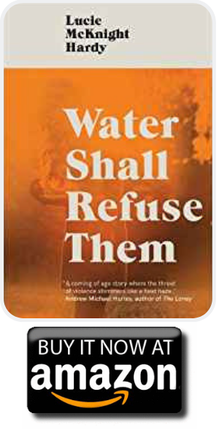
 RSS Feed

|

|