

 Jack Bantry is the editor of Splatterpunk Zine. He resides in a small town at the edge of the North York Moors. Could you tell the readers a little bit about yourself? Hello. My name is Jack Bantry. I’m the owner/editor of Splatterpunk Zine, and I writing horror fiction. What do you like to do when you're not writing? When not working (I’m a self-employed tradesman, doing anything from painting & decorating and tiling to fitting kitchens, bathrooms and wetrooms), I spend time with my family. I also dabble in a bit of publishing. Most recent being a couple of anthologies co-edited with Kit Power, (Splatterpunk Fighting Back and Splatterpunk Forever). Other than the horror genre, what else has been a major influence on your writing? My writing is influenced by the books I read and real life occurrences. For instances, the type of books I read influence the type of fiction I write. My favourite writers are people like Jack Ketchum, Ray Garton, Richard Stark, Richard Laymon, Max Allen Collins, etc. I like my fiction short and straight to the point. 200 page books that read like a film. For example: I prefer James Herbert over Stephen King. And I find real life occurrences scarier than supernatural horror. For instance, the sex trade and the abuse of women and children is probably the worst thing imaginable. Probably why THE GIRL NEXT DOOR by Jack Ketchum is one of the scariest books ever written. The term horror, especially when applied to fiction always carries such heavy connotations. What’s your feeling on the term “horror” and what do you think we can do to break past these assumptions? I think horror is just a title. Some people stick to it and won’t associate with anything else. I tend to go with whatever I enjoy. It’s like music. Some people will only listen to one genre. I like a wide variety of music, (from Bad Religion to Miley Cyrus). Book and films are the same. Horror probably is my favourite. I certain was my favourite, but I also enjoy reading and watching a lot of crime, particularly noir or hardboiled crime. After the success of horror in the 70s and 80s it became a bit of a joke, now though it’s made a resurgence. Just look at the amount of horror on Netflix. A lot of good horror movements have arisen as a direct result of the socio/political climate, considering the current state of the world where do you see horror going in the next few years? I’m a punk, so I enjoyed politics and I think the political climate gives us a lot of stories. Not sure if it’s really being addressed at the moment, but there’s definitely scope for it. The western world is on a downward spiral, like what happened to the Roman Empire, for example, it’s had its time and we are witnessing its demise. I can see a whole new world out there. Probably not for the better. But it sure would make a good backdrop to some stories. The apocalypse is coming. Bring on Mad max… What are the books and films that helped to define you as an author? I started reading horror fiction when I saw a film review for King’s PET SEMETERY on Barry Norman’s FILM TV programme. Read loads of King after that, scoured the car boot sales for second hand books and discovered great writers like Clive Barker, James Herbert, Richard Laymon, Graham Masterson. Reading Herbert’s THE FOG and the rats trilogy made me fall in love with the genre. As far as films go, I was brought up in the Fangoria generation and loved the slasher films. Chainsaw Massacre being my favourite, but there’s too many good films to mention. What new and upcoming authors do you think we should take notice off? Kit Power, Paul Shrimpton, Brendan Vidito, Matt Phillips… How would you describe your writing style? Being the editor of Splatterpunk Zine I’m probably associated with modern splatterpunk but I really love hardboiled crime. POINT BLANK by Richard Stark is one of the best books ever written. As is THE LIGHT AT THE END by Skipp & Spector. Mash them together and that’s the sort of stuff I’d love to write. It’s hard to define my writing style as I haven’t had much published and the books I have coming out this year were written 3-4 years ago. One is a crime/horror/thriller and the other (yet to be announced) is more comedy horror. But I’m currently working on a crime thriller… so there’s loads of diversity. They’re all short-ish. I write what I read. Something that plays out like a film and doesn’t go on a tangent. What aspects of writing to do you find the most difficult? Just finding time and getting motivated to sit at the laptop… Is there one subject you would never write about as an author? No! How important are names to you in your books? Do you choose the names based on liking the way it sounds or the meaning? I like the way they sound. Like Jack Burton! Now that’s how you name a hero! Writing, is not a static process, how have you developed as a writer over the years? I just write. I come up with an idea and it develops itself, if it doesn’t and I like what I have then I send it to Robert Essigand we collaborate. I think we grow as people and writing is the same. Who knows where it’s gonna lead? I have no idea as long as I’m enjoying what I’m doing. Along with AIN’T WORTH A SHIT, I have two more books coming out this year. One is a novella, co-written with Robert, and the other is a collection. I’m also editing an anthology. Then there’s the crime thriller I mentioned. I have no idea what will come next. I might not write anything else? I might publish more. I quite enjoyed it, but then again I might be working on something else with Robert. I enjoyed the collaborating process. I don’t even know what day of the week it is. Ask me something else… What tools do you feel are must-haves for writers? I think it’s like anything in life. People just need to get off their asses and do what they enjoy. So you’ve got to have motivation. You’ve also got to be able to tell a story and not expect immediate success. I failed English at school. I don’t know the difference between a verb, noun or adjective. I just love reading books and getting the chance to tell a story. You can do anything if you try. What is the best piece of advice you ever received with regards to your writing? Nothing stands out when it comes to writing advice. I remember hearing a song titled Never Give Up, by The Swellbellys, from Edinburgh. Sums it up really. Getting your worked noticed is one of the hardest things for a writer to achieve, how have you tried to approach this subject? Getting noticed is very difficult, much harder that writing a book, anyone can do that. But getting noticed is the hard part. There’s so much competition and not enough outlets. There’s no zines anymore. Magazines don’t last 5 minutes – probably cos they don’t make enough in revenue to pay the author rates. Publishers can’t afford to advertise in them etc. There’s a few anthos, but you’ve got to be good enough or somehow make yourself popular enough to get in there. And when you manage to write a book there’s so many people sending books to publishers. Self-publishing is an option but then how do you market it if you’re unknown? Getting reviews is very difficult. Again, there’s so much competition and not enough outlets. The answer is: edit your own zine! It’s relatively cheap, gives you a platform and helps create more outlets for writers. Win win! Also, make your books look good, or pay for a decent cover artist and get a good editor. What piece of your own work are you most proud of? AIN’T WORTH A SHIT. I also really like my short story, THE ITCH, which appeared in The Blackroom Manuscripts Vol. 3, published by The Sinister Horror Company. And are there any that you would like to forget about? Yeah, I’ve wrote a few shorts which didn’t make the upcoming collection, and they will remain buried! For those who haven’t read any of your books, which of your books do you think best represents your work and why? Start with AIN’T WORTH A SHIT. It’s my new one. Then, when you’ve read that I’ll have another book out (in time for Edge-Lit), followed later in the year with the collection. The next book is also a collaboration with Robert Essig, as is the collection. But the collection also contains some of our “solo” shorts. It’s like a “best of”. Do you have a favorite line or passage from your work, and would you like to share it with us? When I was writing AIN’T WORTH A SHIT I finished writing chapter three and I had an uneasy feeling in my stomach. It’s the only time my work has left me feeling like that. (In fact I very rarely get that from fiction). I won’t share any of it here. You’ll have to buy the book… Can you tell us about your last book, and can you tell us about what you are working on next? My last book is AIN’T WORTH A SHIT. It’s about a young man who is a small time drug dealer, just making enough to get by, then he loses some money and finds himself in debt to his supplier. He’s forced to work for them at their hotel in Soho to pay off the debt. It’s not a nice hotel. Our hero finds himself in a whole lot of shit… I’m currently working on a crime thriller set on a small island in the Gulf of Thailand. A couple of travellers decide to rob the local mafia. Yeah, you guessed it, things don’t go to plan… What was the last great book you read? Now that’s a difficult question! My favourite book of 2018 was MONSTERS AND ANIMALS by JF Gonzalez and Wrath James White. Particularly the second story, ANIMALS. What a great conclusion to JFs SURVIVOR series. Ain't Worth A Shit by Jack Bantry, Robert Essig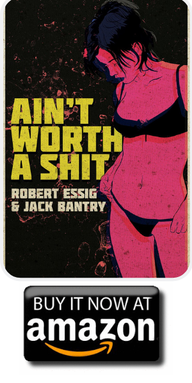 From Jack Bantry, editor of Splatterpunk Zine and author of The Lucky Ones Died First and Robert Essig, author of Death Obsessed, In Black and People of the Ethereal Realm comes a story of gut-wrenching noir.Issy has become used to her new life in the UK, away from poverty in her native land. New beginnings weren’t without struggle, and sometimes the past comes back when you least expect it.Mark dealt a little weed on the side, just enough to get him a few bucks and provide some for personal use. No big deal. Not until he makes a little mistake. Sometimes even the smallest error can turn into a dire situation.There’s another world under the veneer of city streets in London’s Leicester Square, streets people walk every day without suspicion. Issy and Matt find out about this world in the worst ways imaginable, and they must fight for their lives to get out.In this underworld, people Ain’t Worth A Shit!    Keith Knapp is the best-selling author of the novels "Coda," "Moonlight" and numerous short stories including "Battalion" and "The Cat on Alpine Road." Between the day he discovered writing and now, he has played the drums in more bands than he can remember, went to film school in Chicago and has taken up residence in Hawai’i, Missouri, California and Illinois. He loves cats, and if there isn’t always one around he starts to go a little crazy. Could you tell the readers a little bit about yourself? I grew up an avid reader thanks to my parents, and that hobby continues to this day. They also installed a love of music and all art in me. I’ve ended up with huge book, music and movie collections. And I still have a ton of comic books. I just can’t bring myself to throw any of that stuff away, or sell it. Man, why would you want to? What do you like to do when you're not writing? My previous answer kind of sheds some light on this answer. I’m a huge movie buff; I even went to film school. So I watch a lot of movies. Then there’s music, which is my second love (after the written word). I play the drums (although not as well as I like to think I used to) and will always have some form of music on somewhere in the house, except when I’m writing. If I had a drum set around, I’d be hitting that when not hitting the keyboard. Other than the horror genre, what else has been a major influence on your writing? I love sci-fi and the Hero’s Journey stuff. Anything with the words “Star” and “Wars” in it means I love it and it’s influenced my life in some way. Not a day goes by that I don’t mention it at least once. It’s probably pretty annoying to those around me, but I haven’t had any complaints. Yet. The term horror, especially when applied to fiction always carries such heavy connotations. What’s your feeling on the term “horror” and what do you think we can do to break past these assumptions? Horror, to me, is anything that scares us. That can be the scary monster under the bed or losing a loved one and being all alone in the universe. I think when a lot of people think of horror novels, they think of Clive Barker and Stephen King and H.P. Lovecraft (as they should), but Trump’s “Art of the Deal” is also a horrifying book. People like what they like; there’s an organic, primordial draw to horror because we all share fear in common. Some people don’t like to be reminded of that, or don’t want to explore that, and that’s fine…to each their own. I don’t mean that in a condescending way. Quite the opposite, as a matter of fact. For example: I can’t tell you why Metallica is my favorite band other than they thunder-rock my heart and soul. There are many people who think they suck. I don’t particularly care for romantic comedies, but I know many people who do. In art, what speaks to us is what speaks to us. If someone has a certain assumption about horror, that’s part of them, part of their journey in life. “The Shining” might not scare someone as much as, say, “Moby Dick.” A lot of good horror movements have arisen as a direct result of the socio/political climate, considering the current state of the world where do you see horror going in the next few years? I think we’re living the horror right now. But the thing is horror doesn’t really change. Writing styles do, certain tropes come and go with the times (vampires, zombies, werewolves, etc.), but at the end of the day a horror story is usually just a metaphor for something else, and can be applied to whatever situation you want it to. A zombie novel could be a metaphor for the Trump Administration or the AIDS epidemic. Or it could just be a zombie novel. Sometimes a monster is just a monster. What are the books and films that helped to define you as an author? Anything by Stephen King or H.P. Lovecraft has influenced me. I read and wrote a lot of screenplays in my younger years, and that style has naturally found itself into my novel prose, for better or worse. Shane Black (Lethal Weapon, Kiss Kiss, Bang Bang, Iron Man 3) is an outstanding screenwriter. His writing is very concise, to the point and quick, and I’ve kind of stolen some of that. The fewer words you can use, the better. I’m not much for flowery writing unless I come up with something really, really good. And I usually don’t. I just like to tell the story that wants to be told. What new and upcoming authors do you think we should take notice off? You know, there are so many I wouldn’t know where to begin. I usually end up “discovering” authors well after everyone else has; most of what I read is either recommended to me or by an author I’m already familiar with. So you tell me who to take notice of so I can go buy some more books. How would you describe your writing style? Quick, concise and to the point. I don’t like to waste words or time. Are there any reviews of your work, positive or negative that have stayed with you? There was more than one review of my first novel, Moonlight, that mentioned the less-than-wonderful grammar issues. I took that to heart because, as a writer (and a reader) there really shouldn’t be any grammar issues at all. But it happens, it happens in big-time books as well as indie books. I think about that every time I write because it’s a pet peeve of mine, so I hate it when I find out I’m guilty of it. I’m sure I’m guilty of it here somewhere, too. What aspects of writing to do you find the most difficult? The mental energy one has to exude can be exhausting at times. I usually need to take a break after about two hours, and usually end up taking a nap. Then there’s the flipside to that: the fact that I’m always thinking about my story, or the next story, or a certain idea, and something will click within my brain and I can’t get it all out fast enough. Enter exhaustion. Rinse and repeat. Is there one subject you would never write about as an author? Anything involving the injury or abuse of an animal. I’ll kill characters and put them through tons of shit, but not an animal. How important are names to you in your books? Do you choose the names based on liking the way it sounds or the meaning? It all depends. Sometimes a name is just a name: everyone’s got to have one. Other times a name will be based on someone I know in real life. Coda has a lot of that going on in it. Most of the first names in Coda are from people I know. And sometimes I just look up a list of names and pick what sounds or looks the best. Writing, is not a static process, how have you developed as a writer over the years? I like to think I’ve matured a lot. Most of my early stories really had no plot at all. Just little character pieces that went nowhere and told nothing. I used to fret a lot over what words to use and when to use them, but as I’ve gotten older I realize the important thing is to just tell your story. What tools do you feel are must-haves for writers? Access to as many books as possible. And a computer, because these things catch a lot of mistakes. What is the best piece of advice you ever received with regards to your writing? I can’t remember who it was, but in high school I showed a friend a story of mine and they asked me if I had ever thought of publishing. I had not, it never even crossed my mind. I thought that was for, you know, professional writers and not me. That opened up the entire world to me. Getting your work noticed is one of the hardest things for a writer to achieve, how have you tried to approach this subject? These days, hitting as many websites as I can, doing as many of these interviews as I can, and remembering that there are tons of other writers out there, most of them more talented than me. I’m not a very social guy. The only social media I’m on is Goodreads. But I hear Twitter and Facebook or whatever the kids are into these days are great sources. Writing a really good book helps, too. To many writers, the characters they write become like children, who is your favorite child, and who is your least favorite to write for and why? My favorite is John Whitley from Moonlight, because he’s basically me. He’s also my least favorite because, well, he’s basically me. Did I just call myself my own child? That’s got to mean something. Besides him, I love Brett Nickson from Coda. He just exudes pure innocence. It’s how he rolls, as he likes to say. What piece of your own work are you most proud of? Right now it’s Coda. In a year or two it will probably be whatever novel I have just finished. Usually my newest work tends to be what I’m most proud of because it (hopefully) shows growth and gives me an idea of where I’m at mentally in the world. And are there any that you would like to forget about? Many, and I have. There’s one story in particular I wrote called “NSFW” about a guy who gets a cursed email at work, then kills everyone in his office. It was really a displeasure to read. I don’t even remember reading anything in the news that week about work- or school-related shootings or killings, but I’d love to forget I ever wrote that. I can’t, though. All I can do is be happy those little evil gremlins got out of my system. For those who haven’t read any of your books, which of your books do you think best represents your work and why? Either Coda or Moonlight. They’re both similar in structure, with a large-ish cast of characters, normal people in extraordinary circumstances. My favorite kind of story. Do you have a favorite line or passage from your work, and would you like to share it with us? I know I do, but I don’t really remember my stuff all that well. A lot of times when I read something back, after it’s been released to the wild, I cringe. Because there are so many great books out there and I chose to structure a sentence like that?!? However, there are occasions during rewrites where I’ll say to myself “Okay, that’s some pro writing there, buddy,” but it’s forgotten by the time I get to the next cringe-inducing sentence. I’m not selling myself too well with this answer. Can you tell us about your last book, and can you tell us about what you are working on next? My last, most recent book is Coda. It finds a group of earthquake survivors whisked away to a land known only as The Town. The Town seems to know anything and everything about these people, and kind of tortures them with this knowledge. The book plays with the idea that we all have regrets, things in the past which we wish went a different way, and how we deal with them. There are also monsters. I’m currently working on a story about a man trapped in one location, more of an exercise to get into the nitty-gritty of what goes through someone’s mind when all hope is lost. I also thought it’d be challenging to have a story with one character instead of the 10-20 I usually end up with. If you could erase one horror cliché what would be your choice? Oh man, I love clichés. They’re there for a reason. Sure, some of them are over-used, but if used well, no cliché should be erased. Take a cliché and turn it on its head, I say. What was the last great book you read, and what was the last book that disappointed you? I absolutely adored Stephen King’s 11/22/63. It was like if King wrote an episode of Quantum Leap, one of my all-time favorite shows. The last book that disappointed me will remain a secret, as just writing one of these things is a success in my mind. But it was by a well-known author, and it made me a little sad. I kind of think it was ghost-written by an insane dog, but that’s just a guess. What's the one question you wish you would get asked but never do? And what would be the answer? “Would you like to be a part of the next Star Wars movie?” My answer would be a resounding YES. I’ll mop the floors in the production offices, I don’t care. CODA BY KEITH KNAPP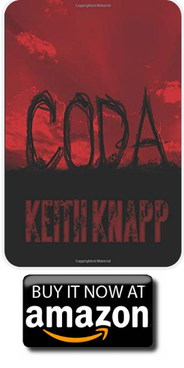 THERE ARE NIGHTMARES HERE After a devastating earthquake hits Los Angeles, a group of survivors find themselves whisked away to a place known only as The Town. It is there that they will face their inner-most demons and relics of the past as they try to find a way out and back to reality.But an evil presence awaits them there. It knows their fears, their sins and their lies and will do anything to keep them right where they are.    C L Raven are identical twins and mistresses of the macabre. They're horror writers because 'bringers of nightmares' isn't a recognised job title. They write novels, short stories, comics and film scripts. Their work has been published in magazines and anthologies in the UK, USA and Australia. A story of theirs was published in The Mammoth Book of Jack the Ripper, which makes their fascination with him seem less creepy. They’ve worked on several indie horror films as crew and reluctant actors and have somehow ended up with lead roles in the forthcoming indie horror film School Hall Slaughter. Could you tell the readers a little bit about yourself? We’re 36, we’re from Cardiff and we’ve been published for 11 years. We love animals, travelling, poledancing, history – particularly the period from the Tudors to the Victorians, and we have weird phobias such as holes, food and Bungle from Rainbow. We’re the first point of contact for people looking to rehome their pets, or when the army is depleted, we adopt some. Our mum has put a pet ban in place, but so far, two rabbits, 6 guinea pigs, 1 dog, 5 cats and 1 snake have joined the army since the ban. The army currently has 15 members. Our mum says we have enough, but we’ve never had pigs, goats or tortoises, and you can’t take over the world with an army of 15. Plus, we want to be crazy cat ladies, but 5 cats isn’t enough. We think the rule is that you need at least 3 cats per person. We need 4 more then we will have finally achieved something in our lives. What do you like to do when you're not writing? Most of our time is spent looking after our animal army. One of our guinea pigs currently requires syringe feeding every hour, so that takes up a lot of time. Other than that, we love polefitness, and are training to become instructors. What we lack in grace, we make up for in enthusiasm. People keep telling us to ‘get a proper job’ but working in an office would cause us to go postal, so we figured we’d get another job doing what we love. We also love exploring castles, graveyards and haunted places. We have a ghost hunting show on YouTube. We also host a horror radio show every Friday night. Once a week we do gymnastics and are a complete embarrassment to the sport. Other than the horror genre, what else has been a major influence on your writing? Music. The lyrics by Jim Steinman, My Chemical Romance and Rise Against are a huge influence on our work. Also, art. Often, seeing a dark, creepy paintings or drawing makes our imaginations tingle. The term horror, especially when applied to fiction always carries such heavy connotations. What’s your feeling on the term “horror” and what do you think we can do to break past these assumptions? One, get rid of the term ‘literary horror’. We find that term tends to get slapped on work that is slightly dark, but more often than not, isn’t really horror. It’s as though horror is a dirty word and they don’t want to be associated with us lowbrow genre types, so they add this label to give it more respectability. It’s like putting makeup on a corpse. It may look pretty, but it’s still a corpse. It’s like when horror films do really well, they’re said to ‘transcend the genre.’ Uh, no, they don’t. That’s just a term for people who can’t admit that they actually enjoyed a horror film. If you like it, own up to it. We need to break away from this notion that horror is the bastard child of literature. It has so many subgenres, yet people automatically think of gore. It’s so much more than that. It plays on your emotions far more than any other genre. A lot of good horror movements have arisen as a direct result of the socio/political climate, considering the current state of the world where do you see horror going in the next few years? To be honest, the world is in such a bad place at the moment, that nothing in horror will ever be as scary as what is happening. We once read a trend that when the Labour government is in power, vampires are popular but when the Tories are in power, zombies are popular. Perhaps there will be more dystopia horror as our planet dies around us, or more horror involving Nazis, seeing as those bastards seem to be back. We know things come back into fashion every few decades, but seriously, Nazis should stay dead and buried along with shellsuits and poodle perms. Plus, you’re not really going to get better Nazi horror than Dead Snow 1 & 2. Although technically, The Handmaid’s Tale isn’t horror, it’s bloody terrifying, especially what with what is happening in America, so we expect more fiction like that. What are the books and films that helped to define you as an author? Roald Dahl. When we were kids, we wrote stories about Tudor children attending executions and the condemned’s head would roll down the hill. That had to have been influenced by the Cinderella poem in Revolting Rhymes. We had twisted a sense of humour as kids, so he really appealed to us. Also, Dean Koontz had a huge influence on our early work. We were always more fans of his than Stephen King’s, because he often creates very beautiful sentences. Then he found God and that kills any relationship. What new and upcoming authors do you think we should take notice of? We love the Sam Spallucci books by A.S. Chambers. We’re not just saying that because we’re friends. We bought the first book from Austin at Scardiff a few years ago and we’d never heard of A.S Chambers. We loved it! Sam is a PI who investigates supernatural cases in Lancaster. A few years later we happened to be at the same con as Austin and got to know each other. Now we hunt him out at every con we go to and buy his books. He’s such a lovely guy as well, which makes it better. How would you describe your writing style? We seem to have two styles – dark and gothic, or horror comedy. There’s no in between. It kind of fits with our personalities. We love dark, gothic things and we also have a twisted sense of humour. We also tend to use sentences which are grammatically incorrect, such as one word sentences, but it fits with our style. Kind of like if Edgar Allen Poe, Roald Dahl and Terry Pratchett had far less talented daughters. Are there any reviews of your work, positive or negative that have stayed with you? When we were researching bodysnatchers for our novel, Empty Graves, we met a woman on Twitter who researches the resurrectionists, and has written a book about them which is published by Pen & Sword. She was so helpful, and when we published Empty Graves, she bought it. Our first reaction was ‘balls.’ Then we panicked and didn’t want to read any messages she sent us. (We are massive wusses when it comes to reading reviews.) But she loved it. She said we’d brought her bodysnatchers to life. She’d fallen out of love with researching them, but after reading our book, it fired up her interest again and now she’s back posting photos of the graveyards she’s been to. We don’t think we’ll ever have better praise than that. During a literary festival in East Budleigh, two people compared our work to Terry Pratchett. We nearly died of glory. And that was despite the fact we showed up at the festival completely drenched, covered in mud and smelling of farm animals after we got lost on a straight road trying to find Sir Walter Raleigh’s house. Don’t ask. What aspects of writing to do you find the most difficult? The endings. We suck at endings and often have to rewrite them. We’re not planners, and as we make it up as we go along, we often have no idea how to end the book or story. Is there one subject you would never write about as an author? Animal cruelty. We can’t bear to see it, or read about it, so we will never write it. We’ve been campaigning for animal rights since we were 8 years old and it’s a subject that makes us so angry. Also, rape. Seriously writers, if you want a badass female character, just create one. She doesn’t need to be raped in order to ‘become strong’ or to have a good reason for butchering a load of men. We feel like going on a killing spree every time we’re stuck behind a slow walker in the supermarket. In action films, a man will go on a killing spree if his family are killed. Or in the case of John Wick, his dog. But when it’s a woman, apparently, she’ll only go all stabby if she’s raped. Really? Have you actually met any women? We are all one ‘give us a smile’ away from beating mankind like a pinata. Unless you’re writing a crime novel, there’s no need for rape. Most women live with the fear of being raped every day of their lives. We don’t want to read about it in books or see it in films. Being raped should not be a female character’s sole arc. They don’t write about male rape so stop writing about female rape. Is it for their own titillation? In which case, put down the pen and go see a therapist. Or better yet, do the world a favour and kindly shuffle off your mortal coil. How important are names to you in your books? Do you choose the names based on liking the way it sounds or the meaning? Names are very important to us. We choose them purely on whether or not we like them. The characters’ names in Bleeding Empire were picked for which Horseman of the Apocalypse they represented. War was Mars, the Roman god of War, Death was twins Morgan and Aeron, who are the Celtic goddess and god of death, Famine was Demi, named after Demeter, the Greek goddess of the harvest, and Pestilence was Macies, a Greek personification of wasting and thinness. We’re constantly using baby name websites to pick a name. Although some of the names that are on there… *stares hard at parents* we are judging you. Your poor child has to go through school with that name. Writing, is not a static process, how have you developed as a writer over the years? We like to think we’ve got better, but the consistent rejection emails tell us otherwise. We used to have an abundance of ideas and carry notebooks or Dictaphones around with us to make note of them. A lot of stories were unfinished because the desire to write the newest one was too strong. After over 20 years of writing, that’s gone now. Now we see a deadline and write for it. Maybe it’s because we’ve been doing it for so long or maybe 20 years of depression has had a part to play, who knows. It’s quieter in our heads now. Our invisible friends don’t visit any more. Our work has always been dark – we have stories we wrote when we were 9 that prove that. What tools do you feel are must-haves for writers? A cat. It doesn’t even have to be yours. Our current writing buddy is a ginger cat called Theo. His owner lives about a quarter of a mile away. We keep messaging her to pick him up, but he always returns after a day or two. We always have a feline writing companion. It used to be our big black cat, Warlock, then after he died, our youngest, Ripley, took over. Then a stray wandered into our garden last April and insisted on moving into our writing shed. We named her Mina. She has now taken up residence in our house, so Theo now lives in the writing shed. Other than that, all you really need is a computer or a notepad. You don’t need anything fancy. When we were teenagers, we used to handwrite our novels whilst in bed. What is the best piece of advice you ever received with regards to your writing? Remove the passive voice and framing. Our work has improved so much since we were taught about those things. Getting your work noticed is one of the hardest things for a writer to achieve, how have you tried to approach this subject? So many ways. We’ve done readings at horror cons, libraries, on YouTube, we’ve made book trailers, done press releases, taken out a full page ad in Scream magazine that cost us £600 and didn’t gain one sale. We’ve done free downloads, been on other people’s blogs, we attend as many conventions or events as we can all over the UK. Sometimes, we’re away at conventions every weekend. And the only thing that works vaguely well, is selling our books at conventions. Everything else has been a massive failure and waste of time and money. We lose money at conventions, because we always have to travel so far (Cardiff has comic con and that’s it) but we sell books we wouldn’t have sold sat at home. And we’ve met loads of lovely people at conventions. Our aim is to get a book banned, because that would be great for sales, but nobody knows who we are, so they won’t ban our books. To many writers, the characters they write become like children, who is your favourite child, and who is your least favourite to write for and why? To be honest, we don’t see our characters as our children. Yes, we love them, but we also have a nasty habit of killing them. And good parents don’t kill their children. We don’t have a least favourite. Some books were harder to write than others and at the time we hated them, but we grew to love them during editing. As for favourite… the stepmother from our Snow White story in Disenchanted was so much fun to write. So was Trey from Romance is Dead. Some of our favourites exist in novels that will never see the light of day. Unless our niece publishes them after our deaths. We’ll have to add a clause to our will that she won’t be allowed to embarrass us in that way. What piece of your own work are you most proud of? Possibly Autumn of Terror. It was published in the Mammoth Book of Jack the Ripper. He’s our favourite serial killer so it was a huge honour to be in that book. And we got paid a decent amount for it, which makes a nice change. Yes, we know it sounds wrong to say you have a favourite serial killer, but ask anyone who is fascinated by them. We’re also quite proud of a short story we wrote called The Art of Dying, but unfortunately, every editor we’ve submitted it to disagrees with us. And are there any that you would like to forget about? Ha ha yes. Our first published story. We haven’t read it since it was published 11 years ago, but we’re certain it’s terrible. We pretend it doesn’t exist. Although it was our first acceptance, so we’re proud of it for that. We bought a new laptop plug with the royalties. For those who haven’t read any of your books, which of your books do you think best represents your work and why? That’s a really hard one to answer because each of our books is so different. We guess Romance is Dead shows off our horror comedy the best. Soul Asylum is probably a good representative, or Silent Dawn. Do you have a favorite line or passage from your work, and would you like to share it with us? Oh god, this is going to require us to remember what we’ve actually written! Ok, this is from Soul Asylum: ‘the blood wanted to prick a conscience that couldn’t bleed. Poe could keep his telltale heart. I couldn’t hear it beating.’ Can you tell us about your last book, and can you tell us about what you are working on next? Our last book was Empty Graves, set in 1828 during the time of the resurrectionists in Edinburgh. We spent a lot of time tracking down various parts of William Burke for ‘research’ and found a card case and notebook made from his skin and got a private viewing of his skeleton. It was a surreal moment to finally meet the man who made us fall in love with Edinburgh. He’s shorter than we thought we would be. Guess that’s why they say you should never meet your heroes. We’re currently writing a novel, Gods and Monsters, about a possessed woman who performs exorcisms on people for the wrong reasons – her demon is looking for an ancient artefact and exorcising demons stops them from finding it. We’ve just finished writing an epistolary novella, The Curse of Ravenhall, set in the 1800s surrounding a cursed castle. It got shortlisted to the final 50 of Crystal Lake’s open period, which wasn’t bad considering we finished writing it two days before the deadline and only had the chance to do one edit each. We’re in the process of editing a horror crime novel, The Dead Shall Rise, about a necromancer who raises the dead to interview them for the police. If you could erase one horror cliché what would be your choice? Only one? That’s not fair! Ok. The whole ‘man buys a new house miles away without his wife and kids ever seeing it and it turns out people were murdered there, and the kids always consist of a teenage daughter and really young son.’ Stop it. Would you ever agree to move to a house you’d never seen? No! Any man that bought a house without us seeing it would be turned into a fancy water feature. Dead or alive, it would depend on how mad we were. It really winds us up. You never see a woman buying a house without her husband’s approval. Maybe our angry, ranty feminist sides are a little sensitive about it, but….dear god, even typing about it is making us angry. What was the last great book you read, and what was the last book that disappointed you? We love the Dresden Files, so every time we read one of those books, it’s great. Frozen Charlotte by Alex Bell was really good. We were surprised by how much we enjoyed it. As for disappointment… Father of Lies by S.E. England didn’t quite live up to its premise. And we know this is going to upset a LOT of horror fans, but we’re often disappointed by Stephen King. There, we said it. His books are too padded and his characters often annoy the hell out of us. IT should have been half that length. There are other famous horror authors whose work has disappointed us, but we’ll probably upset most people with Stephen King, so we’ll keep quiet. What's the one question you wish you would get asked but never do? And what would be the answer? “Would you like to become writers in residence at this beautiful haunted castle, where the only drawback is that you can still hear the condemend’s screams in the dungeons?” “Hell yes!” Empty Graves Kindle by C L Raven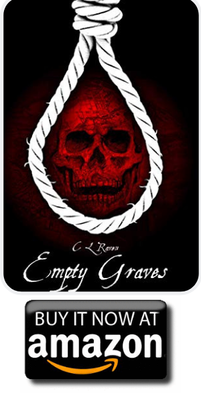 1828. The year the dead rose.Edinburgh’s medical schools hide a dark secret. There is only one way students can learn to save lives: by practising on the dead. However, the law only permits them fifteen murderers’ bodies a year from the hangman. With five schools, supply is in high demand and there aren’t enough murderers to meet it. But there are plenty of graveyards. In the city of the dead, the resurrection men are kings.How many graves held bodies? Or did nobody sleep in the city of the dead? Were the gravestones now empty masks, hiding the city’s shame?Lachlan Ketch comes from a long line of hangmen, who take pride in the role of Edinburgh’s executioner. Some people he’s hanged haunt his dreams, others torment his waking hours. They were always depicted as monsters in the songs. Lachlan had never hanged monsters, only men.But when you're alive, Hell seems so far away.One night, he hears voices in Greyfriars Kirkyard and finds resurrection men digging up a grave. He tries to flee but is captured by Rab, the leader of the Greyfriars Gang. In exchange for his life, they hand him a spade.But they’re not the only resurrectionists in Edinburgh and the other gangs aren’t keen on sharing the dead. When Lachlan discovers the malevolent method of how two of their rivals – Burke and Hare – are obtaining bodies, he must find a way to stop them. Or he’ll end up on the doctor’s table.“Doctors’ careers are built on Edinburgh’s empty graves.”    “When you’re strange, no one remembers your name.” So sang The Lizard King, Jim Morrison on The Doors’ “People Are Strange.” He was wrong, however. At least in the case of Farah Rose Smith. Smith is strange. Her writing is strange. Even she herself, in the interview you’re about to read, cites strangeness as a common attribute across her myriad artistic pursuits. But in many ways it is that strangeness which makes Smith’s work stand out among even the most experimental and transgressive creators working in genre fiction today. The strangeness of Smith’s work is one that blurs the line between poetry and prose, between the supernatural and allegorical, the psychological and theological, the sacred and profane. It is a strangeness that defies easy categorization and challenges readers to actively engage with the words on the page instead of passively experience them. Most importantly, Smith’s strangeness is a genuine strangeness, a personal strangeness. It is her strangeness and no one else’s. And it is a strangeness that makes her name more than worth remembering. Following the release of her first collection, Of One Pure Will, and just days before the release of a new anthology she’s edited, Machinations and Mesmerism: Tales Inspired by E.T.A. Hoffmann, Smith sat down with The Ginger Nuts of Horror to talk about her unconventional writing process, about the importance of writing for oneself rather than an audience, and about finding wonder in the world even when life is at its darkest… and strangest. First off, Farah, I wanted to say thank you for taking the time to speak with me today. Before we get too deep into things, I was wondering if you’d mind providing a little background for any readers who might be new to you and your work. How long have you been writing and publishing? Where are you from? What do you do outside the writing world? I’ve been writing since before I could write. I’d make tiny picture books with my mom at 4 or 5, and this increased in complexity as I aged. I won the 5th grade fiction contest for a vampire story. I have an absurd, silly pride in that anecdote. I was always serious about it, though my real development as a writer came at around 16, when I started developing novel ideas. It was around 2013 that I got involved in the Weird fiction world. As for publishing, I started with Mantid Magazine, and I’m not sure what year it was! Perhaps 2015. I faced so much sexism in the horror film and fiction industries that I really wanted to make a platform to celebrate women and woman-identifying folks. I was born in Providence, Rhode Island in 1991 to two rock musicians. I grew up in a nearby suburban town, in poverty. I struggled with chronic illness since 4 months old. Outside of writing, I am training with serious intention and intensity in bellydance. Mainly classical and folkloric Egyptian styles. I’m not a big fan of the modern versions that emphasize athleticism over dancing with your heart. I am also inching towards a degree, since my education has been slowed by ailments. You’ve been very busy as of late. A few months ago you released a novella, Anonyma, which I had the great pleasure of reviewing on this very website. Your first short story collection, Of One Pure Will, just went on sale in the form of a beautiful limited-edition hardcover from Egaeus Press. And you’ve edited an anthology, Machinations and Mesmerism: Tales Inspired by E.T.A. Hoffmann, which at the time of this writing is just days away from release via Ulthar Press. What has it been like for you, this flurry of different projects coming so close together? Exhausting? Exhilarating? Thank you for that generous review of Anonyma! I get a great amount of satisfaction, pleasure, and confidence from these types of writing and publishing projects, so I am rarely exhausted. Usually exhaustion only comes about when I must rely on others to get certain elements of projects done, because I am very picky about timeliness and efficiency, but in these cases, I have been fortunate to work with some wonderful folks like Mark Beech at Egaeus Press and Sam Gafford at Ulthar Press. Having said that, I don’t know that I am exhilarated either. I think when one has a history of trauma and illness, the good things have a tendency to be experienced in a haze until you “train yourself” to be in the present moment. That’s something I’m working on, and fortunately getting better at. I am very grateful for all of it, but not quite sure it is all a dream. Reading through both Anonyma and Of One Pure Will, one of the things that immediately jumps out at me is your style, which is very distinctive. The language is rich and poetic, at times almost impenetrably so. How would you describe your style? What effects are you hoping to evoke with it? And how do you feel about the possibility that this style might be too dense or elusive for some readers? I think it is dream-like, archaic, emotive. I don’t have any intentions in regards to invoking anything in a reader, because I have absolutely no control over how someone is going to perceive what I write. As for it being too dense of a style, this has always been hard for me. My mom was the first one to tell me that what I was writing was “over her head,” and I insisted that it wasn’t. I don’t think I have a good degree of awareness when it comes to how others receive the work, so because of that, for my own sanity and determination to continue, I need to allow the ones who will appreciate it to find it, and hope that others will leave it with grace. One thing I’m always interested in is when an author releases a collection in which the title of the book is shared by one of its stories. Is there any special significance of the story “Of One Pure Will”? What made you choose that as the title of your collection? There is a line in that story that says: “My daughter is of one pure will. An unspeakably heavy knowledge of the labyrinthian depths of life.” For me, it was meant to reflect the will to live despite what others would consider to be debilitating strangeness and the painful intensities of introversion and emotional sensitivity. I think every protagonist in this book embodies some unshakable will, whether they conquer the matters against them or not. Has gathering so many of your short works together for this collection—some of them a bit older, some of them still very new—impacted the way you look at your own output at all? Do you see things in them, either commonalities or evolutions that you may not have noticed over the years as the pieces came out of you naturally? I can’t bring myself to read the oldest ones without pain! “Sorcerer Machine” is the first written of those in this collection. It was my attempt at Lovecraftian horror with a significant female character (though she is not the protagonist). I have since been able to develop my own distinctive style rather than relying on piecing together styles of my favorite writers (though it may be argued that my current style is that with more refinement), so for that I am quite thankful. If there is any commonality in the stories, it is first the will that I previously mentioned. Also, despite intense sadness, there is always some thread of hope. I think those glimmers of goodness, at least through my perception, are the most significant aspect of the stories. Much of your work that I’ve read has an almost suffocating sense of sadness to it, but also elements of wonder and beauty. Do you feel there is a relationship between these seemingly disparate tones? Do you feel like you benefit on a personal level from being able explore such intense darkness in your fiction? I don't benefit personally at all from the content that I explore in what I write. I find writing to be an arduous and oppressive experience most of the time. The only benefit of writing such things is finishing them, and the satisfaction of having completed something, which is a certain kind of ecstasy in my experience. The sadness is undoubtedly present because of my mental and physical health challenges, though I don’t include it intentionally. What I write just happens. I don’t force it or approach many stories with an elaborate amount of planning. As for the connections between beauty, wonder, and sadness, I honestly don’t know what to think. I would be curious as to what a scholar of Gothic or Symbolist literature would think. I am not yet at the point in my studies where I can illuminate my own subconscious thoughts. Personally, I think finding beauty in sadness is a very wrong variety of morbid, but for beauty to exist around sadness is quite a different, and sometimes remarkable, thing. Perhaps I am capturing my ability to appreciate the world despite oppressive depression. Fiona Geist wrote a very illuminating introduction for this collection. Something in it that struck me was the suggestion of you possibly using automatic writing or some variation of Tristan Tzara’s cut-up technique. That’s not a connection I would have made on my own, but considering the surreal and iconoclastic nature of your fiction, it does make sense. Would you elaborate a little on what your writing process is like? To you, what is the appeal or advantage of these kinds of unconventional techniques? I don’t make direct use of automatic writing, though the techniques I use are similar. I developed my own aleatory technique to accommodate some of my cognitive problems after I had a stroke at 18. The technique is simple. I pick two or three words at random and string together a sentence in my mind. Sometimes I elaborate upon that single sentence in a trancelike state. Sometimes I accumulate up to a hundred pages of single-sentences and string them together to create a passage, a chapter, a novella. Many parts of Anonyma were written in this way, which is probably why it took nearly 7 years to write. I see no appeal in these alternative techniques. It gives me an advantage as someone who is dealing with acquired neurodiversity, to continue to write despite the rewiring of my brain. I know you’ve frequently cited the influence of the Decadent and Symbolist movements on your own work. What is it about those movements that connects with you? How do you feel you’ve adapted elements of those movements into your own unique voice? Strangely, I still struggle to connect my work to the Decadents. When I started doing readings at the Lovecraft Arts and Sciences store in Providence, RI, people would remark on my work as being Decadent. I had not yet read works from this era. They continue to tell me I am Decadent, and I continue to use the term, even after reading many works of the time, because it makes sense to the people who appreciate my work. To me, if I am to be categorized at all, I am a Symbolist-Gothic more than a Decadent. The Symbolists were painterly in their writing, using an enormous amount of color, which I try to do. The Gothics were writing with tragic romantic undercurrents. If I must be categorized, perhaps I am best put there (but I hate categories). Presumably another influence of yours is German fantasist E.T.A. Hoffmann. As mentioned earlier, you’re all set to release a Hoffman-inspired anthology. Can you tell me a little about that, who all is involved, how the project came to be, etc.? I approached Sam Gafford, the owner of Ulthar Press, about doing the anthology Machinations and Mesmerism: Tales Inspired by E.T.A. Hoffmann last year, and I was thrilled that he jumped at the opportunity to publish it. There are some wonderful authors contributing to this collection, and I am glad to say we have writers of various genders, writers of color, international writers. It is the most diverse anthology I have ever had the pleasure of editing. You’ll see stories from Jayaprakash Satyamurthy, LC von Hessen, Rhys Hughes, Sonya Taaffe, Michael Cisco, and many more! It will be released on June 25th and copies will be available for sale at Readercon and NecronomiCon. What is it about Hoffmann’s work that made you want to put together this anthology in the first place? How do you feel the different stories have captured or paid tribute to the spirit of Hoffmann’s literary legacy? I first read Hoffmann when I was taking a year off after graduating high school. My best friend was studying literature at the University of Rochester, and would send me their used textbooks after their semesters ended. I received an anthology of his stories and they revolutionized my spirit. I continued on to find more of his fiction, his letters, everything I could, and still hope to include him in my scholarly studies as I approach the possibility of graduate school. What I really came to be proud of in this anthology is how the different writers tap into the very different elements of Hoffmann’s writing. There are those who associate him with Offenbach’s opera, or those who have only read Der Sandman. There are modern and classical stories here. Horrific and fantastic. Subtle and Blatant. I was very lucky to receive stories that illuminated both the traditional and bizarre in Hoffmann’s oeuvre, and hope that people who have not read many of his works will be compelled to do so after reading this anthology. And that the fans will feel it honors him properly. So you’re an author and an editor. You’re also a filmmaker and a dancer. Anything else I’m missing? Are there any common elements in these art-forms that connects them? Or, in terms of their differences, are there things that you get from one or can express through one that you can’t with another? I have never been able to choose “just one thing,” so I loom perilously close to the jack of all trades, master of none thing. The commonality among them is the strangeness, Gothicness, emotiveness with which I pursue and project my aesthetic and linguistic preferences. Film was a sad venture for me because of the enormous amount of sexism and ableism I faced. I made some short films and long to make more, but there is only so much you can say on a nonexistent budget. On the page, you can say anything. Dance is a unique medium because it is the first through which I am able to manifest true joy. I must admit that if I had to choose one medium to practice in for the remainder of my life, it would be dance. We’re only halfway through the year and you’ve got a new novella on the market, you have your first short story collection, and you’re soon to be releasing the aforementioned Hoffmann tribute anthology. What does the rest of the 2019 hold for you? Do you have any specific goals or projects that you’re looking forward to pursuing? I will be attending Readercon this year, and it’ll be my first time attending as a participant. I will also be attending NecronomiCon, where I will be presenting a paper at the Armitage Symposium, among other things. I am currently at work on my first full-length novel, a Gothic Horror piece. My ultimate wishes in the publishing world are to have an agent, to publish a full-length novel, and for there to be a short or feature-length adaptation of one of my stories. Needless to say, these things will probably not happen this year! But I am in it for the long haul. Honestly, the biggest project for the remainder of the year is planning my wedding. For those interested in following your work, what are the best ways readers can do that? I may be found at all of the following: Visit my website: http://farahrose92.wixsite.com/grimoirepictures Like my page on Facebook: https://www.facebook.com/farahrosesmith/ Follow me on Twitter: https://twitter.com/farahrosesmith Thank you again for taking the time to talk to The Ginger Nuts of Horror. It’s been wonderful having you. Thank you for speaking with me! of one pure will by farah rose smith Of One Pure Will contains eighteen short pieces: strange, decadent, restless stories which seem to map their very own attic space at the edge of the waking world: A treacherous, amorphic region, shewn in a style that writhes and twists, but is never out of Farah Rose Smith's meticulous control. The full table of contents is as follows: An Ethics of Magical Vulnerability: The Works of Farah Rose Smith by Fiona Maeve Geist The Wytch-Byrd of The Nabryd-Keind In The Way of Eslan Mendeghast Of Marble and Mud The Visitor The Land of Other As Unbreakable as The World An Account Above Burnside Park As With Alem Sorcerer Machine Dark Ocean Ash in The Pocket folie à plusiers Rithenslofer (The Corpses of Mer) In The Room of Red Night Of One Pure Will Time Disease (In The Waking City) Ivisou The River Acknowledgements    Tim Lebbon is the New York Times bestselling author of Coldbrook, The Silence and The Relics series, of which the third part is released on 25 June. The movie adaptation of his smash hit novel The Silence has been a worldwide smash hit. On a personal note `I have been honored to know Tim for more years than I care to remember, and fondly remember the time we discussed gypsy tinged rock music on his old writer’s forum. Today we sit down with Tim to chat about writing, Triathlons, his new book, and life after becoming a Hollywood smash. Hello Tim, how are things with you? Evening, Jim. I'm very good. Slightly tired from a weekend of coasteering in St David's, confront my fear of heights by jumping 40ft into the sea (which contains sharks) from a perfectly safe rock. Madness. This month sees the release of Relics: The Edge, the third installment of your hidden world series centered around the illicit trade in mystical curiosities. What was the inspiration for the main theme of the book? The whole trilogy started with a short story I wrote a few years ago (also called Relics) that started with the line "I know where you can buy a dragon's cock." No such appendage appears in the novels, but it was a good starting point. So that was partly the inspiration, and also the whole trade in rare animal body parts, and the idea of trophy hunting, which I also explored in my novel The Hunt. The Edge moves the story on towards a climax, so the themes and idea in this novel reflect those on the first two books, also concentrating a little more on the strength and bond of family. Angela Gough has been the main protagonist throughout the three novels, how has she developed as a character, and how do you feel about saying goodbye to her now that this is the final book? In some ways Angela has suffered more than most. Her life has changed from being quite happy and content, with a job she loved and a life in London with her boyfriend, to being on the run accused of mass murder and with supernatural/mythological creatures out to get her. It's enough to upset anyone, but Angela is handling things, adapting, and doing her best to protect and save the ones she loves. It's been quite a journey with her, and I don't want to give any spoilers about The Edge. But I do think I've spent enough time with Angela for now, though that's not to say I won't write about her again in the future. There are plenty more stories about her adventures with and without the Kin just waiting to be told. Is she your favorite character in the book? If not who is your favorite character? I think my favourite character is Lilou. She's Kin, but perhaps the most 'human' of the Kin. She's troubled, conflicted, her allegiances are pretty fluid. In short she's a Kin who's as messed up as the humans she deals with, and I like the complexity of her character, and the fact that she mostly only wants to do good. Mostly. You could argue that “The Kin” are a metaphor for the never ending struggle of a world where immigration and dislocation is still a problem for too many people, did you set out to create a parable for modern times, or did your subconscious mind just process what is going on around us? I guess there was a bit of subconscious work going on there. I'll admit, it's rare that I consciously set out to tell stories with a higher meaning like that, at least not overtly. But any story is a product of its times, influences, and inspiration, and it's inevitable that some of the outside will bleed into whatever worlds I create. A lot has changed in our world over the space of my writing these three novels, and I guess some of that change is reflected in the arc of the trilogy. While I am sure you would never condone the trade in mystical curiosities, there must be one that you would love to possess, if you could get your hands on it what would it be? A dragon's ... no, wait. Maybe an angel's feather. The Edge is published by Titan, a publisher that has a long history of genre publishing and publishing your work, what does a publisher like Titan offer a writer like yourself? Enthusiastic and friendly editors, publicists, etc. A great track record. Good reach. The Edge is the final volume of the trilogy, would you ever consider going back to that world, or are there any itches to revisit some of your previous worlds? No plans as yet, but I'll never say never. I also like the idea of continuing the stories of The Silence, and Coldbrook. Not sure what format those continuations might take. I'll never shut off the idea of continuing any story I write. But I must say, writing a trilogy is hard work! When there's three years between first and last novel, it's difficult to remember what happened, who did what, and to pick up again when it comes to characters and themes. It's not something I'd rush into again, partly because of that, but also because the idea of telling new, fresh stories every time is probably something I prefer. You are a writer who has never been tied down to a particular genre, Sci Fi, crime, thriller horror, and fantasy have all been touched upon during your career, has genre hopping been a conscious decision on your part, or do you just write about what pops into your head? Often I just write what I like to and it falls into whichever category a publisher wants to call it. Sometimes I have to be more restrictive, especially if I'm writing a new book in a current deal, but even then a lot of my 'horror' novels, for instance, are very different. I'm not consciously thinking of 'genre' all the time. With The Hunt, for instance, I just wanted to write a novel about endurance sports, and it ended up being non-supernatural and pretty much the first non-fantastical bit of writing I'd ever done. But usually, to be honest, what I write does ended up at the darker end of the fantasy scale. Don't know why. As my grandmother would have said, it was just the way my parents put my hat on. I was speaking to James Brogden the other week, and he mentioned how his editor at Titan, saved him from making an error with regards to a factual element in his last book. How closely do you work with your editors, and what point in your career did you have enough trust in them to accept their input without question? I never accept editorial input without question, and any good editor always sends their editor letter/manuscript with a 'these are just my ideas' preface. Everything should be open to discussion and negotiation, and pretty much every edit I've done has been conducted along those lines. There's been one experience which wasn't so good (years ago, and not with Titan), but generally a good editor is worth their weight in gold. So when a book's finished and submitted, I start working with my editor to make it as best it can be. It's a great process, more often than not a pleasure, and as a writer I think you have to be very open to a good editor's opinion. By the time I've submitted a book I've read it so many times that I'm too close to notice mistakes, so an editor's take is always fascinating and exciting to read. And, I'll admit, I'm always a little nervous too. Titan have also published a few of your film tie in novels, I’ve always wondered how that process works, do they contact you, or is there some sort of Octagon battle between you and the other novelists at Titan with the winner winning the book? Yeah, there's a fighting cage beneath Titan Towers in London. Once a year they throw in a selection of their writers, and the three who come out alive get the tie in jobs for that year. Now, I'm not much of a fighter ... but I can run. And it's a big cage. Actually they usually make first contact. It's the sort of work where the more you do, the more you get offered, especially if you're able to deliver a good product on time and are easy to work with when it comes to the restrictions etc of a certain property. I've written everything from Star Wars to Hellboy, and every property has different rules and limits. Always good fun, though. You’ve described yourself as a nine to five writer, is discipline and regimentation a vital part in your writing process? Yeah, I do most of my actual writing between 9 and maybe 2pm, when I'm alone at home. After that it's emailing, admin, phone calls and Skypes ... all the other sides of writing that isn't actual writing. And in the evenings it's often Skypes or calls back and forth with the USA. Especially if the contact is LA based, I'll often start talking at 7 or 8 in the evening to allow for time difference. So while I say 9 to 5, some days I'm working on and off from the time I get up to when I go to bed. When it comes to the actual act of writing, I try to be as disciplined as I can, but it's often not something that works out. Maybe the muse is away for the day, or something else comes up that needs my attention, and just lately I've been working on stuff that is much more time sensitive so I'll work into the evenings and at weekends. But ... I still love almost every minute of it. And what do you have for your lunch? Scrambled egg on toast with a hot sauce is a fave. Or a nice cheese and tomato sandwich. Sometimes a bit of salmon. And coffee. You are keen endurance athlete, what first inspired you to pick up the bike, the running shoes and wet suit? Being overweight and unfit in my early forties and realising that if I didn't try to do something about it I'd just start getting more overweight and unfit, and not wanting that to happen. The lucky thing is, I found something I love in triathlon, so now fitness is only a part of why I do what I do, but mainly I train and race because I enjoy it so much. That's always my tip if someone asks me about getting fit––find something you love doing so much that fitness becomes almost a by-product rather than the final aim. I know so many people who join a gym to get fit and then just trail off ... it's because they haven't found something they enjoy doing, but are doing it because they think they should. My brother in law has just taken up triathlons, do you have any advice for him? Wow, what's my word count ...? I'd say to start short, do a few sprint or Olympic races to get the hang of running off the bikes and transitions. If he has ambitions at the long distances, the hard part is the training volumes required, especially for iron distance races, where at its height your training might be 15 hours per week or more. It's something I've always struggled with, but it can be done. It's essential to have the support of your family and friends. And as mentioned above, I'd say first and foremost to enjoy it. There's a point in every race when the exhaustion is kicking in and everything's starting to hurt and I'm thirsty and scraped and bruised and sunburnt and chafed and the finish line seems 30 miles away (which it usually is), that I remind myself ... I'm doing this because I love it. Also, coffee and cake. You have written a number of novels with the legend that is Christopher Golden, when and what was the catalyst for this long term writing and personal friendship? Chris asked me to write a story for a Hellboy antho he was editing. I didn't want to (in truth, I didn't know much about Hellboy). He talked me into doing it, loved the story, commissioned me to write a Hellboy novel for a series he was editing, we ended up writing Mind the Gap together, and we've been firm friends ever since. The writing has become something that's a real pleasure, we're good at working together, and collaborating whilst working on our own projects often means a new novel seems to appear almost from out of nowhere. It's a fascinating process, too. I've never felt that writing is a lonely business. Talking of Chris, the pair of you are about to launch Ten-word Tragedies an anthology based on a song from the fabulous Frank Turner, how did this come about, and how in hell did you manage to get Frank to appear at the official launch of the book? I've loved Frank's music for years, and when I introduced the music to Chris––and he fell in love with it too––we'd spend time chatting about it when we Skyped (something we do frequently). One evening we were talking about the great lyrics for his song Mittens, and that one lyric in particular that really resonated with us: Wandering lonely through the snow streets of New York I stumbled on a thrift store that sold postcards by the yard I bought a mile and shipped them home so I could read Ten thousand ten-word tragedies, the lives these strangers lead One of us (I can no longer remember which!) said, 'And Ten-Word Tragedies is a great idea for an anthology.' I emailed Frank––we'd conversed before, he's very open and approachable––and mentioned our conversation, and I was delighted to discover that this part of the story was true. There really was a box of postcards that he had shipped home! He agreed to send me the box, and that was it. Chris and I committed to doing the anthology, with Frank's blessing (and also his input, as the book contains his first piece of published fiction), and it's been a pleasure to work on. As for the launch and Frank playing there, what can I say? He's a great guy, venue isn't too far from where he lives, and it's all fallen together very nicely. Chris and I are both delighted with the eclectic range of stories we've included, and we're thrilled to be working with PS Publishing. Was there an open call for the anthology or was this invite only? Invite only. If you had the chance to do another song themed anthology which song would you choose? Hmmm, that's a tough one. I did once write to Bruce Dickinson of Iron Maiden, suggesting an anthology of stories inspired by their music, but got no reply. Their music is so rich in story and imagery I think it'd be amazing. And I have a PERFECT title for the antho, too. I’m not sure if you if you are getting sick of all the attention over it, but I suppose we can’t avoid it. The Silence, I bet you didn’t see that coming when you first published it. Why do you think that out of all your fine back catalogue of novels this was the one they picked up on? I never get sick of talking about that... it was a wonderful experience from beginning to end. I've heard from some writers who say their Hollywood experience was awful, but from the moment it was first mooted, to being on set in Toronto, to stepping through the doors of Netflix in LA to watch it on their big screen, it's been a wholly great adventure. As for why The Silence, I guess it was a series of happy connections that led to certain people reading the book, optioning, producers coming on board, connecting with Constantin, getting such a fantastic cast, and finally Netflix. It was a quick process too. The book was only published four years ago! Other than being mistaken for the lead actor, has your life changed in any way since its success? I was the lead actor! I was a corpse in the pharmacy. I tried for lead casting, but didn't get anywhere. It's been a wild ride, and anything like this changes lots of things to a greater or lesser extent. There's a bit more TV/movie stuff ticking over that I can't talk about yet, and I've met up with a lot of great people whilst in LA, some of which I hope might lead to more adaptations or original screen work. I also bought myself a nice triathlon bike! And there's the obvious change, too, in that just for a little while the pressure of where the next month's mortgage payment is coming from has been lifted, at least a little. I'm a working writer, and income is always an important consideration in what I'm doing. Do you think having a successful film under your belt opens door for you in terms of publishing, or does the benefits, if any get outweighed by the pressure put on by yourself to deliver another blockbuster? I think it's inevitable that having something made makes you more visible, and it's always going to be on my cv. I had a lot of meetings in LA, and I did notice peoples' interest perking up when they heard about The Silence (and another project that's going on that I can't mention yet), so there's a definite advantage to having something made, of course. I suppose there is a bit of pressure writing-wise, but I honestly don't feel it that much. And if there is ever a niggling pressure, it's a good one. The Edge is released later this month, can you tell us about any future projects that are coming our way? I've written a Firefly novel, Generations, that's due out from Titan later this year. Other than that, I'm working on a new novel myself, and Chris Golden and I are also working on a new novel (it'll be our eighth together). I'd also like to put a new collection together at some point, but I haven't even approached publishers about that yet. And I'm working on some original screen projects. And finally it’s something that we never seem to ask writers, but where can we bump into you this year, do you have any appearances at conventions or festivals lined up? Yep, I'm a special guest at EdgeLit on July 13th, Rhondda Book Fair on September 7th, I'm guest at an event at Hodges Figgis in Dublin on 30th October, and I'll be at British Fantasy in Glasgow. Relics - The Edge by Tim Lebbon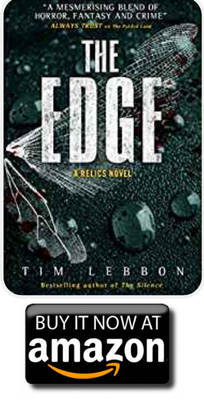 A diseased town--long hidden beneath a lake--rises from the depths to become a focus of the war between humankind and the Kin.There exists a secret and highly illegal trade in mythological creatures and their artifacts. Certain individuals pay fortunes for a sliver of a satyr's hoof, a gryphon's claw, a basilisk's scale, or an angel's wing. Embroiled in the hidden world of the Relics, creatures known as the Kin, Angela Gough is now on the run in the United States. Forty years ago the town of Longford was the site of a deadly disease outbreak that wiped out the entire population. The infection was contained, the town isolated, and the valley in which it sits flooded and turned into a reservoir. The truth--that the outbreak was intentional, and not every resident of Longford died--disappeared beneath the waves. Now the town is revealed again. The Kin have an interest in the ruins, and soon the fairy Grace and the Nephilim leader Mallian are also drawn to them. The infection has risen from beneath silent waters, and this forgotten town becomes the focus of the looming battle between humankind and the Kin.   ARE YOU BRAVE ENOUGH TO ENTER THE CAVERN?: A FIVE MINUTES WITH INTERVIEW WITH AUTHOR ALISTER HODGE
24/6/2019
 Alister Hodge is a Sydney based author, writing within the genres of horror, science fiction and young adult. He is also an Emergency Nurse Practitioner and a Clinical Lecturer at the University of Sydney. As a mental break from providing healthcare in a busy Emergency Department, Alister leaves behind the everyday traumas and horror of the real world, by creating new ones for post-apocalyptic and dystopian landscapes. Alister’s novel ‘The Cavern’, and his debut Plague War series, including ‘Plague War: Outbreak’, ‘Plague War 2: Pandemic’, and ‘Plague War 3: Retaliation’, are published by Severed Press. A new young adult horror / SF novel title ‘The Viperob Files’ was also published in May by Crossroad Press. Aside from fiction writing, Alister has authored numerous journal and textbook publications, and is the co-creator of an app to support triage nurse development in Australia and the USA. Information and links to his books can be found at his website and blog Amazon author page Could you tell the readers a little bit about yourself? I live in Sydney with my wife and two daughters. I’m a keen traveller, loving to experience new foods, sights and cultures. I’ve spent time exploring parts of Africa, the Middle-East, Asia, South-East Asia and Europe, and it was through travelling and work in the UK, that I had the good fortune of meeting my beautiful wife, Lee. Together, we have two amazing daughters that I’m extremely proud of as they grow to be caring, active girls. What do you like to do when you're not writing? I work full time as an Emergency Nurse Practitioner in a busy Sydney Emergency Department, so an awful lot of my days are spent sewing up wounds, and managing minor trauma and illness of the local population. It can be a challenging environment, but every day is different and rewarding in its own way. Outside of work, writing and the basic chores of everyday life, my main priority is getting some down time with my wife and girls. I also love the outdoors, whether it’s going for a run, walking the dog or fishing. And then to top it off, nothing beats kicking back with a beer and a good book. Other than the horror genre, what else has been a major influence on your writing? By working in the Emergency specialty, both in the UK and Australia for over seventeen years, I’ve come in contact with humans at their best and worst. I’ve treated patients during medical emergencies, seen death, trauma, life changing illness and then the grief and loss of families. Someone might be a good person, and have their life cut short in a car accident, or never smoke a cigarette in their life and still end up with a lung cancer diagnosis. In such environments, the usual facades that people put up are stripped away, and it’s a privilege to work with people in what can be the most stressful and difficult time of their life. I think this is reflected in my novels, where I take an almost grimdark style of writing. My characters have flaws, and face challenges. There is evil, and unfortunately the worst is often found in the minds and actions of other humans and what we do to each other. When I describe blood, gore and agony, or life and death situations, it comes from personal experience. I know what the crunch of a broken bone feels like under hand, what the pattern of blood looks like after it squirts from a severed artery. I’ve experienced the stress and self-doubt that must be overcome during a medical emergency, and also witnessed the grief and distress of family members confronted by the loss of a loved one. These are unforgettable experiences that I suppose can’t help but leave a mark on my subconscious and writing. The term horror, especially when applied to fiction always carries such heavy connotations. What’s your feeling on the term “horror” and what do you think we can do to break past these assumptions? Often widely successful horror works, whether it be film or novel, are described by reviewers in other terms, e.g. psychological thriller, as if they might be doing the body of work a disservice if they called it a ‘horror’. This needs to change if broader representations of the horror genre will be accepted by major publishers and make it back onto the shelves of books stores. A lot of good horror movements have arisen as a direct result of the socio/political climate, considering the current state of the world where do you see horror going in the next few years? There might be increasing interest in apocalyptic novel settings, because in the current world order, they now seem entirely possible. Global safety is deteriorating as the middle-east slides into ever greater conflict, while relations between powerful nations are strained over trade, and threats of nuclear war are bandied between certain leaders with school yard bluster. And that’s just on the human front. Threats from nature also hover at the door, waiting to kick our arrogance back to size. Seas are rising, polar ice-caps melting and the severity and frequency of storm events grow by the year as our planet warms. Diseases such as haemorrhagic Ebola are appearing with greater regularity, and the possibility of a mutated bird flu crossing the species barrier cannot be ignored. What are the books and films that helped to define you as an author? I read across a number of genres, however the stories and writing that has probably most influenced my own include Max Brooks’ ‘World War Z’, Joe Abercrombie’s ‘The First Law Trilogy’, and George RR Martin’s ‘A Song of Ice and Fire’ series. What new and upcoming authors do you think we should take notice off? Although not horror, I recently enjoyed ‘We Ride the Storm’ by Devin Madson. It’s a action-packed, violent dark fantasy novel. I’m looking forward to chasing down more of her work. How would you describe your writing style? I try to keep prose tight, aiming for the minimum amount of descriptive detail for the reader to create a clear mental picture of the scene, without it becoming a distraction from the story itself. Are there any reviews of your work, positive or negative that have stayed with you? I’ve been fortunate to receive a number of positive reader reviews, and these have certainly helped motivate me to continue writing on those days where the words don’t come easily. I’m continually learning and seeking to improve my writing. Feedback and advice from Amanda Spedding of Pheonix Editing, who edited my first novel ‘Plague War Outbreak’, and my fourth novel ‘The Viperob Files’, has helped tighten numerous aspects of my writing. This year I was lucky enough to gain a mentorship with Alan Baxter through the Australasian Horror Writers Association. It was priceless experience to gain insights from an experienced writer regarding numerous aspects of our craft. What aspects of writing to do you find the most difficult? Writing the synopsis. Turning a 80-100,000 word manuscript into a one page synopsis (or less) is always a world of pain. Is there one subject you would never write about as an author? Although I’ve had women and children killed in my books, I won’t incorporate child abuse into a story line or include scenes describing rape in progress whether it be of man or woman. How important are names to you in your books? Do you choose the names based on liking the way it sounds or the meaning? Both. In the end, I think the sound is more important. If the name is jarring or doesn’t flow with the text surrounding - it has to go. I changed the name of one character in my latest WIP on completion of the first draft because it just didn’t sound right on the page. Writing, is not a static process, how have you developed as a writer over the years? I’ve become a little leaner in the initial draft, leading to less words being culled in the editing phase where I used to lose up to 20% of the text. What tools do you feel are must-haves for writers? A work ethic that ensures writing opportunities aren’t squandered with procrastination. A quality I have taken from my health background into writing, is a commitment to life-long learning. It is important to keep an open mind to constructive criticism, to strive for continued improvement in the quality of writing I’m sending into the world. Professionalism during interactions with publishers and other writers is also important. What is the best piece of advice you ever received with regards to your writing? You’ve just got to get the words down on the page. Sometimes the writing will require more work in the editing phase than others, but you have to start somewhere. I’ll spend some time fleshing out a brief outline of up to ten chapters at a time, however I’m happy to throw it out the window if the characters call for something different to happen. I find the key purpose of this initial brain storm is to quiet my mind enough to just let me begin writing. Getting your worked noticed is one of the hardest things for a writer to achieve, how have you tried to approach this subject? I’ve attempted to increase my presence on social media, and involvement with appropriate online groups that are reading books similar to my own. I’m also seeking to give something back to the writing community through increased involvement with the Australasian Horror Writers Association, where I’m assisting with this years Shadows Awards for collected works. To many writers, the characters they write become like children, who is your favorite child, and who is your least favorite to write for and why? My favourite character from my first three books is a teenager named Erin. She’s a tough kid, that despite suffering the loss of loved ones, and surviving the hideous violence of the apocalypse, refuses to take a backward step. She’s probably the only character of the series that I couldn’t kill off. On the other side of the equation, I’ve enjoyed writing some evil characters, however, Chris from ‘Plague War 3: Retaliation’ was a different story. Chris was misogynistic, arrogant, sadistic man, and I never failed to feel a little sullied on leaving his headspace. What piece of your own work are you most proud of? Plague War 3: Retaliation And are there any that you would like to forget about? The first book I ever wrote back in uni. I’m happy to accept it as a learning experience, but it’ll remain in the filing cabinet. For those who haven’t read any of your books, which of your books do you think best represents your work and why? Plague War Outbreak is a great introduction to my style of writing. It’s punchy and action packed, with characters that you grow to care about more each chapter you read. The experience of reading the book has been described by multiple people as like watching a movie in their mind. You’ll also learn I’m not adverse to killing off a main character either. Sometimes they have to pay the ultimate price for errors or decisions made. Do you have a favorite line or passage from your work, and would you like to share it with us? I think a line from the blurb of ‘Plague War Outbreak’ sums up the world my characters inhabit; “No-one is safe in the apocalypse, and only those who are willing to fight will survive.” Can you tell us about your last book, and can you tell us about what you are working on next? The past month has been a busy one. I’ve release two books; a creature horror titled ‘The Cavern’, and a YA science fiction / horror / dystopian novel called ‘The Viperob Files’. The Cavern – blurb: When a sink hole opens up near the Australian outback town of Pintalba, it uncovers a pristine cave system. Sam joins an expedition to explore the subterranean passages as paramedic support, hoping to remain unneeded at base camp. But, when one of the cavers is injured, he must overcome paralysing claustrophobia to dive pitch-black waters and squeeze through the bowels of the earth. Soon he will find there are fates worse than being buried alive, for in the abandoned mines and caves beneath Pintalba, there are ravenous teeth in the dark. As a savage predator targets the group with hideous ferocity, Sam and his friends must fight for their lives if they are ever to see the sun again. "The Cavern is a tense and compelling descent into subterranean horror, with characters you will care about in a setting unlike most fiction these days. I've never been a fan of caving, but having read this book, I'm staying above ground in the sunlight forever." - Alan Baxter, author of DEVOURING DARK and the ALEX CAINE SERIES The Viperob Files – blurb: In 2194, the excesses of the Petroleum Age has warmed the Earth, raising sea levels, causing massive social upheaval, and hideous mutations within the animal kingdom. Ethan lives on an island owned by Viperob, a powerful corporation that constructs military drones for the Australasian Army. As the sixteen-year-old child of a Viperob employee, Ethan’s education includes combat training to ensure the corporation has a private army to protect its own assets in time of war. When his father, Nikolai, discovers a plan to hand control of the military’s AI drones to a foreign power, he is murdered to suppress the information. Ethan, however, has been left a copy of the files in question. To bring this evidence to the Australasian Army and prevent a possible invasion, he will need to outwit a private security force led by the psychopathic Lieutenant Harris, survive mutated predators and escape Viperob’s island complex. “Alister Hodge has created a wildly dystopian world where hulking crustaceans aren't the only enemy three fearless teens need to worry about. Set in futuristic Australia but teeming with ancient monsters, it's the company-controlled island where Ethan, Jaego and Gwen discover true horror often lies in those closest toyou. The Viperob Files is a rollicking read from start to finish, dragging the reader into its depths and refusing to let you go. Hodge is a deft storyteller whose characters shine upon the page, both those you cheer for and those you want to die a most terrible death (like horrifically terrible...twice). His is a future imagined, but one that also hits scarily close to the truth. You should be reading this." - AJ Spedding, award winning author and editor. As to what I’m working on next, I have a few projects in the works. First one being a sequel to The Viperob Files, however, that may get sidelined to begin work on a new Grimdark fantasy novel that is gradually forming into some concrete story arcs in my mind. If you could erase one horror cliché what would be your choice? Rape being used a method to prompt character growth or resilience. What was the last great book you read, and what was the last book that disappointed you? Joe Abercrombie’s The First Law Trilogy was truly awesome. I’ll leave the reviews of books that disappointed me to other readers. What's the one question you wish you would get asked but never do? And what would be the answer? Why do the big five publishers and most agents have an aversion to horror novels? Or on the occasional time they do get picked up, why are they always marketed as something other than horror? Unfortunately I don’t have any easy answers though. The Cavern by Alister Hodge When a sink hole opens up near the Australian outback town of Pintalba, it uncovers a pristine cave system. Sam joins an expedition to explore the subterranean passages as paramedic support, hoping to remain unneeded at base camp. But, when one of the cavers is injured, he must overcome paralysing claustrophobia to dive pitch-black waters and squeeze through the bowels of the earth. Soon he will find there are fates worse than being buried alive, for in the abandoned mines and caves beneath Pintalba, there are ravenous teeth in the dark. As a savage predator targets the group with hideous ferocity, Sam and his friends must fight for their lives if they are ever to see the sun again. "The Cavern is a tense and compelling descent into subterranean horror, with characters you will care about in a setting unlike most fiction these days. I've never been a fan of caving, but having read this book, I'm staying above ground in the sunlight forever." - Alan Baxter, author of DEVOURING DARK and the ALEX CAINE SERIES     Although born and raised the son of a preacher, Lee Allen Howard knew since second grade he wanted to be a horror writer. Having a love for all things creepy and a recurring nightmare in which Dracula, the Wolfman, and the Mummy chased him all around the house led to his telling stories on the dark side of reality. Since then he’s written five novels and a collection of short stories. He also writes dark poetry. He edited two horror anthologies for Dark Cloud Press: Thou Shalt Not… and Tales of Blood and Squalor. Lee has worked as a technical writer in the software industry all his adult life and also edits fiction and nonfiction. Visit him online at http://leeallenhoward.com, Lee Allen Howard, author on Facebook, @LeeAllenHoward on Twitter, and leeallenhoward1 on Instagram. You can sign up for his private email newsletter at https://bit.ly/2GiAfYE. Could you tell the readers a little bit about yourself? I wrote my first horror story in second grade. My teacher passed it on to the elementary school principal, who was the president of the local Lions Club chapter in Berne, Indiana. He read the story and fined my father a dime because the preacher’s son had written such a horrifying tale full of skeletons, witches, and blood. That was the first time money exchanged hands for my work, but it unfortunately did not make its way into my pocket. I would have bought an ice cream cone. I wrote through grade school and high school, and my first professional publication was a Halloween story in the local paper. I went on to earn a bachelor’s in English at Indiana University of Pennsylvania and attended the Seton Hill University Writing Popular Fiction master’s program. Death Perception, my third novel, was my thesis. I lived most of my adult life in Pittsburgh but now reside in western New York State with a lot of books. What do you like to do when you're not writing? I lead a quiet life. If I’m not working or writing, I’m reading—sometimes only fiction, sometimes only nonfiction. And I like watching movies and shows on Netflix or Amazon Prime, usually something horror- or crime-related, meaning dark and inspiring. Other than the horror genre, what else has been a major influence on your writing? Anything having to do with the supernatural. Or crime. I love the Parker series by Donald Westlake and books such as Jim Thompson’s The Killer Inside Me. The term horror, especially when applied to fiction, always carries such heavy connotations. What’s your feeling on the term “horror” and what do you think we can do to break past these assumptions? I don’t have a problem with the term. But “horror” means different things to different people. Some think it deals only with the supernatural (monsters bent on destruction). To me, the term refers to anything that evokes the feeling of horror. Horror techniques are used in many works of fiction, but this doesn’t necessarily make a particular work a “horror” story. I use horror in all my writing, but I would categorize my book Death Perception as supernatural crime. The Bedwetter is horror/psychological thriller. With so many genre-crossing stories out there, we could use “horror” to refer to writing techniques that evoke the same. If a story’s primary aim is to evoke the emotion of horror, then call it a horror story. A lot of good horror movements have arisen as a direct result of the socio-political climate. Considering the current state of the world, where do you see horror going in the next few years? Thinking of Stephen King’s The Dead Zone, politics has had its place in modern horror fiction. With where things are heading currently, however, it’s hard to tell horror fiction from reality. This frightens me because you once could write about fascism and it would scare readers because they didn’t want such events to happen in real life. Now there’s a certain percentage of the population that hold fascist values in esteem. I can’t predict the future, but perhaps we’ll see more horror on a global scale dealing with world politics. The challenge will be to scare readers more than current events do. What are the books and films that helped to define you as an author? The first book that turned me on to horror was How to Care for Your Monster by the late Norman Bridwell (of Clifford the Big Red Dog fame). I got it from a Scholastic book catalog in grade school. I loved the combination of horror and humor. It sticks with me today. Two works that were seminal in sparking my desire to be a writer—and specifically a horror writer—were Thomas Tryon’s The Other and James Herbert’s The Rats. I also loved monster movies. A few films that stick in my mind are Dan Curtis’ made-for-TV horror antho Trilogy of Terror starring Karen Black and Walter Grauman’s Crowhaven Farm with Hope Lange. I also loved the shows Dark Shadows and Kolchak: The Night Stalker. Carpenter’s Halloween set my creative mind on fire. What new and upcoming authors do you think we should take notice of? I don’t know whether they’re new and upcoming, but I recently enjoyed works by Christopher Conlon and Chad Lutzke. I also like Dustin LaValley. How would you describe your writing style? Old school. I once asked my Facebook followers who they thought I wrote like, and no one pinned down any other writers I was similar to. I guess I have a style all my own. I would say that The Bedwetter, written as a journal, hits the outer fringe of my style. Are there any reviews of your work, positive or negative, that have stayed with you? Malina Roos wrote a glowing review of Death Perception that I cherish. I’m fortunate that I haven’t had (or haven’t seen) any particularly negative reviews of my work. With The Bedwetter coming out, though, I have a feeling that reviews will be mixed because the subject matter is polarizing. But it’s my best work to date. Like any writer, I hope for positive reviews. What aspects of writing to do you find the most difficult? Getting an initial idea developed into a plotted story. That work is the hardest part of my process. Is there one subject you would never write about as an author? I used to say there were, but not any more. I broke that taboo with The Bedwetter. This book will make a lot of people uncomfortable, but I didn’t flinch; I didn’t turn away from the story that needed to be written. How important are names to you in your books? Do you choose the names based on liking the way they sound or the meaning? Names, especially of main characters, are important. They must carry the weight of the character through the story. I try for noble-sounding names, like Jarod Huntingdon in my forthcoming Dead Cemetery. I called my protagonist Kennet Singleton in Death Perception, playing off his ability to know (ken) the cause of death of those he cremates. And Russell Pisarek is a fitting name for a bedwetting psychopath in The Bedwetter. Writing is not a static process. How have you developed as a writer over the years? Writing is a practice. I’ve grown in my ability to tell and structure a good story. And I’ve developed self-editing skills that make my prose quicker and easier to read. I’ve made small improvements in many areas as I learned the skills. They all add up to being a readable writer. What tools do you feel are must-haves for writers? First, a love for language. A working knowledge of grammar and spelling. (Yes, they’re important if you want to be a professional.) An ability to critique, revise, and self-edit your work. As for actual writing tools, either Microsoft Word or Scrivener are good investments. I use Truby’s Blockbuster to outline my novels and Scrivener to organize and write them. What is the best piece of advice you ever received with regard to your writing? Learn the art of concision. Don’t overwrite. Getting your worked noticed is one of the hardest things for a writer to achieve. How have you tried to approach this subject? You’re right about that. I’m active on social media. I enlist the help of writer friends. But I also hired a publicist to help me get the word out about The Bedwetter. Time will tell if it was a good investment. To many writers, the characters they write become like children. Who is your favorite child, and who is your least favorite and why? One of my favorite characters is Kennet Singleton, the protagonist in Death Perception. I love his genuine heart and his supernatural abilities. I may write a sequel someday with him as lead. I wouldn’t say that I don’t love him, but my most wayward child is Russell Pisarek of The Bedwetter. He is a bad, bad boy, and my heart breaks for him. You must read his journal to find out why. What piece of your own work are you most proud of? Hmm. Hard to say. I’m very proud of Death Perception, which is my most popular novel to date. But I’m equally proud of The Bedwetter, although it is extremely dark and unsettling. And I’m very pleased with my next work, Dead Cemetery. We’ll see what the public thinks. And are there any that you would like to forget about? Some of my early stories are real klunkers. But every writer has some of those. For those who haven’t read any of your books, which of your books do you think best represents your work and why? The Bedwetter definitely stands on its own. But for my career-long writing style and subject matter, I would say that Death Perception best represents my body of work. It contains elements of horror, the supernatural, and my love of crime fiction. And it’s full of quirky characters and has a fun premise: a young man discovers he can discern the cause of death of those he cremates—by toasting a marshmallow over their ashes. Do you have a favorite line or passage from your work, and would you like to share it with us? This comes from The Sixth Seed, when protagonist Tom Furst checks on his sleeping wife who is pregnant with a child half alien: “Melanie had been virtually comatose since lunch. Late that afternoon, he slipped into the bedroom to check on her and laid his hand on her warm belly. She didn’t stir. Faintly, almost imperceptibly, he felt the baby move. It made him smile. His smile died when he felt the child trace the outline of his outspread hand.” Can you tell us about your last book, and can you tell us about what you are working on next? My most recent release (out May 1, 2019) is The Bedwetter: Journal of a Budding Psychopath. Russell Pisarek is twenty-six and still wets the bed. He grew up different because his mother punished him for wetting by shaving his head. Now Russell fantasizes about finding the right woman—so he can shave her bald. When his sister discovers he’s wetting again, she kicks him out of her house. During this stressful time, the mythical Piss Fairy appears in his dreams, and Russell is driven to satisfy his twisted desires with his innocent coworker Uma. When his plans go awry, the Piss Fairy commissions him for a darker task that graduates him from shaving to scalping—and worse. Next up will be a gay/romance horror novel whose working title is Dead Cemetery. Jarod Huntingdon wants to start a family, but he can’t commit to his girlfriend. He’s called home to attend a funeral and discovers he’s attracted to his childhood best friend, Scotty. A terrible rain storm breaks out, blocking all escape and communication from the conservative country valley, and Scotty’s six-year-old niece, Madison, goes missing. It’s all part of a generational curse that has taken hold there where the dead return to abduct the living and transform them into bloodthirsty, winged beasts. To satisfy the curse for another seventeen years, defrocked Pentecostal pastor Uriah Zalmon must find a scapegoat to sacrifice to the master-beast that’s emerged from hibernation and dwells beneath his abandoned church. Who better than Scotty, whom he considers an “unrepentant homosexual”? Jarod must choose between the life he’s always wanted and instead come out to save Scotty from Zalmon and the beast, thus breaking the curse. If you could erase one horror cliché what would be your choice? One thing I hate about horror movies is that horror is all about splatter. I’d like to wipe that one out. Violence and gore have their place in horror fiction, but they’re not the zenith. Horror germinates in the mind and blooms in the body. I’d love it if more horror writers would concentrate on evoking that feeling instead of the cheap gross-out. What was the last great book you read, and what was the last book that disappointed you? Christopher Conlon’s Savaging the Dark. Horrific and uncomfortable subject matter, but a tremendous story. I read a lot. I’m going back through the years, and I can’t pick out anything truly disappointing. If it were disappointing, I would have stopped reading. Not every read is a five-star, but I usually find something to appreciate in every book I pick up. And I usually buy ones I know are good. What’s the one question you wish you would get asked but never do? And what would be the answer? “What is your biggest desire as a writer?” The answer to that is: To have more readers review my books. I’ve had people tell me they love my writing. I just wish they would write a review and tell others. The Bedwetter: Journal of a Budding Psychopath by Lee Allen Howard Armed with electric hair trimmers and a military fighting knife, Russell accepts his dark commission. Russell Pisarek is twenty-six years old and still wets the bed. He grew up different from other young men because his vicious mother punished him for wetting by shaving his head. When he confided this to his girlfriend Tina, she betrayed him, advertising his problem to all their high school classmates, who turned on him mercilessly. He took out his frustration by skinning neighborhood cats. Now Russell fantasizes about finding just the right woman—so he can shave her bald. He struggles to overcome his dark tendencies, but when his sister discovers he’s wetting again, she kicks him out of her house. During this time of stress, the mythical Piss Fairy appears in his dreams, and Russell is driven to satisfy his twisted desires with his innocent coworker Uma, who also needs a new roommate. When his plans go awry, the Piss Fairy commissions him for a much darker task that graduates him from shaving to scalping—and worse. “Lee Allen Howard’s The Bedwetter is an inventive psychological horror novel with a voice that’s as stylish as it is dark.” —Dustin LaValley, author of The Deceived “Lee Allen Howard is an imaginative writer with slick, vivid prose and high-octane pacing. He writes like no one else, and I mean this in a very good way.” —Trent Zelazny, author of Too Late to Call Texas     Michael Patrick Hicks is the author of Broken Shells: A Subterranean Horror Novella, Mass Hysteria, an Audiobook Listeners Choice Awards Horror Finalist, and Convergence, an Amazon Breakthrough Novel Award Finalist. He is a member of the Horror Writers Association and the Great Lakes Association of Horror Writers. In addition to his own works of original fiction, he has written for the online publications Audiobook Reviewer and Graphic Novel Reporter, and has previously worked as a freelance journalist and news photographer in Metro Detroit. Michael lives in Michigan with his wife and two children. In between compulsively buying books and adding titles that he does not have time for to his Netflix queue, he is hard at work on his next story. Could you tell the readers a little bit about yourself? Sure! I’m an author of speculative fiction, primarily horror these days, but I’ve also spent a fair bit of time dabbling in science fiction and sci-fi/horror cross-genre stuff. I also work full-time as a desk jockey at a university and am raising two small boys with my wife. If that wasn’t enough, I also review books at www.highfeverbooks.com, which I manage and have a small team of great reviewers contributing to the operations and keeping the site active. What do you like to do when you're not writing? Between work, family, and writing I don’t have a lot of hours left over for “me” time. I always try to squeeze in an hour or two a day for reading, though, either on my lunch break or before bed after the kids are down for the night. If by some miracle we can get the kids to bed early enough and still be awake enough for it, my wife and I might try to watch a movie. Other than the horror genre, what else has been a major influence on your writing? Thrillers, primarily! Besides Stephen King, much of early years a reader consisted of a steady diet of books by Michael Crichton, Tom Clancy, Barry Eisler, Richard K. Morgan, James Rollins. I think certain aspects of those works helped influence my own writings, particularly in terms of pacing and, I hope, keeping things exciting for the readers. The term horror, especially when applied to fiction always carries such heavy connotations. What’s your feeling on the term “horror” and what do you think we can do to break past these assumptions? Look, I love horror, and I’ve been reading horror pretty regularly for more than twenty years. I think the broader, general reading public tends hold the genre in disdain, that it’s the black sheep of literature, and that in terms of critics and reviewers, there’s an element of elitism, that they think the genre is somehow beneath them. It’s bullshit, frankly. How do we break past these assumptions? Well, people are unwittingly consuming horror, especially since publishers aren’t currently marketing titles as horror and are instead calling them thrillers or psychological suspense, or some such label. Readers who say, “Oh, I would never read horror,” were lining up for Thomas Harris’s next Hannibal Lecter book! Even more ironic are those who say they wouldn’t read horror and then tell horror writers like myself that we need to read The Bible, arguably one of the oldest horror novels in existence! Thankfully, I think we are in the process of breaking past these assumption, slowly but surely, and people are realizing that horror is a legit drama that can provide just as much escapism as mysteries and science fiction. Horror flicks like IT and Get Out are helping to break through the stigma. Maybe the masses are starting to come around. A lot of good horror movements have arisen as a direct result of the socio/political climate, considering the current state of the world where do you see horror going in the next few years? I think we’ll be dealing with Trumpism, its fallout, and the issues surrounding its rise and (hopefully) eventual defeat for a good long while. We’re in a climate, again, where white supremacy is on the rise and out in the open. And not just out in the open and marching, but marching with the support of the President of the United States who has called these neo-nazis “very fine people.” We’re stripping women of their rights and bodily autonomy, and locking migrant children up in concentration camps where they’re raped, beaten, and left to die. These are the things that a number of my fellow American citizens enthusiastically voted for and wanted, and they’re thrilled that all this is happening. People are more politically divided than ever, which in itself is certainly ripe for examination under the horror microscope. Horror is a natural fit for countercultural movements, and it’s been used to great effect in exploring social issues. I think the fact that we’re living in such a dark period right now with Trump, the resurgence of far-right movements, and their evangelical supporters will make horror a more popular genre for escapism, and might even provide a much needed dose of wish fulfillment. Hopefully we’ll get plenty more diverse voices writing in response to the current state of affairs. I would expect to see a rise in eco-horror, too. The past five years have been the warmest on record, and many of our elected officials refuse to give any kind of a shit about the future of the world and keep trying their best to destroy climate policies and defund and defang agencies like the EPA, all while our planet grows hotter every year. There have been plenty of horror stories about science being misused, like in Jurassic Park or Harry Adam Knight’s Slimer, but we also ignore or deny science at our peril. What are the books and films that helped to define you as an author? Stephen King’s IT was the book that made me want to be a writer, and later, Dennis Lehane’s Darkness, Take My Hand. Films, I’d say John Carpenter’s The Thing and Alien. Those two in particular hit several sweet spots that I think have carried over into various works of mine. What new and upcoming authors do you think we should take notice off? Gabino Iglesias is a star on the rise and his latest, Coyote Songs, is one of the best books I’ve read in years. It’s just absolutely fantastic! Gabino’s been around for a few years now, but he’s just warming up. I expect plenty of great things from him. Keep an eye out, too, on Somer Canon, Tim Meyer, Matt Hayward, Patrick Lacey, and Kristi DeMeester. How would you describe your writing style? It’s definitely imaginative narrative, with occasional dashes of expository writing. I do have a few years of journalism in my background, which was highly expository in nature and required me to remain neutral on subjects. As a fiction writer, I can joyfully shrug off those kind of journalistic responsibilities! My villains are routinely villainous and without the pretensions of maintaining an unbiased viewpoint about them. (Of course, the villains don’t always think they are the villains…) That said, I do still try to stick to the facts when I can and do a lot of homework to set the scenes properly. There’s a fair amount of research that goes into stories like The Resurrectionists and Black Site, even when so much of the narrative is imaginary. Are there any reviews of your work, positive or negative that have stayed with you? Positive reviews are always welcome! The ones that have really stuck with me, though, are from my peers in the writing community. There’s a certain pleasure in being acknowledged as an equal, as somebody who does have talent by people with healthy pedigrees behind them. I’m always appreciative of any reader that picks up my books and spends their time with my stories, though, regardless of whether or not they like it. They took a risk on me. Hopefully it pays off for them! I will say, though, that one negative response to my short story Revolver has stuck with me, and likely always will. It wasn’t a formal review, but an e-mail from an irate reader who called me a godless communist. It was my very first piece of hate mail! I still get a good laugh out of that one whenever I think back on it. What aspects of writing to do you find the most difficult? At this point in time, simply finding a solid block of time in which to write is the most difficult thing. I find myself writing in small bursts now, on a mobile app on my phone, during my lunch break or those rare, small moments of quiet when I can knock out a couple hundred words or so if I’m lucky. Is there one subject you would never write about as an author? I don’t think so, but never say never. How important are names to you in your books? Do you choose the names based on liking the way it sounds or the meaning? Typically, I just like the way a name sounds. There isn’t any particularly special meaning to the names I use, or at least none that I’m consciously aware of. Writing, is not a static process, how have you developed as a writer over the years? Well, I certainly hope I’ve gotten better! Having good editors have helped break me of some bad habits, or at least become more aware of them, particularly in terms of crutch words like “just.” What tools do you feel are must-haves for writers? Technology has given us a wider range of options in terms of must-haves, so whatever it is that can make it easier for you to write is a must-have. If you’re on the go a lot or just away from your home office frequently, get a writing app for your phone or tablet. Writers no longer have to be tied down to one spot to get the job done. And, of course, read widely. Read everything you can, in and out of your genre. What is the best piece of advice you ever received with regards to your writing? Lose the info dump! My first novel, Convergence, was a sci-fi thriller and in that first daft I bogged it down with a lot of snazzy details on the technology and the near-future that I thought was really cool…but none of it was really relevant to the story and killed any sense of momentum I’d been building. My editor gave me a good ass-kicking on that and rightly so! While it was important for me, as the author, to know this stuff and let it inform the work, the readers didn’t really need to know about it. I’ve grown a lot more conscious of my world-building and recognizing those first draft details that aren’t necessary for the final book. Getting your worked noticed is one of the hardest things for a writer to achieve, how have you tried to approach this subject? Unless you’re incredibly, incredibly lucky, it takes a good bit of time to get your work noticed. You build an audience slowly, but hopefully steadily, by continuing to release new work. The larger a body of work you can produce, the more points of introduction readers have to discover you. You also have to understand that writing is a business, and a part of that is marketing, which isn’t easy. If you can take advantage of things like NetGalley and research reviewers in your genre (and follow their goddamned submission guidelines, for Christ’s sake!), you have a better chance of luring in more readers. Nothing is ever a given, though. You’ve got to continually work at trying to get noticed, and sometimes that just means sitting your ass down and writing new material. To many writers, the characters they write become like children, who is your favourite child, and who is your least favourite to write for and why? Oddly, I think Cara Stone from Revolver is my answer for both, and that’s because there’s an awful lot of me within that character. That short story was a lot of me talking about my view on modern-day politics and dealing with my own depression and running out of any kind of a fuck to give anymore. It was a hard story to write for all the reasons that made it cathartic. It’s angry, brutal, aggressive, and in your face with all of that. That story, and Cara in particular, was me opening up a vein and bleeding onto the page. So, in a lot of ways, Cara is my favorite because she’s the one I can most closely identify with. Of course, that also makes her my least favorite because she’s a character that I recognize as being maybe not the best parts of me. She’s a bit more damaged than I am, suffered far more trauma than I have and in very different ways, but we share some of the same flaws and character defects. What piece of your own work are you most proud of? Again, Revolver. And are there any that you would like to forget about? There are several novels in the trunk, so to speak, that will never, ever see the light of day, to the point that I’m not even sure if the files exist for them anymore. I don’t think there are any stories I would like to forget, but there are definitely a number that neither I nor anyone else will ever read. For those who haven’t read any of your books, which of your books do you think best represents your work and why? I think my latest novella, The Resurrectionists, is probably the best representation of my overall body of work. It’s bloody and gory and has some neat creature stuff about it, but it also has a social conscious, which has become a bit of a motif in my works. It’s also the first in a series, and I’m hoping it’ll help draw readers in and get them wanting more by the time they hit that last page! Do you have a favorite line or passage from your work, and would you like to share it with us? Sadly, nothing springs immediately to mind! I tend not to linger too long on my past works. Once they’re written and released, I kind of forget about them and am too busy working on something new. Can you tell us about your latest book, and can you tell us about what you are working on next? My latest book is the first in a series introducing Salem Hawley. The Resurrectionists is a work of historical cosmic horror and takes place just a few years after the American Revolution. Hawley fought in the war on the side of the colonies and is now a free man living in New York. It’s also a time of very disruptive progress in medicine, and the teaching hospital is employing groups of resurrectionists, which was the name given to body snatchers. They and the medical students would dig up corpses and steal them for study and dissection. After one of Hawley’s close friends discovers that the bodies of his dead wife and child have been stolen, Hawley becomes involved in trying to stop the wave of grave robbing plaguing New York. What he doesn’t know is that the resurrectionists are doing more than just simple grave robbing, and if their occult practices are successful it could spell the end of this new fledgling nation…and the world itself. If you could erase one horror cliché what would be your choice? Cell phones never working in modern-day settings. What was the last great book you read, and what was the last book that disappointed you? I mentioned above Coyote Songs by Gabino Iglesias – that was definitely the last great book I’ve read! It’s seriously phenomenal stuff! The last book that disappointed me was Soothing the Savage Swamp Beast by Zakary McGaha. It’s got a terrific cover, and McGaha’s a damn good writer, but the story itself wasn’t what I was looking for, unfortunately. What's the one question you wish you would get asked but never do? And what would be the answer? Oh god, I have no idea. Let me get back to you on this one… Find out more about Michael and follow him on social media by following the links below Website: http://www.michaelpatrickhicks.com Amazon author page: https://www.amazon.com/Michael-Patrick-Hicks/e/B00ILI4XLK BookBub: https://www.bookbub.com/profile/michael-patrick-hicks Twitter: https://twitter.com/MikeH5856 Facebook: https://www.facebook.com/authormichaelpatrickhicks/ The Resurrectionists (The Salem Hawley Series Book 1) Having won his emancipation after fighting on the side of the colonies during the American Revolution, Salem Hawley is a free man. Only a handful of years after the end of British rule, Hawley finds himself drawn into a new war unlike anything he has ever seen. New York City is on the cusp of a new revolution as the science of medicine advances, but procuring bodies for study is still illegal. Bands of resurrectionists are stealing corpses from New York cemeteries, and women of the night are disappearing from the streets, only to meet grisly ends elsewhere. After a friend’s family is robbed from their graves, Hawley is compelled to fight back against the wave of exhumations plaguing the Black cemetery. Little does he know, the theft of bodies is key to far darker arts being performed by the resurrectionists. If successful, the work of these occultists could spell the end of the fledgling American Experiment… and the world itself. The Resurrectionists, the first book in the Salem Hawley series, is a novella of historical cosmic horror from the author of Broken Shells and Mass Hysteria.   FIVE MINUTES WITH JESSICA CHAVEZ
14/6/2019
 Jessica Chavez is a grizzled veteran of the video game industry who has worked on over 40 titles for PC, Sony, Nintendo, and Microsoft consoles. Former editor and then localization manager of XSEED Games, she now lives in England where she moonlights as a localization gun for hire and writes books. Could you tell the readers a little bit about yourself? I'm a bit of a wanderer, and I can't seem to stay put in one country even after marrying and starting a family. I worked in Japan for a few years where I met my husband, traveled extensively before settling in the US to work on video games, then moved to Australia when we got married. After that we moved to England, and I expect we'll be off on another adventure soon. My children are Australian and English while I'm American, and my husband has dual citizenship. Between the four of us we have eight passports, and I expect that number to increase. I drink a lot of coffee. What do you like to do when you're not writing? I love to draw and cook. I enjoy doing portraits for random people on the internet (especially for other authors for their bios), and nothing aids the creative process more than a contemplative few hours spent crafting something amazing in the kitchen. Other than the horror genre, what else has been a major influence on your writing? Aside from horror, fantasy and science fiction are my biggest time sinks, though occasionally I'll dip my toes into headier stuff like Eleanor Catton's The Luminaries. I just love the feeling of camaraderie you often get from fantasy book ensembles and the action/suspense of sci-fi thrillers and mysteries. I try to mesh those together in my own writing. A lot of good horror movements have arisen as a direct result of the socio/political climate, considering the current state of the world where do you see horror going in the next few years? It feels like the political climate right now is going to spawn more dystopian-esque or alternate reality horror, similar to what Black Mirror is doing. Films or books where we question where we might be going with technology and society. I think we'll definitely see more spins like The Purge. How would you describe your writing style? It's still evolving, but at the moment it's pretty straightforward with some flourishes and a touch of humor here and there. Thanks to my editor it's gotten a lot tighter. Are there any reviews of your work, positive or negative that have stayed with you? Yes! I got the most amazing 2-star review from a reader who won my book in a Goodreads Giveaway. The reader was a religious and very prodigious reviewer who noted particularly that she wasn't a fan of horror or the paranormal, and especially hated drinking, mentions of alcohol, and swearing. Basically...my book. She said it was almost impossible to get through because of all the “nasty words.” But then she went on to give the rest a positively glowing endorsement. She liked the story, the characters, and the writing. It kept her reading till the end. For her to feel so negatively about some of the core components of the book and yet still finish it and like the characters and mystery really made me feel like I must have done something right. It was honestly the most flattering and encouraging review I've ever been given. I really appreciated getting such an unexpected perspective, and her criticism will absolutely be taken on board. What aspects of writing to do you find the most difficult? That moment that comes right after sitting down and putting your fingers on the keyboard. When I write, I have a shape in my mind of what I'm going to do. I can see it and where I want to go with it. I'm excited to put it to paper because it's basically done. And then I sit down to do it and immediately get distracted. Procrastination, that old enemy of writers everywhere. Is there one subject you would never write about as an author? I don't think so. There are plenty of subjects I'd struggle to do justice, but I'm willing to try anything. I think challenging yourself by writing things that you're not necessarily comfortable with (or that disturb you) is how you grow as a writer. How important are names to you in your books? Do you choose the names based on liking the way it sounds or the meaning? I don't overly dwell on the names of my characters when I start, but I do like to choose things that feel like they'll stick in the ear. Sometimes they'll give nods to a character's background or some personal detail or just roll off the tongue. I'm not wedded to them, though. If, as the story is being written, something doesn't jive right, I don't have a problem changing them. Writing, is not a static process, how have you developed as a writer over the years? I didn't start writing with any intention of putting out a book, so initially I was all over the place. I dabbled in everything from fantasy to poetry to comics. When I did finally decide to sit down and write a proper book I was well into my thirties and had a clear idea of what I wanted to achieve. It was crap. I tried again and it was slightly better. Since then I've had the good fortunate to work with some really amazing editors, and I'd like to think I'm improving every day. What tools do you feel are must-haves for writers? Coffee machine, wine opener, and a shower with excellent water pressure. What is the best piece of advice you ever received with regards to your writing? Less is more. Getting your work noticed is one of the hardest things for a writer to achieve, how have you tried to approach this subject? I've campaigned a lot on my own social media channels, gotten involved in some writing communities, and generally made a goose out of myself online. It's embarrassing sometimes, especially when it's your first book, but if you don't put yourself out there, you won't get eyes. To many writers, the characters they write become like children, who is your favorite child, and who is your least favorite to write for and why? My main character, Cailen, is the easiest to write, but Everett is my favorite because he's nothing like me. It's fun to see the world through the eyes of such a sunny, earnest person. My least favorite would have to be Gabriella, then, but not because I don't enjoy writing her. I just find there's less 'play' with her because of her confidence. She knows where she wants to go and there aren't as many funny detours as there are with the other characters. What piece of your own work are you most proud of? I'm pretty happy with some of the little comedic shifts in the book. People don't really expect comedy when it comes to horror, but such a grim backdrop really makes the small moments of absurdity or humor sparkle. And are there any that you would like to forget about? I think lessons learned by the end of writing the book would have really helped some earlier parts, but it was serialized in chapters, so I'll just have to hope that the whole of the story resonates more with readers than a stumbling sentence or two in the beginning. For those who haven’t read any of your books, which of your books do you think best represents your work and why? I've only finished the one (though the second will be completed by the end of this year!), but I think the core theme of practicality in the face of the fantastical with a dash of humor is pretty much what I do and plan on exploring for my next few books. Do you have a favorite line or passage from your work, and would you like to share it with us? She started in after him, not sure if she was scared for him, or scared of being alone. As she turned to enter the kitchen area, she caught a hint of something to her back-left side, where she presumed the bedroom to be. She stopped short and peered down the darkened hallway to the back rooms. There was a hand by the light panel. “Crap,” she breathed. The hand retreated. Her stomach dropped miles below her feet. Everett’s voice called from the kitchen, high and slightly cracked. “Get in here! It’s stronger over here! Shit... Am I standing in a dead guy? Tell me if I’m standing in a dead guy!” Can you tell us about your last book, and can you tell us about what you are working on next? Dead Endings is my first book, and it's a supernatural thriller about a woman named Cailen who can see ghosts that gets dragged into investigating a strange series of murders by Everett Jung, another person who can sense spirits. Set in New York, it's a kind of practical approach to the paranormal with some real world horror thrown in. I wanted to show a realistic (and somewhat cynical) take on the genre, and their ghost hunting adventures continue in my current project, Dead Leads, the sequel to Dead Endings. If you could erase one horror cliché what would be your choice? The one where when confronted with the unexpected, everyone loses their minds and stops thinking rationally. I've always hated that characters in horror aren't allowed to talk to each other and relay relevant information, or react in practical ways when met with a threat. It's a cheap device used to build conflict and kill people off. What's the one question you wish you would get asked but never do? And what would be the answer? Question: “Did you actually research all the alcohol in this book?” Answer: “Why, yes. Yes, I did.” Find out more about Jessica Chavez and work by following these links and social media accounts Social media: Twitter - @Hprotagonista Goodreads Amazon Author Page Dead Endings Publisher's book page on their magazine site (there are character bios/art here): dead endings In the city that never sleeps, spirits are equally restless and vie for the attentions of those who can sense them. Cailen Delaney, grad student and long-suffering ghost magnet, would rather spend her break getting reacquainted with her pillow, but is instead dragged into the aftermath of a strange series of murders by Everett Jung - a fellow sensitive with an...unusual ability. Armed with nothing but coffee and alcohol-fueled cynicism, Cailen reluctantly joins him on a search that seems to end in death at every turn.Join Jessica Chavez (author) and Irene Flores (illustrator) through the streets of modern New York City in this darkly comedic mystery about the connection between life and death...and how sometimes, literally, the separation is razor-thin.    Thank you for taking part in this interview, Guy. I wonder if you could take us right back to the beginning of your career and tell us how you got started writing horror? In my early youth I was writing stories for the “Tettenhall Observer” of which my Mother was editor of the children’s page. My ambition was to become a novelist and a contact at New English Library informed me that they were seeking a werewolf novel. So I wrote Werewolf by Moonlight” (1977) and “Son of the Werewolf” (1978). Now all 3 have been published in “Werewolf Omnibus”, plus an original short story, by Sinister Horror Company. You’ve had a long career with a prolific output, and you’re continuing to write now. How do you still come up with ideas? And where do you get your ideas from? I always carry a notebook with me. It is amazing how ideas strike me on my travels. I jot them down and when I am considering a new novel I go through my notes. Usually something strikes me, so I expand on it and often it is the basis for a novel. Is there one subject you would never write about as an author? I am always careful to ensure that there is nothing racist in my novels or anything else which might cause offence. Talks us through your writing process. Do you plan a story out in detail, or do you invent the story as you write it? I always compile a detailed synopsis, plot, characters etc before I start a book. Hence when I start to write it, I can go straight through it. Of course, I make changes as it progresses, and further ideas come to mind. All my books are hand-written, I find this much easier and faster than typing them. Then I pass the finished novel over to my assistant who types it. I then proof-read it, make any changes which may occur to me and it goes to my publisher. Do you find any aspects of writing challenging, and if so, what are they and why? Writing a novel is always challenging. There is always detailed research before I put pen to paper, but every aspect is completed before I begin writing a novel. How important are names to you in your books? Do you choose the names based on liking the way it sounds or the meaning? Names are also carefully chosen. Often common names are used for minor characters. I try to avoid names for leading characters which do not suit their roles in the book. A lot of your books have detailed descriptions of countryside, and particularly the surrounding area where you live. How important is your environment and surroundings for inspiration? Can you detail some particular inspirations and how they appeared in your books? My environment, deep in the Shropshire/Welsh border hills, has given me a lot of scope. There are legends which I have used such as the Black Dogs, mythical canines which herald death if seen. The dark mysterious forest was ideal for werewolf plots. Other than the horror genre, what else has been a major influence on your writing? I have written countryside non-fiction books on field sports. Over the years I have kept cattle, goats and donkeys. The latter feature in one of my children’s books “Cornharrow”. My land is also managed as a small nature reserve hence I have an opportunity to see and write about many species of wildlife. Have you seen your style/writing change over the years? If so, how and why do you think that is? Basically my style of writing has not changed over the years. My readers are familiar with it, a story told simply, easy and fast reading. Long and complicated passages are not for them. Thinking about the horror book market, how have you seen trends change over the years? The horror market at large has seen changes over the years, lengthy works, diversions on the main theme etc. Personally I prefer to keep it simple, tell a straightforward story. How do you view the current horror scene? The horror scene is not what it was when I began writing. Certainly it went out of fashion in the early 1990s with some publishers excluding it, along with the former category market. Now it seems to be undergoing a resurgence. You’ve worked with a lot publishers in your time, and most recently the Sinister Horror Company. What has been your experience working with different publishers? Can you tell us about any good or bad stories over your career? Over the years different publishers have had different ideas on the type of horror they published. One experience I had in the early 1990s when a USA publisher dropped their horror section. My books were selling exceedingly well but they decided that horror was no longer in fashion. I simply changed publisher and continued as before very successfully. The term horror, especially when applied to fiction always carries such heavy connotations. What’s your feeling on the term “horror” and what do you think we can do to break past these assumptions? Horror these days incorporates a much wider field. No longer is the short, snappy plot used. As for my own books they are still selling extremely well. “Night of the Crabs” has gone to many reprints and is currently being filmed in New Zealand. There are around six sequels in print with a new novel being published shortly. My Sabat series first published in 1982 is still a best seller. No. 5 was published last autumn and No. 6 is scheduled for release at my Fan Club Convention on September 1st. My Black Fedora novels are also best sellers with a new one in the pipeline. Personally I see no reason to change. My readers buy and enjoy these books. It appears anthologies are very popular these days. I am repeatedly asked to contribute short stories to them. What does your family think about the gruesome stories you create? My family take all my gruesome stories in their stride. They are long accustomed to them. Would they expect anything different from Dad? Apparently not. With all these stories of monsters and the supernatural what are your personal beliefs on the subjects? Do you believe in ghosts? Do you believe in cryptids such as bigfoot, the loch ness monster etc? I have a framed photo taken by a fan on the shore of Loch Ness. It shows a creature swimming away with a long neck upraised. It was confirmed by Arthur C. Clarke as undoubtedly being the legendary monster. Ghosts : My mother came to live with us for the last 2 ½ years of her life. Our grandson (aged 6) came to stay a few years after her death and slept in the room which had been hers. One morning he enquired “who was that old lady who was in the room just after it got light?” He had never seen my mother but his description of his visitor was that of her in every detail. For years afterwards there were unexplainable happenings, items vanishing and then turning up again. One Sunday morning hearing footsteps upstairs I dashed up and there was my mother standing outside her former bedroom, clad in night attire. Then before my eyes she just faded away! Big Cats: Big cats have been around my land for years. One day I was contacted by a neighbouring farmer asking me if I would go and look at some tracks in the snow. These were in a single line and crossed two fields before disappearing into the forest. I photographed them and they were confirmed by A. J. de Nahlik a wildlife expert as having been made by a caracal. Since then a caracal has been seen on my land by many people. One February afternoon I looked out of the window and saw what I thought was a large black sheepdog sniffing around. When it turned sideways on I saw that it had a long tail and was undoubtedly a huge feline. I followed it down the lane and then it turned up into the forest and was lost to sight. I fully believe that it was a black leopard. On another occasion an identical Big Cat was seen on my land in pursuit of a muntjac deer. It passed within a few yards of the trio who observed it. Do you watch horror films? And if so can you name three of your favourites and why? Although I am a fan of horror I find the diet dished up virtually nightly on TV somewhat boring. I prefer the classics “Dracula”, “Frankenstein” and more recently “Hannibal”. Early horror has a greater impact on me. A writer is nothing without their readers. How important are your fans to you, and how you keep them engaged? My fans are very important to me. Many of them have become personal friends, rather than simply readers of my books. I hold a Fan Club Convention every year on the first Sunday in September at my home. I feel that this location adds to the atmosphere. We always have a theme, last year was the haunting of my own home where I was able to show fans the actual location of numerous inexplicable happenings over the last 20 years. There is no problem in maintaining an interest throughout the day. We have an auction of GNS collectibles and a prize draw for some unique item. Have you ever received any unusual requests from your fans? On two or three occasions fans have asked if they can be featured in one of my books. I usually agree to this but I warn them that they will usually meet a sticky end, dismembered by a giant crab or torn to pieces by some other creature. They love it! On the flipside of that, have you ever received any unusual gifts from your fans? Often fans bring me gifts. I have many but one of the most fascinating was a 6ft snakeskin. Also a 1942 novel by Constana and Gwyneth Little “The Black Shrouds” rebound in a rattlesnake skin. Aside from horror you’ve written in various other genres. How did it come about that branched out into different genres? And what do you enjoy about writing them? I have written in many genres, principally children’s novels and countryside books. These are a welcome break from horror, crime and suspense and I find that I come back refreshed to the latter. Is there a genre (or sub-genre) you haven’t tried but would like to? I think I’ve written in most genres, if we include the 4,000 short stories and articles I have penned over the years. I can’t think of anything different which appeals to me. If it should then I will write it! What are you currently working on? A new Black Fedora novel. What’s next to be released? Another Crabs novel “The Charnel Caves”. Of all the books and stories you’ve written what are your personal favourites? My personal favourite is “The Knighton Vampires”. Living only 7 miles away from this town I was familiar with all locations in the book. In fact after I had written it I used to feel slightly uneasy when I visited the town after dark! Another favourite is a western “The Pony Riders”. This features the notorious gunman J. A. Slade who fascinated me in my boyhood. Do you have a book that you’ve written that was unfairly ignored or didn’t get the attention/success you’d hoped? I cannot honestly say that I have had a truly unsuccessful book. Most sold out their initial print run and many more were reprinted. Are there any reviews of your work, positive or negative that have stayed with you? I have 16 large scrapbooks containing reviews from innumerable publications. Virtually all are very good except – “The Star” (Johannesburg October 23 1982) which featured a full page closely printed list of “undesirables”. This was compiled at a Southern African Catholic Bishops’ Conference in Pretoria. At the top of this list is “Graveyard Vultures (Sabat No. 1 . Guy N. Smith)” Clearly these bishops did not like the plot, witchcraft etc. There was a warning that anybody found selling this book would face prosecution. So it became an “underground” best seller! The paper was sent to my mother by a friend in S.A. She was shocked. I was delighted that Sabat had made such an impact! What advice would you give any writers out there at the moment trying to make a name for themselves and forge a career? Keep on writing, don’t be discouraged by rejections. Rejections don’t necessarily mean that a book is no good. In all probability the publishers have a full list so try and try again. Keep on submitting it to other publishers. What tools do you feel are must-haves for writers? Just a word processor/computer and a handy notebook. What's the one question you wish you would get asked but never do? And what would be the answer? I’m still waiting for that question to turn up. I have been asked about virtually everything else. On social gatherings other than literary events I get asked “what are you writing at present?” At book events I’m repeatedly asked about something in one of my 120 books. It is often difficult to remember! One of our regular features on Ginger Nuts Of Horror is ‘The Book That Made Me’. What book was a big influence of you? My Mother was a published historical author in the 1930s. In the late 1950s she was editing the children’s page of the “Tettenhall Observer” and encouraged me to write short stories for it. In all I contributed over 50. However, my Father was a bank manager and he insisted that I followed in the family tradition. Consequently, I spent 20 years in this profession. In 1963 I acquired the shooting rights of the Black Hill on the Shropshire/Welsh border. Here there was the legend of the Black dogs; if one was seen then somebody was destined to die. Around this time, I acquired a book entitled “The Mystery Book”, (1934) an anthology which included a short story entitled “The Werewolf” by Frederick Marryat. I was hooked! Could there be werewolves on the creepy Black Hill with its dark forests? If not, then I would introduce some! So, I wrote my first horror novel “Werewolf by Moonlight” (1974) set there. It was a big success and was followed by two sequels “Return of the Werewolf” (1977) and “Son of the Werewolf” (1978). These are now long out of print and avidly sought by collectors. Hence, they are now reprinted in an omnibus “Werewolf Omnibus” together with an original short story. In the mid – 1970s I sold the film rights for “Night of the Crabs” and this enabled me to resign from banking and move from Tamworth, Staffs, with my wife and 4 children, to the Black Hill. I am still living there. My successful writing career saw 120 novels and around 4,000 short stories, horror, mystery, historical, children’s and articles on the country side. Recently published is the “Guy N. Smith Bibliography” by Shane Agnew, over 300 pages and 950 photographs. So, a second hand book, published in the 1930s was instrumental in launching my long and successful writing career. I hope to continue writing for a few more years yet. Guy N. Smith has been a best-selling author for over 40 years and continues to release new works, with his latest ‘killer crabs’ book, The Charnel Caves, released on 22nd June 2019 by the Sinister Horror Company.   |


Archives
May 2023
|
 RSS Feed

|

|